Blood Flow and Erectile Dysfunction: How Circulation Affects Performance
Written by Dr. Pranitha Bangera

Dr. Pranitha Bangera is a gold-medalist healthcare professional with an elite foundation in clinical training and patient care. A researcher at heart, she specializes in creating high-impact, research-driven medical content that empowers readers through accessible patient education. Dr. Bangera focuses on the intersection of digital health and clinical communication, specifically within the fields of sexual health and mental well-being. Her work is dedicated to making complex medical innovations understandable and trustworthy for a global audience.
•
July 30, 2026
Our experts continually monitor the health and wellness space, and we update our articles when new information becomes available.
Quick Read
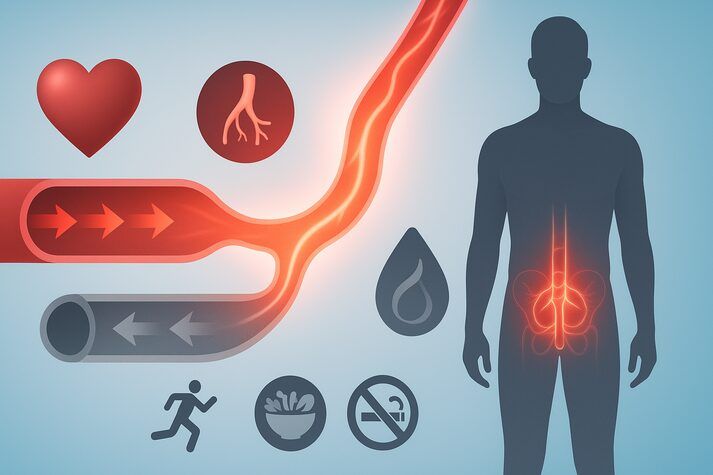
Yes, poor blood flow is one of the leading causes of erectile dysfunction (ED).When arteries can’t deliver enough blood, or veins can’t hold it in, the penis fails to stay firm. Conditions like high blood pressure, diabetes, and high cholesterol commonly damage these vessels, while lifestyle habits such as smoking, drinking, and inactivity make things worse. The good news? Most circulation-related ED can be improved. Simple steps like exercising, eating a heart-healthy diet, managing stress, and avoiding tobacco and alcohol often help restore natural blood flow. And if needed, medical treatments like PDE5 inhibitors (Viagra, Cialis) or advanced therapies can further improve erectile function and overall vascular health.
Erectile dysfunction (ED) is a clinical condition that goes beyond sexual performance; it often reflects underlying vascular, neurological, or metabolic disorders affecting overall health. In most cases, there is an issue with blood flow to the penis. For an erection to happen, blood has to rush into the penis and stay there long enough. If the blood vessels that carry this blood are damaged, this process is interrupted. Because of this, not enough blood flows in, or it escapes too quickly, making it hard to get or keep an erection. This often happens because of conditions like high blood pressure, diabetes, or high cholesterol, which damage the vascular system of the body. Lifestyle habits such as smoking, alcohol use, poor diet, and lack of exercise also play a big role. The good news is that ED caused by poor blood flow is often treatable. Let’s look at the connection between blood flow and ED, why it occurs, steps to improve it, and treatments available.
How Does Blood Flow Affect Erectile Function?
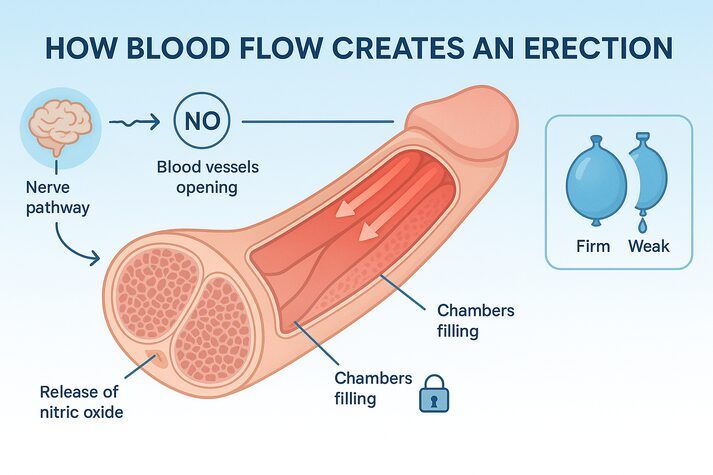
An erection is really just about healthy blood flow and good circulation — the same mechanism disrupted by age and erectile dysfunction. [1] Here's what happens step by step:
- When you receive sexual stimulation, you feel aroused.
- This activates the brain and nerves responsible for erection.
- The brain sends signals down to the penis through these nerves.
- These nerves and blood vessels in your penis release a natural chemical called nitric oxide.
- This chemical tells the muscles in the blood vessels of the penis (the penile arteries) to relax and open wider. [2] The blood vessels open up after receiving this signal. This allows blood to flow quickly into special chambers inside the penis (called the corpora cavernosa). As these chambers fill up, the penis becomes hard.
- Normally, veins allow blood to flow back out of the penis, but during an erection, they’re pressed shut (compressed). This keeps the blood trapped inside the penis and causes the penis to get hard/firm.
- That’s how the erection is maintained until orgasm or arousal fades.
An erection works a lot like filling up a water balloon. If the water pressure is strong and the balloon can hold it, it stays firm. But if the pressure is too weak or there’s even a small leak, it goes soft. In the same way, the penis depends on strong blood flow and proper functioning of blood vessels to fill up and stay firm. In short: Sexual Arousal → Brain Activation → Nerve Signals to Penis → Nitric Oxide Release → Muscles Relax in Arteries → Blood Flows Into Erectile Chambers → Veins Compress to Trap Blood → Erection.
Does Poor Blood Flow Cause Erectile Dysfunction?
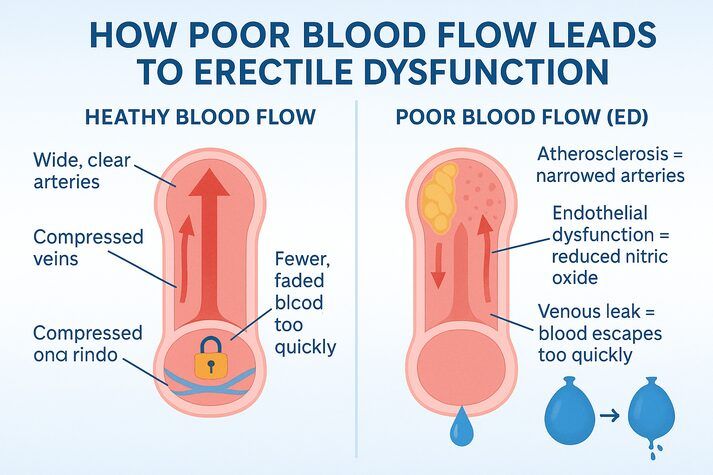
Yes, poor blood flow is a major cause of erectile dysfunction, particularly in cases of arteriogenic erectile dysfunction where narrowed arteries restrict penile blood supply. Erections rely on healthy arteries to bring blood in and veins to hold it there. When these blood vessels are narrowed or damaged, a condition known as vascular disease, circulation slows, and the penis can’t stay firm.
Vascular Disease and Erectile Dysfunction
Most cases of erectile dysfunction are caused by vascular issues/diseases that disrupt normal blood flow through the arteries and veins. The most common vascular issues include:
- Atherosclerosis: Fat and cholesterol build up inside arteries, making them stiff and narrow, which limits blood flow. [3]
- Endothelial dysfunction: The inner lining of blood vessels fails to release enough nitric oxide, so arteries can’t relax and widen properly during arousal. [4]
- Venous leak: Blood enters the penis normally but drains out too quickly, like a balloon with a small hole, leading to soft or short-lived erections. This is also called venogenic ED.
Vascular diseases usually develop gradually due to medical conditions or lifestyle factors such as high blood pressure, high cholesterol, diabetes, smoking, alcohol use, obesity, lack of exercise, aging, or genetic predisposition. In short, anything that harms your heart and blood vessels can also harm your erectile function. That’s why doctors often say ED can be one of the earliest signs of heart disease.
How to Know If Poor Blood Flow Is Causing ED?
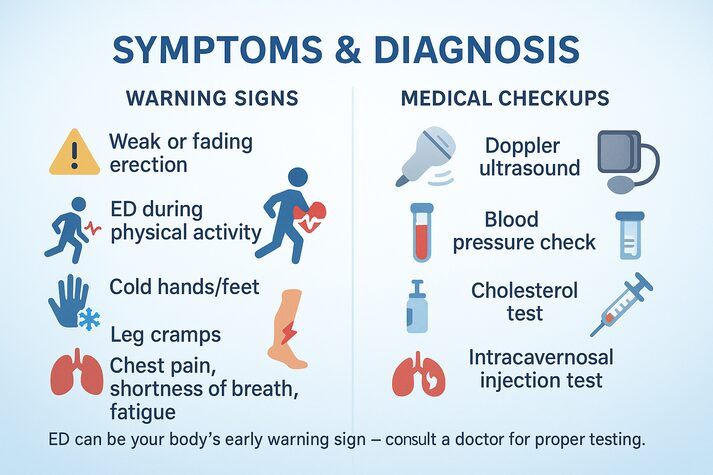
If your erections feel weaker, fade quickly, or aren’t as consistent as before, it could be because of your blood flow. Pay attention to other body signals too, like cold hands and feet, frequent leg cramps, or shortness of breath. If you also have high blood pressure, high cholesterol, diabetes, or a family history of heart disease, it’s a strong hint that circulation may be playing a role. This is exactly what doctors look for when you go in for a checkup. During your visit, they’ll likely run a few simple, non-invasive tests to find out what’s happening:

- Doppler Ultrasound: Uses sound waves to check how well blood moves through the arteries in your penis.
- Blood Pressure and Cholesterol Tests: Help identify hidden vascular problems that may be restricting circulation.
- Intracavernosal Injection Test: A small, controlled injection is given to trigger blood flow and see how your penis responds.
These tests help doctors pinpoint whether poor circulation is behind your erectile dysfunction, often uncovering underlying conditions like atherosclerosis and erections. They can also detect early signs of heart or vascular disease, giving you a chance to address the root cause before it becomes serious. [5]
If you’re finding erections don’t last or aren’t as strong, don’t panic. It usually just means your blood vessels need a little extra care.
Tips to Increase Blood Flow For ED
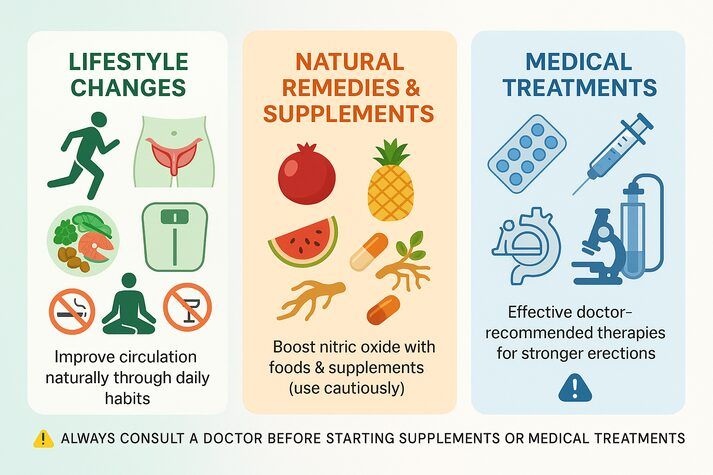
Since ED is closely tied to blood flow, taking steps to support your vascular health can make a big difference. Some ways to increase blood flow to the penis and prevent ED are:
1. Lifestyle Changes:
Simple and healthy lifestyle choices can strengthen your blood vessels, boost nitric oxide, and improve overall erectile function. Here are the most effective changes you can start with:
- Aerobic exercise (running, cycling, swimming): Strengthens the heart and improves circulation.
- Pelvic floor exercises (Kegels): Help trap blood in the penis for firmer erections.
- Nutritious diet (like Mediterranean diet): Leafy greens, berries, nuts, fish, and olive oil all support vascular health.
- Maintain a healthy weight: Extra weight increases ED risk and weakens circulation.
- Stress management (yoga, meditation, breathing): Keeps blood vessels relaxed.
- Quit smoking and limit alcohol: Protects vessel health and maintains healthy nitric oxide levels.
2. Medical Treatments
If lifestyle changes don’t solve the problem, there are proven medical options that can help restore sexual function by improving blood flow:

- Phosphodiesterase-5 inhibitors (Viagra, Cialis, Levitra): These are the most commonly prescribed medications. They boost the effect of nitric oxide, allowing more blood to enter and stay in the penis.
- Intracavernosal injections (penile injections): Medicine is injected directly into the penis to trigger stronger blood flow and erections.
- Vacuum erection devices (VEDs): A non-invasive pump that creates gentle suction, drawing blood into the penis.
- Penile prosthesis ( penile implants): A surgical solution for severe or long-term ED when other treatments don’t work.
- Advanced therapies: Options like penile vascular surgery or Platelet-Rich Plasma (PRP) therapy may be recommended in select cases.
These treatments should always be discussed with a doctor who can recommend the safest and most effective choice based on your health and risk factors.
3. Natural Remedies and Supplements
Some foods and supplements are thought to support blood flow and erectile health by boosting nitric oxide or improving circulation — though a calorie deficit and erectile dysfunction link also exists through nutritional impact:
- Foods: Watermelon, pomegranate, and leafy greens can act as natural nitric oxide boosters. Fruits like pineapple are used to treat ED in different traditions as they are thought to improve blood flow.
- Supplements: Options like L-arginine, ginseng, and ginkgo biloba help with ED, though research results are mixed.
While these may help some men, they are not guaranteed solutions. Supplements can interact with medications or underlying health conditions. Always talk to your doctor before starting any natural remedy to make sure it’s safe and right for you.

Allo asks
Would you consider natural remedies for ED to improve blood flow?
Conclusion
Erectile dysfunction is often a circulation problem at its core. Healthy erections rely on strong blood flow into the penis and the ability to keep that blood trapped long enough for sexual activity. When conditions like high blood pressure, diabetes, high cholesterol, heart disease, or vascular disease damage the arteries and veins, this delicate system breaks down. Lifestyle habits such as smoking, alcohol use, poor diet, and lack of exercise can make things worse. The good news is that poor circulation and ED are treatable. From healthy lifestyle changes (exercise, diet, stress management, quitting smoking) to natural remedies, medical therapies, and advanced treatments, there are many effective options. Most men improve significantly once the root cause is identified and addressed.

Disclaimer
The following blog article provides general information and insights on various topics. However, it is important to note that the information presented is not intended as professional advice in any specific field or area. The content of this blog is for general educational and informational purposes only. The content should not be interpreted as endorsement, recommendation, or guarantee of any product, service, or information mentioned. Readers are solely responsible for the decisions and actions they take based on the information provided in this blog. It is essential to exercise individual judgment, critical thinking, and personal responsibility when applying or implementing any information or suggestions discussed in the blog.
Most Asked Questions
What health conditions affect blood flow to the penis?
High blood pressure, high cholesterol, diabetes, and heart disease are the most common. These conditions damage blood vessels, which affects erections.
How do I know if my ED is related to blood flow?
If your erections are weak, short-lived, or inconsistent, especially during physical activity, circulation could be the cause.
Can erectile dysfunction be an early sign of heart disease?
Yes. ED often appears years before chest pain or other heart symptoms. Doctors sometimes call it a “warning sign” of cardiovascular problems.
Can lifestyle changes really improve blood flow and erections?
Definitely. Regular exercise, a heart-healthy diet, stress management, quitting smoking, and limiting alcohol all help improve circulation and sexual function.
What foods naturally improve blood flow to the penis?
Leafy greens, watermelon, pomegranate, berries, nuts, fish, and olive oil are good choices. They support nitric oxide production and vascular health.
Sources
- 1.
The Role of Nitric Oxide in Erectile Dysfunction
- 2.
Physiology, Erection
- 3.
A retrospective study of the relationship between biomarkers of atherosclerosis and erectile dysfunction
- 4.
Endothelial Dysfunction, Erectile Dysfunction, and Phosphodiesterase 5 Inhibitors.
- 5.
Erectile dysfunction and heart disease: What’s the connection?