Erectile Dysfunction and Narcissism: Is There a Connection?
Written by Dr. Deepali Anand

Dr. Deepali is a medical writer and healthcare professional with a background in clinical surgery and patient care. Having transitioned from active clinical practice to medical communications, she specializes in bridging the gap between complex clinical data and patient education. Dr. Deepali is dedicated to creating evidence-based content that is grounded in scientific rigor and empathy, ensuring that sensitive topics like sexual wellness and mental health are accessible and empowering for every reader.
•
July 30, 2026
Our experts continually monitor the health and wellness space, and we update our articles when new information becomes available.

Quick Read
Yes, there is a connection between narcissism and erectile dysfunction, though it's not a simple cause-and-effect relationship. Research shows that narcissistic traits can contribute to ED through performance anxiety, emotional disconnection, and relationship stress. The "impotent narcissist" describes men whose fragile self-esteem beneath a grandiose exterior creates sexual performance issues, often using ED as a way to avoid vulnerable intimacy. While narcissism doesn't directly cause ED, the psychological patterns, like hypersensitivity to criticism, controlling behaviors, and cycles of idealization/devaluation, create conditions that significantly increase the risk of sexual dysfunction for both the narcissist and negatively impact their partner's sexual health as well.
Impotent narcissist, many people use this term when wondering if narcissism and erectile dysfunction are connected. Does being a narcissist make someone more likely to struggle with ED?
The short answer is that there is a link, but it's not a simple cause-and-effect — much like the complex relationship seen with ADHD and erectile dysfunction. Research shows narcissistic traits can fuel performance anxiety, emotional disconnection, and relationship stress, all of which increase the risk of erectile problems.
In this article, we’ll explore what the term “impotent narcissist” really means, how narcissism influences erectile function, its impact on partners, and the treatment options that can help both individuals and couples.

Understanding Narcissism
Narcissism is often thought of as simple vanity or self-importance, but that's only part of the picture — the underlying anxiety it creates mirrors how stress causes erectile dysfunction in many men. In psychology, narcissism can also describe a personality style. It can show up as a constant need for admiration, a sense of entitlement, and an exaggerated belief in one’s own importance. In more serious cases, it may even be diagnosed as Narcissistic Personality Disorder (NPD). [1]

A person with strong narcissistic traits often places their own needs above those of others. In relationships, this can create real challenges, not just emotionally, but also in sexual intimacy. When one partner struggles to show empathy or maintain emotional connection, it can put strain on both sides of the relationship and affect sexual satisfaction.
So how does this connect to erectile dysfunction? Let’s take a closer look at the ways narcissism can influence erectile function.
According to Allo Health, nearly 1 in 2 men experience erectile dysfunction, which is based on our internal clinical data of more than 2.5 lakh patients who have visited our clinics.

Allo asks
Do you think ED is more difficult to manage when personality issues are involved?

What Is the Meaning of "Impotent Narcissist"?
The term “Impotent Narcissist,” also called the “Impotent King,” was first described by Dr. Jacobs in 1977.[2] It’s not an official medical diagnosis, but a descriptive phrase used in psychology. It usually refers to men with narcissistic traits who struggle with psychological erectile dysfunction (psychogenic ED).
At the surface, these individuals may appear confident, entitled, or even superior. But behind the façade, there is often a fragile sense of self-worth. The grandiose self-image is often a defense mechanism used to mask feelings of inadequacy or powerlessness.
In intimate relationships, this inner conflict can show up as difficulties with sexual and emotional maturity. For some, intimacy feels threatening because it risks exposing vulnerability. Instead of facing possible failure, they may avoid sexual closeness altogether.
What Leads to an “Impotent Narcissist”?
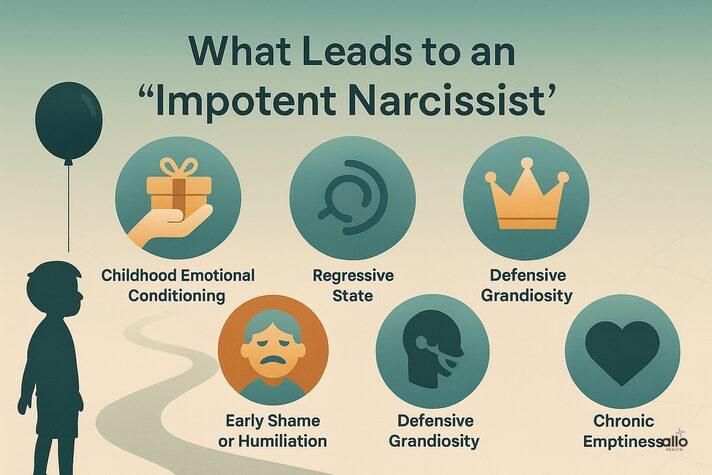
Psychological theories suggest that these patterns often take root in early life experiences.[3] Here are some of the main explanations:
- Childhood Emotional Conditioning
Parents who spoil or praise too much may accidentally make their child feel entitled. When children grow up believing others should always meet their needs, it can set the stage for narcissistic traits in adulthood.
- Regressive State
Some men become “stuck” in a sexually immature stage, often due to complex or unresolved relationships with their parents. This fixation can later manifest as narcissism and psychogenic ED.
- Early Shame or Humiliation
Bad childhood experiences that caused deep feelings of not being good enough can come back in adulthood. This can make people very sensitive to failure, especially during sex.
- Defensive Grandiosity
The inflated self-image works as a shield protecting a vulnerable inner self that fears criticism, rejection, or exposure.
- Chronic Emptiness
Despite outward appearances, many feel a persistent inner void that admiration or social status cannot fill. This emptiness can hurt emotional closeness and sexual confidence.
Is There a Link Between Narcissism and Erectile Dysfunction?
Some studies[4] suggest a possible connection between narcissism and erectile dysfunction. One small study[5] of 64 men with ED found moderate to strong links between narcissism, psychopathy traits, and the severity of ED. Researchers think that attachment style, emotional control, and fear of failure can affect this relationship.
That said, the connection is not straightforward. Having ED does not mean someone is a narcissist, and being narcissistic doesn’t automatically lead to ED. The way narcissism shows up, whether it’s the more confident “grandiose” type or the more sensitive “vulnerable” type, can influence how sexual functioning is affected.
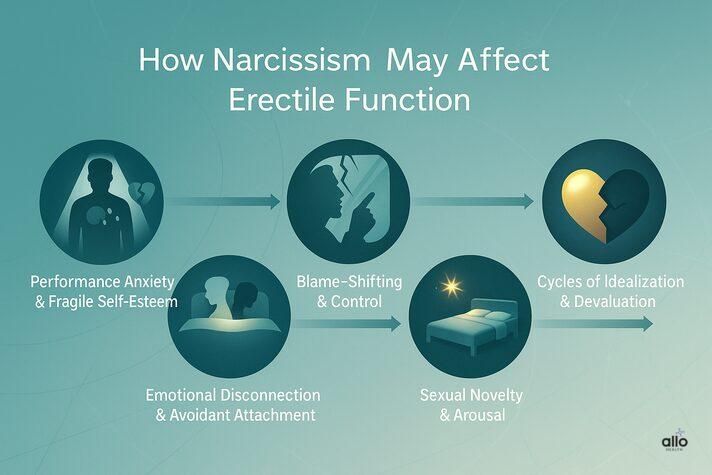
How Narcissism May Affect Erectile Function
1. Performance Anxiety and Fragile Self-Esteem
People with narcissistic traits often carry an inflated self-image and feel pressured to perform perfectly in sexual situations.[6] As criticism, rejection, or failure feels unbearable, the resulting anxiety can interfere with erections.
Sometimes ED becomes a way to avoid intimacy altogether, protecting them from possible criticism.
2. Emotional Disconnection and Avoidant Attachment
Many narcissistic people have an avoidant attachment style. This makes emotional closeness hard, especially in long-term relationships.
When sex is used mainly to boost self-esteem or control rather than to connect, intimacy suffers, and ED becomes more likely.
3. Blame-Shifting and Control
When ED occurs, narcissists may deflect responsibility and blame their partner instead of acknowledging their own struggles.
Over time, this creates a cycle of conflict, emotional withdrawal, and avoidance of intimacy, all of which can reinforce ED.
4. Sexual Novelty and Arousal
Research on sexual narcissism shows that some men may not struggle with erections initially. Still, their strong need for novelty can make it difficult to stay aroused in long-term, less “exciting” relationships.
Interestingly, studies have also noted a link with both premature and delayed ejaculation, depending on the relationship phase.[7]
5. Cycles of Idealization and Devaluation
Narcissists often idealize a partner at first and then later devalue them. This push-pull dynamic creates emotional distance, conflict, and power struggles in the relationship, all of which are well-known risk factors for ED.
In some cases, impotence may even serve as an unconscious way of punishing a partner
Narcissistic traits by themselves don’t directly cause ED. But the stress, relationship tension, or self-image issues that come with narcissism can certainly play a role in sexual difficulties.
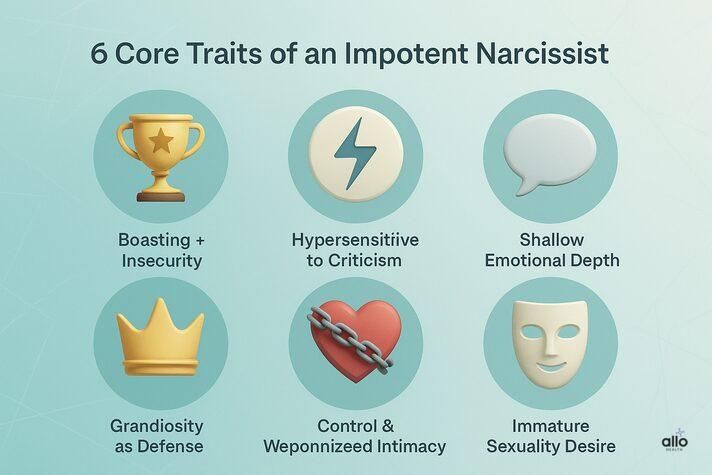
6 Core Characteristics of an “Impotent Narcissist”
Let's look at some of the common traits seen in individuals with narcissistic tendencies who may be at higher risk of experiencing erectile dysfunction (ED), with patterns that often overlap with depression and erectile dysfunction. These are not strict medical rules, but patterns often observed in psychology.
1. Inflated Self-Importance Mixed with Insecurity
They may boast about achievements, wealth, or talents, yet constantly seek validation and admiration from others. Beneath the surface, their confidence often feels shaky, which can heighten pressure in intimate situations.
2. Hypersensitivity to Criticism
Even mild or well-meaning feedback may be perceived as a threat to their carefully constructed self-image. Instead of accepting it, they may lash out, sulk, or respond with passive-aggressive behavior. This fragile self-esteem can contribute to performance anxiety.
3. Emotional Shallowness
Relationships may feel transactional. They often invest emotionally only when it boosts their status or self-esteem. Successes or failures are frequently attributed to external forces, luck, bias, or other people as a way of deflecting personal responsibility.
4. Grandiosity as a Defense
Grandiose fantasies, believing they deserve special treatment, serve as a shield for deeper feelings of emptiness or inadequacy. When reality doesn’t match these expectations, the emotional gap can intensify inner conflict and strain intimacy.
5. Controlling and Weaponizing Intimacy
A sense of helplessness may turn into a need for control in relationships, including sexual ones. Some research suggests that men with higher levels of “sexual narcissism” report more sexual dysfunction, such as premature or inhibited ejaculation.
In some cases, an impotent narcissist may even use their ED as a weapon, blaming their partner, refusing intimacy, or devaluing their partner’s sexuality to deflect their own shame.
6. Desire for Immature Sexuality
There can be an unconscious pull to maintain sexual immaturity as a way of clinging to feelings of uniqueness or self-worth rooted in childhood. These people may prefer dominant-submissive relationships. They often take control to hide deeper weaknesses.
Impact of Narcissism Related ED on Relationships and Partners
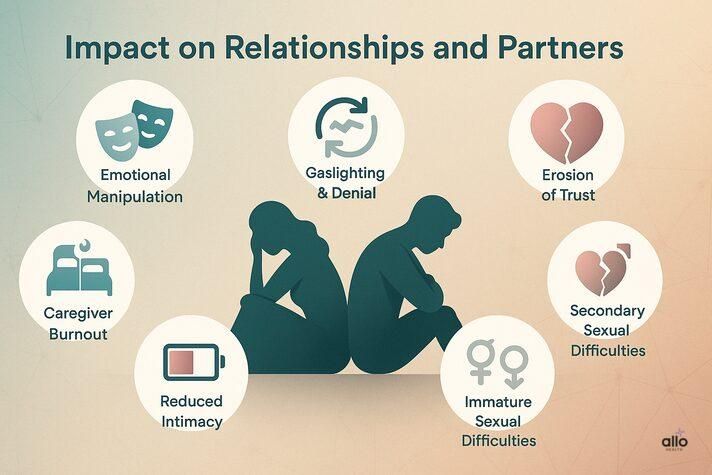
Research[8] suggests that when narcissism and sexual dysfunction combine, relationship satisfaction often declines. For partners, this can create a unique emotional burden, one that goes far beyond the bedroom.
Here are some common experiences reported by those in relationships with narcissistic individuals who struggle with ED:
1. Emotional Manipulation
A cycle of seeking praise, followed by anger or withdrawal, is common. Partners may even be unfairly blamed for the narcissist’s sexual difficulties.
2. Gaslighting and Denial
Subtle forms of manipulation, such as denying the partner’s reality, help maintain a sense of superiority but leave the other person feeling unheard and confused.
3. Erosion of Trust
When reactions are unpredictable, partners may live with constant anxiety and uncertainty, which slowly undermines trust.
4. Caregiver Burnout
The endless need for reassurance and validation can emotionally drain even the most patient and supportive partner.
5. Reduced Intimacy
Sex may become shallow, transactional, or focused purely on performance, leaving little room for genuine emotional connection.
6. Secondary Sexual Difficulties
The strain doesn’t stop with the narcissist. Partners themselves may develop issues like low libido, anxiety, or reduced sexual satisfaction as a result of ongoing stress.
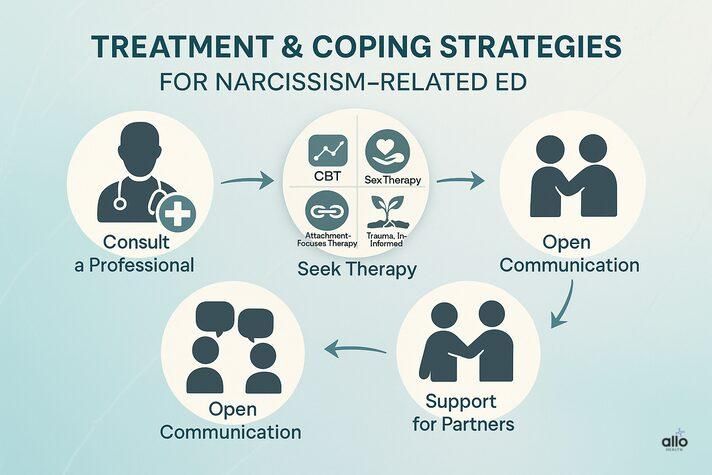
Treatment for Narcissism-Related ED
Treating erectile dysfunction (ED) in people with narcissistic traits can be complex. Grandiose narcissists, for example, often deny having problems and may resist seeking help.
If you suspect a connection between narcissism and ED, here are some important steps to consider:
1. Consult a Professional
The first step is always to rule out physical causes of ED. A visit to a doctor can help determine whether medical conditions like diabetes, high blood pressure, or hormonal imbalances are contributing to the issue.
2. Seek therapy
If ED is diagnosed as primarily psychogenic (psychological in origin), therapy becomes a central part of treatment. Different approaches can be helpful:
- Cognitive Behavioral Therapy (CBT):
Helps reframe negative thought patterns that fuel performance anxiety and distorted self-perceptions common in narcissistic thinking.
- Sex Therapy:
Sex therapy focuses on both psychological and physical aspects of ED, guiding individuals toward healthier expectations and more fulfilling intimacy.
- Attachment-Focused Therapy:
Since many narcissistic individuals show avoidant attachment patterns, therapy that addresses emotional closeness and secure bonding can be especially beneficial.
- Trauma-Informed Treatment:
For those whose narcissistic traits and ED are linked to early trauma, this approach gently addresses the deeper wounds shaping current behavior.
3. Open communication
Talking about ED can be difficult in any relationship and even more so with a narcissistic partner. Still, open, respectful conversations are vital for reducing shame and building a path toward recovery.
4. Support for Partners
Partners of individuals with narcissism-related ED often carry a heavy emotional burden. Personal therapy can provide a safe space to process the impact of the relationship, learn boundary-setting, and prevent burnout.
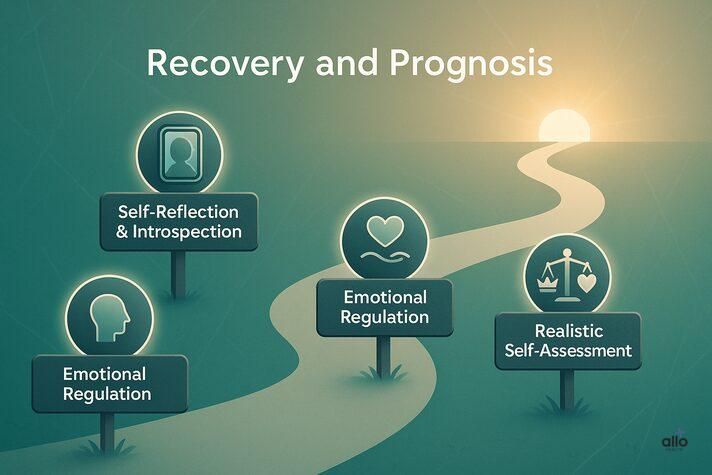
Recovery from Narcissism-ED
Recovery from narcissism-related ED isn’t just about treating erections; it’s about addressing both the personality traits and the sexual dysfunction at the same time. Key factors for success include:
- Self-reflection and introspection: Building empathy and awareness.
- Boundary setting: Respecting a partner’s autonomy and needs.
- Emotional regulation: Developing healthier coping strategies for anxiety and performance pressure.
- Realistic self-assessment: Moving from grandiose self-images toward a more balanced sense of self.
The journey may be challenging, but with the right mix of medical care, therapy — including hypnosis for erectile dysfunction — and support, both individuals and couples can make meaningful progress.
Key Takeaway
The connection between narcissism and erectile dysfunction is real, but it’s not simple. It often involves a mix of psychological, relational, and sometimes medical factors. With the right blend of medical care, therapy, and honest communication, many men see significant improvement. For partners, understanding these patterns can reduce confusion, rebuild trust, and create space for healthier intimacy.

Disclaimer
The following blog article provides general information and insights on various topics. However, it is important to note that the information presented is not intended as professional advice in any specific field or area. The content of this blog is for general educational and informational purposes only. The content should not be interpreted as endorsement, recommendation, or guarantee of any product, service, or information mentioned. Readers are solely responsible for the decisions and actions they take based on the information provided in this blog. It is essential to exercise individual judgment, critical thinking, and personal responsibility when applying or implementing any information or suggestions discussed in the blog.
Most Asked Questions
Can a narcissist be impotent?
Yes. Narcissism doesn’t directly cause ED, but traits like performance anxiety, emotional disconnection, and relationship stress can increase the risk.
Do narcissists have low testosterone?
Not always. Narcissism is psychological, while testosterone is hormonal. Many narcissists have normal hormone levels but may still face ED from stress or intimacy issues.
What is hypersexual narcissism?
Hypersexual narcissism is when a person uses sex mainly for validation, control, or ego, rather than intimacy. It often leads to shallow or unfulfilling sexual relationships.
Can being in a relationship with a narcissist cause sexual problems?
Yes. Partners of narcissists may develop low libido, anxiety, or reduced intimacy due to emotional manipulation, blame-shifting, and lack of empathy.
How is narcissism-related ED treated?
Treatment combines medical and psychological care: ruling out physical causes, using therapies like CBT or sex therapy, and supporting partners through counseling.
Sources
- 1.
Personality Disorders
- 2.
impact-of-family-dynamics-on-narcissism-and-impotence-a-commentary-and-implications-for-psychodynamic-counselors-nodar1.pdf
- 3.
Impact of Family Dynamics on Narcissism and Impotence: A Commentary and Implications for Psychodynamic Counselors
- 4.
Sexual Dysfunctions and Problematic Sexuality in Personality Disorders and Pathological Personality Traits: A Systematic Review
- 5.
Sexual Narcissism among Men with Sexual Dysfunctions: An Exploratory Study
- 6.
Narcissistic Personality Traits and Sexual Dysfunction in Women: The Role of Body Image Self-Consciousness
- 7.
Narcissistic men are more prone to premature ejaculation and to difficulty reaching orgasm
- 8.
The Implications of Sexual Narcissism for Sexual and Marital Satisfaction