Sex Therapy for Erectile Dysfunction: A Complete Guide
Written by Dr. Pranitha Bangera

Dr. Pranitha Bangera is a gold-medalist healthcare professional with an elite foundation in clinical training and patient care. A researcher at heart, she specializes in creating high-impact, research-driven medical content that empowers readers through accessible patient education. Dr. Bangera focuses on the intersection of digital health and clinical communication, specifically within the fields of sexual health and mental well-being. Her work is dedicated to making complex medical innovations understandable and trustworthy for a global audience.
•
July 30, 2026
Our experts continually monitor the health and wellness space, and we update our articles when new information becomes available.

Quick Read
Sex therapy for erectile dysfunction is a proven, non-invasive treatment that targets the psychological and emotional causes of ED, such as performance anxiety, stress, low self-esteem, and relationship issues. It involves talk-based techniques like cognitive-behavioral therapy, mindfulness, sensate focus, and couples communication exercises- all designed to reduce anxiety and improve sexual confidence. Research shows that combining sex therapy with medication, lifestyle changes, or medical devices leads to better and more lasting results than relying on any one treatment alone.
Sex problems can feel deeply personal, yet erectile dysfunction is one of the most common concerns men discuss in clinics. What often gets overlooked is that even when the cause starts in the body, such as blood flow or hormone-related issues, the experience itself can trigger stress and self-doubt that keep the problem going.
That’s where sex Therapy for erectile dysfunction comes in. It’s not about saying the problem is “all in the mind,” and it doesn’t replace medical care. Instead, it’s a structured, evidence-based approach that helps break the anxiety–avoidance cycle, rebuild confidence, and restore intimacy, so sexual activity feels natural again rather than something to be measured or feared.
In this article, you’ll learn what sex therapy really involves, how it works alongside other treatments, and why it can be a game-changer for men seeking long-term, satisfying sexual health.

Allo asks
What would make you hesitant to try sex therapy?
What Is Sex Therapy for Erectile Dysfunction?
Sex Therapy is a form of counselling that helps individuals or couples work through sex-related concerns, including erectile dysfunction. It’s usually short-term and guided by a trained sex therapist, who is often a licensed psychologist, psychiatrist, counsellor, or clinical social worker with additional training in sexual health. [1]
Rather than focusing on physical causes like high blood pressure, sex therapy often explores the emotional, psychological layers — Hindi readers may also want to see अलप्रोस्टाडिल के उपयोग for a medication-based counterpart. Whether it’s stress, low self-esteem, past experiences, or relationship strain, these sessions aim to understand the root causes and help you manage them.

How Does Sex Therapy Work for Erectile Dysfunction?
Even when erections are partly affected by blood flow or blood vessels, emotional and relationship factors can play a real role, such as:
- performance anxiety (fear of “failing” again)
- stress and burnout (often showing up as stress-related ED)
- low self-esteem or shame
- depression or anxiety symptoms
- poor sexual communication
- relationship conflicts
- unrealistic expectations about sex or erections
Sex Therapy works by combining structured conversations with behavioral exercises — and devices like ED rings are sometimes used alongside therapy:
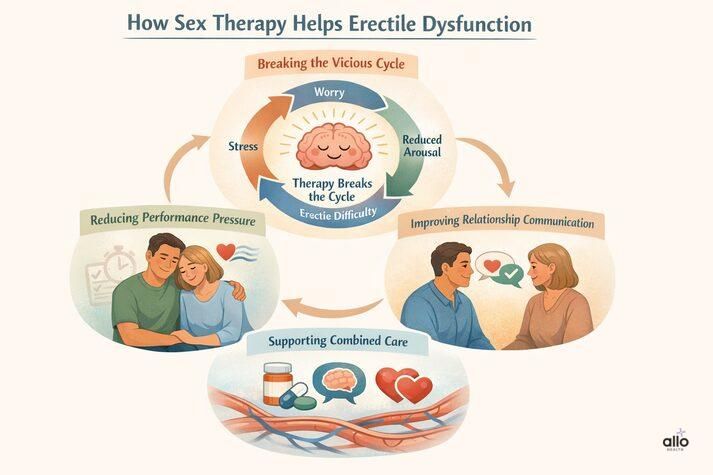
1. Breaking the “vicious cycle”
One episode of erectile dysfunction can plant a seed of doubt: “What if it happens again?” That worry turns into stress, and stress makes it harder for the body to relax into arousal and a normal sexual response. The next time, the pressure feels even higher, which raises anxiety further and increases the chance of ED repeating. Over time, it becomes a self-feeding loop, not because something is “wrong” with you, but because the mind and body start bracing for failure instead of letting arousal happen naturally.[1]
2. Reducing pressure during sexual activity
Therapy shifts focus away from “performing” and back toward comfort, connection, and pleasure, which is often what restores a healthier sexual response over time.

3. Improving relationship communication
When couples can talk about needs, fears, and preferences without blame, intimacy tends to become easier. Better sexual communication often improves desire and confidence.[2]
4. Supporting a combined care approach
If ED medication helps blood flow, therapy helps the mind and relationship stop sabotaging progress. Many studies show that adding couples/psychological interventions to medical treatment can improve outcomes compared to pills alone (especially in psychogenic or mixed ED). This lines up with modern biopsychosocial management described in clinical literature.
Sex therapy doesn’t involve anything physical during sessions- it’s just a safe space to explore what’s getting in the way of healthy, satisfying sex.
What to Expect in a Sex Therapy Clinic
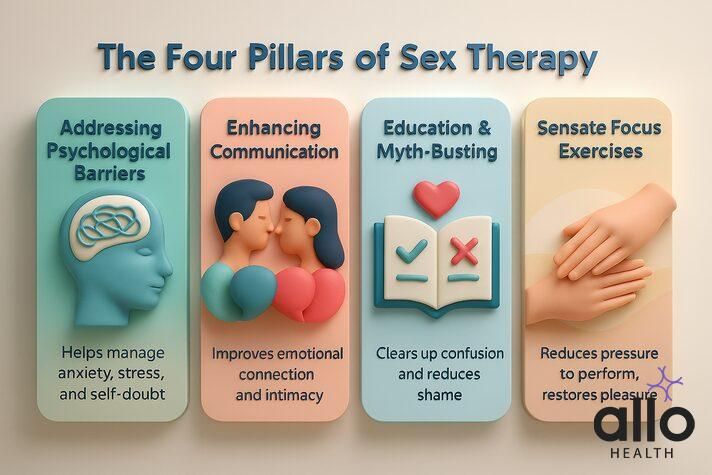
A good treatment plan is always personalized, but most Sex Therapy and Psychosexual therapy programs draw from a small set of well-tested tools. These approaches are chosen based on your symptoms, comfort level, and whether you’re working individually or with a partner, ensuring the therapy stays practical, relevant, and effective:
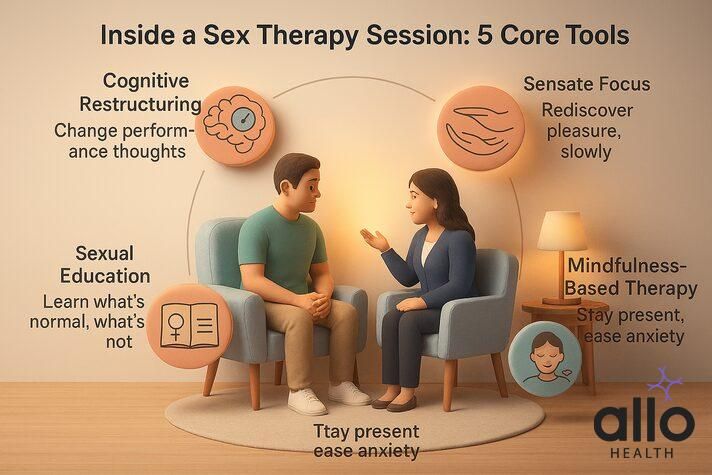
1. Psychosexual Education
Therapists explain how erections work, what’s normal, and why anxiety disrupts arousal. This often includes the sexual response cycle (desire → arousal → orgasm → resolution) and how stress changes that cycle.[1]
2. Cognitive-Behavior Approaches (CBT-informed sex therapy)
Sometimes called cognitive-behavioral sex therapy, this focuses on identifying unhelpful beliefs (for example, “I must stay hard the whole time”) and replacing them with realistic, kinder thinking that reduces pressure.[3]
3. Sensate Focus
Sensate focus is a structured set of exercises done at home that reduces pressure and rebuilds intimacy step-by-step. Early stages often avoid goal-driven sexual stimulation and focus on touch, comfort, and connection first.[1]
4. Mindfulness-based Strategies
Mindfulness skills help a person stay present during sexual activity instead of mentally monitoring erection quality every few seconds. This can be very helpful for psychological ED.[4]
5. Couples' Communication Techniques
This is where therapy can feel like a real upgrade for the relationship, not just the erection. Couples learn how to discuss desire, boundaries, timing, stress, and expectations without turning it into a fight.[2]
What Does a Sex Therapist Do?
A sex therapist is a licensed mental health professional with specialized training in treating sexual concerns — and therapy often answers the bigger question of whether ED is reversible or curable. They help identify and treat the emotional, mental, and relationship factors that affect sexual function. Sessions are talk-based. There is no physical contact or sexual activity during therapy sessions. Typically, they will:
- Take a detailed history (medical, relationship, sexual patterns)
- Help identify psychological triggers and psychological causes
- Teach strategies for anxiety, communication, and confidence
- Assign private at-home exercises (often involving sensate focus)
- Coordinate with medical care when needed
When Is Sex Therapy Most Effective for ED
Sex Therapy tends to work best when the ED is primarily psychological or mixed (physical + psychological), such as:
- nonorganic erectile dysfunction / psychogenic erectile dysfunction
- Situational ED (for example, happens in some contexts but not others)
- ED that is linked to anxiety, stress, depression, or relationship conflicts
- Men who respond “partly” to medication but still struggle due to worry
- Men who want a longer-term skill set, not just a quick fix
Benefits of Sex Therapy for Erectile Dysfunction
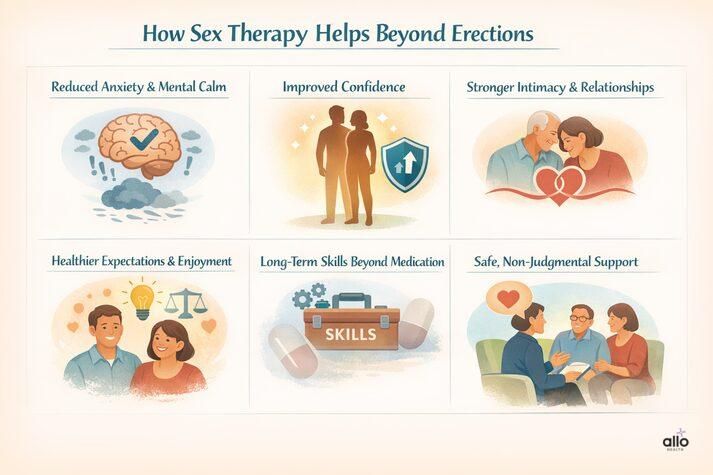
When it’s the right fit, benefits can include:
- Less anxiety and fewer “spirals” after a difficult experience
- Better confidence and less fear around sexual intercourse
- Improved intimacy and relationship satisfaction
- Healthier expectations and improved sexual enjoyment
- Tools that continue working even if medications are stopped later
- A supportive, non-judgmental space to talk about a sensitive topic
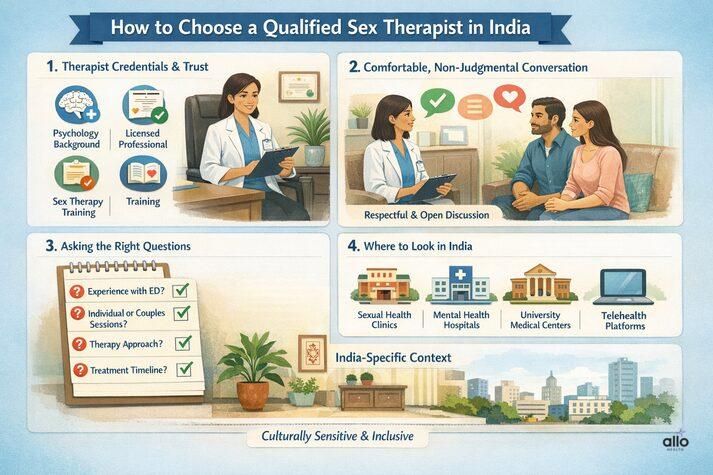
How to Find a Sex Therapist in India
Finding the right sexual health professional matters as much as the therapy itself. Here’s a practical checklist for India:
What to look for
- Licensed mental health background (clinical psychologist, psychiatrist, counsellor, psychiatric social worker)
- Specific training in Sex Therapy / Psychosexual therapy
- Comfort talking about sexuality without judgment
- Experience with erectile dysfunction and couple work
Helpful questions to ask
- “Have you worked with erectile dysfunction or Sexual Dysfunction cases before?”
- “Do you offer individual and couple sessions?”
- “What approach do you use (CBT-informed, mindfulness, sensate focus)?”
- “How long is a typical treatment plan?”
Where people commonly search in India
- Sexual health clinics, like Allohealth (sex therapy clinics)
- Psychology/psychiatry departments at a university medical center
- Hospital-based mental health services
- Reputable telehealth platforms that list clinician credentials clearly
Red Flags in Sexual Health Professionals
- No license or proper training
- Avoids sexual topics or guarantees quick fixes
- Pushes one-size-fits-all treatments
- Unclear boundaries or discomfort
Sex Therapy Costs in India
The cost of sex therapy in India varies based on the city, therapist’s experience, and whether sessions are online or in person. As a general range, sessions typically fall between ₹800 and ₹4,000.
| Location Type | Typical Cost per Session |
|---|---|
| Tier-1 metros (Delhi, Mumbai, Bengaluru) | ₹2,000 – ₹4,000 |
| Tier-2 cities (Pune, Chennai, Hyderabad, Ahmedabad) | ₹1,500 – ₹3,000 |
| Smaller cities & towns | ₹800 – ₹2,000 |
| Online therapy platforms | ₹800 – ₹2,500 |
- Sessions usually last 45–60 minutes
- Some therapists offer packages or sliding-scale fees
Does Health Insurance Cover Sex Therapy in India?
Health insurance coverage for sex therapy in India can be a bit nuanced. While the Mental Healthcare Act, 2017, mandates parity between mental and physical health, and IRDAI has instructed insurers to cover psychological disorders, most insurance plans still focus primarily on hospitalization. Since sex therapy is usually an outpatient service, coverage often applies only if a policy includes OPD benefits, an employer-provided mental health program, or a specific outpatient rider. In short, some people do receive coverage, but it depends largely on whether outpatient mental health care is clearly included in their plan.
Can Sex Therapy Fully Cure Erectile Dysfunction?
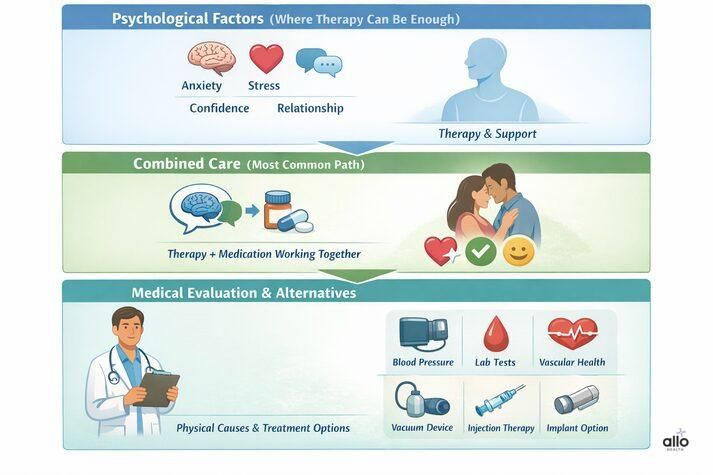
Sex therapy can be very effective for erectile dysfunction, but whether it can fully cure ED depends on the underlying cause. When ED is mainly driven by psychological factors such as performance anxiety, stress, low confidence, or relationship issues, sex therapy alone can lead to lasting improvement and, in many cases, resolution.
If ED treatment also includes medical options like PDE5 inhibitors (for example, sildenafil citrate or other phosphodiesterase-5 inhibitors), sex therapy can help those treatments work better by reducing anxiety, avoidance, and pressure around sexual activity.
If medication isn’t appropriate or doesn’t work well, a medical clinician may discuss other options such as a vacuum erection device (penis pump), penile injections (including self-injection therapy), or penile implants in selected cases. Therapy doesn’t replace these treatments, but it helps people integrate them into a couple’s sex life with less fear, shame, or stress.
It’s also important to rule out medical contributors before or alongside therapy. Conditions like high blood pressure, diabetes, hormone imbalances, medication side effects (including some serotonin reuptake inhibitor antidepressants), and heart disease or broader cardiovascular disease can affect erections by altering blood flow and blood vessels.
A doctor may recommend a physical exam and sometimes blood tests to get the full picture. When medical care and sex therapy work together, outcomes are often more reliable and longer-lasting.
Pros and Cons of Sex Therapy for Erectile Dysfunction
| Advantages | Limitations |
|---|---|
| Non-invasive and completely reversible | Requires regular attendance and active participation (yes, there’s homework) |
| Helps reduce anxiety and depression, improving overall mental health | 20-40% dropout rate in some programs- it may not suit everyone |
| Enhances relationship satisfaction and encourages open communication | Therapist quality can vary; training and experience matter |
| Great option for men who can’t or prefer not to take medication | Insurance coverage is inconsistent; out-of-pocket costs can be high |
Conclusion
Sex Therapy for erectile dysfunction is one of the most practical, evidence-based options when anxiety, stress, or relationship strain are part of the picture, and that’s more common than most men think. It helps reduce performance pressure, rebuild confidence, improve sexual communication, and create a healthier, more satisfying sex life.
And if ED also involves medical factors like blood flow, high blood pressure, or heart disease risk, therapy still plays a valuable role — alongside addressing the root causes of erectile dysfunction.
A step-by-step treatment plan that combines medical care (when needed) with the right psychological support often gives the most reliable, long-term results.
Disclaimer
The following blog article provides general information and insights on various topics. However, it is important to note that the information presented is not intended as professional advice in any specific field or area. The content of this blog is for general educational and informational purposes only. The content should not be interpreted as endorsement, recommendation, or guarantee of any product, service, or information mentioned. Readers are solely responsible for the decisions and actions they take based on the information provided in this blog. It is essential to exercise individual judgment, critical thinking, and personal responsibility when applying or implementing any information or suggestions discussed in the blog.
Most Asked Questions
How do I find a qualified sex therapist in india?
Look for licensed mental health professionals who specialize in sex therapy. In India, check platforms like Allo, Manastha, or BetterLYF. Internationally, platforms like BetterHelp or Talkspace may connect you with certified therapists. Make sure they have credentials from organizations like AASECT, IACP, or RCI.
What do sex therapists teach for psychological ED?
They use proven methods like cognitive-behavioral therapy (CBT), mindfulness, sensate focus exercises, and couples communication strategies. These help reduce anxiety, change negative thought patterns, and rebuild sexual confidence.
What should I expect during ED-focused sex therapy?
Sessions usually involve open conversations about your thoughts, emotions, and past experiences around sex. You may also learn techniques to manage anxiety, improve communication with your partner, and rebuild intimacy. No physical exams or sexual activity takes place in therapy.
Is sex therapy covered by insurance?
It depends on your location and insurance provider. In India, mental health coverage is growing but still inconsistent. Some therapists offer sliding-scale fees. It’s best to ask directly about costs and coverage before starting.
Which therapy is best for erectile dysfunction?
Sex therapy is often the best approach for erectile dysfunction caused by stress, anxiety, or relationship issues. For the best results, it’s commonly combined with medication or lifestyle changes.
Sources
- 1.
A Psychosocial Approach to Erectile Dysfunction: Position Statements from the European Society of Sexual Medicine (ESSM)
- 2.
The effectiveness of psychological interventions alone, or in combination with phosphodiesterase-5 inhibitors, for the treatment of erectile dysfunction:A systematic review
- 3.
Cognitive Behavioral Sex Therapy: An Emerging Treatment Option for Nonorganic Erectile Dysfunction in Young Men: A Feasibility Pilot Study
- 4.
Couples therapy for erectile disorders: conceptual and clinical considerations
- 5.
Sex Therapist
Why Should You Trust Us?
Why Should You Trust Us?
This article was written by Dr. Pranitha Bangera, who has more than 1 years of experience in the healthcare industry.
Allo has the expertise of over 50+ doctors who have treated more than 1.5 lakh patients both online and offline across 30+ clinics.
Our mission is to provide reliable, accurate, and practical health information to help you make informed decisions.
For This Article
- We reviewed over 20 top-ranking articles on sex therapy and erectile dysfunction to ensure this content is accurate, relevant, and up-to-date with current best practices.
- We referenced expert sources including the American Association of Sexuality Educators, Counselors and Therapists (AASECT), peer-reviewed journals, and global mental health guidelines to provide a well-rounded, evidence-based perspective.
- We analyzed over 15 published research studies on the effectiveness of sex therapy in treating erectile dysfunction, especially when combined with medication and lifestyle interventions.
- We explored real-world conversations from platforms like Reddit, YouTube, and Twitter to understand what men are actually going through, including their hesitations, fears, and breakthroughs.
- We included practical tips, therapist-approved techniques, and common questions men ask, based on insights from online communities like Go Ask Alice, Quora, and clinical FAQs.