Home Remedies For Fever During Pregnancy
Written by Dr. Anvi Dogra

Dr. Anvi Dogra is a medical writer and healthcare professional with a doctoral background in clinical sciences. She leverages her medical training to produce deeply researched, people first content across the wellness industries. With a "360-degree" understanding of the healthcare industry, Dr. Anvi focuses on bridge-building between clinical data and patient wellness. Known for her ability to make complex medical topics accessible and engaging, Dr. Anvi ensures that all health information is grounded in clinical evidence.
•
July 30, 2026
Our experts continually monitor the health and wellness space, and we update our articles when new information becomes available.
Quick Read
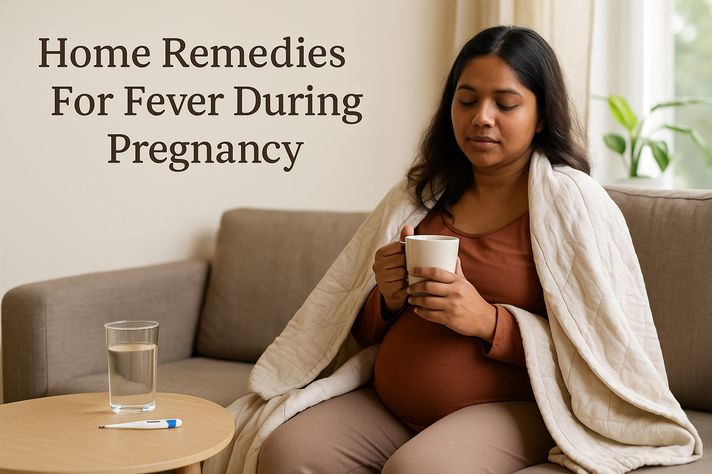
Your body is currently performing a remarkable process by creating a human being. Pregnancy already comes with its share of surprises and fever is one of them which you should not ignore. Fortunately, most mild fevers can be safely managed at home with simple remedies like hydration, rest, and lukewarm baths. But don’t rush to your medicine cabinet immediately. NSAIDs like ibuprofen are a big no. If you must take something, acetaminophen (paracetamol) is the safest drug, but that too only after your doctor gives the green light.Be gentle with yourself, take proper rest and don’t hesitate to call your doctor if something feels off.
Being pregnant is hands down the most responsible full time job. From hormonal rollercoasters to multiple doctor appointments, there is already a lot happening in your body. So when you feel feverish, it is completely okay for you to feel a little uncomfortable. You may come up with a lot of questions like “Is this normal? Is my baby safe? Can I take medicine? What home remedies should I follow?” It is completely normal and you need not to worry. A lot of expectant mothers have the same questions all across the internet. The good news? Pregnant women can generally treat their mild fevers at home. The entire difference lies in knowing when to take a rest, when to try home remedies and when to look up for medical advice. Through this article we will explain to you about the causes of fever during pregnancy followed by safe treatment options for both expectant mothers and their babies.
What Causes Fever During Pregnancy?
It is a smart move to think about the cause first before looking up to the treatment. You might be wondering about the cause of how you acquired fever or what did you do? Identifying the cause helps you determine if home remedies alone are sufficient or if you require any medical intervention. Let us now break down some causes that may be responsible for you acquiring a fever during pregnancy:
- Viral infections: Viral infections are one of the most common causes of fever during pregnancy. A study involving 100 pregnant women found that viral infections were responsible for fever in approximately 37% of the cases. [1]
- Influenza or flu virus: The influenza virus presents special risks for pregnant women since it creates complications which may cause pneumonia or preterm labor. According to the same study, influenza was diagnosed in 21% of pregnant women who had fever symptoms. [1]
- Urinary tract infections: In pregnancy, the state of hormonal change and pressure from the growing uterus may sometimes increase the chances of urinary tract infections. UTIs if untreated may progress to a serious form called pyelonephritis. This may result in kidney infections causing high fever. [2]
- Gastrointestinal infections: These infections like viral gastroenteritis can cause fever, nausea or diarrhoea in pregnant women. [3]
- Chlorioamnionitis: This means infection of membranes surrounding the baby. It is most common in the first and third trimester. This may come along with a high fever, uterine tenderness and a fast heartbeat. [3]
- Dengue: Dengue infection results in high pregnancy fever which could trigger shock situations and problems with the kidneys in pregnant women. [4]
- Hepatitis E: The hepatitis E infection results in high fever and liver failure and may represent a danger to pregnant women. It requires immediate medical intervention. [1]
- Autoimmune conditions: Sometimes pregnant women may get fever due to immune system disorders or as a result of allergic reactions from medications.[1]
In some conditions, the cause of fever may remain unknown. Therefore, you must consult with a healthcare professional to receive the correct medical care and learn about the cause.
Home Remedies For Fever During Pregnancy
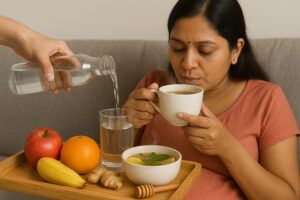
Pregnant women require comfort, care and relief above all else. Now that you know about what may be the reason behind your fever, let us now discuss some natural methods to handle fever symptoms throughout pregnancy. Stay hydrated and take rest: When your body temperature is high, there is excessive sweating combined with increased breathing rate and metabolism. This way you lose a lot of your body fluids. This dehydrated condition leads to reduced blood flow to placenta, hindering uterine contractions and posing a risk of preterm labor. [5] It is advised that expecting mothers need to maintain proper hydration and take rest especially during fever or heat distress episodes.


Can You Take Self Medications During Pregnancy?
The straight answer to this question is NO. Pregnant women who experience fever should avoid immediately looking up for a pill or medication. The use of certain over-the-counter medications during pregnancy can result in potential risks to your developing baby. Non-steroidal anti-inflammatory drugs (NSAIDs) like ibuprofen, aspirin, and naproxen should be avoided, especially during the third trimester. These drugs have been linked to complications such as reduced amniotic fluid, delayed labor, and fetal circulation issues (FDA, 2022). [10] The safest and most widely recommended fever reducer during pregnancy is acetaminophen (commonly known as paracetamol). The American College of Obstetricians and Gynecologists (ACOG) supports its use when taken at the correct dosage. Research shows acetaminophen does not pose significant harm when used under medical supervision. [11] Before using any medication consult your doctor to confirm its safety based on your current trimester situation.
When Should You See A Doctor?
Though mild fever can be easily cured at home, you need to be extra careful during pregnancy. You should immediately look up for a doctor if:

- Your fever exceeds 100.4°F (38°C) and lasts beyond one day [6]
- You feel a burning sensation during urination, as it may indicate UTI.
- You experience chills, rashes and body aches.
- You have vomiting, diarrhoea and dehydration.
- You are in the first trimester, because high temperatures at this stage could potentially lead to birth defects. [1]
Even a mild fever during pregnancy can signal an underlying infection that may affect both the mother and the baby. It’s crucial to monitor symptoms and avoid self-medication without consulting a healthcare provider.
Disclaimer
The following blog article provides general information and insights on various topics. However, it is important to note that the information presented is not intended as professional advice in any specific field or area. The content of this blog is for general educational and informational purposes only. The content should not be interpreted as endorsement, recommendation, or guarantee of any product, service, or information mentioned. Readers are solely responsible for the decisions and actions they take based on the information provided in this blog. It is essential to exercise individual judgment, critical thinking, and personal responsibility when applying or implementing any information or suggestions discussed in the blog.
Most Asked Questions
How can I reduce my fever naturally during pregnancy?
You can reduce a mild fever naturally by keeping yourself hydrated, taking proper rest, wearing breathable clothing and trying sponge bathing with lukewarm water. You should avoid taking cold compressing and self medications without consulting a doctor first.
Can I take Dolo 650 mg during pregnancy?
Prescribed use of Dolo 650 (paracetamol) for pregnant women is acceptable only when a doctor makes the recommendation but self-medication should be avoided.
Can fever in the first trimester pose a risk for my baby?
In the first trimester of pregnancy high fever poses a risk for birth defects particularly neural tube defects. Consult a doctor immediately if you have a body temperature exceeding 100.4°F (38°C).
How long should I wait before seeking medical treatment for a fever?
You must contact a doctor instantly when your fever keeps high for more than one day along with the symptoms such as vomiting, intense body pain or diminished fetal movement.
How much fever is normal during pregnancy?
A temperature between 100.4 degrees Fahrenheit and less can usually be treated with normal drugs without severe discomfort. Contact your doctor and keep monitoring your temperature to check for any changes in your condition despite following over the counter medication treatments.
Sources
- 1.
Fever / Hyperthermia
- 2.
Urinary Tract Infections in Pregnant Individuals
- 3.
Causes and consequences of fever during pregnancy: A retrospective study in a gynaecological emergency department
- 4.
Clinical Study on Spectrum of Dengue Morbidity in Pregnancy and Its Impact
- 5.
Fever and Pregnancy
- 6.
Safety classification of herbal medicines used among pregnant women in Asian countries: a systematic review
- 7.
Herbal Medicines—Are They Effective and Safe during Pregnancy?
- 8.
Effectiveness of Hot Water Footbath Therapy in Reducing Body Temperature amongst Patients with Fever
- 9.
Physical Activity and Exercise During Pregnancy and the Postpartum Period
- 10.
Nonsteroidal Anti-Inflammatory Drugs (NSAIDs): Drug Safety Communication - Avoid Use of NSAIDs in Pregnancy at 20 Weeks or Later
- 11.
ACOG Response to Consensus Statement on Paracetamol Use During Pregnancy
Why Should You Trust Us?
Why Should You Trust Us?
This article was written by Dr. Anvi Dogra, who has more than 3 years of experience in the healthcare industry.
Allo has the expertise of over 50+ doctors who have treated more than 1.5 lakh patients both online and offline across 30+ clinics.
Our mission is to provide reliable, accurate, and practical health information to help you make informed decisions.
For This Article
- We referenced trusted medical sources like the NCBI Bookshelf, FDA guidelines, and research published in peer-reviewed journals like The Pharmaceuticals Journal.
- We analyzed 8+ published research studies related to fever and pregnancy to ensure scientific accuracy.
- We explored real conversations across social media platforms like Instagram, YouTube, and Twitter to understand what real moms-to-be are searching for and struggling with.
- We checked discussion forums like Reddit and Go Ask Alice to get a feel for the most common questions and concerns expectant mothers have about treating fever at home.