Epididymitis and Erectile Dysfunction: Causes and Treatments
Written by Dr. Pranitha Bangera

Dr. Pranitha Bangera is a gold-medalist healthcare professional with an elite foundation in clinical training and patient care. A researcher at heart, she specializes in creating high-impact, research-driven medical content that empowers readers through accessible patient education. Dr. Bangera focuses on the intersection of digital health and clinical communication, specifically within the fields of sexual health and mental well-being. Her work is dedicated to making complex medical innovations understandable and trustworthy for a global audience.
•
July 30, 2026
Our experts continually monitor the health and wellness space, and we update our articles when new information becomes available.
Quick Read
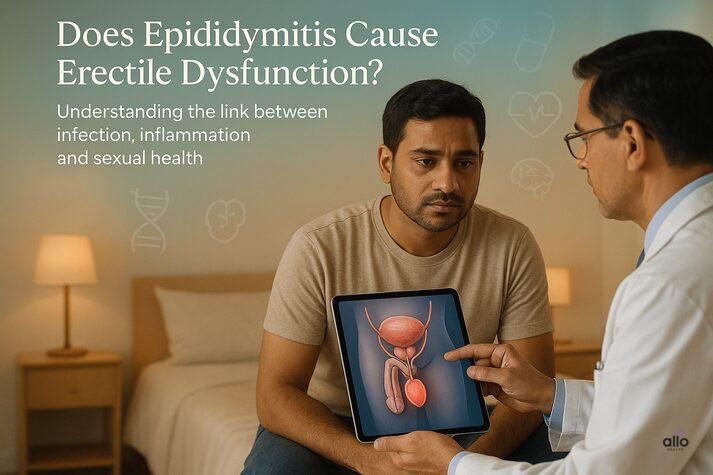
Yes, epididymitis can sometimes cause temporary erectile dysfunction (ED) due to pain, inflammation, and anxiety, but it’s rarely permanent. Once the infection is treated and the inflammation settles, normal erections usually return. Early medical care, antibiotics, and lifestyle support — like rest, stress management, and safe sexual practices — are key to recovery. If erection problems persist after treatment, it’s best to see a urologist for a proper evaluation.
When you’re dealing with testicular pain, swelling, or discomfort caused by epididymitis, it’s natural to worry about your sexual health. One common concern many men have is: Does epididymitis cause erectile dysfunction? Epididymitis can cause temporary erectile dysfunction mainly because of inflammation and psychological stress. The inflammation irritates nerves and blood vessels around the testicles, making sexual activity painful. This discomfort, combined with anxiety about the disease, can interfere with arousal. Once treated, normal erections usually return. Let’s break down how this condition affects sexual health, what causes it, and how to recover safely and prevent it from affecting your erections.

Allo asks
How much did epididymitis affect your erections?
Does Epididymitis Cause Erectile Dysfunction?
Yes, Epididymitis can lead to short-term erectile dysfunction because the pain, inflammation, and stress it causes can interfere with arousal and blood flow. Studies show that men with epididymitis are significantly more likely to experience sexual problems.[1] This shows how ongoing discomfort and anxiety can temporarily affect sexual function, though it usually improves once the infection and pain are treated. To understand how epididymitis can cause ED, first, let us look at what this disease is.
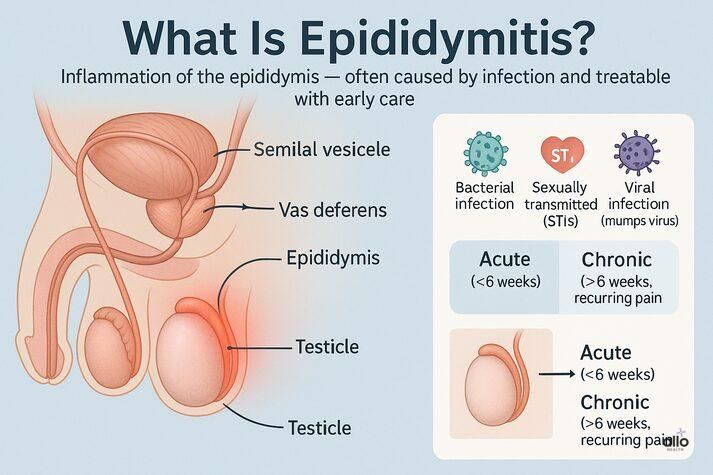
Epididymitis is an infection of the epididymis, a small tube behind the testicles that stores and carries sperm — when chronic, it can contribute to sexual dysfunction similar to age and erectile dysfunction through hormonal disruption. It’s usually caused by bacteria, STIs, or urinary infections.
Symptoms: scrotal pain or swelling, painful urination, discharge, fever, or blood in semen.
If untreated, it can lead to abscesses or testicular shrinkage.

Early treatment helps prevent long-term damage or sexual problems.
How Does Epididymitis Cause Erectile Dysfunction?
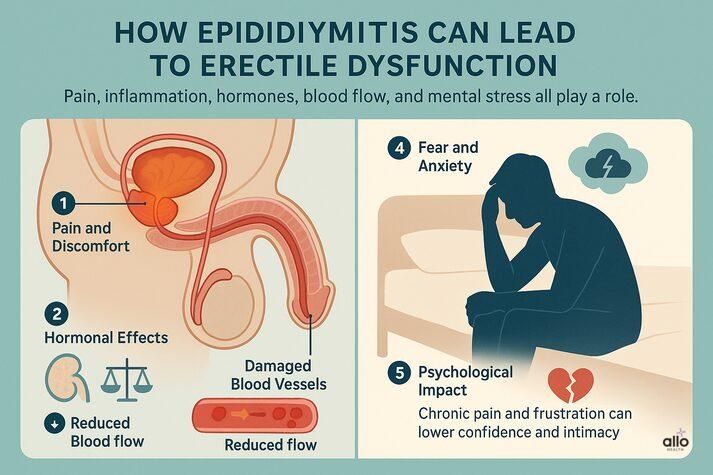
1. Pain and Discomfort
Constant tenderness in the scrotum makes sexual activity painful — the vascular stress involved can also trigger arteriogenic erectile dysfunction in predisposed men. In one study, men with severe pain reported decreased erectile performance. [1]
2. Fear and Anxiety
The experience of pain during sex or ejaculation can lead to performance anxiety, creating a cycle of sexual dysfunction. Men start avoiding sexual activity because of the fear of pain. [1]

3. Hormonal Effects
Studies show that epididymitis can impair the testicles’ ability to produce testosterone, leading to reduced serum testosterone levels [2]. Testosterone is the main male hormone that causes sexual desire, and low levels of it can reduce sex drive. leading to ED.
4. Inflammation Damages Blood Vessels
Persistent inflammation can damage blood vessels in the penis, leading to reduced circulation.[3] Since erections depend on healthy blood flow, this damage can cause ED over time.
5. Psychological Impact
Living with chronic epididymitis can be mentally draining. Nearly half of affected men report anxiety, frustration, and decreased marital satisfaction due to ongoing pain and reduced sexual activity. [4]
Symptoms of ED Caused by Epididymitis
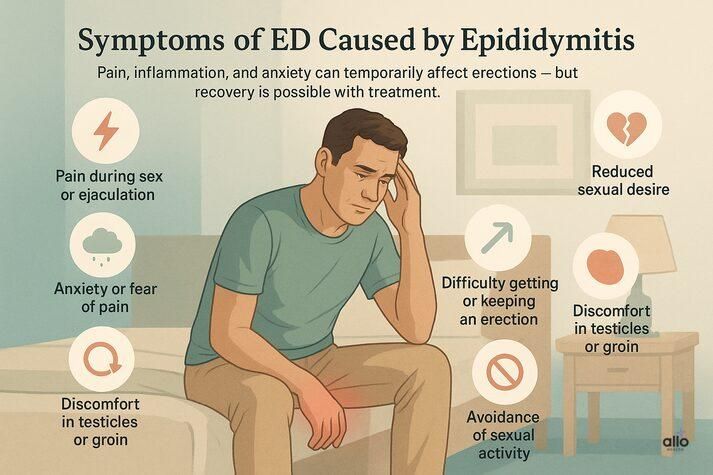
When epididymitis affects sexual function, the symptoms are usually linked to pain, inflammation, and anxiety caused by the condition — inflammation that can accelerate atherosclerosis and erectile dysfunction if systemic. Common signs include:
- Difficulty getting or keeping an erection due to pain or discomfort
- Pain during sex or ejaculation
- Reduced sexual desire or interest
- Anxiety or fear of pain during sexual activity
- Erections that are weaker or less frequent
- Discomfort in the scrotum, testicles, or groin that worsens with arousal
- Avoidance of sexual activity
These symptoms are usually temporary and improve once the infection is treated.
When to See a Doctor
Seek medical advice immediately if you experience:
- Intense testicular pain or swelling
- Urethral discharge, fever, or chills
- Pain during urination, sex, or ejaculation
- Persistent ED
- Persistent discomfort after treatment
Most men recover completely from ED once epididymitis is treated. The key is to manage the infection early, control pain, and address both physical and emotional factors during recovery.”
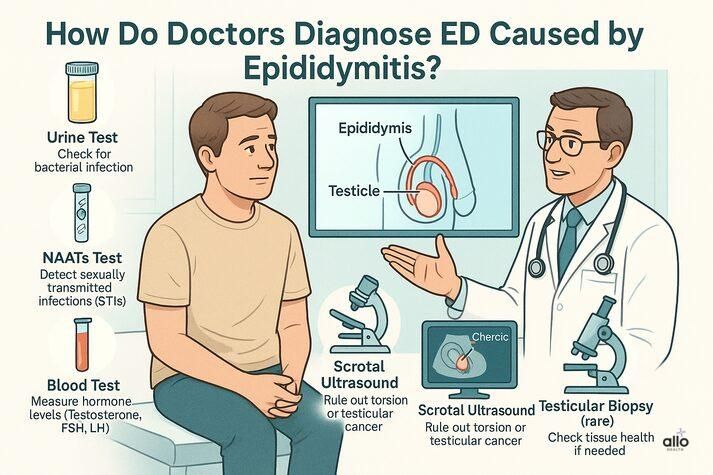
How Do Doctors Diagnose ED Caused by Epididymitis?
The doctor will ask about your symptoms, such as when the pain started, whether sex or ejaculation makes it worse, and how it has affected your erections or desire. They might recommend a mix of physical exams, lab tests, and imaging to diagnose the condition. These include:
- Urine test to detect bacterial infection
- Nucleic acid amplification tests (NAATs) to identify sexually transmitted infections
- Blood tests for hormone levels
- Scrotal ultrasound to rule out testicular torsion or testicular cancer
- In rare cases, a testicular biopsy, to assess tissue health
Treatment for Erectile Dysfunction Caused by Epididymitis
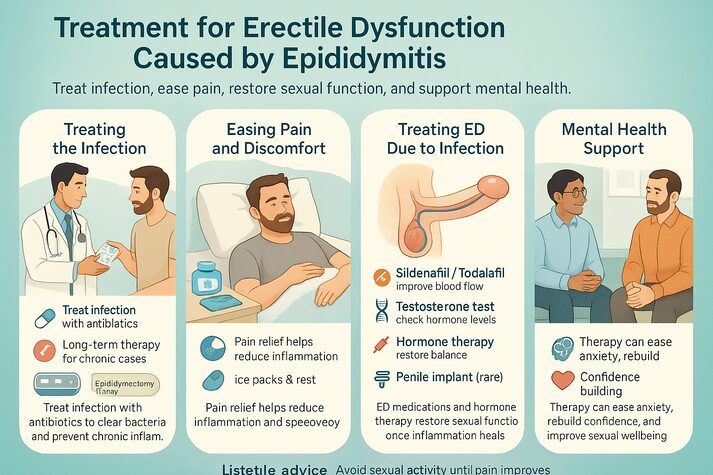
The good news is ED from epididymitis is usually temporary and reversible. Treatment focuses on:
- Treating the infection
- Easing pain and discomfort
- Treating ED due to infection
- Mental Health Support
1. Treating the infection
- Antibiotics are prescribed to clear bacterial infections
- Long-term antibiotic therapy is used for chronic epididymitis
- In rare cases, surgical removal of the epididymis (epididymectomy) is adviced
2. Easing pain and discomfort
- Anti-inflammatory medications are given for swelling and pain relief
- Rest, scrotal support, and ice packs help to reduce discomfort
3. Treating ED due to infection
- Your doctor may prescribe ED medications such as sildenafil (Viagra) or tadalafil (Cialis). These medicines improve blood flow and help restore normal sexual function once the infection and inflammation are gone.
- If persistent ED develops, penile implants may be considered.
- If low testosterone caused due to an infection is causing ED, a hormone test to check levels and testosterone replacement therapy is recommended.
4. Mental Health Support
Anxiety about performance or fear of pain during sex can make erections harder to achieve. Psychotherapy can help reduce stress and rebuild confidence.
Tip:
A few simple lifestyle changes can make recovery faster and more comfortable. These include:
- Avoiding sexual activity until pain improves
- Wearing supportive underwear
- Pelvic floor therapy or relaxation techniques
How to Prevent ED Caused by Epididymitis?
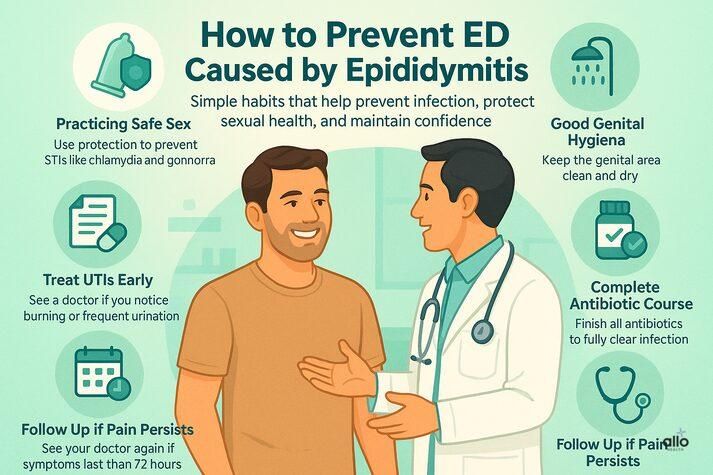
The best way to avoid ED due to epididymitis is to prevent the infection from occurring — and if ED does develop, options like tadalafil for erectile dysfunction can support recovery. This can be done by:
- Practicing safe sex to prevent sexually transmitted infections
- Treating urinary tract infections early
- Maintaining good genital hygiene
- Getting vaccinated against mumps
- Completing the full antibiotic course prescribed by your doctor
- Scheduling follow-ups if pain persists beyond 72 hours
Conclusion
With the right treatment and care, most men recover completely from erectile dysfunction caused due to epididymitis. Long-term problems are rare and usually happen only when the condition is left untreated or misdiagnosed. If you notice persistent erection problems or other signs of erectile dysfunction after recovering from epididymitis, see a doctor or urologist. Early evaluation helps rule out hormonal or vascular issues and ensures your sexual health stays on track.
Disclaimer
The following blog article provides general information and insights on various topics. However, it is important to note that the information presented is not intended as professional advice in any specific field or area. The content of this blog is for general educational and informational purposes only. The content should not be interpreted as endorsement, recommendation, or guarantee of any product, service, or information mentioned. Readers are solely responsible for the decisions and actions they take based on the information provided in this blog. It is essential to exercise individual judgment, critical thinking, and personal responsibility when applying or implementing any information or suggestions discussed in the blog.
Most Asked Questions
Can epididymitis cause erectile dysfunction?
Yes, it can, but it's usually temporary. Pain, inflammation, and anxiety caused by epididymitis can interfere with arousal and blood flow. Once treated, sexual function generally returns to normal.
How long does erectile dysfunction last after epididymitis?
For most men, ED symptoms improve within a few weeks after the infection and pain subsides. Chronic epididymitis, however, may take longer to heal and might need follow-up care.
Can antibiotics help with ED caused by epididymitis?
Antibiotics treat the infection, not the erectile dysfunction directly — but as the infection clears, pain and swelling reduce, allowing erections to return to normal.
Should I avoid sex if I have epididymitis?
Yes. Avoid sexual activity until your doctor says it’s safe. Having sex too soon can worsen inflammation, spread infection, or cause pain.
Does epididymitis affect testosterone?
Chronic inflammation can lower testosterone and impact sperm quality, but this is rare. With timely treatment, most men recover without long-term hormonal or fertility issues.