Position Dependent Erectile Dysfunction (PDED): Causes and Treatments
Written by Dr. Deepali Anand

Dr. Deepali is a medical writer and healthcare professional with a background in clinical surgery and patient care. Having transitioned from active clinical practice to medical communications, she specializes in bridging the gap between complex clinical data and patient education. Dr. Deepali is dedicated to creating evidence-based content that is grounded in scientific rigor and empathy, ensuring that sensitive topics like sexual wellness and mental health are accessible and empowering for every reader.
•
July 30, 2026
Our experts continually monitor the health and wellness space, and we update our articles when new information becomes available.

Quick Read
Position-dependent erectile dysfunction (PDED) is when you can get or maintain an erection in some body positions but not others, often due to venous leakage, where blood drains too quickly from the penis depending on your posture. This happens because certain positions affect blood flow and pressure, making it harder for the veins to trap blood properly. PDED is highly treatable: most men see improvement through lifestyle modifications (regular exercise, pelvic floor exercises), oral medications (Viagra, Cialis), and in resistant cases, surgical interventions like venous embolization. Early diagnosis is key. If you notice your erections weakening when you change positions, talk to a doctor to identify the cause and find the right treatment for you.
Position Dependent Erectile Dysfunction (PDED) is a lesser-known but surprisingly common form of erectile dysfunction where you can get or keep an erection in some body positions. If you’ve ever noticed your erection weakening when you change posture, you might be experiencing exactly that.
In most cases, this happens because of blood flow issues, often called venous leakage, where the penis struggles to hold blood in certain positions. The result? Erections that come and go depending on how your body is aligned.
In this article, we’ll break down why position-dependent ED happens, how doctors diagnose it, and the treatment options. You’ll also learn which sex positions may help and how to prevent symptoms from getting worse.

Allo asks
Have you noticed change/loss of erection while changing positions during sex?

What Is Position Dependent Erectile Dysfunction?
Position-dependent erectile dysfunction (PDED) is a type of erectile dysfunction where a man has difficulty getting or maintaining an erection in certain body positions, for example, while lying down, sitting, or standing.

This happens mainly due to underlying blood flow-related issues, also known as vasculogenic erectile dysfunction — a pattern also seen in ED in young men. In simple terms, the penis isn’t able to hold blood effectively in some positions, which leads to blood leaking out too quickly.
Since healthy blood flow is essential for a firm erection, this leakage in specific postures can cause the erection to weaken or disappear.
According to Allo Health, nearly 1 in 2 men experience erectile dysfunction, which is based on our internal clinical data of more than 2.5 lakh patients who have visited our clinics. Cardiovascular overlaps like a leaky heart valve and ED add to this picture.
Let's dig deeper.

Why Does Position-dependent Erectile Dysfunction Happen?
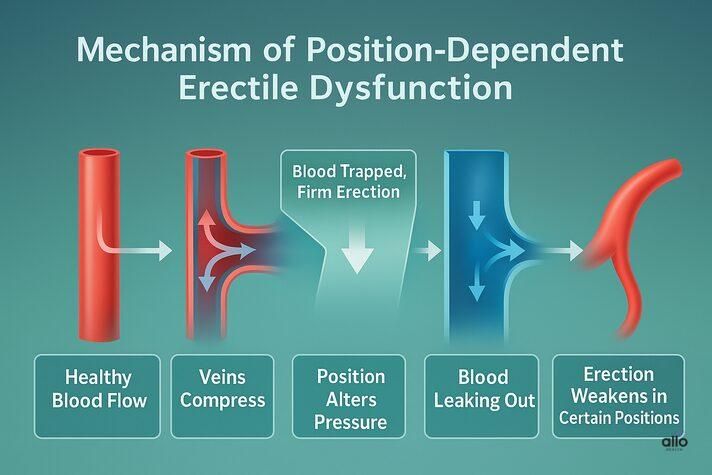
Position-dependent erectile dysfunction (PDED) often happens because of a condition called venous leakage[1] (or veno-occlusive dysfunction).
Normally, during an erection, blood flows into the penis through the arteries and gets trapped inside the corpora cavernosa - the spongy tissues that make the penis firm. This happens because the veins close off, stopping the blood from flowing back out. That’s what helps maintain a steady, firm erection.
In venous leakage, the veins don’t close properly. Instead, blood leaks back out too quickly into the body’s circulation, so the penis can’t stay hard for long.
The amount of leakage can also change with body position. When you stand, sit, or lie down, the pressure inside your abdomen and the pull of gravity change, which can affect how blood moves in and out of the penis. That’s why some men can maintain erections in certain positions but lose them when they shift or lie differently.
Underlying Causes of Venous Leak and Position-Dependent ED
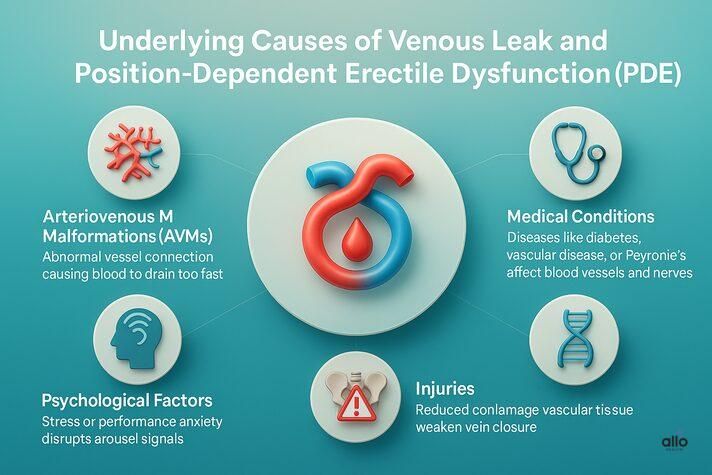
1. Arteriovenous Malformations (AVMs)
In younger men, a rare condition called an AVM can cause blood to drain directly into the veins of the penis, bypassing the spongy erectile tissue. This prevents normal blood trapping and makes it harder to maintain an erection.
2. Medical Conditions
Several health issues that affect blood vessels or nerves can contribute to venous leakage and position-dependent erectile dysfunction, such as:
- Diabetes mellitus: damages the penile nerves and small blood vessels
- Vascular disease: weakens smooth muscle function in the penis
- Peyronie’s disease: causes scar tissue that prevents proper venous compression
- Neurological disorders: interfere with nerve control of vascular tone
3. Injuries
An injury to the pelvic area, penis, or nearby tissues can damage the delicate blood vessels that help trap blood in the penis during an erection.
4. Aging
As men get older, the tissues in the penis lose some of their collagen and elasticity, making it harder for the veins to close properly. This can lead to blood leaking out and weaker erections.
5. Psychological Factors
Sometimes, stress, performance anxiety, or relationship issues can also cause temporary erection problems. Even if the body is healthy, these emotional factors can disrupt the brain’s signals for arousal and blood flow.
Signs of Position-Dependent Erectile Dysfunction
In some men, position-dependent erectile dysfunction (PDED) can be quite noticeable, even described in medical reports where erections occur only in certain positions, like standing upright[2].
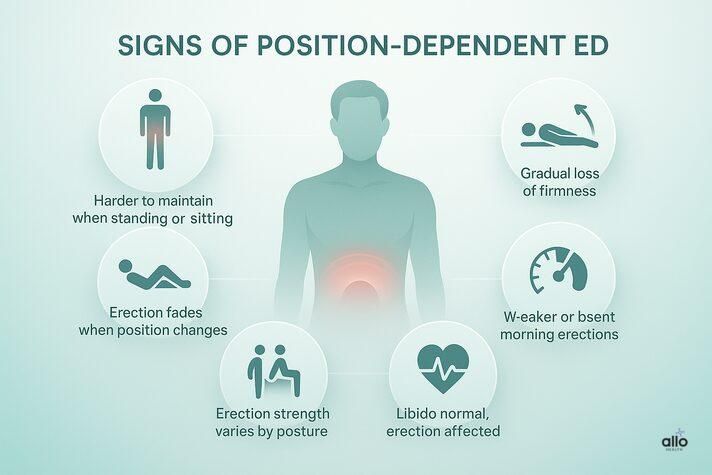
Apart from losing erections in specific postures, other signs of a venous leak or position-related ED may include:
- Difficulty maintaining erections while standing or sitting, but being able to do so when lying down
- Loss of erection when changing positions during sexual activity
- Gradual softening of erections instead of a complete inability to get one
- Erection strength that changes with body posture
- Reduced or missing morning erections
- Normal sex drive (libido), even if firmness is affected
If you notice these patterns, it’s a good idea to talk to a doctor. Tracking when and how your erections change helps identify whether the cause is related to blood flow, nerves, or muscles, and points the way toward the right treatment.
How Is Position-Dependent Erectile Dysfunction Diagnosed?
Diagnosing position-dependent erectile dysfunction (PDED) begins with a detailed medical history and a physical examination.
Your doctor will look for patterns in erection quality, like when erections are strong, when they fade, and how posture might affect them — similar to how common cold and ED is evaluated over a recovery window.
The physical exam specifically includes:
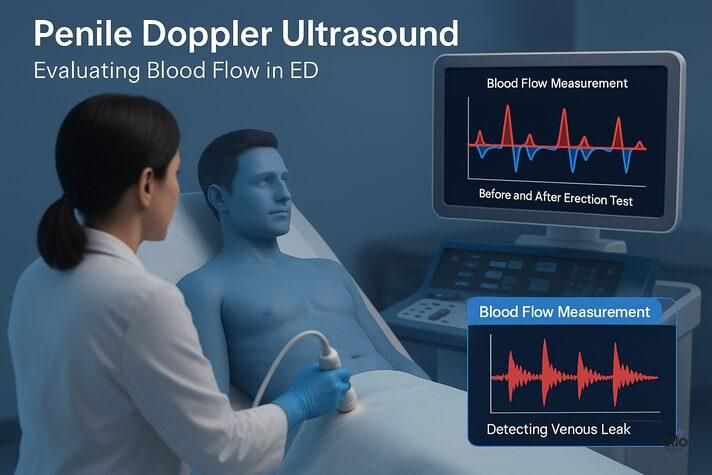
1. Penile Doppler Ultrasound
A color duplex Doppler ultrasound is often the first step to check whether your ED is linked to blood-flow changes[3]. This test is usually performed twice- once before an erection and again afterward to evaluate how well blood enters and stays within the penis.
Key measurements include:
- Peak systolic velocity (PSV): measures how fast blood flows into the penis
- End-diastolic velocity (EDV): measures how quickly blood drains out
- Resistive index (RI): compares inflow and outflow resistance
If end-diastolic velocities are high, it suggests venous leakage, and the degree of leakage often matches how strongly position affects your erections.
2. Advanced Imaging
For complex or unclear cases, doctors may suggest additional tests, such as:
- Cavernosography: to visualize penile veins
- MRI with contrast: to study blood vessels and soft tissues
- CT cavernosometry: in rare or complex cases
- Nocturnal Penile Tumescence (NPT) Test: to check if erections occur naturally during sleep, helping rule out psychological causes
When erections behave differently depending on posture, it’s a clue worth checking out. A simple Doppler test can tell us if it’s a circulation issue, and catching that early makes treatment much easier.
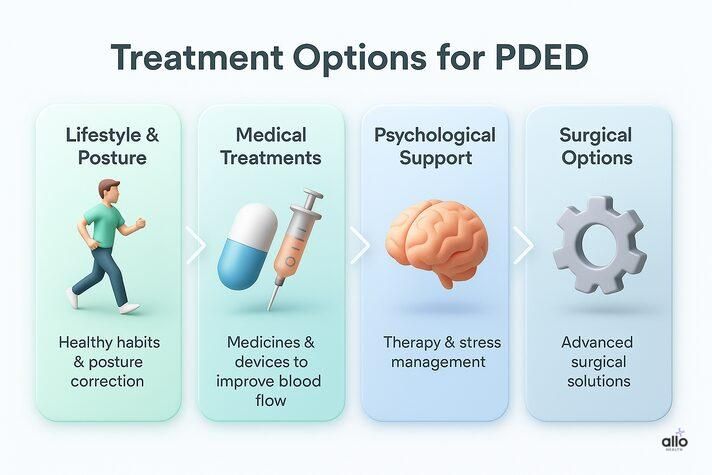
Treatment Options for Position Dependent Erectile Dysfunction
The good news is that position-dependent erectile dysfunction (PDED) can often be treated successfully with a mix of lifestyle changes and medical care.
The outlook depends on the cause- men with healthy blood flow tend to recover faster, while long-term venous leaks may take more time or need advanced treatment[4]. Early diagnosis makes a big difference.
1. Lifestyle and Posture Correction
- Exercise regularly: helps improve circulation and heart health.
- Eat a balanced diet: supports vascular and hormonal balance.
- Limit alcohol and quit smoking: both affect blood vessel function.
- Strengthen your pelvic floor muscles: Kegel or pelvic exercises can improve erectile strength by enhancing blood retention and control.
In some cases, physiotherapy or posture correction can also help by reducing pelvic pressure and improving blood flow to the penis.
2. Medical Treatments
Doctors often start with oral medicines like sildenafil (Viagra) or tadalafil (Cialis) to improve blood flow. If these aren’t enough, other options include:
- Penile injections are medicines injected directly into the penis to trigger an erection.
- Vacuum erection devices (VEDs) create suction to pull blood in and maintain firmness with a soft ring.
3. Psychological Support
If stress, anxiety, or performance pressure are part of the problem, counseling or sex therapy can help.
4. Surgical Options
When other treatments don’t work, surgery may be considered:
- Venous embolization: blocks leaking veins using coils or balloons[5].
- Venous ligation: ties off faulty veins.
- Penile prosthesis: a permanent implant for severe cases of venous leak.
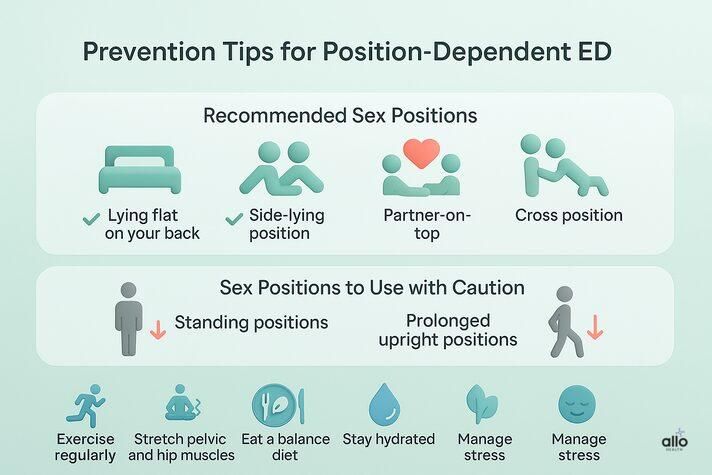
Prevention Tips For Position Dependent Erectile Dysfunction
For men with position-dependent ED, certain sexual positions can help maintain erections by optimizing blood flow and reducing venous drainage.
Recommended Sex Positions
These positions help maintain blood flow and reduce strain on the pelvic area:
- Lying flat on your back: helps blood stay in the penis by reducing the pull of gravity.
- Side-lying position: keeps the body relaxed and supports steady circulation.
- Partner-on-top: lets pelvic muscles stay relaxed, improving blood retention.
- Cross position (face-to-face lying): encourages closeness and reduces muscle tension.
Sex Positions to Use with Caution
- Standing or upright positions can worsen venous drainage due to gravity.
- Prolonged standing may increase position-related symptoms.
Healthy Lifestyle Habits
- Exercise regularly and stay mindful of posture.
- Stretch pelvic and hip muscles to reduce tension.
- Eat a balanced diet, stay hydrated, and manage stress for better vascular health.
Key Takeaway
Position-dependent erectile dysfunction (PDED) is a unique but manageable type of ED that needs careful evaluation and a personalized treatment plan.
While it can affect confidence, relationships, and overall quality of life, the good news is that most men improve with the right care — from lifestyle changes to medications like Cialis for ED.
From lifestyle changes and medical therapy to advanced procedures when needed, early diagnosis and the right approach can help restore both sexual function and peace of mind.

Disclaimer
The following blog article provides general information and insights on various topics. However, it is important to note that the information presented is not intended as professional advice in any specific field or area. The content of this blog is for general educational and informational purposes only. The content should not be interpreted as endorsement, recommendation, or guarantee of any product, service, or information mentioned. Readers are solely responsible for the decisions and actions they take based on the information provided in this blog. It is essential to exercise individual judgment, critical thinking, and personal responsibility when applying or implementing any information or suggestions discussed in the blog.
Most Asked Questions
What is position-dependent erectile dysfunction (PDED)?
Position-dependent erectile dysfunction (PDED) is a type of ED where a man can get or maintain an erection in some positions, like lying down, but loses it in others. This usually happens due to changes in blood flow or venous leakage, where the veins fail to hold blood properly inside the penis.
Why does my erection disappear when I change positions?
If your erection weakens or disappears when you move or change positions, it may be due to blood flow issues or pelvic pressure changes that affect how blood is trapped in the penis. Posture, muscle tension, and even gravity can influence this. A penile Doppler ultrasound can help diagnose the cause accurately.
Is position-dependent erectile dysfunction treatable?
Yes, PDED is treatable. Most men recover with a mix of lifestyle changes, posture correction, and medical therapy. In some cases, treatments like vacuum devices, venous embolization, or physiotherapy can also help improve blood retention and erection quality.
Can certain sex positions help with position-dependent ED?
Yes. Positions that reduce pelvic strain and improve blood flow, like lying flat on your back, side-lying, or partner-on-top, often help maintain erections. Standing or upright positions may worsen symptoms due to gravity pulling blood away from the penis.
When should I see a doctor for position-dependent ED?
If your erections change noticeably with posture, or you frequently lose firmness during sex despite having normal desire, it’s best to see a doctor. Early diagnosis helps rule out vascular or nerve issues and improves the chances of recovery with targeted treatment.
Sources
- 1.
What Is Venous Leakage?
- 2.
A young man with position-dependent erectile dysfunction: diagnostic work-up and interventional therapy of an arteriovenous malformation
- 3.
Diagnostic categorization of erectile dysfunction using duplex color doppler ultrasonography and significance of phentolamine redosing in abolishing false diagnosis of venous leak impotence: A single center experience
- 4.
MRI-Cavernosography: A New Diagnostic Tool for Erectile Dysfunction Due to Venous Leakage: A Diagnostic Chance
- 5.
Erectile dysfunction caused by venous leakage: treatment with detachable balloons and coils