Calorie Deficit and Erectile Dysfunction: Does Dieting Affect Performance?
Written by Dr. Deepali Anand

Dr. Deepali is a medical writer and healthcare professional with a background in clinical surgery and patient care. Having transitioned from active clinical practice to medical communications, she specializes in bridging the gap between complex clinical data and patient education. Dr. Deepali is dedicated to creating evidence-based content that is grounded in scientific rigor and empathy, ensuring that sensitive topics like sexual wellness and mental health are accessible and empowering for every reader.
•
July 30, 2026
Our experts continually monitor the health and wellness space, and we update our articles when new information becomes available.
Quick Read
Yes, a calorie deficit can cause erectile dysfunction, but it depends on how extreme it is. For overweight men, a moderate calorie deficit (300-500 calories/day) with balanced nutrition can actually improve erections by boosting testosterone and blood flow. However, severe or prolonged calorie restriction, especially in lean men can backfire by lowering testosterone, draining energy, and increasing stress hormones, all of which harm sexual function. The key is losing weight gradually with plenty of healthy fats, essential nutrients, adequate sleep, and stress management. If ED persists despite a balanced approach, consult a doctor to rule out other underlying causes.Retry
Can a calorie deficit cause erectile dysfunction? The truth is, it can, but not always. The effect of a calorie deficit on erections depends on how it’s done. A balanced, moderate deficit can actually boost blood flow, hormones, and confidence, while an extreme one can backfire, lowering testosterone, draining energy, and increasing stress.
In this article, we’ll explore the science behind how calorie restriction impacts hormones, energy levels, and sexual function.

Allo asks
Have you noticed any change in your sexual performance since starting a diet?

Can a Calorie Deficit Cause Erectile Dysfunction?
A calorie-deficient diet is one where you burn more calories than you consume. While it’s a common approach for weight loss, a severe or prolonged calorie deficit can actually cause erectile dysfunction in some men.
The relationship between calorie deficit and erectile dysfunction is complex — and shares overlapping mechanisms with fasting and erectile dysfunction. It depends on factors like how strict the diet is, how long it’s followed, your body composition before starting, and the overall nutritional quality of your meals.

It’s important to remember that moderate, healthy weight loss, especially in obese men, can actually improve erectile function. The problem arises when dieting becomes extreme, leading to hormonal imbalances, nutrient deficiencies, and poor mental health.
Scientific studies back this up, including research on how drugs that cause erectile dysfunction interact with dietary factors:
- Three out of four clinical trials on calorie restriction in overweight or obese men showed a significant increase in total testosterone compared to control groups.[1]
- But, two out of three studies on calorie restriction in normal-weight, healthy men reported a drop in testosterone levels instead.[2]
According to Allo Health, every 1 in 2 patients has ED, which is based on our internal clinical data of more than 2.5 Lakh patients who come to our clinic.
Let’s take a closer look at this.

Link Between Calorie Deficit and Erectile Dysfunction
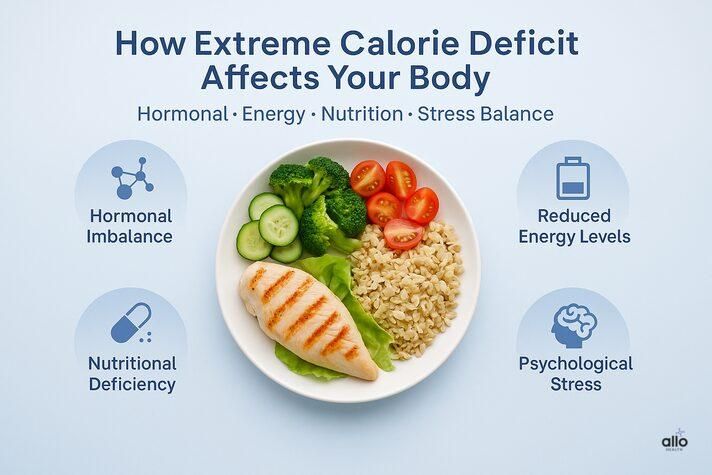
An extreme calorie deficit can have several negative effects on the body. These changes can directly and indirectly affect erections, sometimes leading to temporary and reversible erectile dysfunction.
1. Hormonal Disturbances
-
Decrease in Testosterone Levels
Severe calorie restriction, especially when dietary fats are cut too low, can lower testosterone levels.[2] Healthy body fats are essential for the production of sex hormones, and without them, testosterone naturally declines, affecting libido and erections.
-
Increase in Cortisol
A strict calorie deficit puts stress on the body, which raises cortisol[3] (the stress hormone). High cortisol affects erections not only by interfering with testosterone production, but also by reducing sexual desire.
-
Reduction in Thyroid Hormones
Calorie restriction can also decrease thyroid hormones (mainly T3), slowing metabolism and lowering energy levels.[4] This lack of energy can make it harder for the body to have normal sexual function.
2. Reduced Energy Levels
Sex and erections require physical and mental energy. When the body is in an extreme calorie deficit, it shifts into energy conservation mode, prioritizing vital organs over sexual functions.[5]
Fatigue and low energy, common with long-term restrictive dieting, can directly affect arousal, stamina, and overall sexual performance.
3. Nutritional Deficiency
Eating too few calories often means missing essential nutrients that support sexual health. Deficiencies in vitamins and minerals like zinc can reduce testosterone and impair blood flow.
Research[6] shows that low-fat diets are linked with lower testosterone levels compared to more balanced diets, such as the Mediterranean diet.
These nutrients are crucial for energy, healthy circulation, and the production of nitric oxide, a molecule that relaxes blood vessels and supports firm erections.
4. Psychological Stress
Extreme dieting can also take a toll on mental well-being — adding psychological stress to physical risks also studied in conditions like priapism. It may lead to irritability, anxiety, low mood, or poor self-esteem, all of which can contribute to performance anxiety and erectile dysfunction.
In fact, studies show that men with very low food security have a 59% higher risk of erectile dysfunction compared to those with stable access to food.[6]
A calorie deficit isn’t harmful by itself, in fact, it can improve overall and sexual health when done correctly. The problem starts when people go too extreme, cutting out essential nutrients their body needs to function properly.
Warning Signs of Too Much Calorie Restriction
Men who experience erectile dysfunction during a calorie-restricted diet should watch for early signs of malnutrition or over-restriction. Common warning signs include:
- Reduced sexual desire or libido
- Constant fatigue or low energy
- Feeling unusually cold
- Difficulty focusing or concentrating
- Decline in strength or athletic performance
These symptoms suggest that the calorie deficit may be too severe and your body is struggling to function normally.
Remember, healthy and sustainable weight loss comes from a moderate calorie deficit combined with a balanced diet of whole foods and regular exercise.
Here’s the key difference:
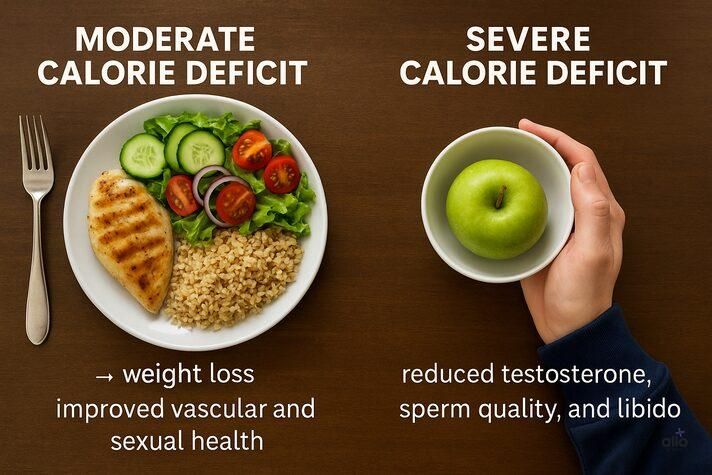
Moderate calorie deficit → weight loss → improved vascular and sexual health
Severe or prolonged calorie restriction → reduced testosterone, sperm quality, and libido
6 Steps to Lose Weight Without Affecting Erections
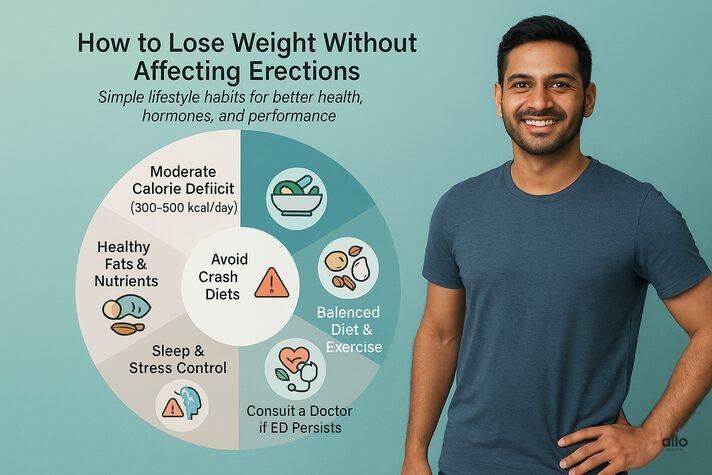
A healthy weight is one of the most important factors for maintaining strong, healthy erections. The key is to lose weight in a balanced way without harming your libido or sexual function. Here’s how:
1. Maintain a Moderate Calorie Deficit
Aim for a moderate calorie deficit of around 300-500 kcal per day. This supports steady fat loss without disrupting hormones that control sexual function.[7]
2. Include Healthy Fats and Nutrient-Rich Foods
Add foods rich in healthy fats like nuts, eggs, and fish. Include zinc-rich foods and adequate protein to support testosterone production and muscle health.
3. Prioritize Rest and Stress Management
Get enough sleep and manage stress through mindfulness, exercise, or relaxation techniques. Chronic stress and poor sleep can both lower testosterone and affect erections.
4. Avoid Crash Diets
Avoid crash diets, where calorie intake is drastically and unsustainably low. These can trigger hormonal imbalances, reduce libido, and lead to fatigue or nutrient deficiencies.
5. Focus on a Healthy Lifestyle
A balanced diet combined with regular physical activity improves blood flow, one of the key factors behind a firm erection.
6. Seek Medical Advice When Needed
If erectile dysfunction persists, don’t ignore it. Early medical evaluation can identify the root cause and prevent the condition from getting worse.
Bottom Line
A calorie deficit can cause erectile dysfunction, but it largely depends on how the deficit is created. For overweight or obese men, a moderate and well-planned calorie restriction can actually improve erectile function by enhancing blood flow, hormone balance, and vascular health.
But an extreme or prolonged calorie deficit, especially in lean men or those consuming inadequate nutrition, can have the opposite effect and harm erections — at which point treatments like tamsulosin for ED are sometimes considered.
The key is balance and moderation. A thoughtfully designed diet that includes all essential nutrients can help you lose weight safely without affecting erections. That’s why it’s important to keep your doctor in the loop and regularly monitor how your diet is impacting your body, hormones, and sexual health.

Disclaimer
The following blog article provides general information and insights on various topics. However, it is important to note that the information presented is not intended as professional advice in any specific field or area. The content of this blog is for general educational and informational purposes only. The content should not be interpreted as endorsement, recommendation, or guarantee of any product, service, or information mentioned. Readers are solely responsible for the decisions and actions they take based on the information provided in this blog. It is essential to exercise individual judgment, critical thinking, and personal responsibility when applying or implementing any information or suggestions discussed in the blog.
Most Asked Questions
Can dieting cause erectile dysfunction?
Yes, it can, but it depends on how you diet. A moderate, balanced calorie deficit can actually improve erectile health by supporting weight loss and blood flow. However, extreme or prolonged dieting that leads to nutrient deficiencies or hormonal imbalance can lower testosterone and cause temporary erectile dysfunction.
What causes a weak erection during dieting?
A weak erection while dieting often happens due to low energy, stress, or hormonal changes. When calorie intake drops too low, testosterone levels can decrease, and blood circulation may suffer. Fatigue, anxiety, or poor sleep during strict diets can also make it harder to get or maintain an erection.
Can losing weight improve erectile dysfunction?
Yes. For men who are overweight or obese, healthy weight loss can significantly improve erectile function. It helps balance hormones, reduce inflammation, and improve blood vessel health, all of which are essential for strong erections.
How can I lose weight without affecting erections?
The best way is to follow a moderate calorie deficit (300–500 kcal/day), eat nutrient-rich foods (like fish, eggs, nuts, and whole grains), manage stress, and avoid crash diets. Getting enough sleep and exercising regularly also supports both weight loss and sexual health.
When should I see a doctor about erection problems while dieting?
If you’ve noticed persistent erection issues or low libido despite eating well and staying active, it’s best to consult a doctor or men’s health specialist. They can check for hormonal imbalances or underlying conditions and guide you on how to safely adjust your diet.
Sources
- 1.
The effects of a low carbohydrate diet on erectile function and serum testosterone levels in hypogonadal men with metabolic syndrome: a randomized clinical trial
- 2.
Examining the effects of calorie restriction on testosterone concentrations in men: a systematic review and meta-analysis
- 3.
Low Calorie Dieting Increases Cortisol
- 4.
Impact of calorie restriction on energy metabolism in humans
- 5.
The Role of Energy Availability in Reproductive Function in the Female Athlete Triad and Extension of its Effects to Men: An Initial Working Model of a Similar Syndrome in Male Athletes
- 6.
Food Insecurity May be an Independent Risk Factor Associated With Erectile Dysfunction in the United States: Analysis of the National Health and Nutrition Examination Survey Data
- 7.
Dietary Treatment of Obesity