Cetirizine and Erectile Dysfunction: Allergy Medicine Side Effects
Written by Dr. Deepali Anand

Dr. Deepali is a medical writer and healthcare professional with a background in clinical surgery and patient care. Having transitioned from active clinical practice to medical communications, she specializes in bridging the gap between complex clinical data and patient education. Dr. Deepali is dedicated to creating evidence-based content that is grounded in scientific rigor and empathy, ensuring that sensitive topics like sexual wellness and mental health are accessible and empowering for every reader.
•
July 30, 2026
Our experts continually monitor the health and wellness space, and we update our articles when new information becomes available.

Quick Read
Cetirizine can occasionally cause erectile dysfunction in some men, though it's not a common side effect. This happens because the medication blocks histamine, a chemical that not only triggers allergies but also helps with blood flow and arousal during sexual function. The risk is generally low, especially compared to older antihistamines, but it may affect sensitive individuals or those using it long-term. If you're experiencing ED while taking cetirizine, talk to your doctor about switching to alternatives like loratadine or fexofenadine, or exploring non-medication allergy management options. Never stop the medication on your own without medical guidance.
Cetirizine and erectile dysfunction; if you’ve been taking this allergy medication and noticed changes in your erections or sexual desire, you’re probably wondering if the two are connected. The truth is, while Cetirizine is generally safe and effective, it can occasionally interfere with erectile function in some people. This happens because the same chemical that blocks to stop allergies - histamine, also plays a role in sexual arousal and blood flow.
In this article, you’ll learn why Cetirizine may cause erectile dysfunction, how serious it is, and what you can do about it.

Allo asks
Have you ever experienced erection problems after taking an allergy medicine like Cetirizine?
Can Cetirizine Cause Erectile Dysfunction?
Yes, Cetirizine (Cetzine), also known as Cetirizine Hydrochloride, can cause erectile dysfunction in some cases. This medication, widely used for allergies, belongs to the second generation of antihistamines, which generally carry a lower risk of sexual side effects compared to first-generation antihistamines.
Cetirizine works by blocking histamine, a natural substance in the body responsible for allergy symptoms like sneezing, itching, and watery eyes — and its systemic effects can overlap with what’s seen in antibiotics and ED. Histamine also plays a role in male sexual function, particularly in arousal and erection. [1] When histamine activity is suppressed, it may sometimes interfere with the body’s ability to achieve or maintain an erection.
That said, erectile dysfunction is not a common or major side effect of cetirizine. It tends to occur only in sensitive individuals or after long-term use.

According to Allo Health, every 1 in 2 patients has ED, which is based on our internal clinical data of more than 2.5 Lakh patients who come to us for consultations. The broader class of antihistamines and ED is one contributing factor.
Let’s explore this connection in more detail.
The Link Between Cetirizine and Erectile Dysfunction
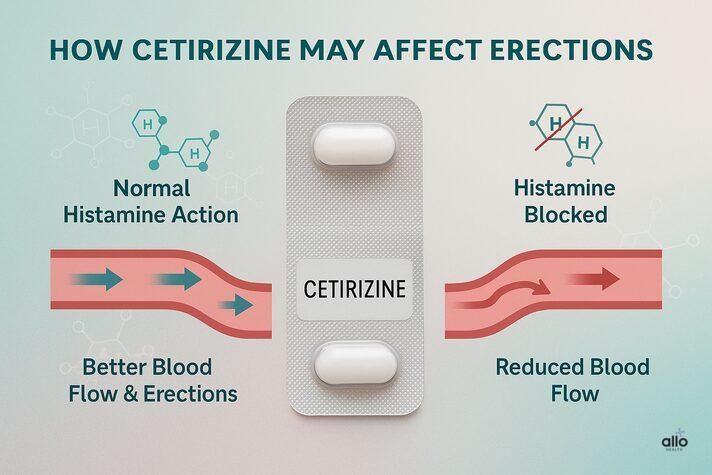
Histamine acts like a messenger in the body; it’s released by certain cells when triggered by allergic responses. One of its main effects is causing blood vessels to relax, allowing more blood to flow through them.

Interestingly, the same principle applies during sexual arousal. Research[2] shows that histamine helps trigger erections and also supports the release of nitric oxide, a molecule that relaxes blood vessels and improves penile blood flow, both essential for achieving an erection.
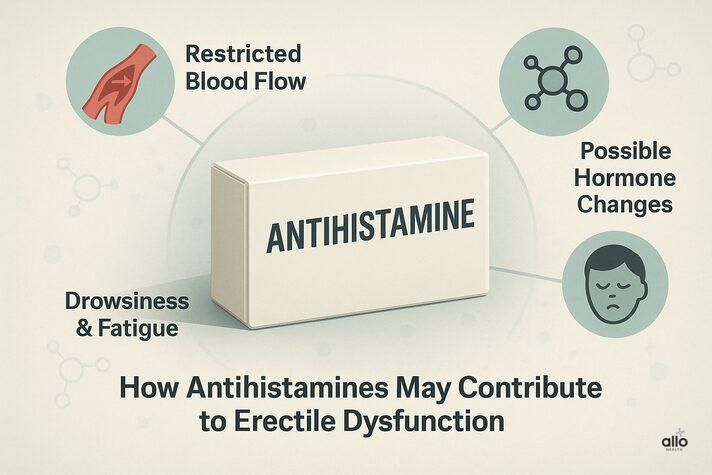
But when you take antihistamines like Cetirizine, this process can be affected. Most antihistamines can contribute to erectile dysfunction in several ways:
- Reduced blood flow: Blocking H1 receptors limits histamine’s natural vasodilatory effect, which may restrict blood flow to the penis.
- Hormonal impact: Some antihistamines might influence hormone production in the testicles by blocking histamine receptors, potentially lowering testosterone levels.
- Sedation and low arousal: Common side effects like drowsiness and fatigue can indirectly affect sexual desire and performance.
Scientists think histamine helps cause erections mainly by activating H2 receptors. H2 receptors relax smooth muscles and allow more blood flow during an erection. H3 receptors(which help control the release of other brain chemicals related to arousal and alertness__)__ might also have a role.[2]
Some studies even suggest that histamine activity could be useful in diagnosing erectile dysfunction, given its close link to sexual function.[3]
In short, while cetirizine is safe for most people, its histamine-blocking action may contribute to temporary erectile issues in some people.
How Cetirizine Causes Erectile Dysfunction?
Cetirizine generally carries a lower risk of erectile dysfunction compared to older, first-generation antihistamines like diphenhydramine (Benadryl), dimenhydrinate (Dramamine), and hydroxyzine (Vistaril).
Cetirizine works by blocking histamine H1 receptors, which helps relieve allergy symptoms such as sneezing, itching, and watery eyes. Histamine also plays a key role in sexual function[3]; it helps stimulate blood flow and contributes to the body’s natural arousal process.
When histamine activity is blocked, this balance can be disrupted, potentially affecting sexual desire and erection quality.
Cetirizine's effect is usually mild and temporary. Still, some health sources say it can cause erectile dysfunction, especially in men sensitive to medicines or who use it for a long time.
Most people don’t realize that histamine isn’t just about allergies, it also plays a small role in sexual function. So when an antihistamine like cetirizine blocks histamine, it can sometimes affect erections, especially in sensitive individuals.
Cetirizine vs Other Antihistamines
Among second-generation antihistamines, Cetirizine may have a slightly higher risk of certain side effects compared to Loratadine (Claritin) or Fexofenadine (Allegra).[4] Cetirizine is still a safe and effective allergy medicine. But it can cause mild drowsiness, which may lower arousal or energy and affect sexual function.
The table below shows how Cetirizine compares with other common antihistamines:
Drug
Sedation
Reported Sexual Side Effects
Notes
Cetirizine
Mild cases of cetirizine-linked sexual side effects often resolve with dose adjustment — a pattern also discussed with aspirin and ED.
Rare
May affect libido slightly
Loratadine
Low
Minimal
Often preferred for fewer side effects
Diphenhydramine
High
Possible ED/libido issues
Older generation antihistamine
In short, cetirizine has a low risk of causing erectile dysfunction. But it can cause problems if used long-term or with other medicines that cause tiredness or lower testosterone. Choosing a less sedating alternative, like Loratadine or Fexofenadine, may help minimize this risk.
What To Do If Cetirizine is Causing ED
The side effect of erectile dysfunction from antihistamines like Cetirizine is often dose-dependent and can vary from person to person. Some individuals may be more sensitive to its effects, while others experience no changes at all.
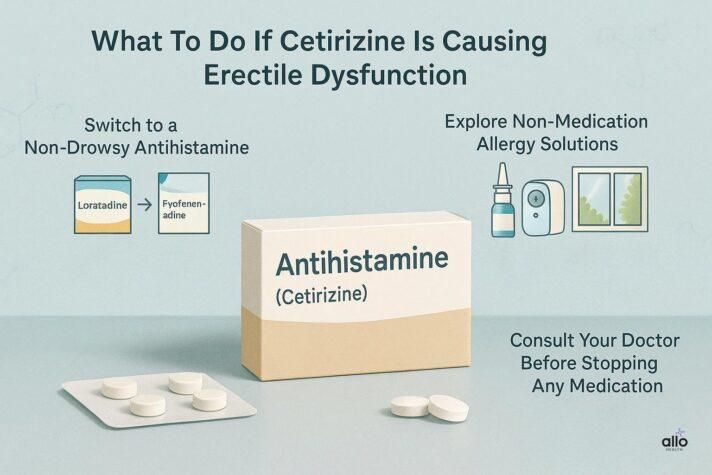
If you notice erectile issues while taking Cetirizine, there are several ways to manage it safely:
-
Switch to a non-drowsy antihistamine:
Options like Fexofenadine (Allegra) or Loratadine (Claritin) are less sedating and may help relieve allergies without affecting sexual function as much.
-
Explore non-medication allergy solutions:
Discuss other management strategies with your doctor, such as saline nasal sprays, air purifiers, dust control, and simple lifestyle changes like reducing allergen exposure.
-
Consult your doctor before stopping any medication:
It’s important not to discontinue Cetirizine on your own, as untreated allergies can worsen or trigger other complications. A healthcare professional can guide you through safe alternatives or dosage adjustments.
In most cases, symptoms improve once the medication is changed or the dose is adjusted under medical supervision.

Bottom Line
Cetirizine, a second-generation antihistamine, can sometimes cause erectile dysfunction in some people. The risk of ED with Cetirizine is slightly higher than other second-generation antihistamines, but still much lower than first-generation ones.
While Cetirizine and erectile dysfunction are connected, they don’t affect everyone, and the medication should never be stopped without medical guidance — supportive nutrients like Lycopene for ED may also be explored with your doctor.
Since erectile dysfunction can have multiple causes, including medication, stress, or underlying health conditions, it’s important to speak with a doctor to identify the root cause and find the most effective treatment options for ED.
Disclaimer
The following blog article provides general information and insights on various topics. However, it is important to note that the information presented is not intended as professional advice in any specific field or area. The content of this blog is for general educational and informational purposes only. The content should not be interpreted as endorsement, recommendation, or guarantee of any product, service, or information mentioned. Readers are solely responsible for the decisions and actions they take based on the information provided in this blog. It is essential to exercise individual judgment, critical thinking, and personal responsibility when applying or implementing any information or suggestions discussed in the blog.
Most Asked Questions
Does Cetirizine cause erectile dysfunction?
Cetirizine can occasionally cause erectile dysfunction, though it’s not a common side effect. This happens because the medicine blocks histamine — a chemical that also plays a role in sexual arousal and blood flow. The effect is usually mild and temporary, and most men don’t experience it.
What are the common side effects of Cetirizine?
Common side effects of Cetirizine include drowsiness, dry mouth, and mild fatigue. In rare cases, it may cause reduced libido or erectile issues, especially with long-term or high-dose use.
Is Cetirizine safer than other antihistamines for sexual health?
Yes. Cetirizine is a second-generation antihistamine, which means it generally causes fewer sexual and sedative side effects than older drugs like Diphenhydramine (Benadryl). However, Loratadine and Fexofenadine may have an even lower risk of affecting sexual function.
What should I do if I notice erectile problems after taking Cetirizine?
If you experience erectile issues, don’t stop the medicine on your own. Talk to your doctor, they may suggest switching to a non-drowsy antihistamine like Loratadine or Fexofenadine, or explore other allergy management options like saline sprays and air filters.
Is erectile dysfunction from Cetirizine permanent?
No. Erectile dysfunction caused by Cetirizine is usually temporary and reversible once the medicine is stopped or changed under medical guidance. If symptoms persist, it’s best to get checked for other possible causes, such as stress, low testosterone, or underlying health conditions.
Sources
- 1.
Is there a significance of histamine in the control of the human male sexual response?
- 2.
The role of histamine in human penile erection
- 3.
Potential negative effects of anti-histamines on male reproductive function
- 4.
High‐risks drug adverse events associated with Cetirizine and Loratadine for the treatment of allergic diseases: A retrospective pharmacovigilance study based on the FDA adverse event reporting system database