Nitric Oxide in Erectile Dysfunction: Role, Benefits and Dosage
Medically reviewed by Dr. Sandip Deshpande

Dr Sandip completed his training in Psychiatry and sexual medicine in the UK. A post-graduate in Psychiatry from KMC Manipal, he worked in the UK for over 8 years following a one-year research post at NIMHANS, Bangalore. With an interest in the fields of sexual health and functioning, he has authored articles in books and peer-reviewed journals. A recipient of the student of the year award by BSART in 2010, he is currently a consultant psychiatrist and sexual and relationship therapist with a belief in a holistic and psychotherapeutic approach to treating psychological distress.
•
Written by Dr. Pranitha Bangera

Dr. Pranitha Bangera is a gold-medalist healthcare professional with an elite foundation in clinical training and patient care. A researcher at heart, she specializes in creating high-impact, research-driven medical content that empowers readers through accessible patient education. Dr. Bangera focuses on the intersection of digital health and clinical communication, specifically within the fields of sexual health and mental well-being. Her work is dedicated to making complex medical innovations understandable and trustworthy for a global audience.
•
July 30, 2026
Our experts continually monitor the health and wellness space, and we update our articles when new information becomes available.

Quick Read
Nitric oxide (NO) plays an important role in achieving and maintaining erections. It’s a natural gas in your body that helps relax blood vessels (pipes carrying blood in the body), allowing blood to flow more easily into the penis during sexual arousal. When NO levels are low, it can be harder to get or keep an erection. This is often the case with age, health issues like diabetes, high blood pressure, and poor lifestyle choices such as smoking. To boost NO, treatments like PDE-5 inhibitors (Viagra, Cialis) can help extend the effects of NO in the body, making them effective for erectile dysfunction (ED). Natural supplements like L-arginine and L-citrulline can support NO production too. In severe cases, advanced treatments like NO donors or gene therapy are being explored. Maintaining a healthy lifestyle, like exercise, diet, and stress management, also helps improve NO levels, supporting both heart and sexual health.
One of the most important links in understanding erectile dysfunction is the relationship between nitric oxide and erections. Erections depend heavily on healthy blood flow, and when the body is unable to produce or use enough nitric oxide, blood vessels in the penis may not relax properly.
Nitric oxide (NO) is a naturally produced gas molecule that helps regulate blood flow throughout the body, including to the penis during sexual arousal. It works by relaxing blood vessels, allowing more blood to enter the penile tissue and support a firm erection. When nitric oxide activity drops due to aging, chronic conditions, or lifestyle factors, erectile dysfunction may develop.
In this article, you will learn how nitric oxide for erectile dysfunction works, whether nitric oxide really helps with erectile dysfunction, and what the best nitric oxide supplements for ED may offer. It also covers important risks to look out for, so expectations stay realistic and health decisions remain safe and informed.

Allo asks
What do you think impacts nitric oxide levels the most?
Does Nitric Oxide Help with Erectile Dysfunction?
Yes, nitric oxide can help with erectile dysfunction. Nitric oxide is the body’s natural “blood-vessel relaxer.” During sexual stimulation, NO helps widen penile blood vessels so more blood can enter and stay trapped in the penis, creating and maintaining an erection.
- ED medicines called PDE5 inhibitors are established first-line treatments for ED, and their core mechanism depends on nitric oxide signaling (NO → cGMP → muscle relaxation → blood flow). That’s one reason NO is considered “central” to erections in modern ED treatment. [1]
- A study in The Journal of Sexual Medicine reported evidence that arginine supplements, which increase nitric oxide levels, can help with mild-to-moderate ED. [2]
- Another study found L-citrulline improved erection hardness in men with mild ED, suggesting a potential role for NO support in select cases. [3]
How Does Nitric Oxide Help With Erectile Dysfunction?
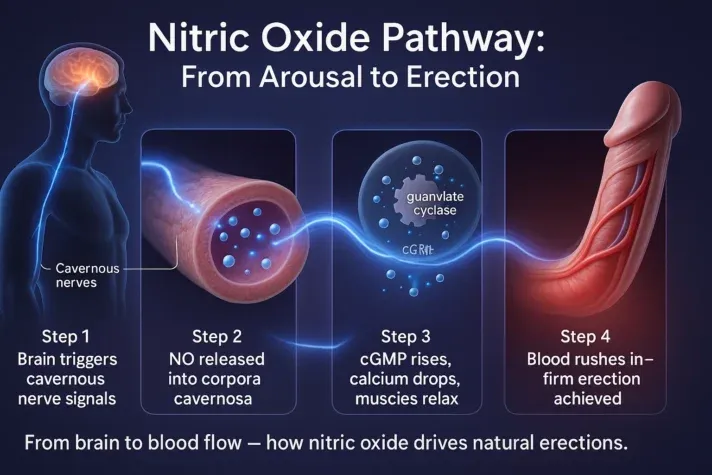
Nitric oxide plays a vital role in helping the body achieve and maintain an erection — the same mechanism that explains why erections in children and infants are purely reflexive and physiological. When sexual arousal occurs, the brain sends signals through specialized nerves to the penis. These nerves release nitric oxide into the erectile tissue, where it begins the process that allows blood vessels to relax and open.

Once released, nitric oxide increases the production of cyclic GMP (cGMP) inside penile muscle cells. cGMP acts as a signal that tells the smooth muscles in the blood vessels and erectile tissue to relax. As these muscles loosen, blood can flow more freely into the penis, leading to a firmer erection.[4]
Nitric oxide also helps keep an erection stable by lowering calcium levels inside muscle cells — a function that progressively declines with age and erectile dysfunction. Reduced calcium allows the muscles to remain relaxed for longer, which helps maintain adequate blood flow during sexual activity. Neuronal nitric oxide helps start this response, while endothelial nitric oxide supports ongoing blood circulation, ensuring erections are sustained rather than short-lived.[5]
When nitric oxide levels are sufficient and functioning properly, erections are easier to achieve and maintain. This is why many medical treatments for erectile dysfunction focus on enhancing nitric oxide activity or prolonging its effects within penile blood vessels.[5]
Dr Sandip, with 27 years of experience as a psychiatrist and sexologist, says, “Healthy erections depend on healthy blood vessels, and nitric oxide is the chemical that keeps those vessels relaxed and responsive.”

What are the Current Treatments that Target Nitric Oxide for Erectile Dysfunction?
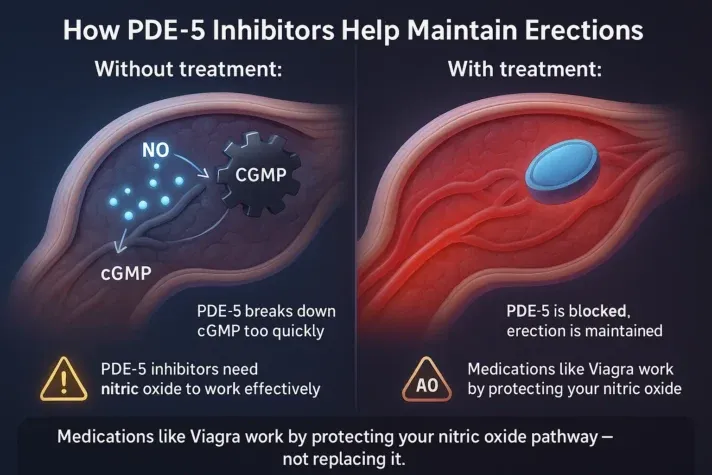
The most commonly prescribed treatments for erectile dysfunction are PDE-5 inhibitors (phosphodiesterase type-5 inhibitors). These medications are considered first-line therapy because they work directly on the nitric oxide (NO) pathway, which regulates blood flow to the penis.
PDE-5 inhibitors work by blocking the enzyme phosphodiesterase type-5, which normally breaks down a molecule called cyclic GMP (cGMP). cGMP is responsible for keeping the smooth muscles in penile blood vessels relaxed. When these muscles remain relaxed, blood flows into the penis more easily, making it possible to achieve and maintain an erection.[6]
By preventing cGMP breakdown, PDE-5 inhibitors prolong the effects of nitric oxide and support stronger, longer-lasting erections. However, these medications do not create nitric oxide on their own. They rely on the body’s ability to produce a baseline level of nitric oxide during sexual stimulation. When nitric oxide production is reduced due to aging, lifestyle factors, or underlying medical conditions, the response to these medications may be less effective.
In such cases, combining medical treatment with lifestyle measures that support nitric oxide production, such as regular physical activity, balanced nutrition, good sleep, and stress management, can help improve overall results.
Advanced NO-Based Therapies and Erectile Dysfunction
For men who do not respond adequately to standard ED treatments, researchers are exploring newer therapies that target the nitric oxide pathway more directly. One approach involves nitric oxide donors, such as sodium nitroprusside, which deliver nitric oxide directly to tissues to promote blood vessel relaxation and improve blood flow.
Another nitric oxide donor being studied is isosorbide mononitrate, which may enhance circulation in erectile tissue. Researchers are also investigating guanylate cyclase activators, a newer class of drugs that increase cGMP levels directly. Unlike PDE-5 inhibitors, these medications do not require existing nitric oxide to work, making them a potential option for men with severely impaired NO production.[7]
Gene therapy represents another emerging area of research. The goal is to restore normal nitric oxide synthase function at the cellular level, allowing the body to produce nitric oxide more effectively. While these approaches remain experimental, early research suggests they may offer future options for men who do not benefit from current treatments.[8]
What Are Nitric Oxide Foods for Erectile Dysfunction?
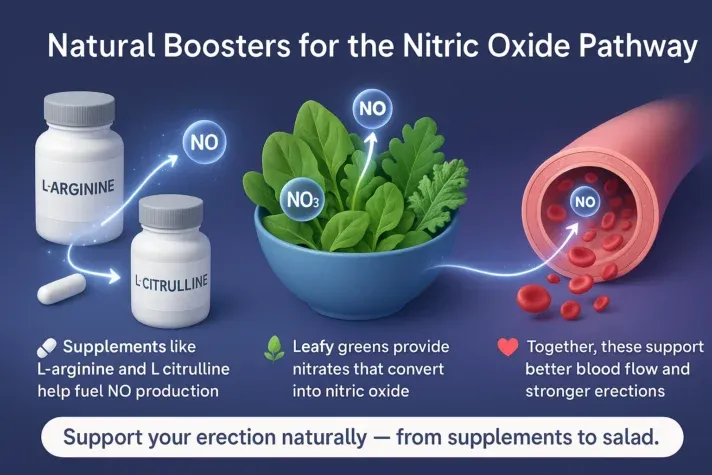
Certain foods can support the body’s natural production of nitric oxide, which helps improve blood flow and plays an important role in erections. These foods do not act like ED medications, but when eaten regularly, they can strengthen vascular health and support erectile function over time.[9]
Foods rich in natural nitrates are especially helpful because the body converts nitrates into nitric oxide, directly addressing the vascular deficits seen in arteriogenic erectile dysfunction. Common examples include:
- Beetroot (and beetroot juice)
- Spinach, arugula, lettuce, and kale
- Celery
Amino acid–rich foods also support nitric oxide production, as they provide building blocks like L-arginine and L-citrulline:
- Watermelon (high in L-citrulline)
- Nuts and seeds (walnuts, almonds, pumpkin seeds)
- Legumes (chickpeas, lentils, beans)
Heart-healthy foods help protect blood vessels so nitric oxide can work effectively:
- Fatty fish (salmon, sardines)
- Olive oil
- Dark chocolate (in moderation)
While nitric oxide–boosting foods are not a quick fix for erectile dysfunction, a diet rich in these options can improve circulation, support overall vascular health, and complement medical or lifestyle-based ED treatments when followed consistently.
According to Allo Health Data, 62% of men under 35 with ED had anxiety-related symptoms: Anxiety can increase stress hormones that negatively affect nitric oxide production, leading to poorer erectile health.
What Are the Best Nitric Oxide Supplements for Erectile Dysfunction?
Among natural options, L-arginine is one of the most commonly discussed supplements. It is an amino acid that the body uses to produce nitric oxide. Some studies suggest L-arginine may help improve blood flow and erection quality in men with mild erectile dysfunction, though results are mixed and benefits are not universal.
L-citrulline may be a more reliable option for some people. The body converts L-citrulline into L-arginine efficiently, leading to increased nitric oxide availability. Research suggests it can improve erection hardness and blood flow in men with mild ED, particularly when poor circulation is a contributing factor.
Diet also matters. Foods rich in natural nitrates, such as spinach, arugula, beetroot, and kale, support nitric oxide production over time. While dietary changes are not a quick fix, consistent intake can strengthen the nitric oxide pathway and support overall vascular health. When combined with healthy habits, supplements like L-citrulline may provide an added boost to erectile function.[10]
The table below highlights commonly used options, the evidence behind them, and who they may help most:
| Supplement | Evidence | Who It Helps |
|---|---|---|
| L-Citrulline | Moderate clinical evidence | Men with mild ED linked to poor blood flow |
| L-Arginine | Mixed research results | Mild ED or early vascular issues |
| Beetroot Extract | Moderate vascular studies | Men with circulation or blood pressure concerns |
| Pycnogenol | Moderate, often in combination studies | Vascular-related ED |
| Panax Ginseng | Low to moderate evidence | Mild ED with fatigue or low energy |
What Are Nitric Oxide Creams for Erectile Dysfunction?
Nitric oxide creams for erectile dysfunction are topical formulations designed to improve blood flow to the penis by increasing local nitric oxide activity. When applied to the penile skin, these creams aim to relax nearby blood vessels, allowing more blood to enter the erectile tissue and support firmness. Unlike oral ED medications, nitric oxide creams work locally rather than systemically, which may reduce whole-body side effects for some users. However, their effects are usually milder and less predictable than prescription treatments, and results can vary widely depending on formulation, dosage, and the underlying cause of ED. At present, nitric oxide creams are generally considered adjunct or experimental options, not first-line treatments for erectile dysfunction.
Conclusion
Nitric oxide plays a central role in erectile function by helping blood vessels relax and improving blood flow to the penis — complementing hormonal treatments like HCG for erectile dysfunction that work through a different pathway. When nitric oxide production or activity is reduced, erections can become weaker or harder to maintain, which explains why erectile dysfunction is often linked to vascular and overall health.
While prescription treatments remain the most effective option for many men, supporting the body’s natural nitric oxide pathway through healthy lifestyle choices, targeted supplements, and nitric oxide–rich foods can make a meaningful difference, especially in mild cases. Understanding how nitric oxide works allows for more informed, realistic decisions about erectile dysfunction care and highlights why a combined approach often delivers the best results.

Disclaimer
The following blog article provides general information and insights on various topics. However, it is important to note that the information presented is not intended as professional advice in any specific field or area. The content of this blog is for general educational and informational purposes only. The content should not be interpreted as endorsement, recommendation, or guarantee of any product, service, or information mentioned. Readers are solely responsible for the decisions and actions they take based on the information provided in this blog. It is essential to exercise individual judgment, critical thinking, and personal responsibility when applying or implementing any information or suggestions discussed in the blog.
Most Asked Questions
What is nitric oxide’s role in erections?
Nitric oxide (NO) helps blood vessels relax, allowing increased blood flow to the penis during sexual arousal. This process is critical for achieving and maintaining an erection.
What treatments are available for ED that target nitric oxide?
PDE-5 inhibitors, such as Viagra and Cialis, work by protecting the nitric oxide pathway, allowing for better blood flow and helping with erectile function.
Can nitric oxide supplements improve erectile dysfunction?
Some men find supplements like L-arginine or L-citrulline helpful, especially for mild ED. However, results can vary, and it’s important to talk to your doctor before starting any supplement regimen.
Can poor lifestyle choices affect nitric oxide levels?
Yes, smoking, poor diet, lack of exercise, and high stress can lower nitric oxide levels and increase the risk of erectile dysfunction. Making healthier lifestyle choices can improve NO production.
Sources
- 1.
PDE5 inhibitors – pharmacology and clinical applications 20 years after sildenafil discovery
- 2.
The Potential Role of Arginine Supplements on Erectile Dysfunction: A Systemic Review and Meta-Analysis
- 3.
Oral L-citrulline supplementation improves erection hardness in men with mild erectile dysfunction
- 4.
Dietary supplements for improving nitric-oxide synthesis
- 5.
Neuronal Nitric Oxide Synthase in Vascular Physiology and Diseases
- 6.
The Discovery of Endothelium-Derived Relaxing Factor and Its Importance in the Identification of Nitric Oxide
- 7.
The building blocks of erection: Nitric oxide...and more nitric oxide
- 8.
The Role of Nitric Oxide in Erectile Dysfunction: Implications for Medical Therapy
- 9.
Innervation of the cavernous body of the human efferent tear ducts and function in tear outflow mechanism
- 10.
Guanylyl cyclases and signaling by cyclic GMP
Why Should You Trust Us?
Why Should You Trust Us?
This article was written by Dr. Sandip Deshpande, who has more than 27 years of experience in the healthcare industry.
Allo has the expertise of over 50+ doctors who have treated more than 1.5 lakh patients both online and offline across 30+ clinics.
Our mission is to provide reliable, accurate, and practical health information to help you make informed decisions.
For This Article
- The content is based on established medical science around nitric oxide, blood flow, and erectile physiology, not trends or marketing claims.
- We reviewed findings from peer-reviewed clinical studies and urology research to explain how nitric oxide affects erectile dysfunction and where current treatments actually work.
- The article clearly distinguishes between proven treatments, supportive options, and experimental therapies, helping set realistic expectations.
- Information is presented in simple, patient-friendly language without oversimplifying or exaggerating benefits.
- Safety, limitations, and when to seek medical advice are emphasized to ensure decisions remain responsible and health-focused, especially for a sensitive topic like erectile dysfunction.