Erectile Dysfunction Do’s and Don’ts: Lifestyle Guide
Written by Dr. Pranitha Bangera

Dr. Pranitha Bangera is a gold-medalist healthcare professional with an elite foundation in clinical training and patient care. A researcher at heart, she specializes in creating high-impact, research-driven medical content that empowers readers through accessible patient education. Dr. Bangera focuses on the intersection of digital health and clinical communication, specifically within the fields of sexual health and mental well-being. Her work is dedicated to making complex medical innovations understandable and trustworthy for a global audience.
•
July 30, 2026
Our experts continually monitor the health and wellness space, and we update our articles when new information becomes available.
Quick Read
Erectile dysfunction can often be improved with the right lifestyle habits. This guide explains the key do’s and don’ts of erectile dysfunction, focusing on diet, exercise, stress management, and sleep. Healthy daily choices boost blood flow, hormones, and confidence, while habits like smoking, alcohol, and stress can make ED worse. With consistent changes and proper medical guidance, most men can see real, lasting improvement in their erectile health.
Erectile dysfunction (ED) is far more common than most men realize. But the good news is that it’s highly treatable. Knowing the dos and don’ts of erectile dysfunction can make a big difference. Healthy habits like good nutrition, exercise, sleep, and stress control boost blood flow and hormone balance, while smoking, alcohol, and poor mental health can worsen ED. This article explains the essential dos and don’ts of erectile dysfunction, helping you make practical, everyday changes that can strengthen your erections and your overall sexual health.

Allo asks
Which habit helps erections the most?
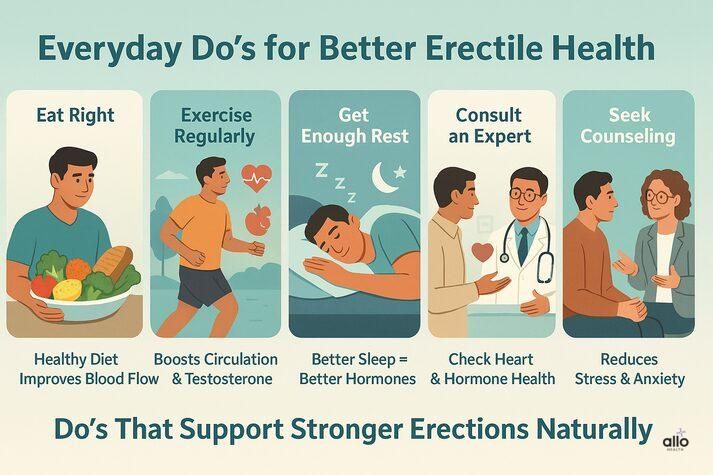
Everyday Do’s for Better Erectile Health
1. Do Stick to the Right Diet
What you eat plays a major role in your erectile function. Obesity and poor nutrition can affect blood vessels and limit blood flow to the pelvic area, leading to ED. Replace processed foods that contain saturated fats and trans fats with heart-healthy food choices, such as fruits and vegetables, whole-grain bread, nuts, and olive oil. A diet rich in fish, lean proteins, and healthy fats improves blood pressure and boosts sexual performance naturally. [1]
2. Do Indulge in Regular Exercise
Physical activity is one of the most effective natural ways to improve erectile function — pairing it with foods for ED amplifies the benefit. Even 30 minutes of moderate physical activity four times a week can reduce ED risk by up to 40%. [2] Studies show aerobic exercises boost blood flow, support heart health, and enhance overall sexual performance. [3] Aerobic exercise is any sustained physical activity that increases your heart rate and breathing. Activities such as brisk walking, cycling, or swimming improve blood flow, boost testosterone deficiency, and reduce cardiovascular risk. [4] Including pelvic floor muscles training (Kegel exercises) can also strengthen the pelvic area and improve erection control. [5]
3. Do Get Enough Rest
Sleep deprivation disrupts hormonal balance and lowers testosterone production[6]. Proper rest also improves mood, focus, and energy, all of which contribute to better sexual performance. Aim for 7–9 hours of quality sleep nightly to allow your body to restore hormone levels.
4. Do Consult an Expert
ED can be an early sign of heart disease, high blood pressure, diabetes, or hormonal imbalances — even superfoods like pumpkin seeds for erectile dysfunction work best alongside medical screening. A doctor can assess your condition, rule out serious cardiovascular health risks, and recommend safe treatment options. They may also suggest ED treatments like vacuum devices, counseling, or medications after reviewing potential drug interactions.

5. Do Consider Counseling
Mental well-being is a crucial part of managing ED. Emotional or psychological factors like stress, anxiety, or relationship tension can cause or worsen ED. Consider different forms of therapy for psychological support, like psychotherapy or hypnotherapy for ED. Talking to a therapist can reduce sexual performance anxiety related to sex.
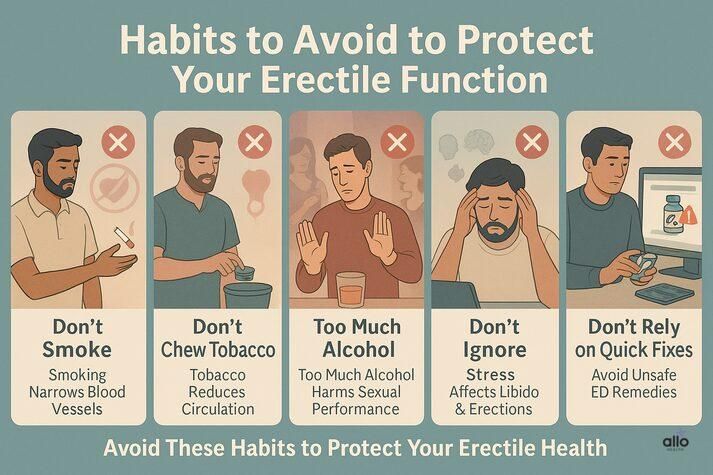
Habits to Avoid to Protect Your Erectile Function
1. Don’t Smoke
Smoking causes ED as it damages blood vessels and reduces blood circulation — natural remedies like royal honey for ED are no substitute for quitting smoking first. It also decreases nitric oxide, the molecule responsible for the relaxation of muscles in the penis during sexual stimulation, which helps increase blood flow to the penis. Within 2–12 weeks of quitting, your blood pressure and circulation begin to normalize, improving erectile function and heart health.
2. Don’t Chew Tobacco
Chewing tobacco can cause ED and can be just as harmful as smoking when it comes to erectile health. The nicotine in smokeless tobacco constricts blood vessels and lowers blood flow to the penis, making it harder to get or maintain an erection. Long-term use also affects hormone balance and increases the risk of heart disease, both major contributors to erectile dysfunction. Quitting chewing tobacco can significantly improve circulation, boost energy, and enhance overall sexual performance within a few weeks.
3. Don’t Overuse Alcohol
Alcohol leads to ED as it depresses the nervous system and interferes with hormonal balance. Keep intake moderate, one to two drinks a day, to support cardiovascular health and prevent long-term sexual dysfunction.
4. Don’t Ignore Stress
Chronic stress increases stress hormones, which impact libido. Practicing stress relief techniques such as yoga, deep breathing, or meditation enhances sexual health and overall well-being.

5. Don’t Rely on Quick Fixes
Over-the-counter pills, unregulated herbal blends, or online "miracle cures" can have dangerous side effects or drug interactions — a structured approach like yoga for erectile dysfunction is far safer. Self-medication may mask the problem temporarily, but it rarely solves the underlying issue. Always consult a qualified urologist or sexual health expert before trying natural remedies for potency.
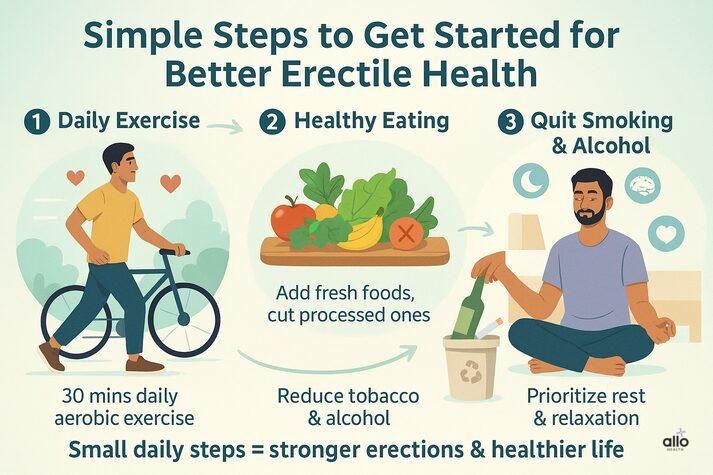
Simple Steps to Get Started for Better Erectile Health
- Begin with daily aerobic exercise: Walking or cycling for 30 minutes.
- Improve your diet gradually by adding fruits and vegetables, and cut down on processed meats.
- Reduce smoking. tobacco intake and drinking.
- Prioritize sleep hygiene and stress reduction.
Most men don’t realize how much their daily habits affect erections. Simple changes like moving more, eating well, and sleeping better can do wonders for blood flow and sexual confidence.
Conclusion
Erectile dysfunction often signals underlying issues such as heart disease, hormonal imbalance, or poor lifestyle choices. The encouraging news is that the right habits, the dos and don’ts of erectile dysfunction, can reverse much of the damage naturally. By focusing on exercise, nutrition, stress management, and open communication, you can reclaim not just your erections but your overall well-being. Always seek medical advice if symptoms persist. Combining lifestyle improvements with professional care provides the most effective path toward long-term sexual health, confidence, and quality of life.
Disclaimer
The following blog article provides general information and insights on various topics. However, it is important to note that the information presented is not intended as professional advice in any specific field or area. The content of this blog is for general educational and informational purposes only. The content should not be interpreted as endorsement, recommendation, or guarantee of any product, service, or information mentioned. Readers are solely responsible for the decisions and actions they take based on the information provided in this blog. It is essential to exercise individual judgment, critical thinking, and personal responsibility when applying or implementing any information or suggestions discussed in the blog.
Sources
- 1.
Association of Diet With Erectile Dysfunction
- 2.
Exercise and erectile dysfunction (ED)
- 3.
Effects of Aerobic Exercise in the Management of Erectile Dysfunction
- 4.
Physical Activity to Improve Erectile Function
- 5.
Pelvic floor exercises for erectile dysfunction
- 6.
Effect of 1 Week of Sleep Restriction on Testosterone Levels in Young Healthy Men