Running and Erectile Dysfunction: Does Cardio Help or Harm in Sexual Health?
Written by Dr. Deepali Anand

Dr. Deepali is a medical writer and healthcare professional with a background in clinical surgery and patient care. Having transitioned from active clinical practice to medical communications, she specializes in bridging the gap between complex clinical data and patient education. Dr. Deepali is dedicated to creating evidence-based content that is grounded in scientific rigor and empathy, ensuring that sensitive topics like sexual wellness and mental health are accessible and empowering for every reader.
•
July 30, 2026
Our experts continually monitor the health and wellness space, and we update our articles when new information becomes available.

Quick Read
Running can both help and harm erectile function, it all depends on how much you do. Moderate running (30-60 minutes, 3-5 times a week) is excellent for erections because it improves blood flow, boosts testosterone, and reduces stress. However, excessive endurance training, like marathon running without adequate recovery, can lower testosterone by 10-40% and raise cortisol, which may weaken libido and erectile strength. The key takeaway is to stay active and consistent, but avoiding overtraining. Balance and rest are just as crucial as the exercise itself for maintaining healthy sexual function.
Running and erectile dysfunction: how are the two connected? For many men, this simple question comes from genuine curiosity. Running, like most aerobic exercises, boosts heart health, blood flow, and testosterone, all vital for strong, healthy erections. But when pushed to extremes, it can backfire, leading to fatigue, hormonal changes, and lower libido.
In this article, we’ll explore how running affects erectile function both positively and negatively, what science says about it, and how to find the right running routine to support your sexual health without overdoing it.

Allo asks
Do you think excessive running or overtraining can affect erections?

Understanding the Connection Between Running and Erections
Aerobic exercises like running are highly beneficial for erections. Just like other forms of cardio, running improves heart health, blood circulation, and overall physical well-being, all of which are vital for healthy erectile function.
Regular running can also help reduce the risk factors for erectile dysfunction by improving blood flow, managing weight, lowering stress, and supporting vascular health. In other words, the same mechanisms that make running great for your heart also make it great for your erections.

But even good things overdone can come with harm. Excessive long and intense running can have a negative and opposite impact in some cases.
Understanding the relationship between running and erectile dysfunction is therefore essential to get the full benefits of cardio while protecting your sexual health.
According to Allo Health, nearly 1 in 2 men experience erectile dysfunction, which is based on our internal clinical data of more than 2.5 lakh patients who have visited our clinics.


Benefits Of Running for Erectile Dysfunction
Studies[1] show that running can significantly improve erections in men with mild to moderate erectile dysfunction. It helps in several ways, supporting both physical and mental aspects of sexual health.
1. Improves Heart Health and Blood Flow
Running strengthens the heart and the vascular system, enhancing blood flow throughout the body, including to the penis.[2]
It also improves the functioning of the inner lining of blood vessels, known as the endothelium. Healthy endothelial cells help increase the production of nitric oxide, which is essential for erections.
It is a natural compound that relaxes blood vessels and penile muscles, allowing for better blood flow for erections.
2. Increases Testosterone Levels
Regular running can help boost testosterone levels by stimulating the pathway that signals its production(the hypothalamic-pituitary-gonadal axis).[3]
Balanced testosterone levels play an important role in sexual desire, energy, and erectile strength.
3. Reduces Stress and Anxiety
Running also reduces the levels of cortisol, the stress hormone. Cortisol negatively impacts erections and overall sexual function.[4]
At the same time, it increases the release of endorphins- the body’s natural “feel-good” chemicals that help relieve stress and anxiety, both major contributors to erectile dysfunction.
4. Lowers Major Risk Factors for ED
Running helps manage heart disease, high blood pressure, high cholesterol, and obesity, all of which are major risk factors for erectile dysfunction.
It also supports better blood sugar control in people with diabetes, while reducing inflammation and oxidative stress, both of which play a role in the development of ED.
When Running Might Harm Erections & Sexual Health
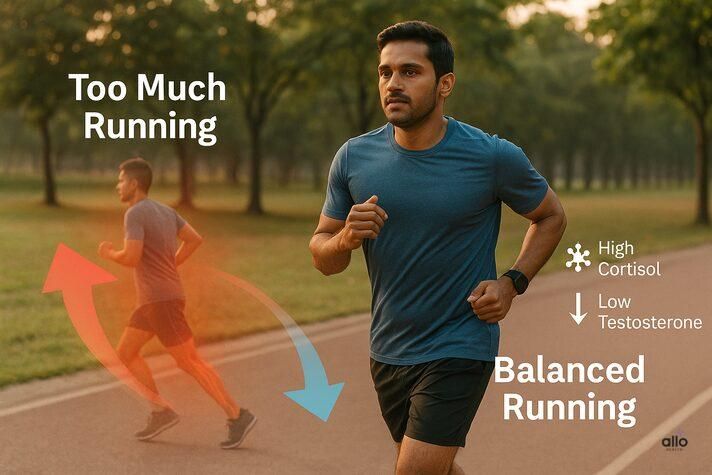
Running is great for erections, but only when done in moderation. Too much running, especially marathon training, can sometimes harm sexual health and libido by raising cortisol levels and lowering testosterone. Here’s how it happens:
Excessive Running Can Lower Testosterone
Research[5] shows that men who train for marathons often have 20% lower libido than those who run moderately.
Long-term endurance[6] running can reduce testosterone levels by 10–40%. Men who run over 67 miles a week may experience a 28% drop in testosterone and poorer semen quality.
Low testosterone can lead to fatigue, low mood, and weaker erections.
Overtraining Raises Cortisol
Training too hard without enough rest raises cortisol, the body’s main stress hormone. High cortisol lowers sexual desire and affects arousal.
A study[7] of 1,077 men found that those with moderate training intensity were seven times more likely to have a healthy sex drive than men who trained at extreme intensity.
In short, your body needs rest as much as exercise.
Cycling vs. Running: Clearing the Confusion
Large studies[8] show cycling doesn’t cause more ED than swimming or running, but can increase the risk of numbness, saddle sores, or urethral injury.
Moderate running is one of the best natural ways to improve erectile health because it boosts blood flow, heart function, and stress control. But extreme endurance without recovery can backfire.
Running and Erectile Dysfunction: Tips to Find the Right Balance
Running and erectile dysfunction can go hand in hand. When done right, running can improve erections and overall sexual health. The key is to find the right balance so it helps your body without overstraining it.
-
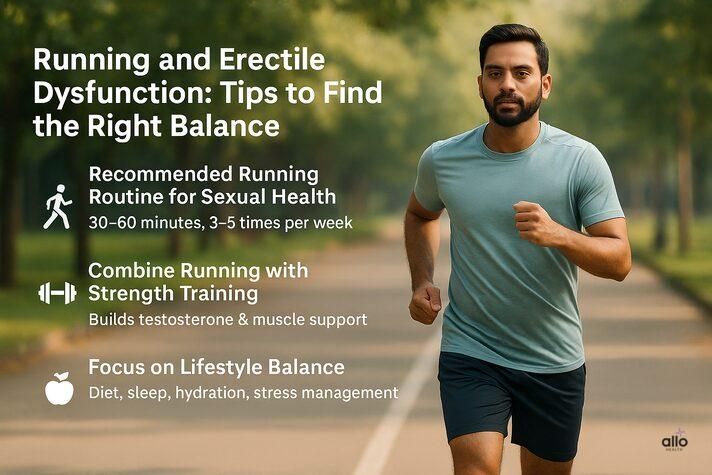
Recommended Running Routine for Sexual Health
Research[8] shows that 30-60 minutes of moderate to intense running, about 3-5 times a week, is ideal for supporting both cardiovascular and sexual health.
In fact, studies[8] have found that 160 minutes of weekly exercise over six months can significantly reduce erectile problems in men whose ED is linked to physical inactivity, obesity, or heart disease.
Regular, consistent running improves blood flow, boosts stamina, and helps regulate hormones, all crucial for healthy erections.
-
Combine Running with Strength Training
The American College of Cardiology and American Heart Association[9] recommend 3-4 sessions of moderate-to-vigorous physical activity, lasting about 40 minutes per session.
Combining running with strength or resistance training supports muscle growth and testosterone production, creating a balanced approach to physical fitness and sexual wellness.
-
Focus on Lifestyle Balance
Running is just one part of the equation. To keep erections healthy, also pay attention to:
- Diet: Eat a balanced, heart-friendly diet rich in fruits, vegetables, and whole grains.
- Sleep: Aim for 7–8 hours of quality rest to support hormone balance.
- Hydration: Drink enough water to maintain circulation and energy.
- Stress Management: Practice relaxation, meditation, or yoga to reduce cortisol and anxiety

When to Seek Medical Help
Erectile dysfunction is a complex condition that can result from one or a combination of physical, psychological, or underlying medical causes.
This means there’s no single treatment that works for everyone; managing ED requires a personalized plan based on a proper medical evaluation.
It’s important to see a doctor if erection problems persist despite improvements in fitness or lifestyle. Persistent symptoms may point to an underlying issue that needs attention.
Seek medical help if you notice:
- Decreased libido or sexual desire
- Constant fatigue
- Loss of morning erections
- Noticeable mood changes
Bottom Line
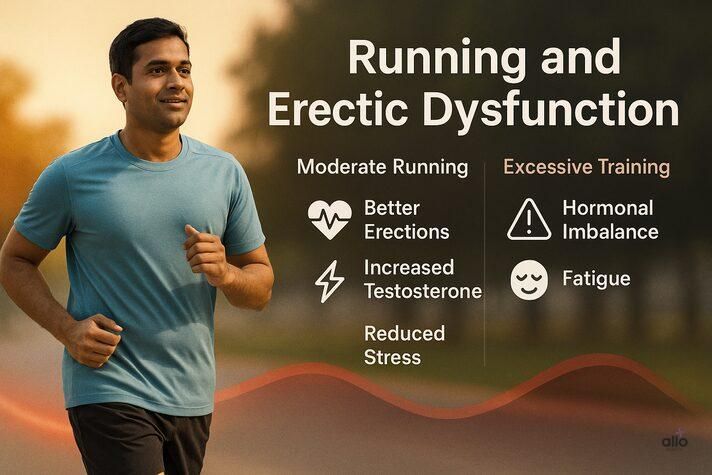
Running and erectile dysfunction are closely connected in both positive and negative ways. The key is finding the right balance. Moderate, consistent running supports sexual health by improving cardiovascular health, boosting testosterone, reducing stress, and enhancing blood flow, all of which help maintain stronger erections.
But excessive endurance training, such as long-term marathon running or high-intensity workouts without proper rest, can have the opposite effect. In short, stay active, but listen to your body; balance and recovery are just as important as the miles you run.

Disclaimer
The following blog article provides general information and insights on various topics. However, it is important to note that the information presented is not intended as professional advice in any specific field or area. The content of this blog is for general educational and informational purposes only. The content should not be interpreted as endorsement, recommendation, or guarantee of any product, service, or information mentioned. Readers are solely responsible for the decisions and actions they take based on the information provided in this blog. It is essential to exercise individual judgment, critical thinking, and personal responsibility when applying or implementing any information or suggestions discussed in the blog.
Most Asked Questions
Does long-distance running cause erectile dysfunction?
Not usually, but excessive endurance running without rest can lower testosterone and raise stress hormones like cortisol, which may temporarily affect libido and erections. Moderate running, on the other hand, actually improves erectile function by boosting blood flow and heart health.
Which exercise is best for erectile dysfunction?
A combination of aerobic exercise (like running, brisk walking, or swimming) and strength training works best. Aerobic workouts improve circulation, while strength training supports testosterone and muscle health, both vital for stronger erections.
Can erectile dysfunction be reversed by exercise?
Yes, in many cases. Regular physical activity, especially 30–60 minutes of moderate cardio, 3–5 times per week can significantly improve erections. Exercise helps by improving vascular function, lowering stress, and restoring hormonal balance.
Is walking good for erectile dysfunction?
Absolutely. Brisk walking improves circulation and reduces the risk factors that contribute to ED, such as obesity, diabetes, and high blood pressure. It’s one of the safest and easiest ways to boost sexual and cardiovascular health.
How much running is healthy for better erections?
Research suggests around 160 minutes of weekly running or cardio can improve erectile health, especially in men with lifestyle-related ED. The key is moderation, regular running helps, but extreme marathon training without recovery can have the opposite effect.
Sources
- 1.
Effect of aerobic exercise on erectile function: systematic review and meta-analysis of randomized controlled trials
- 2.
Aerobic activity may work as well as medication for helping erectile dysfunction
- 3.
Exercise, Training, and the Hypothalamic-Pituitary-Gonadal Axis in Men and Women
- 4.
Exercise and stress: Get moving to manage stress
- 5.
Marathon Running and Sexual Libido in Adult Men: Exercise Training and Racing Effects
- 6.
Endurance training decreases serum testosterone levels in men without change in luteinizing hormone pulsatile release
- 7.
Endurance Exercise Training and Male Sexual Libido
- 8.
Cycling, and Male Sexual and Urinary Function: Results from a Large, Multinational, Cross-Sectional Study
- 9.
Physical Activity to Improve Erectile Function: A Systematic Review of Intervention Studies