Spinach and Erectile Dysfunction: Know Benefits, Uses, and Risks for Sexual Health
Written by Dr. Deepali Anand

Dr. Deepali is a medical writer and healthcare professional with a background in clinical surgery and patient care. Having transitioned from active clinical practice to medical communications, she specializes in bridging the gap between complex clinical data and patient education. Dr. Deepali is dedicated to creating evidence-based content that is grounded in scientific rigor and empathy, ensuring that sensitive topics like sexual wellness and mental health are accessible and empowering for every reader.
•
July 30, 2026
Our experts continually monitor the health and wellness space, and we update our articles when new information becomes available.
Quick Read
Spinach can support erectile function thanks to its high levels of dietary nitrates, which convert to nitric oxide in the body, a key molecule that relaxes blood vessels and improves blood flow to the penis. It also provides folate, magnesium, and antioxidants that promote vascular health, all of which are important for healthy erections. While spinach won't cure ED on its own or work overnight, adding 2–3 cups raw (or 1–1.5 cups cooked) to your daily diet can complement heart-healthy eating patterns linked to better sexual health. If ED persists despite lifestyle changes, it's important to see a doctor to identify underlying causes and explore proven treatments like PDE5 inhibitors or hormone therapy.
Is spinach good for erectile dysfunction? The short answer is yes, spinach contains nutrients like dietary nitrates, folate, magnesium, and antioxidants that may help improve blood flow, support nitric oxide levels, and contribute to overall erectile health.
In this article, you’ll learn how spinach may help with erectile function, what nutrients make it effective, how it compares to medical treatments, and how to include it in your diet safely.

Allo asks
Have you ever tried using food or diet changes to improve erectile function?
Is Spinach Good For Erectile Dysfunction?
Yes, spinach is good for erectile dysfunction. Food and diet play an important role in sexual health, and what someone eats can influence overall well-being, including blood circulation, which is essential for healthy erections[1].
Spinach benefits for erectile dysfunction are widely searched because the leaves are rich in dietary nitrates, folate, and antioxidants. These nutrients are known to support vascular health and overall sexual wellness, making spinach a helpful addition to an ED-friendly diet.

But it is important to remember that spinach can support erectile function, but it is not a standalone cure for ED.
According to Allo Health, every 1 in 2 patients has ED, which is based on our internal clinical data of more than 2.5 Lakh patients who come to our clinic.
Benefits of Spinach for Erectile Dysfunction
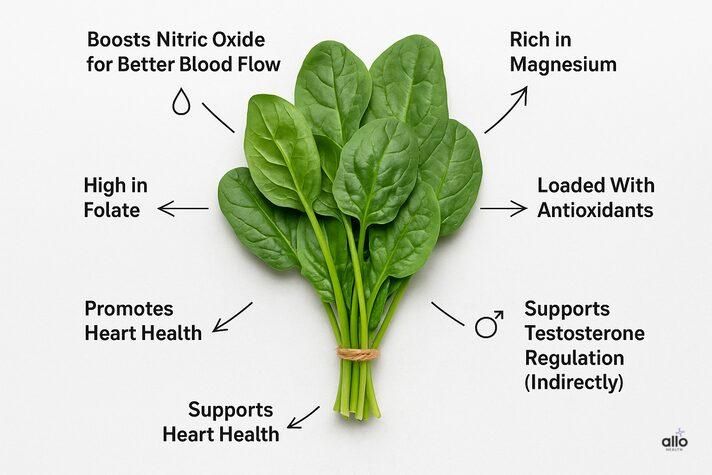
There are many benefits of spinach for erectile dysfunction. Here are the key ways it can support better sexual and vascular health:

1. Spinach Boosts Nitric Oxide for Better Blood Flow
Spinach is one of the highest natural sources of dietary nitrates[2]. In the body, nitrates turn into nitrite and then into nitric oxide (NO). Nitric oxide is a key molecule for erections. It relaxes blood vessels and improves blood flow, including to the penis.
Diets rich in nitrate-containing leafy greens such as spinach, arugula, lettuce, and beetroot are often recommended for both erectile and heart health.
Dietary Nitrates → Nitric Oxide → Vasodilation → Improved Erections
2. Folate Levels and Erectile Function
Spinach is very rich in folate[3]. In fact, one cup of boiled spinach can provide nearly two-thirds of your daily folate needs. Low folate levels have been linked to ED, and some studies suggest that folic acid supplementation may help improve erectile function.
3. Magnesium Levels and Erectile Function
Spinach also provides a meaningful amount of magnesium[4]. Magnesium helps with ED as it regulates vascular tone, supports nitric oxide production, and reduces inflammation in blood vessels. All of these can help improve blood flow and may lower the risk of ED.
4. Antioxidants That Support Vascular and Sexual Health
Spinach contains vitamin C, beta carotene, and other antioxidants[5]. These nutrients help improve endothelial function, the inner lining of blood vessels, which supports healthier blood circulation to the penis and better erections.
5. Spinach May Support Testosterone Levels Indirectly
Spinach is not a testosterone level booster, but it supports metabolic and vascular health. Better overall health often supports better sexual wellness, including hormone balance and testosterone production.
6. Spinach and Cardiovascular Health
Most ED in middle-aged and older men is related to vascular issues such as atherosclerosis, high blood pressure, or diabetes. Foods that support heart and blood vessel health, like spinach, naturally support erectile function as well.
Leafy greens are a major part of heart-healthy foods and Mediterranean diets, which are consistently linked to lower ED risk.
Spinach won’t fix erectile dysfunction overnight, but the nutrients it contains support the same blood flow pathways that medical treatments target. Think of it as a helpful addition to a larger plan, not the plan itself.
Limitations and Side Effects: When Spinach May Not Be the Best Choice
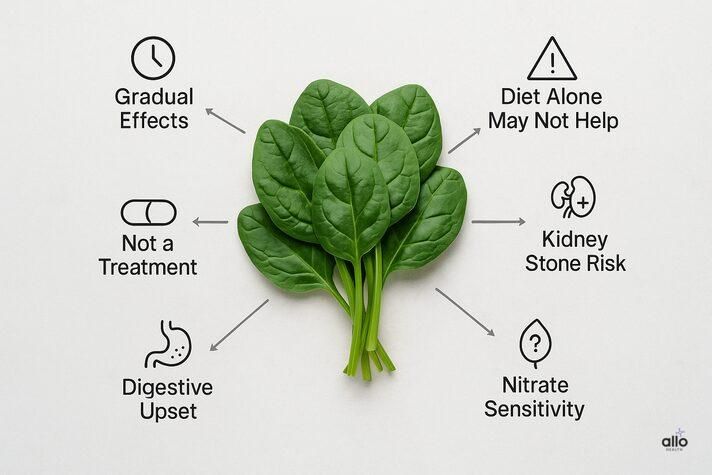
Is spinach good for erectile dysfunction? Yes, it can help support erectile health. But like any food, spinach also has a few side effects and limitations that are important to understand.
Side Effects of Spinach
1. Oxalates and Kidney Stone Risk
Eating very large amounts of spinach can increase oxalate levels[6]. This may be a concern for people who have a history of calcium-oxalate kidney stones.
2. Interactions for People on Blood Thinners
Spinach is high in vitamin K. People taking warfarin or other vitamin-K–sensitive blood thinners need consistent intake and medical guidance to avoid sudden changes in dosage effect[7].
3. Digestive Upset When Overconsumed
Some people may experience gas, bloating, or stomach discomfort if they eat too much spinach at once.
4. Nitrate Sensitivity in Some Individuals
Nitrates from vegetables are safe for most people and are different from prescription nitrate drugs. However, a small number of people may be sensitive to dietary nitrates.
Limitations of Spinach for Erectile Dysfunction
1. Effects Are Supportive and Gradual, Not Immediate
Spinach will not cause an instant erection. Any benefits to men's sexual health come slowly through regular use as part of a healthy diet and lifestyle.
2. Spinach Is Not a Treatment for ED
Foods that support nitric oxide and blood flow can be helpful, but they cannot replace evidence-based ED treatments such as:
- Medications for ED, such as PDE5 inhibitors (like sildenafil)
- Treating underlying conditions (diabetes, high blood pressure, obesity)
- Hormonal evaluation
- Psychological or couples therapy when needed
3. Diet Alone May Not Help Certain Types of ED
If ED is caused by severe nerve damage, major hormonal issues, pelvic surgery, or strong psychological factors(like lack of sexual desire), spinach alone will not be enough. In these cases, medical evaluation and proper treatment are essential.
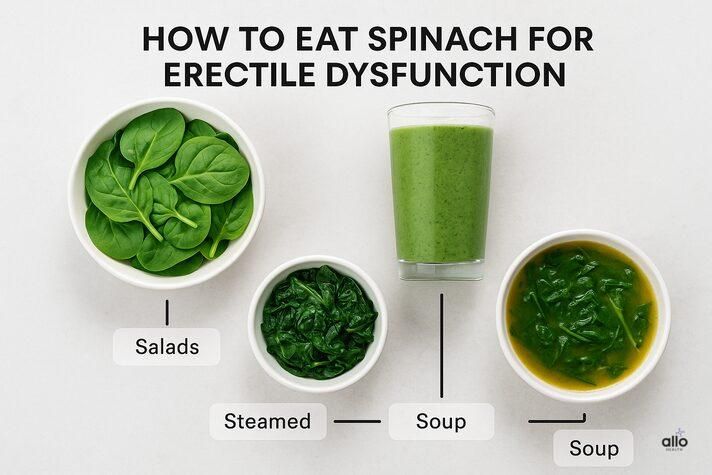
How to Eat Spinach for Erectile Dysfunction
Eating and planning your diet the right way can help you get the most benefits from spinach. Here’s how to eat spinach for erectile dysfunction in a safe, effective, and easy-to-follow way.
Recommended Servings of Spinach for Daily Benefit
The best way to consume spinach for erectile dysfunction is to include it regularly, ideally, most days of the week, as part of a nitrate-rich diet.
A good daily target is 100–200 g of fresh spinach, which is about:
- 2-3 cups raw, or
- 1-1.5 cups cooked
This amount provides roughly 124-250 mg of dietary nitrate, helping you reach a total daily goal of 250-370 mg of nitrate from all vegetables combined.
Best Ways to Consume Spinach for ED
Raw spinach keeps 100% of its dietary nitrate, making it one of the most effective options for supporting nitric oxide levels. But raw spinach is also high in oxalates, which may not be ideal for people prone to kidney stones.
Here are some practical and balanced ways to add spinach to your daily meals:
1. Salads
Fresh spinach works well in salads and is easy to pair with foods that support nitric oxide production.
Tips:
- Combine spinach with vitamin C–rich foods (tomatoes, citrus fruits, bell peppers). Vitamin C helps convert nitrates into nitric oxide in the stomach.
- Mix 2-3 cups of spinach with other nitrate-rich vegetables like arugula, lettuce, beetroot, or celery.
2. Smoothies
Spinach smoothies are one of the simplest ways to get a large amount of spinach, especially if you’re not a fan of raw greens.
Example: Green ED Smoothie
Blend:
- 1-2 cups fresh spinach
- 1 banana
- ½ cup frozen pineapple or mango
- 1 tablespoon almond or peanut butter
- 1 cup unsweetened almond milk or coconut water
- Ice (optional)
This gives you nitrate-rich spinach along with nutrients that support energy and vascular health.
3. Steamed Spinach
If you prefer cooked greens, steamed spinach is a great option. Steaming helps preserve antioxidants and keeps most of the nitrate content.
How to prepare: Steam fresh spinach until just wilted. It becomes softer, easier to digest, and suitable for people who want to reduce oxalate load.
4. Spinach in Soups
If using spinach in soups or stews, try to consume the broth as well, since nitrates can leach into the cooking liquid.
A study even found that spinach soup cooked with onions and low-sodium broth significantly increased nitrate levels in participants.
When to See a Doctor for Erectile Dysfunction
You should speak to a doctor if you notice:
- Persistent ED: erections are difficult for several weeks or become a recurring issue.
- Health conditions like diabetes, high blood pressure, or heart problems may affect blood flow.
- Sudden onset of ED with no clear reason.
- ED in young men, especially if it’s affecting confidence or creating stress.
If ED is starting to impact your daily life or relationships and sex life, reaching out to a qualified doctor can help you find clear answers and the right treatment path.
Bottom Line: Should you Try Spinach for ED?
Is spinach good for erectile dysfunction? Yes. Spinach benefits for erectile dysfunction are meaningful, but it should be seen as just one part of a broader heart-healthy, nitrate-rich, and antioxidant-rich diet. Spinach can support better blood flow and cardiovascular health, but it is not a replacement for medical evaluation or prescribed ED treatments.
If erectile dysfunction is not improving with diet and lifestyle changes, it may be a sign to get a full check-up. Understanding what is causing the ED is the first step toward finding the right treatment and getting long-term results.

Disclaimer
The following blog article discusses food and diet-related information for general educational purposes. However, it is important to note that the information provided is not intended as personalized dietary advice and should not be considered a substitute for professional guidance from a registered dietitian or qualified healthcare professional. Before making any significant changes to your diet or nutrition plan, it is recommended to consult with a registered dietitian or healthcare professional. Dietary changes can have a significant impact on your overall health and well-being. It is important to approach any changes to your diet in a balanced and sustainable manner, ensuring that you meet your nutritional needs and avoid any potential nutrient deficiencies. Rapid or extreme changes in dietary patterns can be detrimental to your health and may require professional guidance. It is crucial to note that any specific dietary recommendations or guidelines mentioned in this article may not be appropriate for individuals with specific medical conditions, allergies, or intolerances. A registered dietitian or healthcare professional can provide individualized advice, including modifications or alternative food choices to accommodate your unique circumstances. The information provided in this article may not encompass all possible dietary considerations or account for the latest research and nutritional guidelines.
Most Asked Questions
How to eat spinach for erectile dysfunction?
Spinach can be eaten raw in salads, blended into smoothies, lightly steamed, or added to soups. Aim for 100–200 g per day as part of a nitrate-rich diet to support nitric oxide and blood flow.
Is spinach good for erectile dysfunction?
Yes. Spinach contains dietary nitrates, folate, magnesium, and antioxidants that support blood flow and nitric oxide production, both important for healthy erections. It helps, but it is not a standalone treatment.
How much spinach should I eat daily for ED benefits?
Most people can aim for 2–3 cups raw spinach or 1–1.5 cups cooked per day. This amount supports vascular health without relying on spinach alone for treatment.
Which food is best for erectile dysfunction?
Foods that improve blood flow — such as spinach, beetroot, pomegranate, watermelon, nuts, and leafy greens — are often recommended. They help support nitric oxide and heart health, which play a key role in erectile function.
Can spinach cure erectile dysfunction completely?
No. Spinach can support erectile function, but it cannot cure ED on its own. Persistent or sudden ED usually needs medical evaluation to identify underlying causes and the right treatment plan.
Sources
- 1.
Plant-Based Diet and Erectile Dysfunction: A Narrative Review
- 2.
Effect of Spinach, a High Dietary Nitrate Source, on Arterial Stiffness and Related Hemodynamic Measures: A Randomized, Controlled Trial in Healthy Adults
- 3.
Folate
- 4.
The bioavailability of magnesium in spinach and the effect of oxalic acid on magnesium utilization examined in diets of magnesium-deficient rats
- 5.
Biological Effect of Different Spinach Extracts in Comparison with the Individual Components of the Phytocomplex
- 6.
Acute Oxalate Nephropathy Caused by Excessive Vegetable Juicing and Concomitant Volume Depletion
- 7.
Warfarin and vitamin K intake in the era of pharmacogenetics