Sexual Advances: Understanding the Line Between Interest and Intrusion
Written by Dr. Sana Khan

Dr. Sana Khan is a dentist and medical content writer with a degree from Maharashtra University of Health Sciences. With a solid background in clinical research and medical communications, she excels at turning complex health topics into clear, accessible content. Her writing is rooted in accuracy and empathy—especially when covering sensitive health issues—making her a trusted voice in patient education and health awareness.
•
July 30, 2026
Our experts continually monitor the health and wellness space, and we update our articles when new information becomes available.
Quick Read
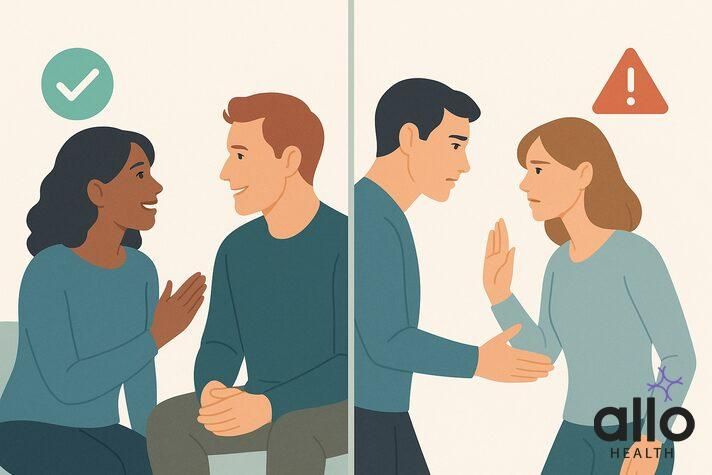
Sexual advances are actions that signal romantic or sexual interest, but their impact depends entirely on context, consent, and mutual comfort. This article breaks down what counts as a sexual advance, how to tell when it’s respectful or inappropriate, and why clear communication and consent are key. It also helps readers recognize the warning signs of non-consensual behavior, especially in workplaces or unequal power dynamics, and offers simple, actionable tips on how to respond if you're uncomfortable. Whether you're feeling confused, concerned, or curious, this guide helps you navigate the fine line between interest and intrusion with clarity and confidence.
Ever had someone flirt with you and you weren’t quite sure if it was harmless fun—or crossing a line? Maybe a coworker kept giving you compliments that started to feel a little too personal. Or maybe you sent a flirty text to someone you liked and later worried, “Was that too much?”. That’s why understanding what counts as a sexual advance, and when it becomes a problem, is so important. Whether you're on the receiving end or the one expressing interest, this article will help you navigate the blurry lines—with clarity, respect, and consent.
What Are Sexual Advances?
Sexual advances are things people do or say to show that they’re interested in you in a sexual or romantic way. Sometimes, they’re sweet or playful. At other times, you might feel uncomfortable or even unsafe — it really depends on the situation and how you feel about it. Here are a few examples to make it clearer:
- Verbal: Flirty talk, sexual jokes, sharing stories of their sex life, calling “babe” or “honey”, or asking you to hang out alone with romantic or sexual intent.
- Non-verbal: Long stares, checking out from head to toe, winks, licking lips, blowing kisses, using body language to show interest.
- Physical: Touching, hugging, brushing up against you, or getting into your personal space.
- Digital: Sending sexual texts, photos, videos, or voice messages. [1]
The thing is, sometimes these actions are welcome — and sometimes they’re not. It really depends on mutual comfort and respect. If both people feel okay and safe, then it's completely fine, otherwise it’s a problem.
When Are Sexual Advances Considered Healthy?
Sexual advances are healthy and respectful when they are:
- Consensual: When both people agree with what’s happening and no one is pressured in any way.
- Mutual: There’s clear interest from both sides. It’s not one-sided or forced.
- Context-appropriate: For example, a flirtatious message may be okay in a dating scene but not in a workplace.
- Respectful: No one feels uncomfortable, disrespected, or objectified.
In a romantic or sexual relationship, little things like flirting or touching (with consent) can bring people closer and overall lead to increased satisfaction in the relationship. [2] But the key is communication. Always checking in by asking “Is this okay?”, and watching for the other person’s reactions shows care and respect.

Sexual expression is a natural part of human connection, but it must always come with mutual respect and consent. If one person is uncomfortable, that’s a clear signal to pause, reflect, and reset. Healthy intimacy begins with healthy communication.

When Do Sexual Advances Become a Problem?
Sexual advances cross the line when you feel uncomfortable, pressured, or unsafe. This usually happens when you are clearly not interested in the other person but they keep doing it anyway completely ignoring your boundaries. Maybe they touch you without your permission or act in a way that feels aggressive to you. This is not at all okay. It also usually happens when there's a power difference involved among the individuals, like a boss hitting on an employee or a teacher making a move on a student. In these situations, you might feel like you can’t say no, even if you want to because you’re afraid of the consequences you’ll face. Unwanted or pushy advances like these, especially if they involve physical contact that really feels invasive — can cause you emotional harm and can quickly turn into sexual harassment or assault. [3]
The Role of Consent in Sexual Advances
One of the biggest mistakes people make when showing interest in someone is assuming that body language or “vibes” are enough to know if the other person is okay with going further. But consent isn’t something you guess — it’s something you ask for. Just because someone is laughing at your jokes or seems to enjoy being around you doesn’t automatically mean they want things to turn sexual. We’re often told to “read the room”, but when it comes to anything intimate, that’s not enough. You don’t find out how someone feels by guessing — you find out by asking. And asking doesn’t ruin the moment — it actually shows you care. It builds trust. It creates safety and comfort, which are the real foundations of intimacy. Because nothing breaks trust faster than moving too quickly without knowing the other person’s boundaries.

How to Handle Unwanted Sexual Advances
If someone makes a sexual advance that you don’t want, it’s okay to speak up to protect yourself. Here are some ways to handle the situation:
- Be direct: A clear “No” — “I’m not interested”, or “That makes me uncomfortable” is enough.
- Set boundaries: Tell the other person what is and isn’t okay with you. For example, you can say, “Please don’t touch me like that again”.
- Use body language: Take a step back, avoid eye contact, or leave the situation if you feel unsafe.
- Trust your feelings: Listen to your gut if something feels off. Never assume that it's just in your head or you're just overthinking. If it's making you uncomfortable then there must be a reason for it.
- Keep a record: If it happens more than once, especially at work or school — write it down or save messages in case you need to report it.
- Reach out for support: Talk to someone you trust — like a friend, HR, or a mental health professional.
On the other hand, if you realize that you may have made someone uncomfortable, it’s important to pause and reflect. Ask for a sincere apology, take responsibility, and make sure not to repeat the behavior ever again. Respecting others' boundaries shows maturity and care.
Disclaimer
The following blog article provides general information and insights on various topics. However, it is important to note that the information presented is not intended as professional advice in any specific field or area. The content of this blog is for general educational and informational purposes only. The content should not be interpreted as endorsement, recommendation, or guarantee of any product, service, or information mentioned. Readers are solely responsible for the decisions and actions they take based on the information provided in this blog. It is essential to exercise individual judgment, critical thinking, and personal responsibility when applying or implementing any information or suggestions discussed in the blog.
Most Asked Questions
Can sexual advances be a form of harassment?
Yes. If advances are unwanted, repeated, or inappropriate, they may be considered harassment, especially in professional or public settings.
How can I say no to a sexual advance without hurting someone?
Use calm, honest language like, “I’m flattered, but I’m not comfortable with this.” You have the right to say no without guilt.
What should I do if I keep getting unwanted advances from the same person?
Set firm boundaries, avoid interaction, and seek help if needed—especially if it feels unsafe or ongoing.
Can I take back consent after initially agreeing?
Yes. Consent can be withdrawn at any time. It’s your right.
Does joking around mean consent?
No. Even if someone laughs or plays along, they can still say no. Everyone has the right to stop anytime.
Sources
- 1.
Technology-Facilitated Sexual Violence and Abuse in Low and Middle-Income Countries: A Scoping Review - Trauma, Violence, & Abuse
- 2.
Responses to Sexual Advances and Satisfaction in Romantic Relationships: Is Yes Good and No Bad? - Social Psychological and Personality Science
- 3.
Sexual Harassment at Workplace - Ministry of Labour & Employment, Govt of India
Why Should You Trust Us?
Why Should You Trust Us?
This article was written by Dr. Sana Khan, who has more than 1 years of experience in the healthcare industry.
Allo has the expertise of over 50+ doctors who have treated more than 1.5 lakh patients both online and offline across 30+ clinics.
Our mission is to provide reliable, accurate, and practical health information to help you make informed decisions.
For This Article
- We reviewed over 10 top-ranking articles on sexual boundaries, consent, and harassment to ensure this guide is accurate, balanced, and up-to-date.
- We referenced trusted sources including journal articles on sexual behavior and interpersonal dynamics.
- We studied real-life discussions on Reddit, YouTube, and Quora to understand the confusion, pain points, and common situations people face around sexual advances.
- We examined legal and psychological frameworks around consent and harassment to differentiate healthy interest from intrusive behavior.
- We included insights that reflect diverse situations and relationship contexts—from dating to workplaces—so readers can apply this information to their own lives.