What Is Sadism?
Written by Dr. Sana Khan

Dr. Sana Khan is a dentist and medical content writer with a degree from Maharashtra University of Health Sciences. With a solid background in clinical research and medical communications, she excels at turning complex health topics into clear, accessible content. Her writing is rooted in accuracy and empathy—especially when covering sensitive health issues—making her a trusted voice in patient education and health awareness.
•
July 30, 2026
Our experts continually monitor the health and wellness space, and we update our articles when new information becomes available.
Quick Read
Sadism refers to finding pleasure—emotional or sexual—in another person’s pain, discomfort, or humiliation. It can range from subtle, everyday behaviors to harmful patterns seen in relationships or disorders like Sexual Sadism Disorder. The roots of sadism often involve early trauma, emotional detachment, or a desire for control, and it’s important to distinguish it from consensual dynamics like BDSM. If you’re noticing red flags in someone’s behavior—especially mocking, controlling, or hurtful actions without remorse—it may be time to reflect, set boundaries, or seek help. Understanding the psychology behind sadism can empower you to protect your mental and emotional well-being.
Have you ever heard someone say, “That person enjoys hurting others—they must be a sadist”? The word gets thrown around a lot, but there’s more to it than just being mean or cruel. At its core, sadism is when someone feels pleasure—often emotional or sexual—from causing pain, discomfort, or humiliation to others.[1] That might sound intense, but here’s the thing: not all sadistic behavior is extreme or even intentional. In fact, some people might show small, subtle signs and not even realize it.[2] The term “sadism” actually comes from the name of a French writer—Marquis de Sade—who was known for writing about violent sexual fantasies in the 1700s.[3] [4]
Is Sadism a Disorder?
It depends. A lot of people have occasional sadistic thoughts or behaviors—like enjoying dark humor or liking a bit of control in certain situations. That doesn’t mean they have a disorder. But in some cases, sadism can show up in more harmful or persistent ways. Here’s a quick comparison:
Term
What It Means
Is It a Disorder?

Everyday Sadism
Mild enjoyment of others’ discomfort (like trolling or intentionally provoking negative reactions)[5]
No
Sadistic Personality Traits

More regular patterns of cruelty, control, or dominance (like bullying or using humiliation as a control tactic)
Not a clinical disorder[6]
Sexual Sadism Disorder
Ongoing, intense sexual arousal from hurting others—especially if it causes harm and acted on non-consensually
Yes (in DSM-5)[7]
In short, context matters. It’s not just what someone does, but why, how often, and whether anyone is getting hurt.
What Causes Sadism?
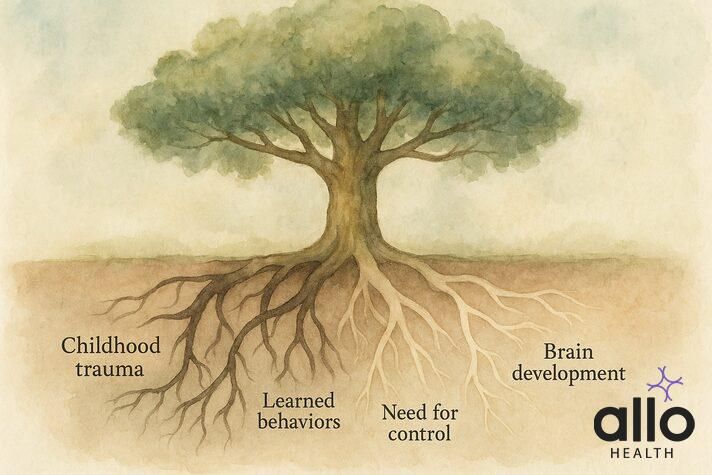
Like most things in psychology, it’s not just one reason. Sadistic traits usually come from a mix of things—how someone grew up, what they’ve been through, and even brain wiring. Here’s what studies suggest:
- Childhood trauma**:** People who felt powerless or were mistreated as kids might grow up craving control.[8]
- Learned behavior**:** If someone grew up seeing others act in a manipulative or hurtful way, they might copy that behavior later.[9]
- Biology**:** Brain scans show that some sadistic individuals may have differences in how they process empathy and rewards, which could make causing pain feel rewarding to them.[10]
- Personality**:** Sadism often goes hand in hand with traits like narcissism and not feeling guilty for hurting others.[11]
- Need for control or dominance: Sadistic behavior can stem from a strong desire to feel powerful or superior, especially if the person feels insecure or powerless in other areas of life.[12]
One 2013 study found that people with sadistic traits were more likely to choose tasks that involved harming insects—even when they didn’t have to. It’s called “everyday sadism,” and it shows how subtle these behaviors can be.[5]
Being curious about sadism or your own thoughts doesn’t mean something’s wrong with you. It’s actually a healthy sign that you’re trying to understand things better — and in any relationship, what really matters is mutual respect, clear boundaries, and emotional safety.
What Does Sadism Look Like? (It’s Not Always About Violence)
Sadism isn’t always about physical violence. It can show up in subtle or socially acceptable ways that still cause real harm. Here are some signs to look for—especially if their behavior leaves you feeling uneasy:
- Enjoying others’ pain or discomfort – whether physical, emotional, or social.[13]
- Mocking, humiliating, or putting others down regularly, especially in front of others — often by targeting their insecurities to make them feel ashamed.[13]
- Get defensive or mocking when you express hurt, instead of showing concern.[13]
- Power play and control – feeling superior by making others feel small, afraid, or uncomfortable especially in relationships.[13]
- Lacks guilt or empathy after hurting someone.[13]
- Seeking conflict — thrives on drama, tension, or arguments, or pushing people’s boundaries.[13]
- Hidden aggression – using sarcasm, manipulation, or passive-aggressive behavior to undermine or harm others.[13]
- Enjoys cruelty framed as “just a joke”.[13]
If any of this sounds familiar, it might be time to take a step back and reflect on how you feel around this person.
Sadism in Relationships: What’s Healthy vs. What’s Harmful?
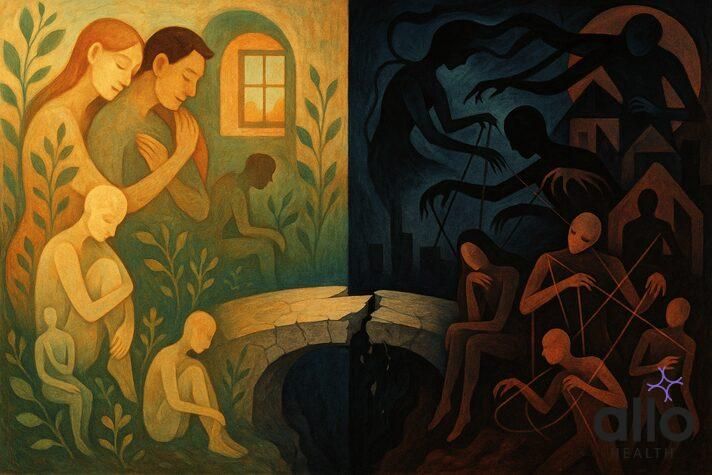
Not all sadistic behavior in relationships is abusive. The key difference lies in consent, communication, and intent. Here's a quick comparison to help you identify the line between safe exploration and harm:
Aspect
Consensual Sadism (Okay)
Harmful Sadism (Not Okay)
Consent
Freely given, enthusiastic, and ongoing
Absent, unclear, or pressured
Communication
Open discussions before, during, and after
Manipulative, one-sided, or completely lacking
Boundaries
Clearly set and always respected
Ignored, dismissed, or constantly violated
Emotional Safety
Both partners feel safe, cared for, and emotionally supported
The other person feels unsafe, emotionally drained, humiliated, or constantly hurt
Intent
Mutual exploration for shared pleasure
Used to dominate, punish, or control the other person[14]
Aftercare
Prioritized to ensure comfort and connection
Neglected or seen as unnecessary
Important note: BDSM ≠ abuse: Sadism is not like the power plays of masochism or consensual BDSM, where healthy dynamics are rooted in mutual trust, respect, and clear boundaries based on clear consent.[15] [16] [17]
How to Cope if Someone’s Sadism Is Hurting You
If you’re dealing with someone who seems to enjoy causing harm — emotionally, verbally, or sexually — it can take a serious toll on your mental health. Whether it’s a partner or someone else in your life, here’s how you can start protecting yourself:
- Set clear boundaries and stick to them - You have every right to say “No” or “That’s not okay with me.” If someone continues to cross the line after you’ve clearly set boundaries, that’s not a miscommunication — it’s a red flag.[18]
- Seek support from a therapist or counselor - A mental health professional can help you process what’s happening, validate your feelings, and guide you toward practical ways to stay safe — emotionally and physically.[19]
- Document patterns of manipulation or abuse - Keep a private record of incidents, how they made you feel, and any patterns you notice. This can help you see things more clearly and support you if you decide to seek help or take action later.[20]
- Prioritize your emotional safety - If you feel anxious, drained, or unsafe around someone — that’s reason enough to take a step back. Your peace matters, even if the other person doesn’t see it that way.[19]
- Don’t minimize what you’re experiencing - It's easy to second-guess yourself, but if something feels wrong, it probably is. Trust your gut — your discomfort is valid.[20]
Disclaimer
The following blog article provides general information and insights on various topics. However, it is important to note that the information presented is not intended as professional advice in any specific field or area. The content of this blog is for general educational and informational purposes only. The content should not be interpreted as endorsement, recommendation, or guarantee of any product, service, or information mentioned. Readers are solely responsible for the decisions and actions they take based on the information provided in this blog. It is essential to exercise individual judgment, critical thinking, and personal responsibility when applying or implementing any information or suggestions discussed in the blog.
Most Asked Questions
How can I tell if my partner’s behavior is sadistic or just dominant?
If their behavior hurts you emotionally or physically, or makes you feel afraid or powerless—especially without your consent—it may be sadistic or abusive.
Can someone be a sadist without realizing it?
Yes. Some people may not realize their enjoyment of power or humiliation is part of sadistic behavior—especially if it’s normalized in their environment.
Is sadism always linked to sexual behavior?
No. While some sadistic traits appear in sexual contexts, others show up in emotional or social situations — like belittling others, bullying, or enjoying someone’s discomfort.
What is the difference between sadism and BDSM?
Sadism in a consensual BDSM context involves mutual agreement, safety, and respect. In contrast, non-consensual sadism causes harm or distress without the other person's consent.
Is it okay to have sadistic fantasies?
Having fantasies doesn’t make someone bad or abusive. Fantasies are normal, and what matters most is how you act in real life—especially in relationships.
What is a masochist vs a sadist?
A masochist enjoys receiving pain or humiliation, while a sadist derives pleasure from causing it. In consensual contexts (like BDSM), these roles are understood and agreed upon by both people.
Sources
- 1.
Sadism - APA Dictionary of Psychology
- 2.
Do Sadists Feel Sad After Inflicting Pain? UK Psychology Grad Reveals Intriguing Results
- 3.
The Enigma of the Will: Sade’s Psychology of Evil
- 4.
The Marquis de_Sade - oxford university press
- 5.
Behavioral confirmation of everyday sadism - Psychological Science
- 6.
The Assessment of Sadistic Personality: Preliminary psychometric evidence for a new measure - Personality and Individual Differences
- 7.
The DSM Diagnostic Criteria for Sexual Sadism - Archives of Sexual Behavior
- 8.
Childhood Trauma Predicts Sadistic Traits and Violent Behavior in Incarcerated Youth - Child Psychiatry & Human Development
- 9.
Childhood abuse and sadomasochism: New insights - Sexologies
- 10.
Increased frontotemporal activation during pain observation in sexual sadism: preliminary findings - JAMA Psychiatry
- 11.
Sadism and Personality Disorders - Current Psychiatry Reports
- 12.
Toward a Taxonomy of Dark Personalities - Current Directions in Psychological Science
- 13.
Sadistic abuse: definition, recognition, and treatment - International Society for the Study of Trauma and Dissociation
- 14.
Sexual Sadism - International Journal of Offender Therapy and Comparative Criminology
- 15.
The Index of Consensual Sexual Sadism (ICSS): Scale development, validation, measurement invariance, and nomological network comparisons with everyday sadism - Psychological Assessment
- 16.
A Comparison of BDSM Sadism and Everyday Sadism in Multiple Adult Populations - Northern Illinois University
- 17.
Consent vs. Coercion: BDSM Interactions Highlight a Fine but Immutable Line - The New School Psychology Bulletin
- 18.
What Is a Sadistic Narcissist? Tips To Deal With This Personality Disorder - Mantra Care
- 19.
Yes, abusive partners brainwash their victims - SVRI
- 20.
Energy Vampires: Emotional Sadism and the Narcissistic Relationship by Dr. Roberta Cone - Straight Talk Clinic
Why Should You Trust Us?
Why Should You Trust Us?
This article was written by Dr. Sana Khan, who has more than 1 years of experience in the healthcare industry.
Allo has the expertise of over 50+ doctors who have treated more than 1.5 lakh patients both online and offline across 30+ clinics.
Our mission is to provide reliable, accurate, and practical health information to help you make informed decisions.
For This Article
- We reviewed over 20+ top-ranking articles on sadism—both clinical and conversational—to ensure this content is thorough, current, and reflects a balanced understanding.
- We referenced peer-reviewed studies and academic papers from credible databases like PubMed, NIH, and university repositories to ground our insights in research.
- We analyzed over 10 published psychological studies on sadistic behavior, personality traits, and relationship dynamics to help differentiate between everyday and disordered sadism.
- We explored real user experiences on Reddit, Quora, and YouTube comments to understand how people describe, question, and cope with sadistic behavior in daily life.