Vitalix-D Capsule Precautions & Who Should Avoid It
Written by Dr. Paavas Sharma

Dr. Paavas Sharma holds a Bachelor's degree in Dental Surgery from Manipal Academy of Higher Education. In her journey, she has garnered numerous accolades for her creative writing. Proficient in both English and Hindi, she particularly enjoys delving into topics related to sexual and dental health and possesses experience in writing about oncology. Dr. Paavas has 3 years of professional writing experience and was also involved in editorial teams for magazines since her school and college days. Apart from writing she consistently seeks opportunities for personal expression and enjoyment, whether it's cooking, Netflix sessions or indulging in crafts.
•
May 29, 2026
Our experts continually monitor the health and wellness space, and we update our articles when new information becomes available.
Quick Read
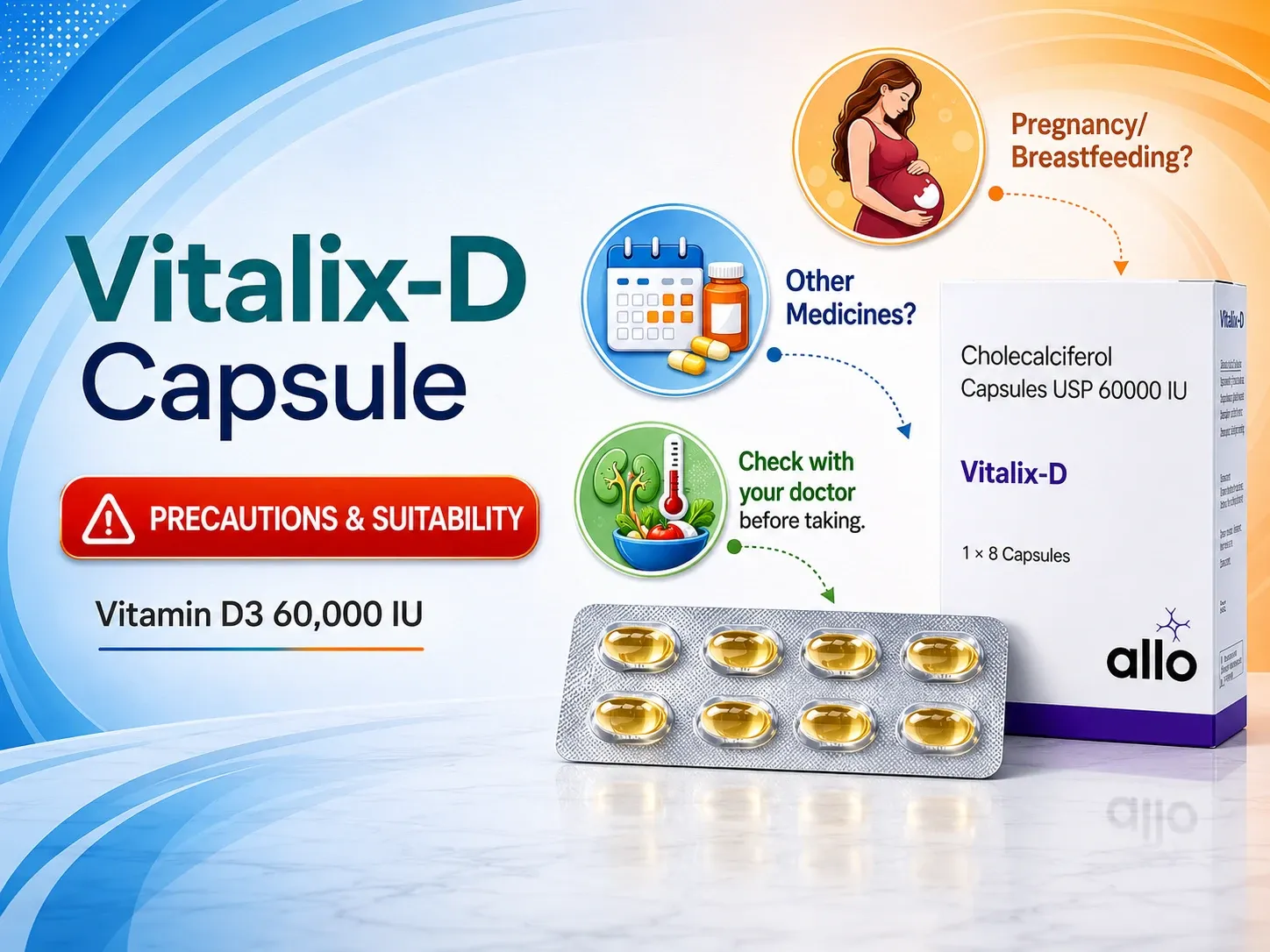
Vitalix-D capsule is safe for most people when taken as prescribed. However, people with kidney disease, kidney stones, or high calcium levels need caution. Pregnant and breastfeeding women should use it only if advised by a doctor. High-dose vitamin D should never be taken casually or without supervision. Always report unusual symptoms during treatment.
Vitalix-D is a high-dose Vitamin D3 medicine prescribed to treat vitamin D deficiency and support bone health. While it is safe and effective for most people when taken correctly, certain precautions are important because excessive vitamin D can affect calcium levels in the body.
This article explains who Vitalix-D is suitable for, who should use it with caution, and when it may not be appropriate.
Who can usually take Vitalix-D safely?
Vitalix-D is generally suitable for:
- Adults diagnosed with vitamin D deficiency
- People with low vitamin D levels due to limited sun exposure
- Individuals with bone or muscle pain linked to deficiency
- Older adults at risk of weak bones
- Patients prescribed the medicine by a doctor after evaluation
When taken in the correct dose and for the recommended duration, most people tolerate Vitalix-D well.
Why precautions are important with Vitamin D3
Vitamin D helps the body absorb calcium. While this is beneficial, too much vitamin D can raise calcium levels in the blood beyond normal limits. High calcium levels can affect the kidneys, digestive system, and overall health.

Because Vitalix-D contains a high dose (60,000 IU), it should always be taken under medical supervision.
Who should use Vitalix-D with caution?
1. People with kidney problems
Patients with kidney disease need extra caution while taking vitamin D. Reduced kidney function can affect how calcium is handled by the body.
Vitalix-D should be used carefully in people with:
- Chronic kidney disease
- History of kidney stones
In severe kidney impairment or active kidney stones, doctors may avoid prescribing high-dose vitamin D altogether.

2. People with high calcium levels
Vitalix-D should not be taken by individuals who already have:
- High calcium levels in the blood
- Excess calcium in the urine
Taking vitamin D in such cases can worsen calcium imbalance and increase the risk of complications.
3. People allergic to Vitamin D3
Vitalix-D should be avoided if you are allergic to:
- Cholecalciferol (Vitamin D3)
- Any ingredient used in the capsule formulation
Always inform your doctor about known allergies before starting treatment.
4. Pregnancy and breastfeeding
Vitamin D is important during pregnancy and breastfeeding, but dose matters.
- High-dose vitamin D medicines like Vitalix-D should be taken only if prescribed
- Your doctor will decide the dose based on individual needs
- Self-medication during pregnancy can be harmful
Breastfeeding mothers should also use it only under medical advice.
5. Children and adolescents
High-dose Vitamin D3 formulations are usually not meant for routine use in children unless specifically prescribed by a pediatrician. Dosing in children differs from adults and depends on age, weight, and deficiency severity.
Drug and supplement interactions to be aware of
Certain medicines can affect how vitamin D is absorbed or processed. Always tell your doctor if you are taking:
- Antacids
- Calcium supplements
- Other vitamin D products
- Medicines for seizures or long-term steroid therapy
Taking multiple vitamin D or calcium supplements together without guidance can increase the risk of side effects.
Lifestyle factors that affect suitability
Your doctor may also consider:
- Sun exposure habits
- Diet (especially calcium and vitamin D intake)
- Alcohol consumption
- Existing medical conditions
These factors help determine whether Vitalix-D is appropriate and for how long it should be taken.
Warning signs to watch for
While on Vitalix-D, inform your doctor if you notice:
- Nausea or vomiting
- Poor appetite
- Constipation
- Weakness or fatigue
- Unexplained weight loss
- Increased thirst or urination
These may indicate rising calcium levels and require medical review.
Suitability summary
| Situation | Suitability |
|---|---|
| Vitamin D deficiency (diagnosed) | Suitable if prescribed |
| Normal healthy adults | Only if advised |
| Kidney disease | Use with caution |
| Kidney stones | Usually avoided |
| High calcium levels | Not suitable |
| Pregnancy | Only if prescribed |
| Breastfeeding | Generally safe if prescribed |
| Long-term self-use | Not recommended |
Key takeaway
Vitalix-D is effective and safe for treating vitamin D deficiency when used under a doctor’s guidance. However, because it is a high-dose vitamin D medicine, it is not suitable for everyone and should not be taken casually or without medical advice.
Proper screening, correct dosing, and awareness of precautions help ensure safe and effective treatment.

Disclaimer
The following blog article provides general information and insights on various topics. However, it is important to note that the information presented is not intended as professional advice in any specific field or area. The content of this blog is for general educational and informational purposes only. The content should not be interpreted as endorsement, recommendation, or guarantee of any product, service, or information mentioned. Readers are solely responsible for the decisions and actions they take based on the information provided in this blog. It is essential to exercise individual judgment, critical thinking, and personal responsibility when applying or implementing any information or suggestions discussed in the blog.
Most Asked Questions
Who should avoid taking Vitalix-D capsule?
People with high calcium levels, kidney stones, or severe kidney disease should usually avoid it.
Is Vitalix-D safe during pregnancy?
It should be taken only if prescribed by a doctor.
Can elderly people take Vitalix-D?
Yes, if prescribed and monitored appropriately.
Can Vitalix-D cause kidney problems?
Incorrect or long-term use can increase calcium levels, which may affect the kidneys.
What symptoms should I report while taking Vitalix-D?
Nausea, constipation, weakness, or poor appetite should be reported.
Why Should You Trust Us?
Why Should You Trust Us?
This article was written by Dr. Paavas Sharma, who has more than 4 years of experience in the healthcare industry.
Allo has the expertise of over 50+ doctors who have treated more than 1.5 lakh patients both online and offline across 30+ clinics.
Our mission is to provide reliable, accurate, and practical health information to help you make informed decisions.
For This Article
- We reviewed medical safety guidelines related to Vitamin D3 use in special populations.
- We analysed clinical literature on kidney health and calcium balance.
- We referred to prescribing information and safety warnings for high-dose vitamin D.
- We examined real-world patient concerns from forums and Q&A platforms.
- The content prioritises patient safety and risk awareness.