Alfuzosin and Erectile Dysfunction: Dosages, Side Effects, and Uses
Written by Dr. Deepali Anand

Dr. Deepali is a medical writer and healthcare professional with a background in clinical surgery and patient care. Having transitioned from active clinical practice to medical communications, she specializes in bridging the gap between complex clinical data and patient education. Dr. Deepali is dedicated to creating evidence-based content that is grounded in scientific rigor and empathy, ensuring that sensitive topics like sexual wellness and mental health are accessible and empowering for every reader.
•
July 30, 2026
Our experts continually monitor the health and wellness space, and we update our articles when new information becomes available.
Quick Read
Alfuzosin rarely causes erectile dysfunction and is actually considered one of the most sexual-function-friendly alpha-blockers used for treating BPH. Most studies show it either improves erectile function (by relieving urinary symptoms) or has no negative effect on erections. It's generally safe to combine with ED medications like sildenafil under medical guidance, and this combination often works better than either drug alone for men dealing with both urinary symptoms and ED. While alfuzosin itself isn't an ED treatment, it won't harm your erections, though it may occasionally affect ejaculation or cause dizziness due to blood pressure changes.
Alfuzosin erectile dysfunction is a common search because people want to know one simple thing: Does alfuzosin affect erections, and is it safe to use with ED medications? The short answer is reassuring; alfuzosin rarely causes erectile dysfunction and is generally considered one of the more “sexual-function–friendly” alpha-blockers. Still, it can influence ejaculation, blood pressure, and overall comfort, which makes it important to understand how it works and what to expect.
In this article, we’ll walk through what the research says about alfuzosin and sexual function, how it compares with other BPH medicines, and whether it can improve or worsen ED.
Does Alfuzosin Cause Erectile Dysfunction?
Alfuzosin is an alpha-1 adrenergic blocker commonly prescribed for lower urinary tract symptoms (LUTS) caused by benign prostatic hyperplasia (BPH). Many people worry about its effect on sexual function, but the relationship between alfuzosin and erectile dysfunction is more complex than it seems.
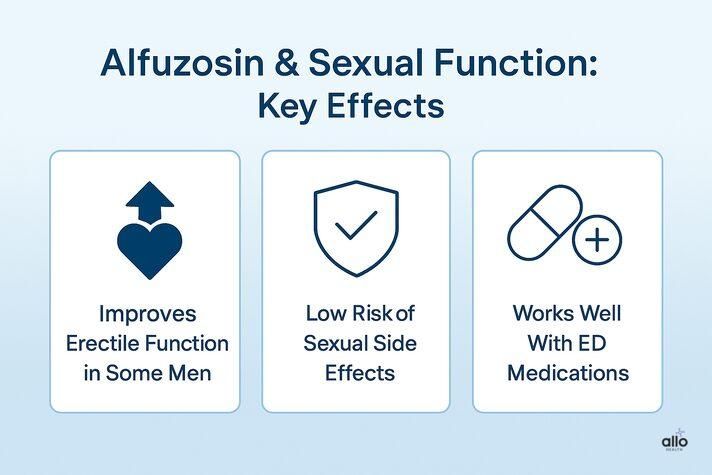
Most studies show that alfuzosin either improves erectile function or has no negative effect on erections — and hormone-related cases may benefit from Anastrozole for ED. In fact, some men with BPH notice better sexual comfort once their urinary symptoms improve.
A few studies do report that alfuzosin can rarely cause ED, but this is uncommon. It mainly affects ejaculation, not erection quality[2]. But its side effects, like low blood pressure, dizziness, or fatigue, may indirectly make it harder to get or maintain an erection.

Overall, alfuzosin is considered one of the BPH medicines with the lowest risk of erectile dysfunction — and faster-onset options like Avanafil for ED remain available when ED is present. If ED symptoms appear after starting it, it’s usually mild and may be linked to other factors, not the medicine alone.
According to Allo Health, every 1 in 2 patients has ED, which is based on our internal clinical data of more than 2.5 Lakh patients who come to our clinic.

Allo asks
Have you noticed any sexual changes after starting alfuzosin?
Alfuzosin Effects on Sexual Function
Alfuzosin can influence sexual function in a few different ways. Most of these effects are mild, and many are actually positive for men dealing with LUTS and ED.

Does Alfuzosin Improve Erectile Dysfunction?
Some studies show that 10 mg once daily of alfuzosin may help improve erectile function in men with lower urinary tract symptoms (LUTS)[3]. This improvement is likely due to:
- Relief from LUTS
- Better overall quality of life
- Relaxing effects on the smooth muscles in the penis
So while alfuzosin is not an ED medicine, it can still create a positive impact for some men.
Lack of Negative Impact of Alfuzosin on ED
Alfuzosin is known for having a low risk of sexual side effects. Compared to other alpha-blockers, especially tamsulosin, which has a higher chance of causing erectile dysfunction, alfuzosin is generally more sexually functional–friendly.
Combination Therapy: ED Medication and Alfuzosin
Research shows that combining alfuzosin with phosphodiesterase-5 (PDE5) inhibitors, such as sildenafil, is often more effective for men who have both LUTS and ED[4].
This combination:
- Provides better improvement in urinary symptoms
- Enhances erectile function
- It is considered safe for most men when used under medical guidance
Overall, a combo of alfuzosin and a PDE5 inhibitor can work better than either medicine alone for treating both LUTS and ED.
Most people worry that alfuzosin might harm their erections, but in reality, it’s one of the alpha-blockers least likely to cause erectile dysfunction. If anything changes, we look at the whole picture, not just the medicine.
Should You Take Alfuzosin for Erectile Dysfunction?
Alfuzosin works by blocking alpha-1 receptors in the prostate and bladder neck. This helps the muscles in these areas relax, improves urine flow, and reduces symptoms of benign prostatic hyperplasia (BPH). It also reduces the tightening effect of certain body chemicals (like epinephrine and norepinephrine), which can cause mild widening of blood vessels.
As alfuzosin relaxes smooth muscles, many people think it might help with erectile dysfunction, too. But this is a common misunderstanding.
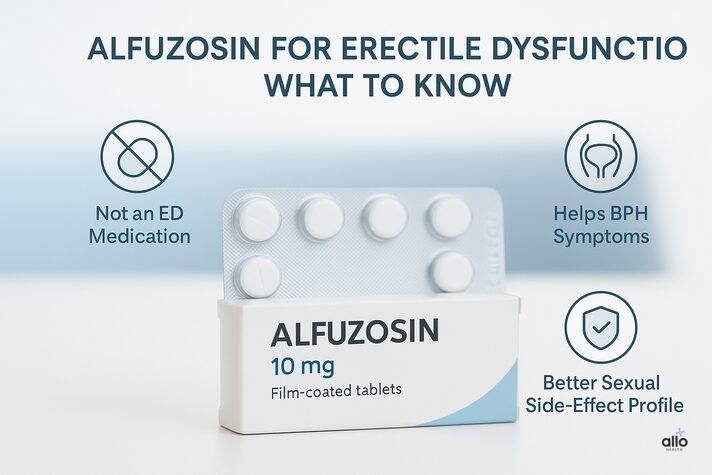
Alfuzosin does not work like sildenafil or tadalafil, and it cannot replace ED medicines like Avanafil tablet for ED. Its main action is on the urinary tract, not on the blood flow process needed for erections.
For men with BPH who worry about sexual side effects, alfuzosin does have one benefit: It has a better sexual side-effect profile and a lower chance of causing erectile dysfunction than some other alpha-blockers.
Still, it’s important to remember that alfuzosin is not designed to treat ED. If someone has both BPH and ED, doctors usually consider a combination approach, such as using alfuzosin along with a suitable ED medication.
Sexual Side Effects of Alfuzosin
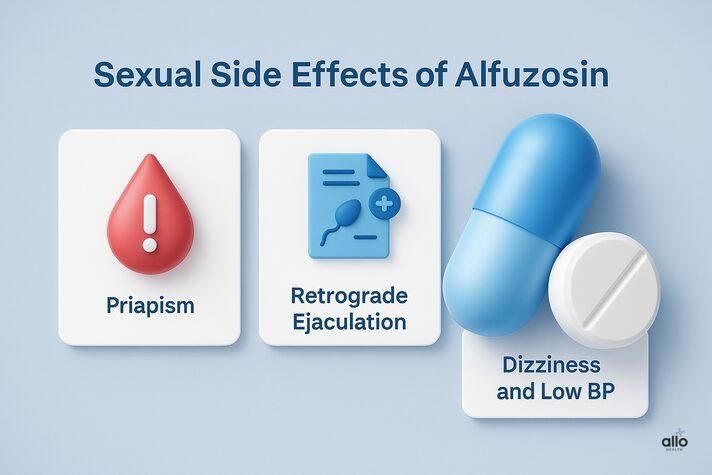
Alfuzosin is known for having a favorable sexual side-effect profile, but a few rare issues can still occur. Most of these are mild, but some require quick attention.
-
Priapism (Very Rare)
In rare cases, alfuzosin may cause priapism, which is a prolonged and painful erection. This is a medical emergency and needs immediate treatment to prevent long-term damage to the penis.
-
Retrograde Ejaculation
Some men may experience retrograde ejaculation, where semen travels backward into the bladder instead of coming out normally. This is harmless but can be concerning if you’re not expecting it.
-
Dizziness and Low Blood Pressure
The most common side effect is dizziness, which usually happens due to a drop in blood pressure, especially when standing up quickly. This effect does not directly impact erections, but it can make you feel light-headed or unsteady.
When to Talk to a Doctor
If you notice any erectile dysfunction symptoms while using alfuzosin, it’s a good idea to speak with your doctor. They can help identify whether the ED is related to the medication or caused by another health issue. You should see a doctor if you experience:
- Persistent ED
- Dizziness or fainting
- Severe ejaculation problems
- Chest discomfort
- Using ED medications and alfuzosin together without medical advice
These symptoms need proper evaluation to keep you safe and to make sure your treatment plan is right for your body.
Possible Alternatives Your Doctor May Suggest
If alfuzosin seems to be affecting your sexual health, your doctor may recommend other options, such as:
- Tamsulosin
- Silodosin
- Finasteride (note: this medication can have its own sexual side effects)
- Lifestyle-based approaches, such as exercise, weight management, or reducing stress
Your doctor will choose the option that best fits your symptoms, sexual health concerns, and overall medical condition.
Bottom Line
Alfuzosin-induced erectile dysfunction is rare — and traditional adjuncts like Safed Musli for ED are sometimes considered alongside treatment. In fact, for many men with BPH, alfuzosin is often seen as a safer and more comfortable option compared to other alpha-blockers because it may even help improve erectile function by easing urinary symptoms.
That said, alfuzosin is not an ED treatment. If you notice difficulty with erections while taking alfuzosin, it’s best to talk to your doctor. They can help find out what’s causing the issue and guide you toward the safest and most effective treatment plan.
Disclaimer
The following blog article provides general information and insights on various topics. However, it is important to note that the information presented is not intended as professional advice in any specific field or area. The content of this blog is for general educational and informational purposes only. The content should not be interpreted as endorsement, recommendation, or guarantee of any product, service, or information mentioned. Readers are solely responsible for the decisions and actions they take based on the information provided in this blog. It is essential to exercise individual judgment, critical thinking, and personal responsibility when applying or implementing any information or suggestions discussed in the blog.
Most Asked Questions
Can alfuzosin treat erectile dysfunction?
No, alfuzosin is not an ED medication. It’s used to treat urinary symptoms caused by an enlarged prostate (BPH). Some men may notice better erections after starting it because relieving LUTS can indirectly improve sexual comfort, but alfuzosin itself does not treat ED.
Can you take Viagra if you take alfuzosin?
Yes, but only under medical guidance. Both medicines lower blood pressure, and taking them together can sometimes cause dizziness or light-headedness. A doctor can help you adjust the timing or dosage to make the combination safer.
Does alfuzosin cause erectile dysfunction?
ED from alfuzosin is uncommon. Most research shows that alfuzosin has a low risk of sexual side effects and may even improve erections in some men by reducing urinary symptoms. If you notice new ED symptoms, it’s worth checking in with your doctor.
Which erectile dysfunction pill is safest for older men using alfuzosin?
For older men or those with BPH, sildenafil (Viagra) or tadalafil can be used, but only with medical supervision to avoid low blood pressure. A doctor can help choose the safest option based on age, heart health, and current medications.
What should I do if my erections weaken after starting alfuzosin?
Start by monitoring when the symptoms happen and whether dizziness or low blood pressure accompanies them. Then talk to your doctor. They may adjust your dose, switch medications, or suggest ED-specific treatments if needed.
Sources
- 1.
Alfuzosin 10 mg once daily improves sexual function in men with lower urinary tract symptoms and concomitant sexual dysfunction
- 2.
Alfuzosin and Its Effect on Ejaculatory Dysfunction: A Systematic Review
- 3.
Efficacy of Long-Term Daily Dosage of Alfuzosin 10 mg upon Sexual Function of Benign Prostatic Hypertrophy Patients: Two-Year Prospective Observational Study
- 4.
Combination of alfuzosin and sildenafil is superior to monotherapy in treating lower urinary tract symptoms and erectile dysfunction