Atherosclerosis and Erectile Dysfunction: How Blocked Arteries Affect Erections
Written by Dr. Pranitha Bangera

Dr. Pranitha Bangera is a gold-medalist healthcare professional with an elite foundation in clinical training and patient care. A researcher at heart, she specializes in creating high-impact, research-driven medical content that empowers readers through accessible patient education. Dr. Bangera focuses on the intersection of digital health and clinical communication, specifically within the fields of sexual health and mental well-being. Her work is dedicated to making complex medical innovations understandable and trustworthy for a global audience.
•
July 30, 2026
Our experts continually monitor the health and wellness space, and we update our articles when new information becomes available.
Quick Read
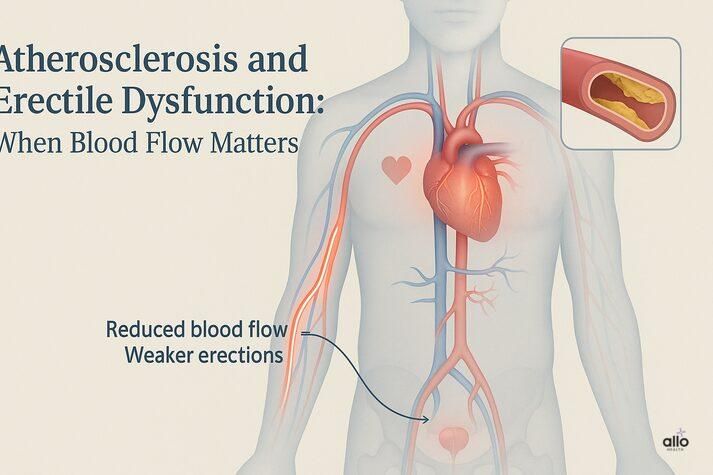
Atherosclerosis, the buildup of fatty plaque inside arteries, can reduce blood flow and lead to erectile dysfunction (ED) long before heart symptoms appear. This happens because the smaller penile arteries get blocked earlier than larger ones, a concept known as the “Artery Size Effect.” Early detection is crucial since ED can be an early warning sign of vascular disease or coronary artery disease. With timely treatment, including medications, lifestyle changes, and better heart care, blood flow can often be restored, helping men regain both sexual function and overall heart health.
Many men think of erectile dysfunction (ED) as a private or isolated issue, but in reality, it can reveal a lot about what’s happening inside your blood vessels.. One of the most common causes is atherosclerosis: the gradual buildup of fatty plaque that narrows and stiffens blood vessels, slowing down blood flow. Because the arteries in the penis are smaller than those in the heart, erection problems can appear years before any signs of heart disease. In other words, ED can act as an early warning sign of vascular disease and coronary artery disease. In this article, we’ll explore how atherosclerosis affects sexual function, why ED can act as an early warning sign for heart trouble, and the most effective ways to treat, manage, and prevent it through medical care and lifestyle changes.
Does Atherosclerosis Cause Erectile Dysfunction?
Yes, atherosclerosis can directly cause erectile dysfunction. In simple terms, atherosclerosis means your arteries are getting narrower or stiffer because of fatty deposits, also called atherosclerotic plaque, due to conditions like high cholesterol, which can lead to ED. When this buildup happens, blood flow to different parts of the body reduces, and since the penis depends on a good supply of blood for erections, even a small blockage can make it difficult to get or keep one. Researchers have concluded that men often experience erectile dysfunction several years before being diagnosed with heart disease. An interesting explanation for this is the “Artery Size Effect.”
What is the Artery Size Effect?
It's a theory that suggests smaller arteries, like the ones supplying blood to the penis, get blocked much earlier than larger arteries, such as those in the heart — explaining why erectile dysfunction and age are so closely linked. Because of this, erection problems often show up years before heart disease or a heart attack occurs. [1] In many cases, erectile dysfunction can act as an early warning sign of hidden vascular disease or coronary artery disease, giving doctors an important opportunity to detect and manage heart issues before they become serious. Several studies back this theory:
- A study found that ED can appear two to five years before symptoms of coronary artery disease, making it one of the earliest warning signs of poor heart and artery health. [2]
- Another study confirmed that the early stage of atherosclerosis (endothelial dysfunction) is strongly linked to erectile dysfunction. [3]
How Does Atherosclerosis Cause Erectile Dysfunction?
1. Reduced Blood Flow to the Penis
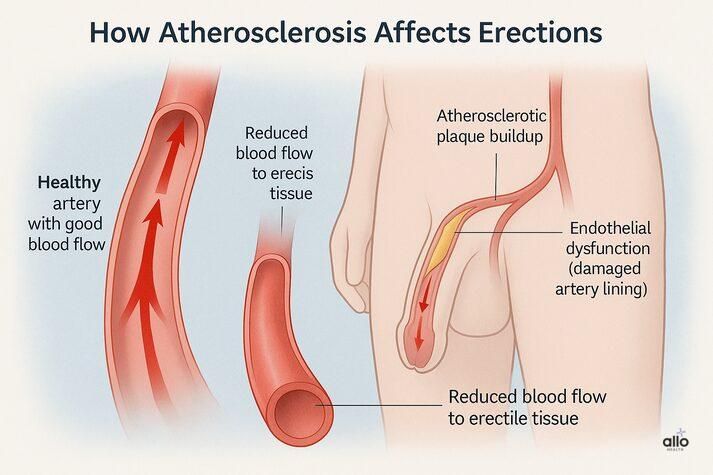
Over time, the plaque that is deposited inside blood vessels makes the arteries narrow and stiff, slowing down blood flow throughout the body. Since the penile arteries are much smaller than the other, bigger arteries, even a mild blockage can drastically reduce circulation to the penis. When less blood reaches the erectile tissue (corpus cavernosum), it becomes difficult to achieve or maintain a firm erection. [4]
2. Damage to the Artery Lining
The inner lining of blood vessels, known as the endothelium, plays a vital role in healthy erections — damage here is the hallmark of arteriogenic erectile dysfunction. When it’s damaged by high cholesterol, diabetes, smoking, or inflammation, it can’t produce enough nitric oxide (NO), the chemical that signals the arteries in the penis to relax. This damage, called endothelial dysfunction, disrupts the normal chain of events needed for blood to fill the erectile tissue. [3]

3. Impaired Blood Vessel Activity
Nitric oxide is a natural chemical your body makes to help control blood flow. It works like a “green light” for circulation, signaling the tiny muscles inside the arteries to relax so blood can move freely into the penis. This process happens through a chain reaction called the NO-cGMP-PDE5 pathway.[5] In atherosclerosis, however, the arteries become stiff and damaged, and the body produces much less nitric oxide. The remaining nitric oxide also gets destroyed by inflammation. As a result, the muscles stay tense, the arteries don’t open enough, and erections become weaker or short-lived.
4. Inflammation and Plaque Buildup
Inflammation plays a big part in atherosclerosis. When immune cells attack the plaque, they release harmful substances that further injure the inner lining of blood vessels (vascular endothelium). Over time, this makes the arteries stiffer and keeps the inflammation cycle going, further reducing healthy blood flow. [6]
Is ED Caused by Atherosclerosis Permanent?
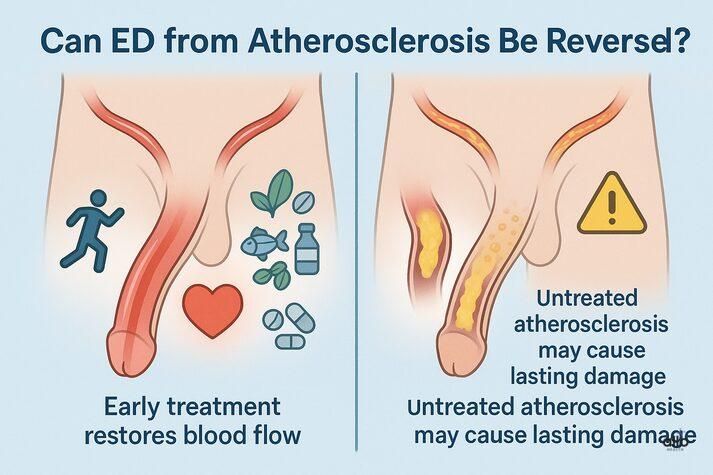
Not always. With early diagnosis and proper atherosclerosis erectile dysfunction treatment, blood flow can often be restored, and mild damage may even heal. If the arteries are only partly blocked, medicines and lifestyle changes can help bring back normal function. But if the condition is ignored for too long, the arteries may become stiff and the erectile tissue may get damaged. In such cases, more advanced treatments might be needed.
When to See a Doctor
You should consult a doctor if you notice any of these signs, especially since conditions like back pain and erectile dysfunction can appear together:
- Gradual loss of erection firmness
- Difficulty maintaining a penile erection despite desire
- Presence of cardiovascular risk factors such as high blood pressure, diabetes, or high cholesterol
- Family history of coronary artery disease or peripheral vascular disease.
When a man comes in with new erection problems, we always look beyond the surface. Sometimes, it’s the first clue of a heart or blood vessel issue developing quietly underneath.
How to Manage ED Caused by Atherosclerosis
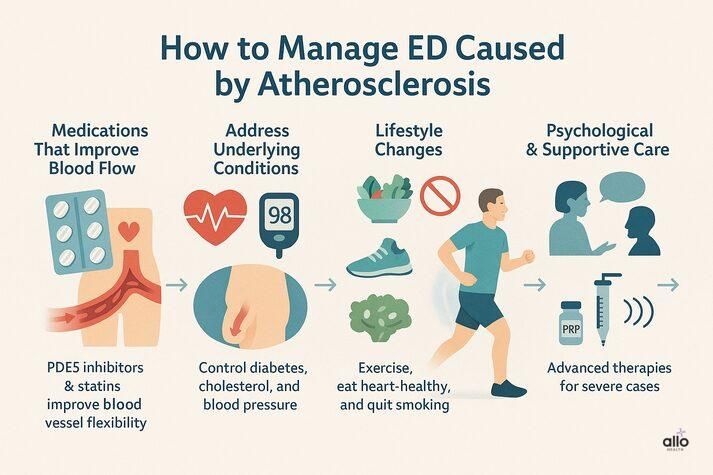
Comprehensive atherosclerosis erectile dysfunction treatment focuses on both restoring sexual function and cardiovascular repair:
1. Medications That Improve Blood Flow
- PDE5 inhibitors like sildenafil citrate (Viagra), tadalafil (Cialis), and vardenafil (Levitra) improve blood flow to the penis. They are safe for most cardiovascular patients, except those taking nitrates.
- Statins help lower bad cholesterol and improve how blood vessels work. They boost nitric oxide production, which relaxes the arteries and helps them stay flexible and healthy
2. Address Underlying Conditions
It’s very important to manage heart-related risk factors carefully. Treating conditions like high blood pressure, diabetes, and high cholesterol early can stop atherosclerosis from getting worse. Controlled sugar levels and reduced cholesterol (oxidized LDL ) protect blood vessels, and this improves vascular ED.

3. Lifestyle Changes
- Quit cigarette smoking and limit alcohol.
- Exercise regularly to boost heart health and arterial elasticity.
- Eat foods rich in antioxidants, omega-3 fatty acids to increase nitric oxide levels.
- Maintain a healthy resting heart rate and body weight.
4. Psychological & Supportive Care
Chronic illness can create performance anxiety. Psychological therapy, like sex therapy or counseling, helps men rebuild confidence and improve overall sexual health.
4. Advanced Treatment
In more severe cases, advanced medical options may be needed to improve erections. These can include:
- Vacuum Erection Devices (VEDs)
- Platelet-Rich Plasma (PRP) Therapy
- Low-Intensity Shock Wave Therapy (LiSWT)
- Penile Prosthesis Surgery
How to Prevent ED Caused by Atherosclerosis
Prevention overlaps strongly with heart protection — your erectile dysfunction treatment plan may mirror your cardiac care:
- Monitor and manage cardiovascular risk factors early.
- Get regular check-ups for cholesterol, blood sugar, and blood pressure.
- Eat a Mediterranean-style diet, rich in fruits, vegetables, whole grains, fish, and olive oil, to reduce bad cholesterol and inflammation.
- Avoid a sedentary lifestyle. Incorporate any form of daily movement and maintain a healthy weight.
Conclusion
Erectile dysfunction is often the body’s earliest alarm for heart disease, like a heart attack. Understanding and addressing atherosclerosis erectile dysfunction treatment not only restores intimacy but may also prevent life-threatening cardiac events. Remember, your erection is powered by the same blood vessels that nourish your heart. By combining medication, lifestyle changes, and cardiovascular monitoring, men can regain both healthy erections and a healthier heart.

Disclaimer
The following blog article provides general information and insights on various topics. However, it is important to note that the information presented is not intended as professional advice in any specific field or area. The content of this blog is for general educational and informational purposes only. The content should not be interpreted as endorsement, recommendation, or guarantee of any product, service, or information mentioned. Readers are solely responsible for the decisions and actions they take based on the information provided in this blog. It is essential to exercise individual judgment, critical thinking, and personal responsibility when applying or implementing any information or suggestions discussed in the blog.
Most Asked Questions
How do I know if my erectile dysfunction is caused by atherosclerosis?
If your ED developed gradually and you also have high cholesterol, diabetes, high blood pressure, or a family history of heart disease, it’s likely linked to atherosclerosis. A doctor can confirm this through heart and blood flow tests.
Is erectile dysfunction an early sign of heart disease?
Yes. ED often appears two to five years before symptoms of heart disease. Doctors see it as an early warning sign that your arteries may be narrowing or becoming less flexible.
What treatments help with ED caused by atherosclerosis?
Treatment may include PDE5 inhibitors (like Viagra or Cialis), statins for cholesterol control, exercise, diet changes, and managing diabetes or high blood pressure. In severe cases, advanced therapies like shock wave therapy or penile implants may help.
What lifestyle changes can improve both heart and erectile health?
Quit smoking, limit alcohol, exercise regularly, maintain a healthy weight, and eat a Mediterranean-style diet rich in fruits, vegetables, whole grains, and healthy fats.
Is it safe to take ED medications if I have heart disease?
In most cases, yes — but you should never combine PDE5 inhibitors with nitrate-based heart medications. Always talk to your doctor before starting any new medicine.
Sources
- 1.
Erectile dysfunction is associated with a high prevalence of hyperlipidemia and coronary heart disease risk
- 2.
association between erectile dysfunction and cardiovascular disease
- 3.
Endothelial Dysfunction, Erectile Deficit and Cardiovascular Disease
- 4.
Anatomy, Pathophysiology, Molecular Mechanisms, and Clinical Management of Erectile Dysfunction in Patients Affected by Coronary Artery Disease
- 5.
Development and therapeutic applications of nitric oxide releasing materials to treat erectile dysfunction
- 6.
Inflammation in atherosclerosis: pathophysiology and mechanisms