Conium Maculatum and Erectile Dysfunction: Homeopathic Approach Explained
Written by Dr. Deepali Anand

Dr. Deepali is a medical writer and healthcare professional with a background in clinical surgery and patient care. Having transitioned from active clinical practice to medical communications, she specializes in bridging the gap between complex clinical data and patient education. Dr. Deepali is dedicated to creating evidence-based content that is grounded in scientific rigor and empathy, ensuring that sensitive topics like sexual wellness and mental health are accessible and empowering for every reader.
•
July 30, 2026
Our experts continually monitor the health and wellness space, and we update our articles when new information becomes available.

Quick Read
Conium Maculatum is a homeopathic remedy derived from poison hemlock that some practitioners use for erectile dysfunction, particularly for weak erections with normal desire or performance anxiety. But, there's no scientific evidence proving it works better than a placebo; its use is based entirely on traditional homeopathic theory, not clinical trials. While the highly diluted homeopathic form is considered safe (unlike the deadly raw plant), it cannot replace proven ED treatments like PDE5 inhibitors (Viagra, Cialis) that actually improve blood flow to the penis. If you're experiencing ED, the smart approach is to get a proper medical evaluation first, as ED can signal underlying health issues like heart disease or diabetes that need attention.
Conium maculatum for erectile dysfunction is often searched by people who want to know one thing upfront: Can this homeopathic remedy actually help with ED, and is it safe to use? Conium Maculatum comes from the poisonous hemlock plant, but in homeopathy, it’s used in highly diluted forms that are considered non-toxic.
Homeopaths traditionally recommend it for patterns like weak erections with normal desire, performance-related anxiety, or long periods of sexual inactivity, but these uses come from homeopathic theory, not scientific evidence.
In this article, we break down exactly what Conium Maculatum is, how homeopathy believes it works for ED, and what research says.

Allo asks
Have you ever used homeopathy for erectile dysfunction?
What is Conium Maculatum for Erectile Dysfunction?
Conium Maculatum (poison hemlock) is a homeopathic ingredient often used to address symptoms linked with erectile dysfunction. Many people explore Conium Maculatum for erectile dysfunction when they want a more natural remedy for ED or feel worried about the possible side effects of standard ED pills.
In homeopathy, this remedy is used for issues like weak erections, performance anxiety(psychogenic erectile dysfunction), and age-related sexual difficulties[1] — similar claims exist around Akarkara benefits for men in Ayurveda. But it’s important to remember that its use comes from traditional homeopathic practice. It has not been evaluated by the FDA for safety or effectiveness in treating ED.

According to Allo Health, every 1 in 2 patients has ED, which is based on our internal clinical data of more than 2.5 Lakh patients who come to our clinic.
So, how effective is Conium Maculatum for erectile dysfunction — and how does it compare to home options like castor oil for erections? Let’s look at what the evidence and homeopathic theory say.
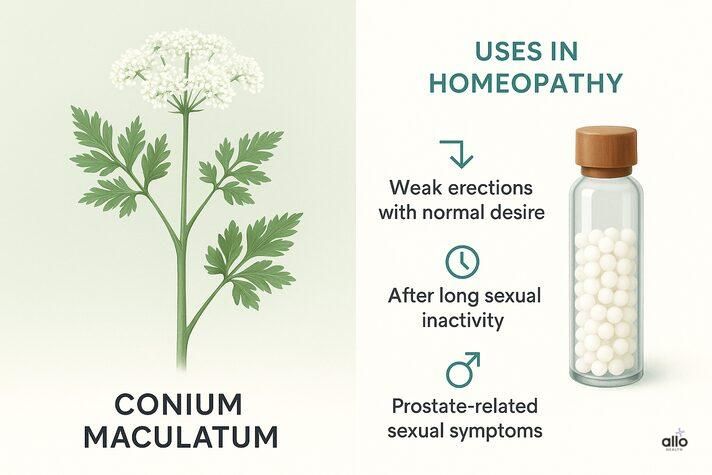
How Conium Maculatum Is Thought to Work for ED
In the context of erectile dysfunction, Conium Maculatum is used only as a homeopathic remedy. In these preparations, the toxic plant compounds are diluted so many times that the final product becomes chemically non-toxic.

Traditionally, homeopaths prescribe Conium Maculatum for erectile dysfunction linked with low sexual desire, long periods of celibacy, or prostate-related issues in older men[1]. It is usually considered when erectile problems seem connected to emotional or physical patterns rather than sudden medical illness.
Homeopathy medicine often uses Conium when:
- There are weak or absent erections even though sexual desire is normal.
- There are erection or ejaculation problems after a long period without sexual activity.
- There are conditions like an enlarged prostate (prostatism) or hard, swollen testicles that may cause urinary infections or sexual discomfort.
- A person experiences general nervous weakness that affects sexual stamina or confidence.
While these uses are part of traditional homeopathic practice, there is no clinical evidence from conventional medical trials showing that Conium Maculatum is an effective treatment for erectile dysfunction.

Is There Scientific Evidence for Conium Maculatum in ED?
There are no clinical trials showing that Conium Maculatum can treat erectile dysfunction better than a placebo[2]. Most of the information about this remedy comes from traditional homeopathic practice, not scientific research.
A few small observational studies on prostate health in 2012 suggest that Conium may help men with Benign Prostatic Hyperplasia (BPH) by improving urinary flow[3]. While better urinary health can indirectly support sexual comfort, this is not direct evidence that Conium treats erectile dysfunction.
There is also no known pharmacological mechanism by which a highly diluted homeopathic product (which usually contains no active molecules) would improve blood flow to the penis[4]. Adequate blood flow is essential for an erection, and Conium does not have a proven effect on this process.
Because the source plant is toxic, it is important to understand the difference between the raw plant and the homeopathic medicine. Confusing the two can be extremely dangerous.
Raw Plant vs. Homeopathic Pellet: Key Differences
Form
Description
Safety Status
Raw Plant (Herbal)
Contains coniine, a powerful active ingredient that can cause respiratory paralysis and death[5].
Deadly
Homeopathic Pellet
A highly diluted preparation (e.g., 30C or 200C) where toxic alkaloids are removed or diluted beyond material existence — a very different approach from evidence-based options like Ashwagandha for ED.
Generally safe(non-toxic due to extreme dilution)
How Homeopaths Typically Prescribe Conium for ED
Homeopaths prescribe Conium Maculatum based on a person’s symptoms, not the diagnosis alone. The most common potencies used are 30C and 200C. These are chosen depending on patterns like weak erections with normal desire, long gaps in sexual activity, or prostate-related discomfort.
A professional assessment is important because erectile dysfunction can have medical causes that need proper evaluation. Self-medication can delay the right treatment.
Even though homeopathic dilutions are generally safe, mixing them with ED medications without guidance can create confusion about what is or isn’t helping.
Conium Maculatum should be avoided in people with severe heart conditions, neurological issues, or anyone who hasn’t been checked for medical causes of ED.
Homeopathic remedies like Conium can be explored, but it’s important to remember they aren’t proven treatments for ED. If someone is struggling with erections, the first step is understanding what’s causing it rather than hoping a single remedy will fix everything.
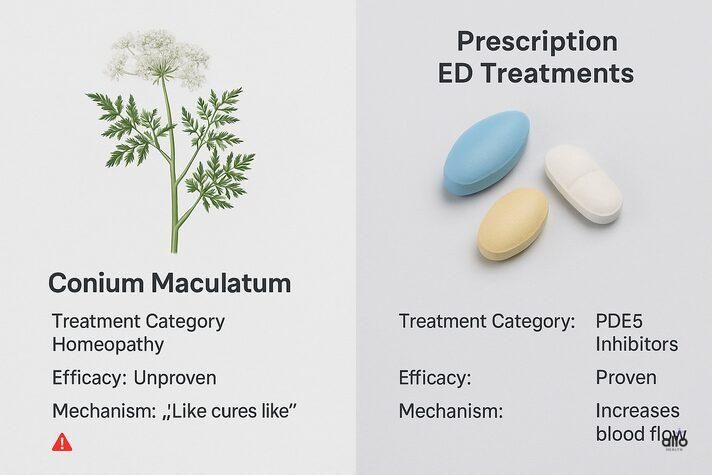
Conium Maculatum vs. Prescription ED Treatments
When it comes to treating erectile dysfunction, prescription medicines remain the most reliable options. They have proven results, a clear safety profile, and well-understood mechanisms.
Treatment Comparison
Treatment Category
Examples
Efficacy
How It Works
PDE5 Inhibitors
Sildenafil (Viagra), Tadalafil (Cialis)
High (Proven in clinical trials)
Increase blood flow to the penis by relaxing smooth muscles.
Homeopathy
Conium, Lycopodium, Agnus Castus
Unproven(Anecdotal)
Follows homeopathic ideas such as “like cures like” and treating suppression.
Lifestyle Changes
Weight loss, regular exercise, quitting smoking
Moderate to High
Improve overall cardiovascular health, which is a major factor in most ED cases.
Bottom Line
Conium Maculatum may be explored in a homeopathic context, but it cannot replace evidence-based ED treatments or supportive practices like yoga for erectile dysfunction. If someone chooses to use it, it is important to use it under a doctor's guidance and to buy only sealed and regulated homeopathic tubes (such as 30C or 200C). Never purchase raw “hemlock,” never buy herbal Conium products, and never forage for the plant, its natural form is highly toxic.
Erectile dysfunction can also be a warning sign of conditions like heart disease or diabetes. A proper medical check-up is essential to understand the underlying cause and get safe, effective treatment.

Disclaimer
The following blog article discusses alternative medicine practices and their potential effects or benefits. However, it is important to note that the information provided is for general educational purposes only and should not be considered as medical advice or a substitute for professional guidance from a qualified healthcare professional. Before considering any alternative medicine practices or treatments, it is recommended to consult with a healthcare professional. Alternative medicine encompasses a wide range of practices that may not have undergone rigorous scientific evaluation or received widespread acceptance within the medical community. The effectiveness, safety, and appropriateness of alternative medicine practices can vary significantly depending on the individual, their specific medical conditions, and other factors. It is important to approach alternative medicine practices with caution and skepticism. Some practices may carry potential risks or interact with existing medical treatments. A healthcare professional can provide guidance based on your medical history, evaluate the available evidence, and offer informed advice regarding the potential benefits and risks of alternative medicine practices. Individuals with specific medical conditions, allergies, or taking medications should exercise particular caution when considering alternative medicine practices. Some practices may have contraindications or adverse effects, and it is essential to discuss these potential concerns with a healthcare professional before pursuing any alternative treatments.
Most Asked Questions
What is the most powerful medicine for erectile dysfunction?
Prescription PDE5 inhibitors such as sildenafil (Viagra) and tadalafil (Cialis) are considered the most effective and well-studied ED treatments. They work by improving blood flow to the penis and have strong clinical evidence behind them. Homeopathic remedies like Conium Maculatum are not proven to work the same way.
What is Conium Maculatum used for in homeopathy?
In homeopathy, Conium Maculatum is traditionally used for symptoms like weak erections with normal desire, performance anxiety, long gaps in sexual activity, and age-related sexual weakness. These uses are based on homeopathic principles, not scientific evidence.
What is Conium 200C used for?
Conium 200C is a commonly used potency in homeopathy. Practitioners may choose it for deeper or long-standing patterns such as chronic sexual weakness, prostate-related discomfort, or nervous exhaustion. This is based on symptom matching, not proven clinical outcomes.
What are the risks of using Conium Maculatum?
The raw plant (hemlock) is extremely toxic and can be deadly. However, the homeopathic pellet form is highly diluted and generally considered safe. The main risks come from using unregulated products, mixing remedies with ED medications without guidance, or delaying medical care for an underlying health condition.
Can Conium Maculatum actually cure erectile dysfunction?
No scientific studies show that Conium Maculatum can cure ED. Homeopaths may use it for certain symptom patterns, but it should not replace evidence-based treatments. A medical evaluation is important to rule out causes like heart disease, diabetes, or hormonal issues.