Omeprazole and Erectile Dysfunction: Uses, Dosage and Sexual Side Effects
Written by Dr. Pranitha Bangera

Dr. Pranitha Bangera is a gold-medalist healthcare professional with an elite foundation in clinical training and patient care. A researcher at heart, she specializes in creating high-impact, research-driven medical content that empowers readers through accessible patient education. Dr. Bangera focuses on the intersection of digital health and clinical communication, specifically within the fields of sexual health and mental well-being. Her work is dedicated to making complex medical innovations understandable and trustworthy for a global audience.
•
July 30, 2026
Our experts continually monitor the health and wellness space, and we update our articles when new information becomes available.
Quick Read
Omeprazole can affect sexual function in several ways: by reducing blood flow to the penis, interfering with penile muscle relaxation, disrupting hormone levels like testosterone and prolactin, lowering magnesium, and even altering gut health in ways that increase inflammation. These changes can make it harder to get or maintain an erection, especially with long-term use. The encouraging part is that many of these effects are reversible once the underlying trigger is identified and addressed. For some men, simply stopping or switching the PPI leads to noticeable improvement. Others may benefit from checking and correcting magnesium or hormone levels, or adjusting how ED medications are taken if reduced absorption is an issue. Lifestyle habits such as regular exercise, better sleep, stress reduction, and heart-healthy nutrition also support recovery by strengthening the blood vessels and improving overall metabolic health.
Omeprazole is one of the most widely used medications for acid reflux, GERD, and stomach ulcers. Recently, many people have begun searching for “Omeprazole and Erectile Dysfunction” after noticing unexpected changes in their sexual health. While PPIs like omeprazole are considered safe, growing concern among patients, doctors, and researchers has led to a deeper investigation into whether this common heartburn medicine could affect erections. Omeprazole can affect several systems involved in sexual function: blood flow, hormones, nutrient levels, and even gut health. These changes may disrupt the normal relaxation of penile blood vessels, alter testosterone balance, or trigger magnesium deficiency, all of which can make erections weaker or harder to maintain. In this article, we’ll take a clear, science-backed look at omeprazole and erectile dysfunction, including how it may cause ED, what the research says, if omeprazole impotence is reversible, and what you can do to manage or prevent these side effects.

Allo asks
Do you think omeprazole-related impotence is reversible?
Does Omeprazole Cause Erectile Dysfunction?
Erectile Dysfunction is not listed as a classic or common side effect of Omeprazole, which is a proton pump inhibitor (PPI) used to treat gastric issues. But mounting evidence suggests a biologically possible connection, especially in younger, otherwise healthy men.
- In April 2023, the U.S. Food and Drug Administration (FDA) officially required all PPI labels (including omeprazole, esomeprazole, lansoprazole, pantoprazole, rabeprazole, and dexlansoprazole) to add erectile dysfunction to their adverse reactions list. [1]
- The World Health Organisation (WHO) database found ~170 reports of impotence linked to omeprazole. [2]
- A striking case involved a 38-year-old healthy man who developed severe ED within 2 days of starting omeprazole.[3]
So while ED due to omeprazole isn’t extremely common, the evidence is strong enough that the link should be taken seriously, especially if symptoms appear soon after starting the drug — a pattern also noted with antibiotics and ED.
How Does Omeprazole Cause Erectile Dysfunction?
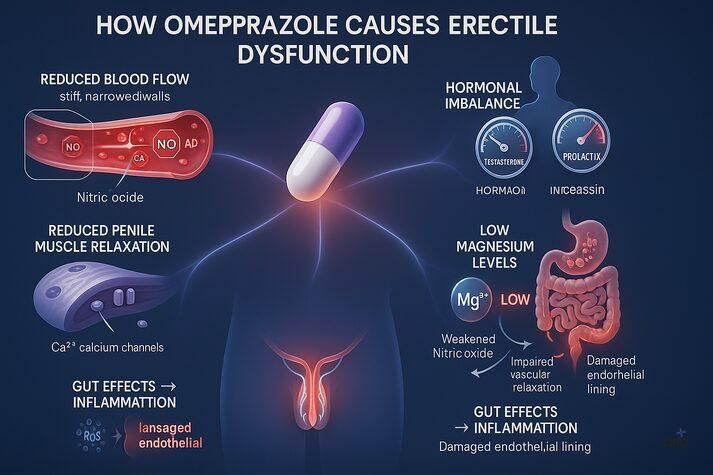
Omeprazole affects several processes that happen during a normal erection:
1. Reduced Blood Flow to the Penis
Healthy erections depend on good blood flow — and histamine-receptor effects like those discussed in antihistamines and ED can also compound omeprazole’s impact. For the blood vessels in the penis to open up and let that blood in, the body uses a chemical messenger called nitric oxide. Think of it as the “relax and let blood in” signal for your blood vessels. Omeprazole can get in the way of this process:

- It can increase certain natural blockers in the body (like ADMA) that stop nitric oxide from doing its job.
- It can reduce the body’s ability to clear those blockers.
- It can increase oxidative stress, which is a buildup of harmful substances that can irritate the blood vessels and cause cell damage.
- It can disturb the way the inner lining of your blood vessels works.
When you put all of this together, the blood vessels don’t relax the way they normally would (endothelial dysfunction). [4] And if the vessels in the penis can’t relax properly, blood doesn’t flow in enough to create or maintain an erection.
2. Reduced Penile Muscle Relaxation
Your erection works on a simple rhythm: the muscles inside the penis need to relax to let blood in for an erection, and tighten again afterwards. This relax–tighten cycle depends on tiny “gates” in the cells called calcium channels. Some studies suggest that PPIs like omeprazole might interfere with these calcium channels.[5] When that happens, the muscles may not relax the way they’re supposed to, which means less blood flow and more difficulty achieving a firm erection.
3. Hormonal Imbalance
Some research suggests that omeprazole may affect your hormones, especially if you use it for a long time. [6]
- Omeprazole might speed up the body’s breakdown of testosterone, the hormone that plays a big role in sex drive and erections.
- It may also raise levels of prolactin, a hormone that, when too high, can lower testosterone.
And when testosterone drops, or prolactin rises, men may notice:

- Lower sex drive (low libido)
- More difficulty getting or keeping an erection
Not every study shows this effect, and it doesn’t happen to everyone. But it’s a real possibility, especially for people who take omeprazole long-term.
4. Reduced Magnesium Levels
Research shows a link between magnesium deficiency and increased ED risk. Long-term PPI use can lead to hypomagnesemia, which means reduced levels of magnesium in the blood. [7] Low magnesium affects:
- Nitric oxide production
- Blood Vessel Relaxation
- Testosterone function
5. Effect On the Gut
Taking PPIs like omeprazole for a long time can also affect your gut health, and surprisingly, that can indirectly impact erections too.
- PPIs can change the balance of good and bad bacteria in your gut.
- Long-term use may increase the risk of infections like Clostridium difficile, which can make you very sick.
- They can also raise levels of reactive oxygen species (ROS), basically, “stress chemicals” that can irritate tissues throughout the body.
When your gut isn’t functioning well, or you have ongoing inflammation, it can harm the endothelium (the lining of your blood vessels). And since healthy blood vessels are essential for erections, anything that damages them can make ED more likely. So while the gut and penis may seem unrelated, the body is more connected than we think, and long-term PPI use can indirectly affect sexual function through gut-related changes.
Is Impotence Caused by Omeprazole Reversible?
Current evidence suggests that ED caused by Omeprazole is usually reversible. [1] Most reported cases show:
- ED improves after stopping the medication
- ED returns if the medication is restarted
- Recovery occurred within days to weeks.
- Even in long-term users, testosterone and prolactin returned to normal once the medication was stopped.
No strong evidence points to permanent ED from omeprazole — the picture is more nuanced, similar to debates around aspirin and ED. However, untreated long-term endothelial dysfunction (from any cause, including PPIs) can contribute to persistent issues over time.
How to Manage ED Caused by Omeprazole
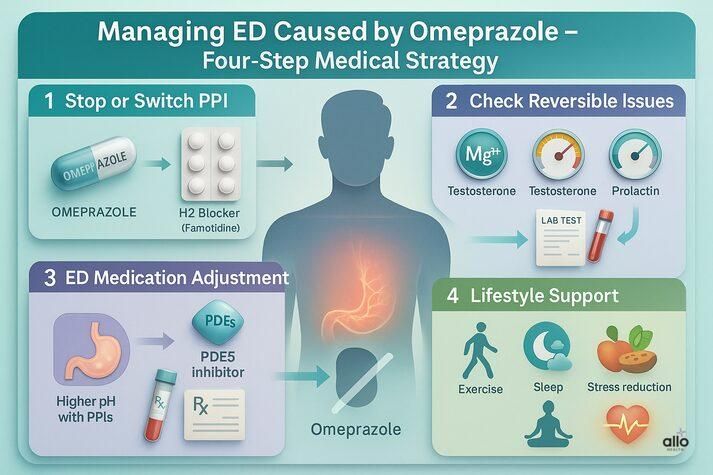
1. Stop or Switch the PPI
Often, stopping omeprazole leads to improvement. Alternatives include:
- H2 blockers (famotidine)
- Other PPIs
- Non-PPI approaches for acid control
2. Check for Reversible Issues
Your doctor may check:
- Magnesium levels
- Testosterone
- Prolactin
Correcting deficiencies often improves ED.
3. Consider Medication for ED
PPIs can raise stomach pH and reduce the absorption of certain ED medications (PDE5 inhibitors) like sildenafil. So if you need medication for ED, your doctor may adjust the dosage or choose a different formulation or switch you off PPIs completely.
4. Lifestyle Support
Lifestyle changes can greatly support endothelial (blood vessel) function, which is essential for healthy erections. Regular exercise improves circulation, better sleep helps regulate hormones, stress reduction lowers cortisol that can interfere with sexual function, and a heart-healthy diet keeps your blood vessels strong.
How to Prevent ED Caused by Omeprazole
1. Use PPIs only when necessary
Avoid chronic use unless strongly indicated.
2. Lowest effective dose
PPIs are often over-prescribed or used longer than needed.
3. Correct nutrient deficiencies
Especially magnesium and Vitamin B12, as PPIs can lower these over time, and these deficiencies can contribute to ED.
4. Manage GERD with non-drug methods
You can also manage GERD with simple non-drug methods: eating smaller, more frequent meals to reduce reflux, maintaining a healthy weight to decrease stomach pressure, avoiding trigger foods like spicy or acidic dishes, and elevating the head of your bed while sleeping to prevent acid from flowing back up.
5. Review all medications
Many drug combinations can increase the risk of adverse drug reactions, including sexual dysfunctions.
6. Monitor symptoms early
If libido or erectile changes appear within days to months of starting omeprazole, report them to your physician — and consider the broader ED treatment plan when evaluating next steps.
Omeprazole doesn’t cause erectile problems in everyone, but when it does, adjusting the dose or switching to another medication often leads to improvement within weeks.
Conclusion
Omeprazole is widely used and generally safe, but growing evidence shows that it can cause erectile dysfunction in certain individuals. This link is now recognised by major regulators like the FDA, and explained by biologically plausible mechanisms, including nitric oxide impairment, endothelial dysfunction, hormonal changes, and nutrient depletion. ED caused by omeprazole is usually reversible, especially when caught early and managed appropriately. If you're experiencing ED and recently started a PPI, don’t panic, but do talk to your healthcare provider. The solution may be as simple as switching medications, correcting a deficiency, or adjusting your treatment plan. Your sexual health matters just as much as your digestive health, and with the right guidance, you can protect both.
Disclaimer
The following blog article provides general information and insights on various topics. However, it is important to note that the information presented is not intended as professional advice in any specific field or area. The content of this blog is for general educational and informational purposes only. The content should not be interpreted as endorsement, recommendation, or guarantee of any product, service, or information mentioned. Readers are solely responsible for the decisions and actions they take based on the information provided in this blog. It is essential to exercise individual judgment, critical thinking, and personal responsibility when applying or implementing any information or suggestions discussed in the blog.
Most Asked Questions
Is impotence caused by omeprazole reversible?
In many cases, yes. Once the medication is stopped or switched — and any deficiencies or hormonal imbalances are corrected, sexual function often improves.
How long does it take for ED to improve after stopping omeprazole?
Improvement varies. Some men notice changes within a few weeks, while others may take a couple of months, depending on the underlying cause and how long the medication has been used.
What should I do if I think omeprazole is affecting my erections?
Speak to a doctor before stopping the medication. They may adjust the dose, switch you to an H2 blocker like famotidine, or check magnesium and hormone levels.
Does omeprazole affect testosterone?
Long-term use may lower testosterone or raise prolactin in some men. These changes can affect libido and erections, but they are often reversible with proper treatment.
Do ED medications like Viagra still work if I’m taking omeprazole?
They can work, but omeprazole may reduce their absorption. Your doctor may adjust the dose or suggest switching off PPIs to improve the medication’s effectiveness.
Sources
- 1.
October - December 2021 | Potential Signals of Serious Risks/New Safety Information Identified by the FDA Adverse Event Reporting System (FAERS)
- 2.
Sexual Dysfunctions Associated with Proton Pump Inhibitors: Insights from VigiBase, the World Health Organization Pharmacovigilance Database
- 3.
Abrupt-onset, profound erectile dysfunction in a healthy young man after initiating over-the-counter omeprazole: a case report
- 4.
Omeprazole impairs vascular redox biology and causes xanthine oxidoreductase-mediated endothelial dysfunction
- 5.
Omeprazole and erectile dysfunction
- 6.
Proton pump inhibitors therapy and risk of hyperprolactinemia with associated sexual disorders
- 7.
Magnesium deficiency score predicts erectile dysfunction risk and mortality: a population-based analysis of NHANES 2001–2004