Diagnosis of Erectile Dysfunction
Written by Dr. Pranitha Bangera

Dr. Pranitha Bangera is a gold-medalist healthcare professional with an elite foundation in clinical training and patient care. A researcher at heart, she specializes in creating high-impact, research-driven medical content that empowers readers through accessible patient education. Dr. Bangera focuses on the intersection of digital health and clinical communication, specifically within the fields of sexual health and mental well-being. Her work is dedicated to making complex medical innovations understandable and trustworthy for a global audience.
•
April 13, 2026
Our experts continually monitor the health and wellness space, and we update our articles when new information becomes available.
Quick Read
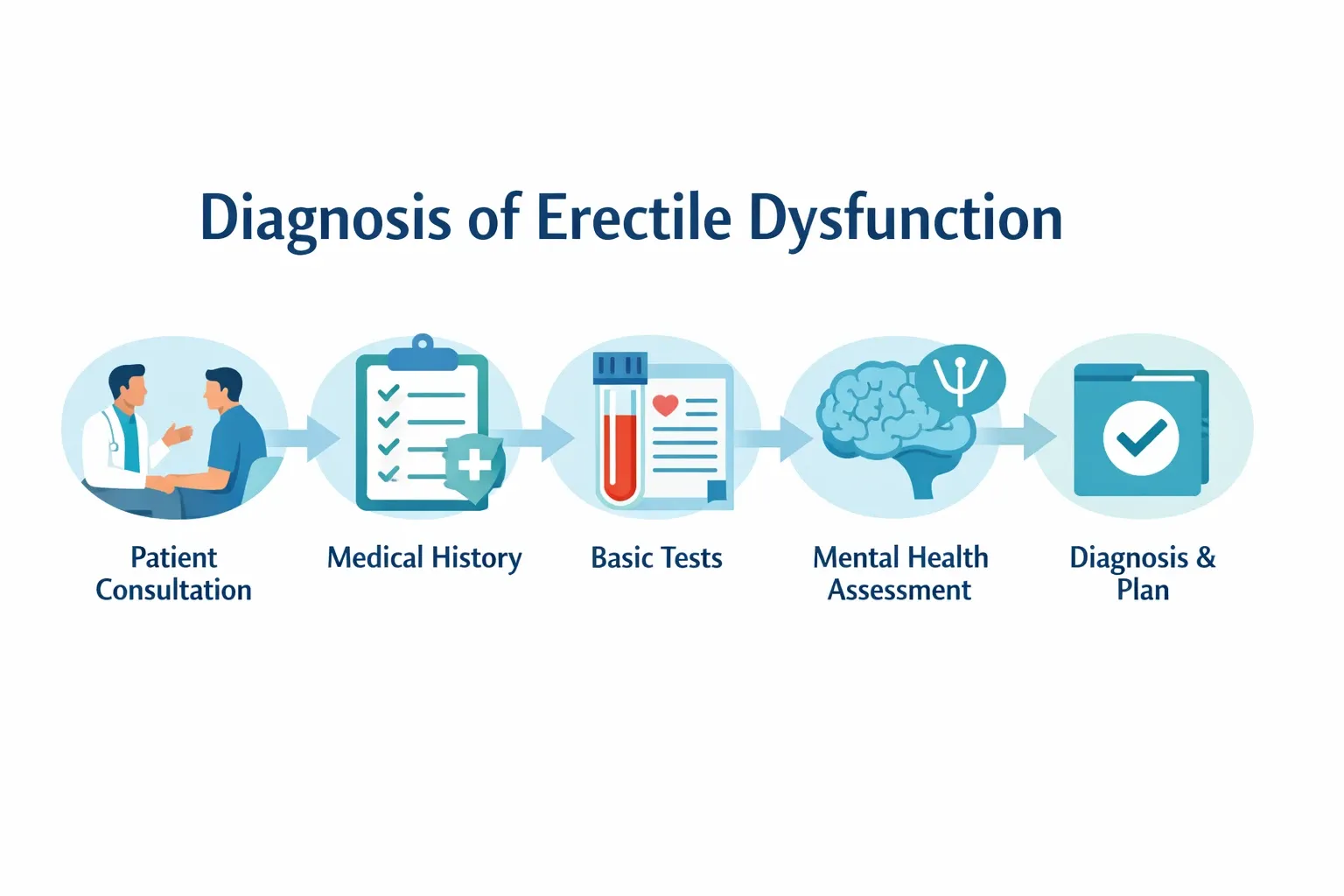
Diagnosing erectile dysfunction usually begins with understanding the pattern of symptoms rather than relying on one single test. Doctors often look at how often erection problems happen, how long they have been present, and whether physical health, mental health, medicines, stress, or lifestyle may be contributing. Self-evaluation can help people notice triggers and recurring patterns, while medical advice helps confirm the cause and guide the right next step. Choosing the right doctor also matters, since ED may need support from a general physician, urologist, psychiatrist, endocrinologist, or sex therapist, depending on the situation. ED की पहचान के लिए कोई एक अकेला टेस्ट नहीं होता; इसमें पूरी स्थिति को समझना ज़रूरी है। डॉक्टर यह देखते हैं कि यह समस्या कितनी बार होती है, कितने समय से है, और आपकी शारीरिक सेहत, मानसिक तनाव या दवाइयां इसमें क्या भूमिका निभा रही हैं। अपनी आदतों पर गौर करने से आपको कारणों का अंदाज़ा लग सकता है, लेकिन सही वजह जानने के लिए डॉक्टर की सलाह ही सबसे ज़रूरी है। आपकी स्थिति के हिसाब से आपको किसी जनरल डॉक्टर, यूरोलॉजिस्ट (नसों और अंगों के विशेषज्ञ) या थेरेपिस्ट से सही सलाह लेनी चाहिए।
Diagnosing erectile dysfunction is usually more straightforward than many people expect. In most cases, it starts with understanding the symptoms, looking at overall health, and identifying possible physical or psychological factors that may be contributing to the problem.
ED is not diagnosed by one single test alone in every case. Doctors often begin with a conversation about erection problems, medical history, medications, stress, lifestyle, and relationship context. Sometimes, simple self-assessment and symptom tracking can also help people understand when it may be time to seek medical advice.
This article will help you learn how erectile dysfunction is identified, what symptoms to look for, how self-evaluation can help, and how to choose the right doctor for support.
ED की पहचान करना उतना मुश्किल नहीं है जितना लोग समझते हैं। इसके लिए कोई एक अकेला टेस्ट नहीं होता, बल्कि पूरी स्थिति को समझना ज़रूरी है। डॉक्टर आमतौर पर आपके लक्षणों, पुरानी बीमारियों, तनाव और लाइफस्टाइल के बारे में बातचीत से शुरुआत करते हैं। अपनी आदतों और लक्षणों पर गौर करने से आपको समस्या समझने में मदद मिल सकती है, लेकिन सही वजह जानने और सही इलाज के लिए डॉक्टर की सलाह ही सबसे ज़रूरी है।
Symptoms & Diagnosis
The first step in diagnosing is understanding the symptoms of ED clearly. This may include trouble getting an erection, difficulty keeping it long enough, reduced firmness, or changes that happen repeatedly rather than once in a while. A proper diagnosis looks at how often the problem occurs, how long it has been happening, and whether it may be linked to physical health, mental health, or both. [1]
ED की पहचान के लिए सबसे पहले इसके लक्षणों को ठीक से समझना ज़रूरी है। यह सिर्फ एक-दो बार होने वाली बात नहीं है, बल्कि बार-बार दिखने वाले बदलावों पर गौर करना है। इसके लक्षणों में स्तंभन (erection) पाने में दिक्कत, उसे देर तक बनाए न रख पाना, या उसके कड़ेपन में कमी आना शामिल हो सकता है। सही पहचान इस बात पर निर्भर करती है कि यह समस्या कितनी बार होती है, कितने समय से है, और क्या इसका संबंध आपकी शारीरिक सेहत से है, मानसिक तनाव से है, या दोनों से है।
Also explore:
- Symptoms of Erectile Dysfunction
- Erectile Dysfunction Diagnosis and Test
- ED के लक्षण और उपचार
- Tests for ED
- ED की जांच: कौन-से टेस्ट होते हैं
Self Evaluation
Many people first notice ED through patterns in their daily lives rather than in a clinic. Self-evaluation for ED can help observe symptoms, identify triggers, and think about possible links with stress, sleep, medications, health conditions, or sexual confidence. While self-checks cannot replace medical diagnosis, they can make the next step clearer and more informed.
ज़्यादातर लोग क्लिनिक जाने से बहुत पहले अपनी रोज़ाना की ज़िंदगी में ED के लक्षणों को महसूस करने लगते हैं। खुद की जांच का मतलब है अपने लक्षणों पर गौर करना, यह देखना कि समस्या कब बढ़ती है, और क्या इसका संबंध तनाव, नींद की कमी, दवाइयों या आत्मविश्वास की कमी से है। हालांकि, खुद से की गई यह जांच डॉक्टर के टेस्ट की जगह नहीं ले सकती, लेकिन इससे आपकी स्थिति काफी हद तक साफ हो जाती है और डॉक्टर को सही जानकारी देने में मदद मिलती है।

Also explore:
- How Common is Erectile Dysfunction?
- Does Tight Underwear Affect Erectile Dysfunction
- लिंग कितनी देर तक खड़ा होना चाहिए
- लिंग की मोटाई — सामान्य साइज़ और जानकारी
- सेक्स करते समय दर्द होना — कारण और उपाय
Choosing a Doctor
A lot of people delay getting help because they are unsure which doctor to see for ED. Depending on the situation, support may come from a general physician, urologist, psychiatrist, endocrinologist, sex therapist, or another specialist. The right doctor for ED often depends on whether the issue seems mainly physical, psychological, medication-related, or mixed.
बहुत से लोग सिर्फ इसलिए इलाज में देरी करते हैं क्योंकि उन्हें पता नहीं होता कि किस डॉक्टर के पास जाना है। सही डॉक्टर का चुनाव इस बात पर निर्भर करता है कि समस्या शारीरिक है, मानसिक है, या दोनों है। आपके लक्षणों के हिसाब से आपको किसी जनरल फिजिशियन, यूरोलॉजिस्ट (अंगों और नसों के विशेषज्ञ), सायकायट्रिस्ट (मानसिक स्वास्थ्य के लिए) या एंडोक्रिनोलॉजिस्ट (हार्मोन विशेषज्ञ) की सलाह लेनी पड़ सकती है। अपनी समस्या के हिसाब से सही डॉक्टर चुनना ही जल्दी ठीक होने का सबसे सही तरीका है।
Also explore:
Read more: Diagnosis of Erectile Dysfunction.
Disclaimer
The following blog article provides general information and insights on various topics. However, it is important to note that the information presented is not intended as professional advice in any specific field or area. The content of this blog is for general educational and informational purposes only. The content should not be interpreted as endorsement, recommendation, or guarantee of any product, service, or information mentioned. Readers are solely responsible for the decisions and actions they take based on the information provided in this blog. It is essential to exercise individual judgment, critical thinking, and personal responsibility when applying or implementing any information or suggestions discussed in the blog.
Most Asked Questions
How is erectile dysfunction usually diagnosed?
Erectile dysfunction is usually diagnosed through symptoms, medical history, and a discussion about overall health. Doctors often ask about erection problems, medicines, stress, lifestyle, and relationship factors to understand what may be causing the issue.
स्तंभन दोष का निदान आमतौर पर कैसे किया जाता है?
स्तंभन दोष का निदान आमतौर पर लक्षणों, बीमारी के इतिहास और समग्र स्वास्थ्य को समझकर किया जाता है। डॉक्टर अक्सर स्तंभन से जुड़ी परेशानी, दवाइयों, तनाव, जीवनशैली और रिश्तों से जुड़े पहलुओं के बारे में पूछते हैं ताकि कारण को बेहतर ढंग से समझा जा सके।
Is there one test that confirms ED in every case?
No, there is not one single test that confirms ED in every case. Diagnosis often depends on symptoms, how long the problem has been happening, how often it occurs, and whether physical or psychological factors may be involved.
क्या हर मामले में एक ही जाँच से स्तंभन दोष की पुष्टि हो जाती है?
नहीं, हर मामले में केवल एक ही जाँच से स्तंभन दोष की पुष्टि नहीं होती। निदान इस बात पर निर्भर करता है कि समस्या कितने समय से है, कितनी बार हो रही है, और उसके पीछे शारीरिक, मानसिक या मिले-जुले कारण हो सकते हैं या नहीं।
What symptoms do doctors look for when diagnosing ED?
Doctors usually look for repeated difficulty getting an erection, trouble keeping it long enough, reduced firmness, or ongoing changes in erection quality. A one-time problem is usually viewed differently from a recurring pattern.
स्तंभन दोष के निदान में किन लक्षणों को देखा जाता है?
डॉक्टर आमतौर पर बार-बार स्तंभन पाने में कठिनाई, उसे पर्याप्त समय तक बनाए न रख पाना, पर्याप्त कठोरता न होना, या स्तंभन की गुणवत्ता में लगातार बदलाव जैसे लक्षणों को देखते हैं। एक बार की समस्या और बार-बार होने वाली समस्या को अलग तरह से समझा जाता है।
Can self-evaluation help identify erectile dysfunction?
Yes, self-evaluation can help people notice patterns, triggers, and possible links with stress, sleep, medicines, health conditions, or sexual confidence. While it does not replace a medical diagnosis, it can help someone decide when to seek professional advice.
क्या स्वयं मूल्यांकन से स्तंभन दोष को समझने में मदद मिल सकती है?
हाँ, स्वयं मूल्यांकन से लक्षणों के पैटर्न, संभावित कारणों और तनाव, नींद, दवाइयों, स्वास्थ्य समस्याओं या यौन आत्मविश्वास से उनके संबंध को समझने में मदद मिल सकती है। यह चिकित्सकीय निदान का विकल्प नहीं है, लेकिन सही समय पर डॉक्टर से मिलने का निर्णय आसान बना सकता है।
Which doctor should someone see for erectile dysfunction?
The right doctor depends on the likely cause of the problem. A general physician, urologist, psychiatrist, endocrinologist, or sex therapist may be involved, depending on whether the issue seems physical, psychological, medicine-related, or mixed.
स्तंभन दोष के लिए किस डॉक्टर से मिलना चाहिए?
यह इस बात पर निर्भर करता है कि समस्या का कारण क्या लग रहा है। सामान्य चिकित्सक, मूत्ररोग विशेषज्ञ, मनोचिकित्सक, हार्मोन विशेषज्ञ या यौन परामर्शदाता में से किसी की मदद ली जा सकती है, इस आधार पर कि समस्या शारीरिक, मानसिक, दवाइयों से जुड़ी हुई है या मिली-जुली है।
Why Should You Trust Us?
Why Should You Trust Us?
This article was written by Dr. Pranitha Bangera, who has more than 1 years of experience in the healthcare industry.
Allo has the expertise of over 50+ doctors who have treated more than 1.5 lakh patients both online and offline across 30+ clinics.
Our mission is to provide reliable, accurate, and practical health information to help you make informed decisions.
For This Article
- We reviewed 30+ medical guides and clinical protocols to understand how ED is diagnosed in real-world settings.
- We referenced guidelines from organizations like NIDDK and standard urology practices to ensure accuracy.
- We analyzed clinical research on diagnostic methods, including physical exams, lab tests, and psychological assessments.
- We studied patient queries across forums and search trends to address common fears about testing and doctor visits.
- We structured this guide to mirror an actual clinical consultation, so readers know what to expect step by step.