Mood Stabilisers: What They Do, the Blood Tests and How Long You Take Them
Written by Dr. Srishti Rastogi

Dr. Srishti Rastogi is a medical writer and healthcare professional dedicated to high-quality patient education and public health awareness. Leveraging her clinical background, she produces deeply researched, evidence-based content for digital health platforms and medical publications. Dr. Srishti’s unique dual perspective as a clinician and communicator allows her to craft content that builds trust and credibility with readers navigating sensitive health topics.
•
October 7, 2026
Our experts continually monitor the health and wellness space, and we update our articles when new information becomes available.

Quick Read
Mood stabilisers are prescription medicines used mainly to treat bipolar disorder and prevent future episodes of mania or depression. Lithium is a common long-term treatment, but it needs regular blood tests. Heat, dehydration, vomiting, diarrhoea and some painkillers can raise the amount of lithium in your blood. Different mood stabilisers need different safety checks. Do not change the dose or stop treatment without speaking to your psychiatrist.
If you or someone you know is in crisis, help is available right now. You are not alone, and things can get better with the right support.
If you have been prescribed a mood stabiliser, you may have questions your appointment did not fully answer. Why do you need this medicine? Will it change your personality? Why are so many blood tests required? Will you have to take it for life?
This guide explains what mood stabilisers do, how the main medicines differ, which tests you may need, and how everyday situations in India can affect treatment. It also explains how long these medicines are usually taken and how stopping is managed safely.

Allo asks
What Concerns You Most About Taking a Mood Stabiliser?
What Are Mood Stabilisers Used For?
Mood stabilisers are mainly used to treat bipolar disorder. Depending on the medicine, they may help:
- Treat an episode of mania or bipolar depression
- Reduce extreme changes in mood and energy
- Prevent future episodes
- Lower the risk of hospital admission
- Support sleep, daily functioning and relationships
Some are also added to treatment when repeated or severe depression has not improved enough with other medicines.
“Mood stabiliser” describes the medicine’s purpose. It does not mean that everyone taking one has the same diagnosis. Ask your psychiatrist which symptoms the medicine is intended to treat in your case.

What Are the Main Types of Mood Stabilisers?
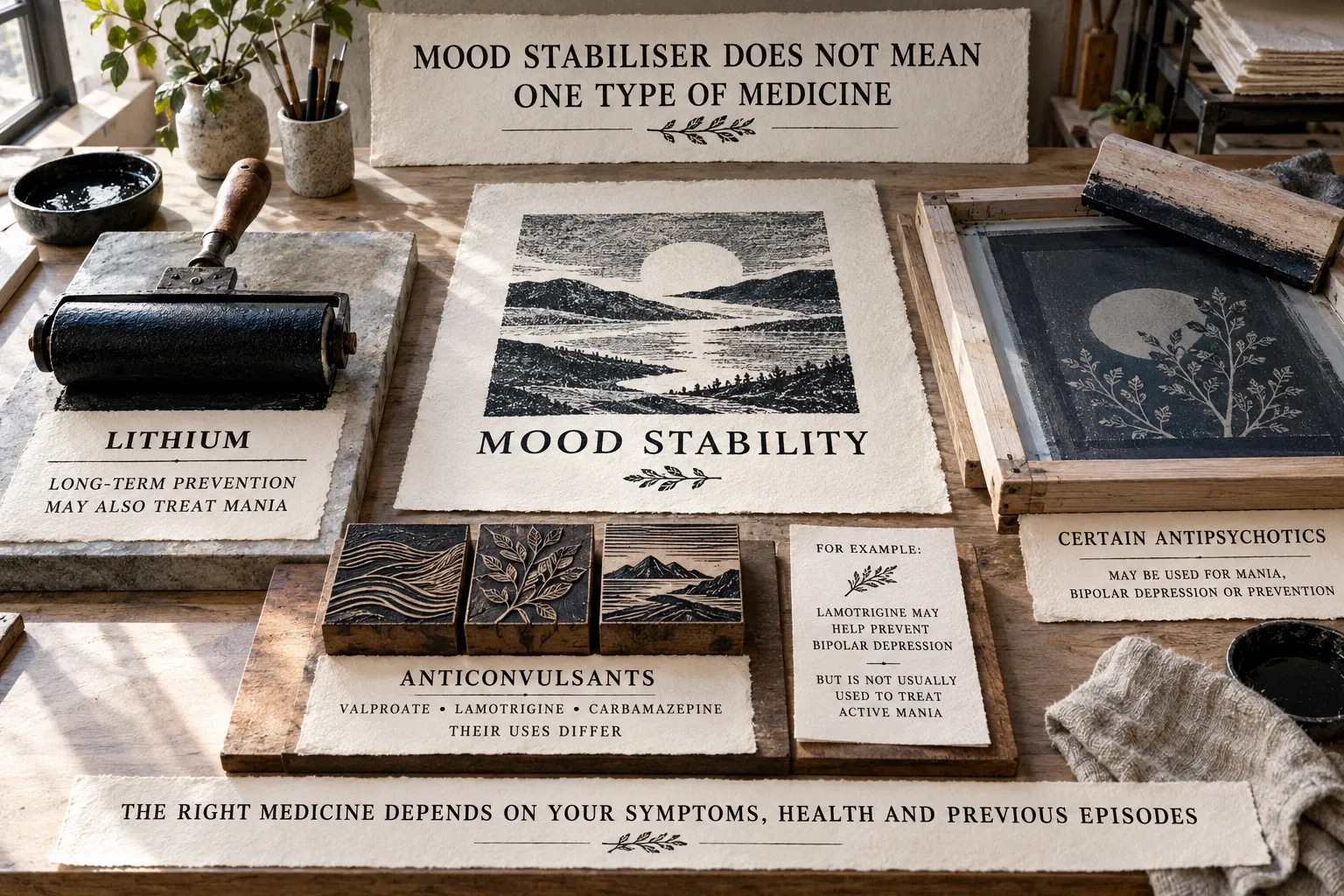
Mood stabilisers do not belong to one single drug class. The term includes several kinds of medicine.
| Type | Examples | How it may be used |
|---|---|---|
| Lithium | Lithium carbonate | Long-term prevention of mania and depression; treatment of mania in some cases |
| Anticonvulsants | Valproate, lamotrigine, carbamazepine | Different medicines may be used for mania, bipolar depression or long-term prevention |
| Certain antipsychotics | Quetiapine, olanzapine and others | Treatment of mania, bipolar depression or prevention of further episodes |
These medicines are not interchangeable. For example, lamotrigine may help prevent bipolar depression but is not normally used to treat an active manic episode.
Your psychiatrist will consider your symptoms, previous episodes, physical health, other medicines, pregnancy plans and possible side effects before recommending one.
Why Is Lithium Commonly Used for Bipolar Disorder?
NICE recommends lithium as a first-line long-term treatment for bipolar disorder [1]. Indian clinical guidance also recognises it as an important treatment option [2].

Lithium has been studied for many years and can reduce the risk of future mood episodes. A review of 48 trials also found fewer suicides among people taking lithium than among those taking a placebo, although suicide events in these studies were uncommon [3].
However, lithium is not automatically right for everyone. Another medicine may be considered if lithium is unsuitable, has caused difficult side effects or cannot be monitored safely.
Why Are Blood Tests Needed for Mood Stabilisers?
Blood tests are used for two main reasons:
- To check whether the medicine is at a safe and useful level
- To identify possible effects on organs such as the kidneys, thyroid or liver
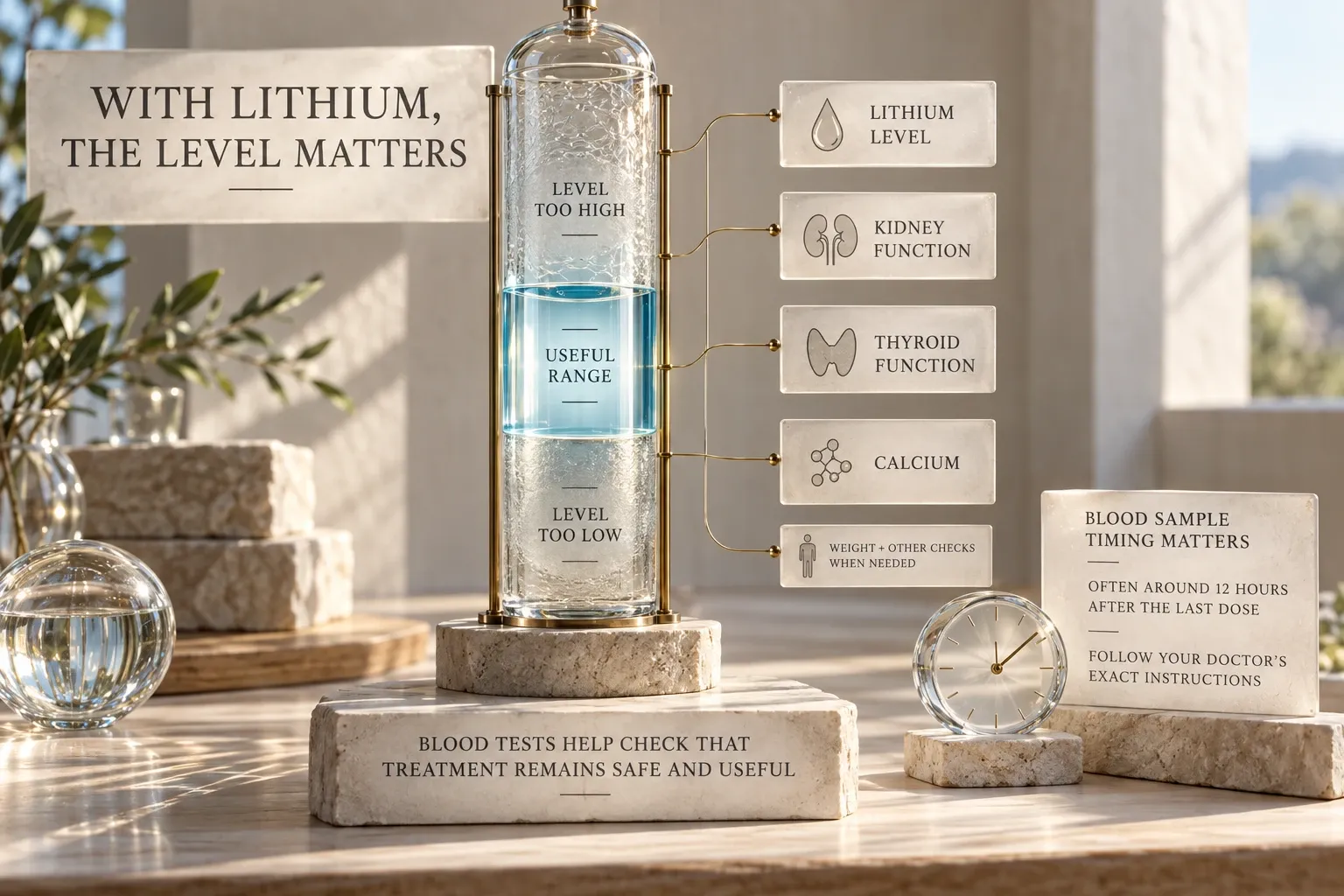
Lithium needs particularly careful monitoring because the helpful level and the harmful level are relatively close. Your kidneys remove lithium from your body, so dehydration, illness, another medicine or a change in kidney function can cause its level to rise.
Not every mood stabiliser requires a medicine-level test. The monitoring depends on what you take.
| Medicine | Checks you may need |
|---|---|
| Lithium | Lithium level, kidney function, thyroid function, calcium, weight and sometimes an ECG |
| Valproate | Liver function, full blood count, weight and reproductive-safety review |
| Carbamazepine | Full blood count, liver function, sodium level and medicine-interaction review |
| Lamotrigine | Careful monitoring for rash; routine blood-level testing is not usually required |
| Antipsychotic medicines | Weight, waist measurement, blood pressure, blood sugar and cholesterol; sometimes an ECG or prolactin test |
Your doctor may arrange additional checks based on your age, health conditions and other medicines.
Which Tests Are Needed Before and During Lithium Treatment?
Before you start lithium, your doctor will usually check your:
- Weight or body mass index
- Kidney function
- Sodium and other electrolytes
- Calcium level
- Thyroid function
- Full blood count
- Heart health, with an ECG if you have heart disease or relevant risk factors
Your first lithium-level test is usually done about one week after starting treatment. It is repeated after dose changes and then checked regularly once the level is stable.
NICE recommends checking the lithium level approximately:
- Every three months during the first year
- Every six months after the first year for many patients
- Every three months for people who need closer monitoring
Kidney function, thyroid function and calcium are generally checked every six months [1].
A lithium blood sample is commonly taken around 12 hours after the last dose. The timing matters because a sample taken too early or too late can give a misleading result. Ask your doctor exactly when to take your medicine and when to visit the laboratory.

What Can Raise Your Lithium Level?
Anything that significantly changes your body’s fluid or salt balance can affect lithium.
Contact your doctor if you develop:
- Repeated vomiting or diarrhoea
- A high fever
- An illness that stops you eating or drinking normally
- Heavy sweating or signs of dehydration
- A major change in your usual salt intake
Hot weather matters. During an Indian summer, a long journey, outdoor work, exercise or a power cut can cause more sweating than usual. Drink enough water and seek medical advice if you become dehydrated or unwell.
Do not deliberately increase or severely restrict salt without medical advice. A sudden reduction in salt intake can cause your lithium level to rise.
Fasting can also change your food and fluid intake. If you plan to fast for religious or personal reasons, ask your psychiatrist how to manage your lithium safely beforehand.
The aim of a mood stabiliser is to help you feel more like yourself. If you feel numb, too sleepy or unlike yourself, please tell us. We can review how the treatment is working and whether anything needs to change. You do not have to silently put up with side effects, but please do not change or stop the medicine on your own.
Can You Take Painkillers While Using Lithium?
Some commonly used painkillers can raise lithium levels. These include non-steroidal anti-inflammatory drugs, or NSAIDs, such as ibuprofen and diclofenac.
These medicines are widely available from chemists in India, but that does not mean they are safe with every prescription. Before taking a painkiller, cold medicine, herbal product or supplement, tell the doctor or pharmacist that you use lithium.
Some medicines for high blood pressure and water retention can also interact with lithium. Give every healthcare professional you see an updated list of your medicines.
What Are the Warning Signs of Lithium Toxicity?
Lithium toxicity means the level in your body has become dangerously high. Possible warning signs include:
- A tremor that becomes stronger or more noticeable
- Repeated vomiting or diarrhoea
- Unusual drowsiness
- Muscle weakness
- Confusion
- Slurred speech
- Blurred vision
- Poor coordination or difficulty walking
Do not wait for your next routine appointment if these symptoms appear. Seek urgent medical care and tell the healthcare team that you take lithium.

What Side Effects Can Mood Stabilisers Cause?
Side effects depend on the medicine and the dose.
Lithium
Lithium may cause thirst, frequent urination, nausea, a fine hand tremor or weight changes. Over time, it can affect the thyroid or kidneys, which is why repeat tests are important.
Valproate
Valproate may cause nausea, sleepiness, tremor, weight gain or changes in hair. It also has serious reproductive and pregnancy-related risks.
Lamotrigine
Lamotrigine can cause a skin rash. Most rashes are not dangerous, but a new rash needs prompt medical advice because a rare serious reaction is possible. A rash with fever, blistering, skin peeling or sores in the mouth requires urgent medical care.
The dose is usually increased slowly to reduce this risk.
Carbamazepine
Carbamazepine may cause dizziness, drowsiness, blurred vision or nausea. It can also affect blood cells, sodium levels and liver function. It interacts with several medicines, including some contraceptives.
Antipsychotic medicines
Some antipsychotics used for bipolar disorder can cause sleepiness, increased appetite, weight gain or changes in blood sugar and cholesterol. Others may cause restlessness, stiffness or unusual movements.
Side effects do not always mean the medicine must be stopped. Your doctor may adjust the dose, change when you take it or consider another medicine. Report the problem instead of changing treatment yourself.
Is Valproate Safe During Pregnancy?
Valproate taken during pregnancy can cause birth defects and problems with a child’s development. Its use therefore requires particular caution.
UK safety rules introduced in 2024 state that valproate should not be newly started in people under 55 unless two specialists agree that another effective or tolerated treatment is unavailable, or the reproductive risks do not apply [4]. These are UK rules rather than Indian law, but they show the seriousness of the risk.
Speak to your psychiatrist promptly if you:
- Take valproate and could become pregnant
- Are planning a pregnancy
- Think you may already be pregnant
- Are a man taking valproate and planning to have a child
- Need advice about contraception
Do not stop valproate suddenly. An unplanned stop can cause a serious return of symptoms. Your psychiatrist can explain the risks and discuss safer treatment options where appropriate.
You can also read about pregnancy and mental health.
Will Mood Stabilisers Change Your Personality?
The aim is not to remove your emotions or change who you are. Treatment is intended to reduce severe mood episodes so that your usual personality and functioning are easier to maintain.
You may feel different as an episode settles. For example, the energy and confidence of mania can feel like part of your personality, even when they have also caused impulsive decisions, conflict or exhaustion.
Feeling emotionally numb, unusually slowed down or unlike yourself should still be discussed with your psychiatrist. It may be related to the dose, a side effect, depression or another part of your condition.
How Long Do You Need to Take a Mood Stabiliser?
There is no single duration that applies to everyone. Some people take a mood stabiliser for several years, while others need long-term or lifelong treatment.
The decision depends on:
- The number and severity of previous episodes
- Whether an episode involved psychosis, hospital admission or serious risk
- How quickly symptoms returned in the past
- How well the medicine is working
- Side effects and physical-health concerns
- Your preferences and circumstances
Feeling well does not necessarily mean the medicine is no longer needed. It may mean that the treatment is preventing another episode.
Your psychiatrist should review the benefits, side effects and need for continued treatment with you regularly.
Can You Stop Taking a Mood Stabiliser?
You can discuss stopping with your psychiatrist, but it needs a planned reduction and follow-up.
For lithium, NICE recommends reducing the dose over at least four weeks and preferably over as long as three months [1]. You should then be monitored for early symptoms of mania and depression during the reduction and for at least three months afterwards.
Possible early warning signs include:
- Needing much less sleep
- Racing thoughts or unusually fast speech
- Increased confidence, spending or risk-taking
- Irritability or agitation
- Withdrawing from other people
- Persistent sadness or loss of interest
- Thoughts of self-harm
You and your family can agree on which signs to watch for and whom to contact. A written relapse plan can make it easier to act before symptoms become severe.
What Should You Ask Your Psychiatrist?
Consider taking these questions to your next appointment:
- What is this medicine treating in my case?
- How long may I need to take it?
- Which blood tests do I need, and when?
- When should I take my medicine before a blood test?
- Which side effects should I report?
- What should I do if I have vomiting, diarrhoea or a fever?
- Which painkillers and other medicines are safe for me?
- What are my early warning signs of relapse?
- Who should I contact if a problem happens outside clinic hours?
Keep a photograph of your prescription on your phone and bring a list of every medicine, supplement and herbal product you use.
Conclusion
Mood stabilisers can be effective, but safe treatment requires more than collecting a repeat prescription. Understanding the medicine, completing the recommended tests and knowing when to seek help all matter.
If you are unsure about your treatment, you can book a confidential consultation with a mental health professional at Allo Health. You can also explore the mental health resource centre for more information about symptoms, therapy and treatment.
Disclaimer
This blog article discusses mental health and emotional wellbeing for general educational and informational purposes only. It is not a substitute for professional advice, diagnosis, or treatment, and only a qualified mental health professional, such as a psychiatrist, psychologist, or licensed therapist, can diagnose a condition or recommend treatment. If you are struggling, please reach out to a qualified professional or someone you trust; if you are in crisis or may be at risk of harming yourself, use the crisis support resources on this page. For any decisions about your mental health, we encourage you to seek the guidance of a qualified professional.
Most Asked Questions
How long before a mood stabiliser starts working?
Longer than most people expect. Indian guidance notes that lithium's effect can take up to three weeks to show itself [2]. Prevention is judged over months rather than weeks, so a few steady weeks is not the test of whether it's working.
Are mood stabilisers addictive?
No. Addiction means craving something and losing control over using it, and that isn't what happens here. Your body does adjust to the medicine, which is why it's reduced slowly rather than stopped in one step.
My doctor prescribed an antipsychotic and called it a mood stabiliser. Is that a mistake?
No. Several antipsychotics are used specifically to prevent mood episodes, which is the job a mood stabiliser does. The drug class and the purpose are two different things. Ask your doctor which one applies to you.
Can I drink alcohol while taking one?
Ask your doctor about your specific medicine. Alcohol also disturbs sleep and mood, which works against what the medicine is trying to do, and heavy drinking can leave you dehydrated.
Do I need to drink more water in summer?
If you're on lithium, keeping your fluid intake up matters, especially after sweating or a fever [1]. If you've been vomiting or have diarrhoea, that's a reason to contact your doctor rather than to wait it out.
Sources
- 1.
National Institute for Health and Care Excellence. Bipolar Disorder: Assessment and Management (CG185).
- 2.
Menon V, Grover S, et al. Clinical Practice Guidelines for the Management of Bipolar Disorder. Indian Psychiatric Society. 2026.
- 3.
Cipriani A, Hawton K, Stockton S, Geddes JR. Lithium in the Prevention of Suicide in Mood Disorders: Updated Systematic Review and Meta-analysis. BMJ. 2013;346.
- 4.
Medicines and Healthcare products Regulatory Agency. New Measures to Reduce the Serious Harms of Valproate. Published 2023; measures implemented from January 2024.
Why Should You Trust Us?
Why Should You Trust Us?
This article was written by Dr. Srishti Rastogi, who has more than 1 years of experience in the healthcare industry.
Allo has the expertise of over 50+ doctors who have treated more than 1.5 lakh patients both online and offline across 30+ clinics.
Our mission is to provide reliable, accurate, and practical health information to help you make informed decisions.
For This Article
- This article was medically reviewed by a qualified psychiatrist before publication. The reviewer checked the explanations about mood stabilisers, lithium monitoring, side effects, medicine interactions, pregnancy-related risks and safe discontinuation.
- The medical information is based on guidance from NICE and the Indian Psychiatric Society. Important safety information about valproate is supported by an official update from the UK Medicines and Healthcare products Regulatory Agency.
- The article explains that “mood stabiliser” is a broad term. Lithium, valproate, lamotrigine, carbamazepine and certain antipsychotics do not all work in the same way or require the same tests.
- Blood-test information is explained in practical terms. This includes why lithium levels are measured, when the sample may need to be taken and why kidney, thyroid and calcium tests are repeated.
- The article addresses situations Indian patients may face, including hot weather, dehydration, fasting, stomach infections and buying painkillers directly from a chemist. These factors can affect lithium safety and should be discussed with a doctor.