Eating Disorders: The Signs, the Myths, and What Actually Helps
Written by Dr. Srishti Rastogi
Dr. Srishti Rastogi is a medical writer and healthcare professional dedicated to high-quality patient education and public health awareness. Leveraging her clinical background, she produces deeply researched, evidence-based content for digital health platforms and medical publications. Dr. Srishti’s unique dual perspective as a clinician and communicator allows her to craft content that builds trust and credibility with readers navigating sensitive health topics.
•
October 12, 2026
Our experts continually monitor the health and wellness space, and we update our articles when new information becomes available.
Quick Read
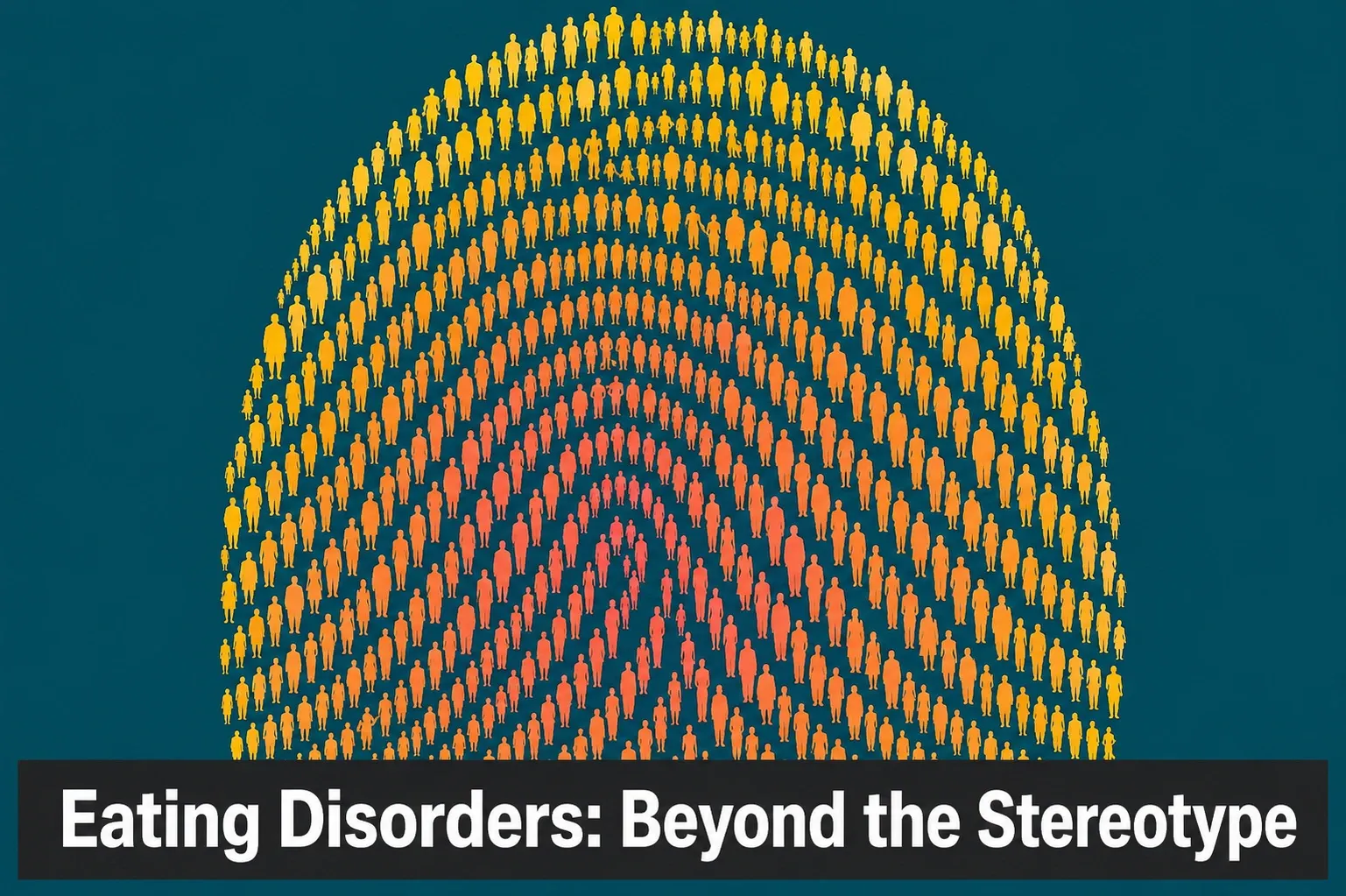
Eating disorders are serious mental illnesses, not vanity, willpower, or a phase. They are about control and distress far more than about food. You cannot tell who has one by looking, which is the single biggest reason people go untreated for years. They are treatable, treatment works better the earlier it starts, and full recovery is possible
If you or someone you know is in crisis, help is available right now. You are not alone, and things can get better with the right support.
Eating disorders are often associated with very thin teenage girls. In reality, they can affect children, adults, men, women and people at any body weight.
A person may look healthy while struggling with strict food rules, binge eating, vomiting, excessive exercise or constant thoughts about their body. These problems are treatable, and asking for help early can make recovery easier.
What Is an Eating Disorder?
An eating disorder is a mental health condition that affects how someone eats and thinks about food, weight or body shape.
The behaviour may become a way to manage stress, difficult emotions or a need for control. Even when a person knows it is harming them, they may find it very difficult to stop.
Eating disorders are not caused by vanity, greed or a lack of willpower [1].


Allo asks
Does anything about this feel familiar?
What Are the Main Types of Eating Disorders?
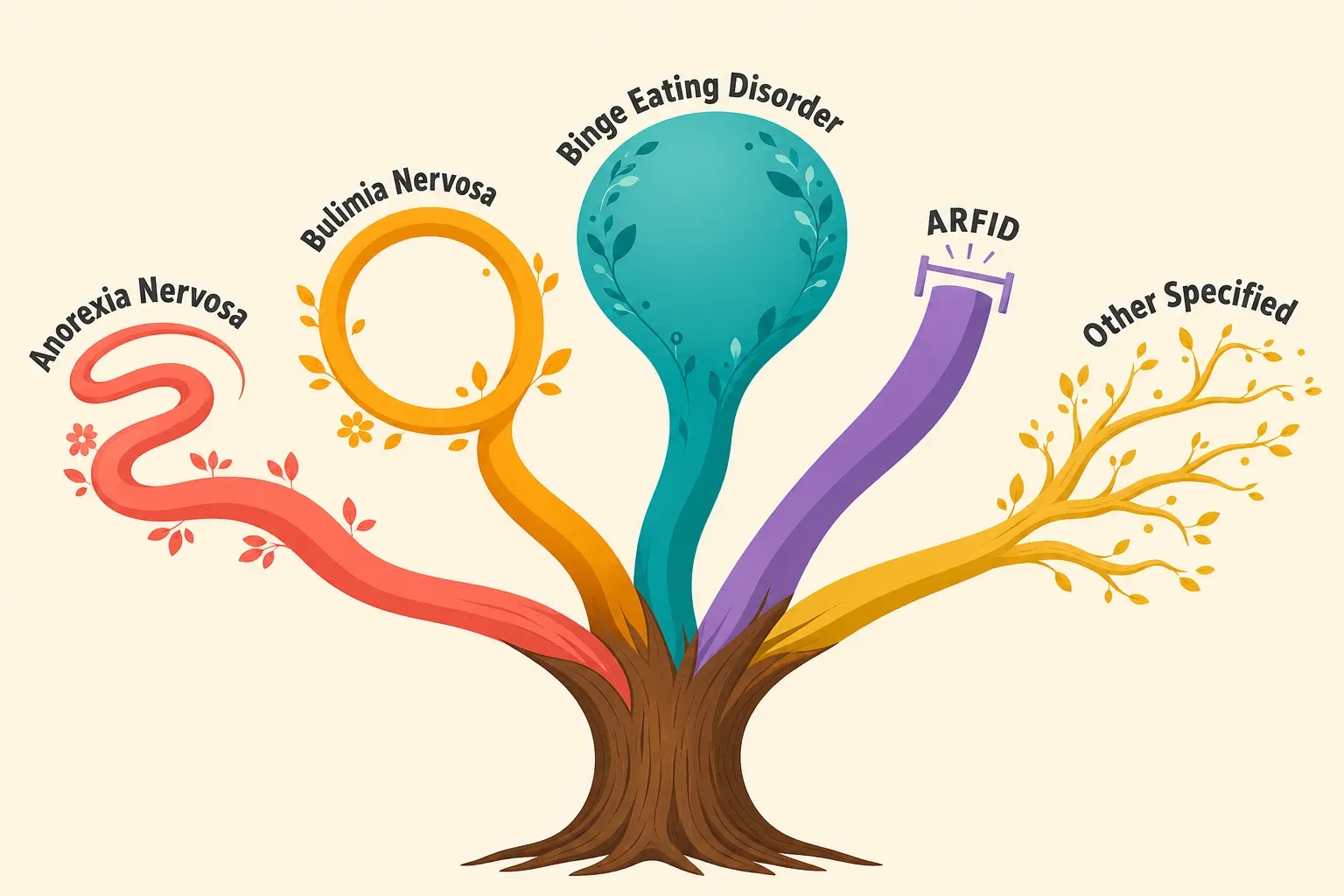
| Type | What it may involve |
|---|---|
| Anorexia nervosa | Severely limiting food, intense fear of gaining weight and difficulty seeing your body accurately |
| Bulimia nervosa | Repeated binge eating followed by vomiting, fasting, excessive exercise or other attempts to compensate |
| Binge eating disorder | Repeatedly eating large amounts while feeling unable to stop, followed by distress or guilt |
| Avoidant/Restrictive Food Intake Disorder (ARFID) | Avoiding or limiting food because of fear, sensitivity, disgust or low interest in eating, rather than concerns about body shape |
| Other specified eating disorders | Serious symptoms that do not fit all the criteria for one particular diagnosis |
A person’s symptoms may change over time. Only a qualified professional can diagnose the condition.
Can Someone Have an Eating Disorder at Any Body Size?
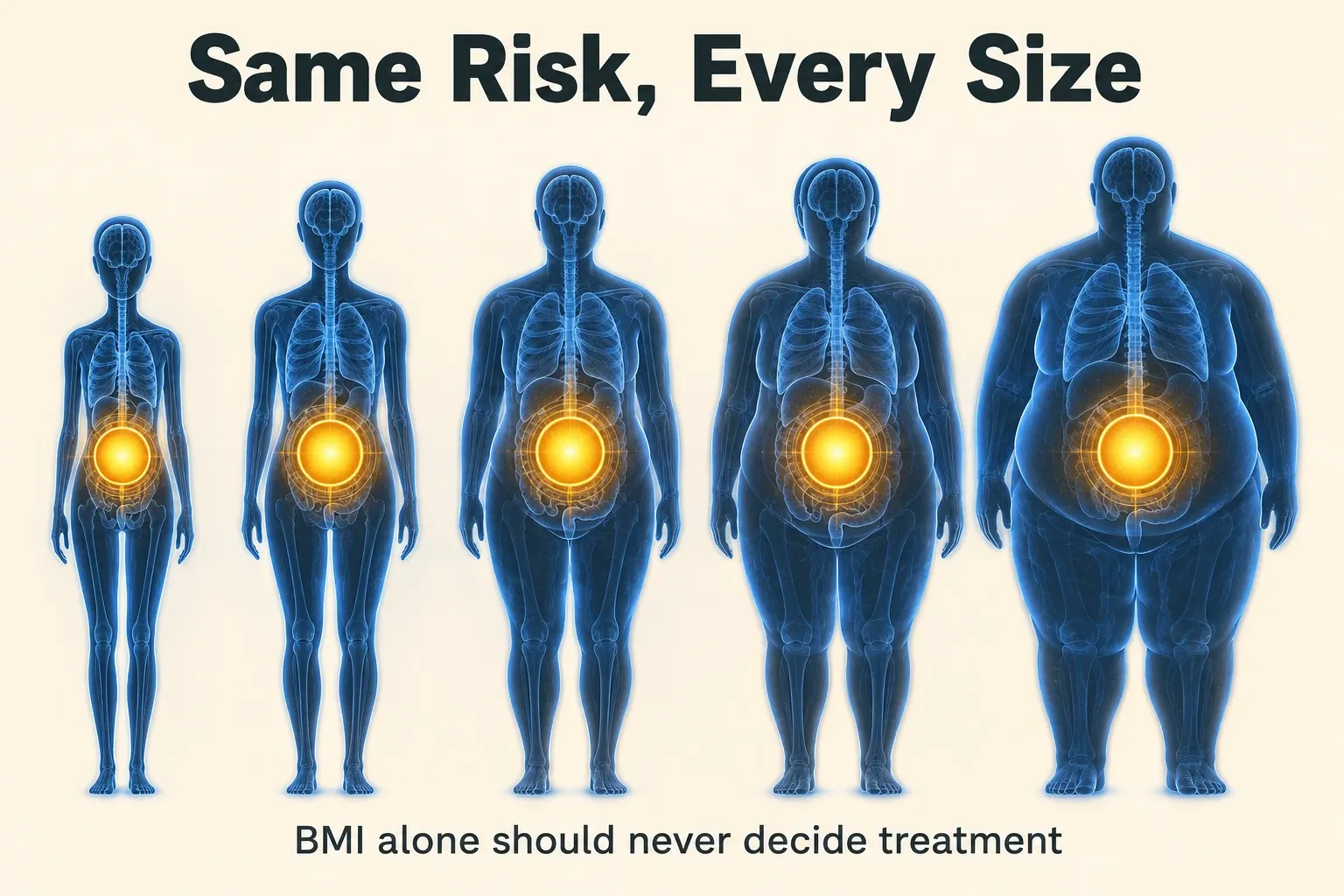
Yes. Most people with eating disorders are not visibly underweight.
Someone in a larger body may be severely limiting food. Someone whose weight appears unchanged may be binge eating, vomiting or exercising excessively. Treatment takes into account the person’s eating behaviours, physical health and emotional distress, not just their weight. Body mass index, or BMI, alone does not determine whether someone needs treatment [2].

What Are the Warning Signs?
Eating disorders can affect behaviour, emotions and physical health.
Changes Around Food
- Skipping meals regularly
- Making strict rules about what you can eat
- Cutting out several types of food
- Eating secretly or hiding food
- Eating very quickly or feeling unable to stop
- Going to the bathroom immediately after meals
- Avoiding meals with family or friends
- Feeling guilty or ashamed after eating
In India, restriction may sometimes be mistaken for fasting, discipline or “healthy eating.” The key concern is whether eating has become rigid, secretive or distressing.
Changes in Thoughts and Behaviour
- Thinking about food, weight or body shape for much of the day
- Checking your body repeatedly
- Avoiding mirrors or photographs
- Exercising even when tired, unwell or injured
- Becoming withdrawn, anxious or irritable
- Feeling that your worth depends on your weight or appearance
Physical Signs
- Tiredness or weakness
- Feeling cold frequently
- Dizziness or fainting
- Digestive problems
- Hair thinning
- Dental damage
- Irregular or absent periods
- Changes in weight
These symptoms may have other causes. A medical assessment can help identify what is happening.
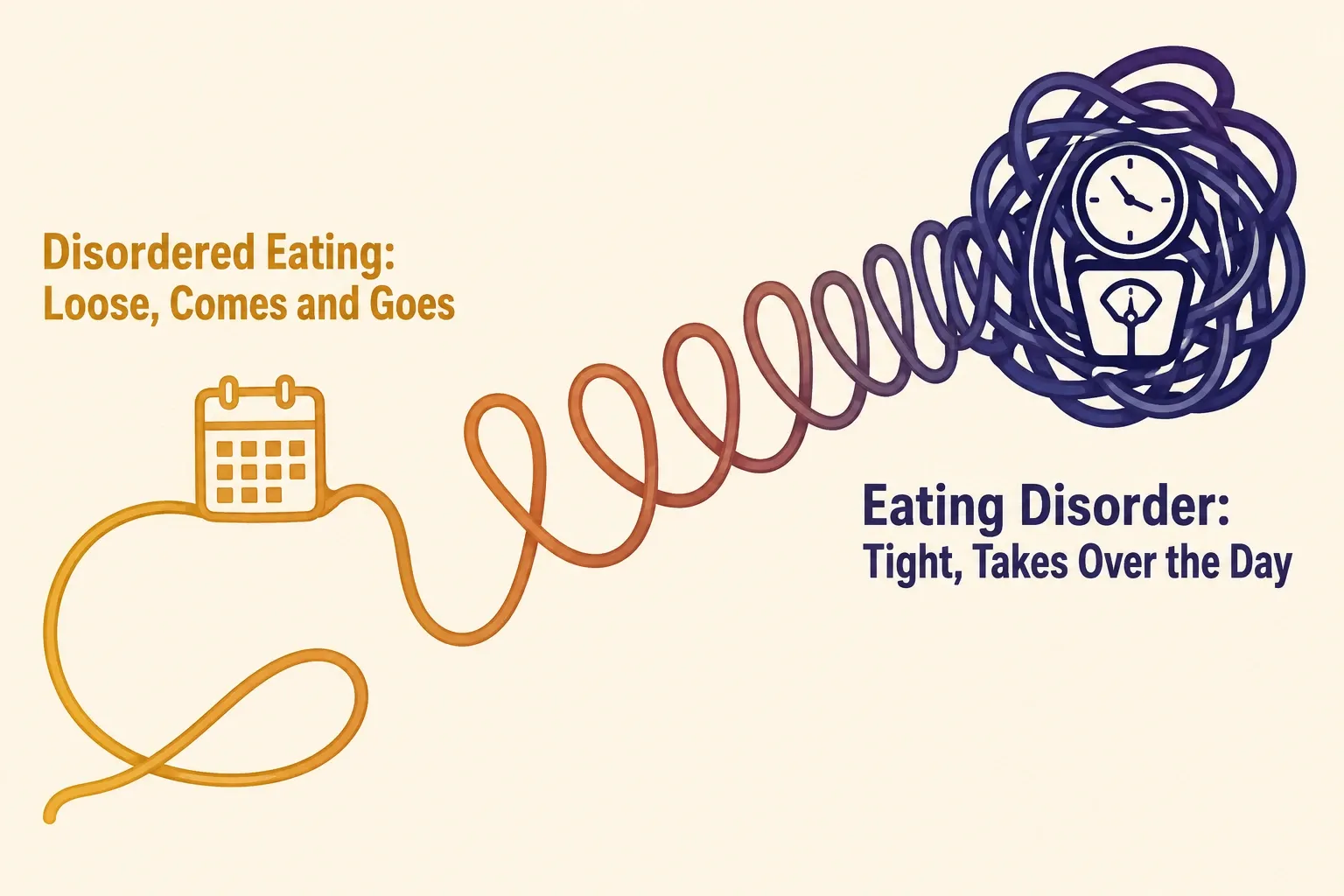
What Is the Difference Between Disordered Eating and an Eating Disorder?
| Disordered eating | Possible eating disorder |
|---|---|
| Food rules or dieting happen occasionally | Food rules become strict and difficult to stop |
| Thoughts about food come and go | Food and body thoughts take up much of the day |
| Daily life remains mostly manageable | Eating affects health, work, studies or relationships |
| The pattern may improve with support | Professional assessment and treatment may be needed |
You do not have to decide which category fits before asking for help. Online quizzes cannot diagnose an eating disorder.
Parents almost always ask me, in some form, whether they caused this. They didn't. Genetics, temperament, and environment all play a role, but this isn't about parenting failure. What I need from families isn't guilt, it's their involvement in recovery, which is often one of the strongest things we have working in our favor.
What Causes Eating Disorders?
Eating disorders usually develop through several factors, including:
- Genetics and family history
- Anxiety, depression or OCD
- Trauma or difficult experiences
- Perfectionism or a strong need for control
- Low self-esteem
- Dieting and strict food rules
- Bullying or repeated comments about weight
- Pressure to look a particular way
- Body comparison on social media
While parenting and familial interactions can influence the development of eating disorders, they are not the only reason, and eating disorders are also impacted by other factors. If included in the treatment, family support can be an important part of recovery. Family support can be an important part of recovery [1].
Eating disorders may occur alongside depression, anxiety or OCD.
How Are Eating Disorders Diagnosed?
There is no single test for an eating disorder. A doctor or mental health professional may ask about:
- Your eating habits
- Thoughts about food and your body
- Binge eating, vomiting or excessive exercise
- Changes in weight or physical health
- Your mood and mental health
- Medicines or substances you use
They may also check your pulse, blood pressure and blood tests. These checks help identify medical problems caused by restricted eating, vomiting or other behaviours.
You deserve an assessment even if your weight appears “normal.”
How Are Eating Disorders Treated?
Treatment depends on the type of eating disorder, its severity and your physical health. It commonly includes therapy, nutritional support and medical monitoring.
Talking Therapy
Specialist therapy can help you understand and change the thoughts, emotions and behaviours linked with eating.
Cognitive behavioural therapy, or CBT, is commonly used. Guided self-help may be offered first for some people with bulimia or binge eating disorder [2].
Children and teenagers may receive family-based support. This helps parents or caregivers support regular eating and recovery.
Nutritional and Medical Support
A qualified professional can help you return to safer and more regular eating. Medical checks may be needed to monitor your heart, blood pressure and general health.
A diet plan alone is usually not enough because treatment also needs to address the thoughts and emotions connected with eating.
Medication
Medication is not used as the only treatment for an eating disorder [2]. A doctor may prescribe it for related concerns such as depression or anxiety.
Do not start, stop or change medication without medical advice. Read more about psychiatric medications.
Are Eating Disorders Common in India?
Eating problems are not limited to Western countries. Indian studies have found high levels of disordered eating among adolescents, particularly girls [3].
Several factors can make eating disorders difficult to recognise in India:
- Restriction may be praised as discipline
- Fasting may hide changes in eating
- Comments about weight may be treated as normal
- Boys and men may not be asked about symptoms
- Families may wait until someone looks physically unwell
- Specialist services may be difficult to find outside large cities
Online consultations may help some people reach qualified support. However, urgent physical symptoms require in-person medical care.
How Can You Help Someone With an Eating Disorder?
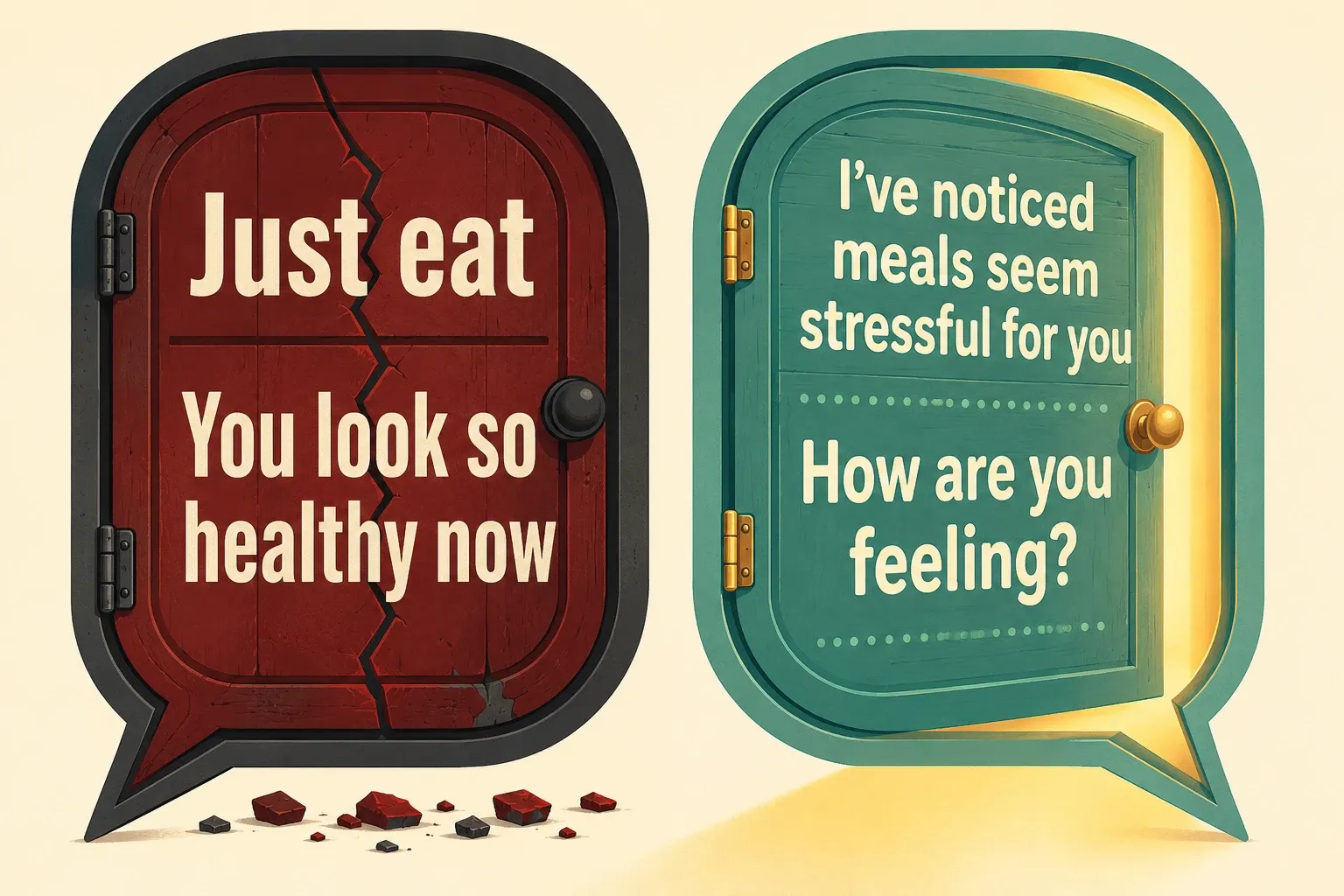
Speak privately and focus on what you have noticed rather than commenting on their weight.
You might say:
- “I have noticed that meals seem stressful for you.”
- “You have seemed tired and worried recently. How are you feeling?”
- “Would you like me to help you find a doctor or therapist?”
Avoid telling them to “just eat,” praising weight loss or arguing about whether they look unwell.
Read our guide to supporting a loved one.
When Should You Get Help?
Speak to a doctor or mental health professional if:
- Food or body thoughts take up much of your day
- You regularly restrict food, binge eat or vomit
- You follow strict food or exercise rules
- You hide your eating from other people
- Eating affects your health, mood or relationships
- Someone close to you has expressed concern
You do not need to be underweight or seriously ill before asking for help. Treatment is often more effective when it begins early [2][4].
When Is Emergency Help Needed?
Get urgent medical help if someone:
- Faints or feels close to fainting
- Has chest pain or an irregular heartbeat
- Cannot keep down food or fluids
- Is severely weak, confused or dehydrated
- Vomits blood
- Has thoughts of suicide or cannot stay safe
Call 112 or go to the nearest hospital emergency department. Do not leave the person alone.
Visit our crisis support and helplines page for more options.
Can You Recover From an Eating Disorder?
Yes. Full recovery is possible, although it may take time. Treatment can help improve eating, physical health, body image and emotional wellbeing.
If food or body concerns are beginning to control your day, consider speaking confidentially with a qualified mental health professional at Allo Health.
Disclaimer
This blog article discusses mental health and emotional wellbeing for general educational and informational purposes only. It is not a substitute for professional advice, diagnosis, or treatment, and only a qualified mental health professional, such as a psychiatrist, psychologist, or licensed therapist, can diagnose a condition or recommend treatment. If you are struggling, please reach out to a qualified professional or someone you trust; if you are in crisis or may be at risk of harming yourself, use the crisis support resources on this page. For any decisions about your mental health, we encourage you to seek the guidance of a qualified professional.
Most Asked Questions
Do eating disorders only affect young women?
No. They affect people of all genders, ages, races, body sizes, and income levels. Boys and men are substantially under-diagnosed, partly because neither they nor the people around them expect it, and partly because the questions never get asked.
Is binge eating disorder just overeating?
No. Everyone overeats sometimes. Binge eating disorder involves repeated episodes with a real sense of losing control, usually done alone, followed by significant distress. It is the most common eating disorder and among the least recognised, largely because it gets treated as a discipline problem instead of an illness.
Can eating disorders be cured?
Full recovery is possible, and that is the consensus position rather than optimism. Recovery takes time and is rarely a straight line, but people do reach a point where food and body no longer run their life.
Is it my fault as a parent?
No. Families do not cause eating disorders, and they are frequently central to someone getting better. Guilt tends to make parents either withdraw or push harder, and neither helps. Getting professional guidance on how to support someone is more useful than working out who is to blame.
They will not admit anything is wrong. What do I do?
This is common, because the disorder itself often argues against treatment. Focus on what you can observe and how it affects you rather than on getting them to accept a label. Keep the relationship intact, keep the offer of help open, and get advice yourself from a professional. You do not need their agreement to seek guidance.
Sources
- 1.
Academy for Eating Disorders and collaborating organisations. Nine Truths About Eating Disorders. Developed by Bulik CM from the 2014 NIMH presentation.
- 2.
National Institute for Health and Care Excellence. Eating disorders: recognition and treatment (NG69).
- 3.
Lewis-Smith H, Ahuja L, Diedrichs PC, et al. Adaptation and validation of the Child Eating Disorder Examination Questionnaire (ChEDE-Q) for use in English among adolescents in urban India. Nutrients. 2023;15(17):3836.
- 4.
Hyam L, Torkelson C, Richards K, et al. "Early intervention isn't an option, it's a necessity"... Frontiers in Health Services. 2024;3:1253966.
Why Should You Trust Us?
Why Should You Trust Us?
This article was written by Dr. Srishti Rastogi, who has more than 1 years of experience in the healthcare industry.
Allo has the expertise of over 50+ doctors who have treated more than 1.5 lakh patients both online and offline across 30+ clinics.
Our mission is to provide reliable, accurate, and practical health information to help you make informed decisions.
For This Article
- We referenced UK national clinical guidance (NICE) on eating disorder treatment, including its explicit stance that body mass index or duration of illness should never be used alone to decide whether someone receives treatment.
- We included India-specific research on disordered eating among adolescents in urban Indian schools, so readers get a realistic picture of how common this is locally rather than assuming it is a Western-only concern.
- We cited research on early-intervention services showing that starting treatment sooner leads to shorter delays and better outcomes, so the guide's emphasis on early help is grounded in evidence, not urgency for its own sake.
- We were direct about what the research says regarding families, that they do not cause eating disorders and are often essential to recovery, so this article does not add to the guilt many parents already carry.
- We were clear that medication alone is never the recommended treatment for these conditions, reflecting actual clinical guidance rather than oversimplifying what recovery requires.