Generalized Anxiety Disorder: Signs, Causes, and Treatment
Written by Dr. Srishti Rastogi

Dr. Srishti Rastogi is a medical writer and healthcare professional dedicated to high-quality patient education and public health awareness. Leveraging her clinical background, she produces deeply researched, evidence-based content for digital health platforms and medical publications. Dr. Srishti’s unique dual perspective as a clinician and communicator allows her to craft content that builds trust and credibility with readers navigating sensitive health topics.
•
October 9, 2026
Our experts continually monitor the health and wellness space, and we update our articles when new information becomes available.
Quick Read
Everyone worries. Generalized anxiety disorder, or GAD, is when worry becomes excessive, hard to switch off, and starts to interfere with daily life. It brings mental symptoms like constant worry and physical ones like restlessness, tension, and poor sleep. Anxiety is very common and very treatable: talking therapies such as CBT help many people, and medication is an option some people use with a doctor. If anxiety is wearing you down, that is worth talking to a professional about, not something you have to push through alone.
Feeling anxious is normal. Anxiety is your mind and body’s response to danger, uncertainty or pressure. It can help you prepare for an exam, make an important decision or deal with a difficult situation.
However, anxiety may become a problem when it is difficult to control, continues for a long time or affects your daily life.
What Is GAD?
Generalized anxiety disorder, or GAD, causes excessive worry about different parts of life. This may include work, studies, health, money, family or small everyday matters. If the worry is present for more than 6 months, and feels difficult to stop, then it's called GAD [1].

Allo asks
When was the last time you felt truly relaxed?
Normal Worry vs GAD
| Normal worry | Possible GAD |
|---|---|
| Usually has a clear reason | May involve many different concerns |
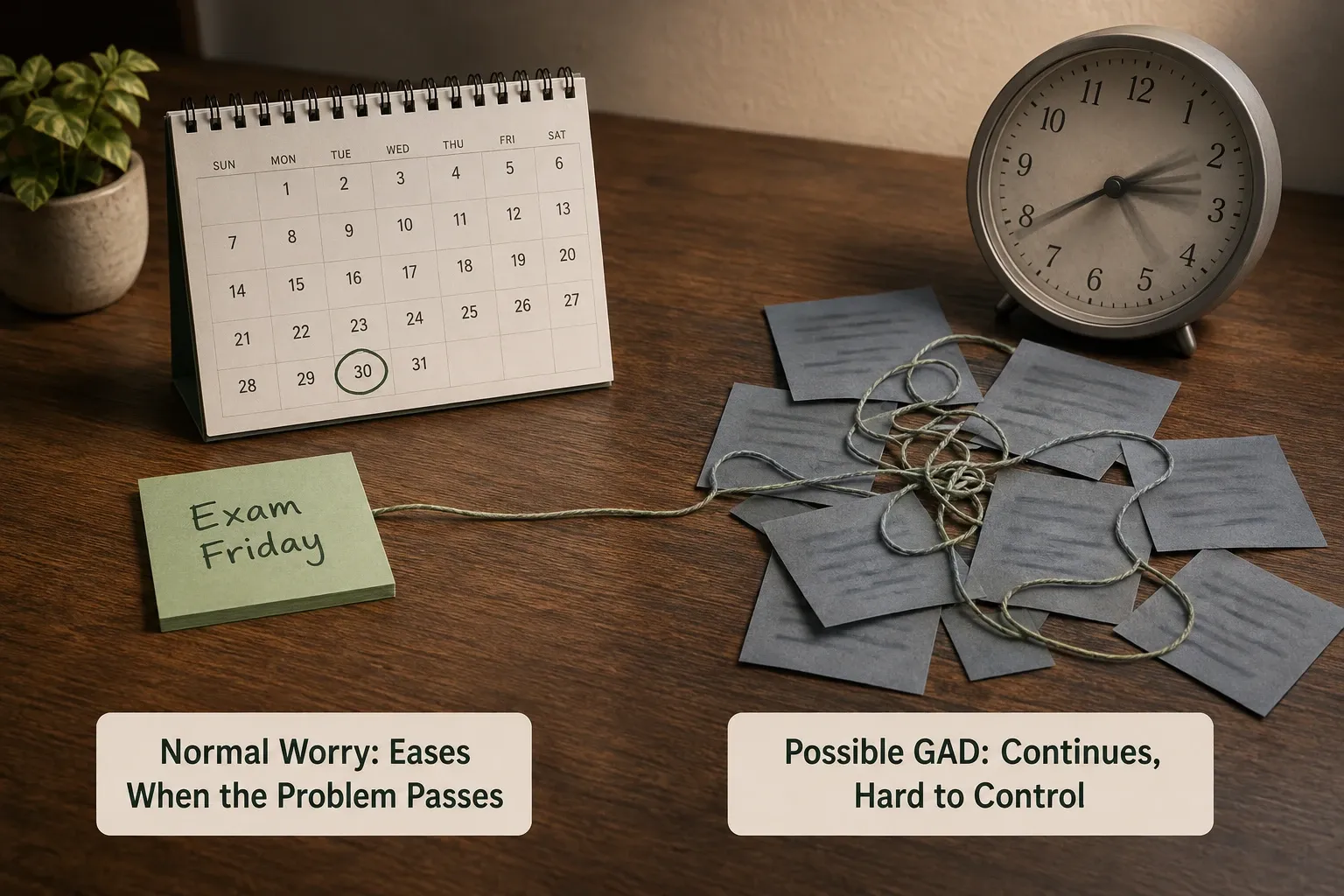
| Reduces when the problem passes | Continues even when there is no clear danger |
| Can usually be managed | Feels difficult to control |
| Does not take over daily life | Affects sleep, concentration, work or relationships |
Only a qualified mental health professional can diagnose GAD. This information can help you understand the condition, but it is not a medical test.

What Are the Main Types of Anxiety Disorders?
Anxiety disorders can appear in different ways:
- Panic disorder and panic attacks: Sudden and intense fear with symptoms such as a fast heartbeat, sweating, shaking or difficulty breathing. Read more about panic attacks and how to manage them.
- Social anxiety disorder: A strong fear of being judged, embarrassed or rejected in social situations. This is more than ordinary shyness. Read more about social anxiety.
- Phobias: A very strong fear of a particular object, animal, place or situation, even when the actual danger is small. Read more about phobias.
- Health anxiety: Constant worry about having a serious illness, even when medical tests do not show a problem. The person may repeatedly check their body or ask others for reassurance. Read more about health anxiety.
- Agoraphobia: Fear of situations where leaving may feel difficult or help may not be available. This can lead someone to avoid travel, crowds or leaving home. Read more about agoraphobia.
Obsessive-compulsive disorder (OCD) can also involve anxiety. However, it is considered a separate condition.
A lot of patients come in for a racing heart or stomach problems, convinced something's physically wrong, and it turns out to be anxiety. That doesn't mean it's ‘not real ’; your body genuinely reacts to it. We just treat it differently once we know what's driving it.
What Are the Symptoms of Anxiety?
Anxiety can affect your thoughts, emotions and body [1].
Mental and Physical Symptoms of Anxiety
| Mental and emotional symptoms | Physical symptoms |
|---|---|
| Constant worry that is difficult to stop | Fast or pounding heartbeat |
| Feeling restless, nervous or always on alert | Sweating or shaking |
| Difficulty concentrating | Muscle tension |
| Feeling as if your mind has gone blank | Headaches |
| Becoming irritated easily | Stomach discomfort |
| Feeling that something bad may happen | Tiredness or low energy |
| — | Difficulty sleeping |
Anxiety can cause real physical symptoms. However, heart, thyroid and other health conditions can cause similar problems. Speak to a doctor if your symptoms are new, severe or unexplained.

What Causes Anxiety?
Anxiety usually develops because of a combination of factors [2]:
- Family and biology: Anxiety may be more common in some families.
- Personality: Some people find uncertainty more difficult to manage.
- Past experiences: Trauma, loss or difficult childhood experiences may increase the risk.
- Current stress: Work pressure, family problems, illness, money worries or major life changes can trigger anxiety. Learn more about coping with stress and burnout.
- Daily habits: Poor sleep, too much caffeine and ongoing stress may make symptoms worse. Read our guide to sleep hygiene.
You do not need to know the exact cause before starting treatment.
How Is Anxiety Diagnosed?
There is no single blood test for an anxiety disorder. A doctor or mental health professional may ask about:
- Your worries and fears
- Your mental and physical symptoms
- How long the symptoms have continued
- Their effect on your daily life
- Your health history
- Any medicines or substances you use
A doctor may also recommend tests to rule out physical health problems.
Online quizzes can help you notice possible symptoms, but they cannot diagnose anxiety. A proper assessment considers your complete situation. Read what to expect in your first therapy session.
How Is Anxiety Treated?
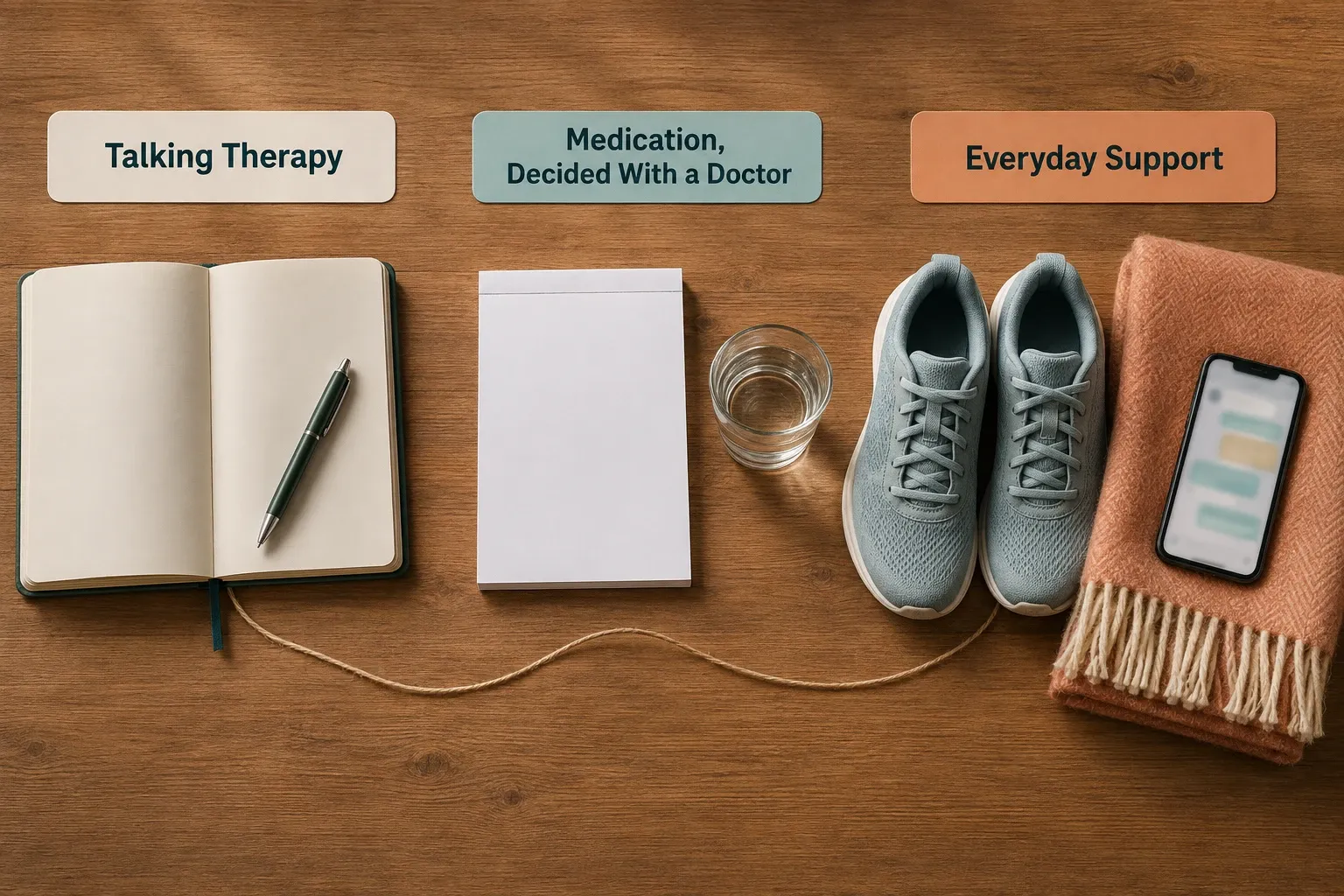
The main treatments for anxiety are talking therapy, medication and healthy daily habits. Your treatment will depend on your symptoms, health and personal needs.
Talking Therapy
Cognitive behavioural therapy, or CBT, is a commonly recommended treatment for anxiety [3]. It can help you:
- Recognise thoughts that increase anxiety
- Reduce avoidance
- Develop practical ways to manage worry and fear
For a fear linked to a particular object or situation, a therapist may use gradual exposure. This means facing the fear slowly and safely with professional support.
If you are unsure whom to consult, read about the difference between a psychiatrist, psychologist and therapist.
Medication
A doctor may prescribe medicine when anxiety is severe or affects daily life. Some medicines are used regularly, while others may be recommended only for a short time because they can cause dependence [3].
Do not start, stop or change anxiety medicine without speaking to your doctor. Read more about anti-anxiety medications and how psychiatric medicines work.
Everyday Ways to Manage Anxiety
The following habits may help:
- Follow a regular sleep routine
- Exercise or move your body regularly
- Reduce caffeine, especially later in the day
- Eat regular meals
- Practise slow breathing or grounding
- Talk to someone you trust
You can learn simple mindfulness, breathing and grounding techniques to calm your body.
These habits may help with mild or short-term anxiety. If your symptoms continue or interfere with daily life, combine self-help with professional care.
Anxiety in India
Many people in India do not receive help for anxiety. India’s National Mental Health Survey estimated that about 1 in 40 adults had an anxiety disorder at the time of the survey, with higher reported rates among women [4][5]. The true number may be higher because many people do not recognise their symptoms or seek support.
Common barriers include:
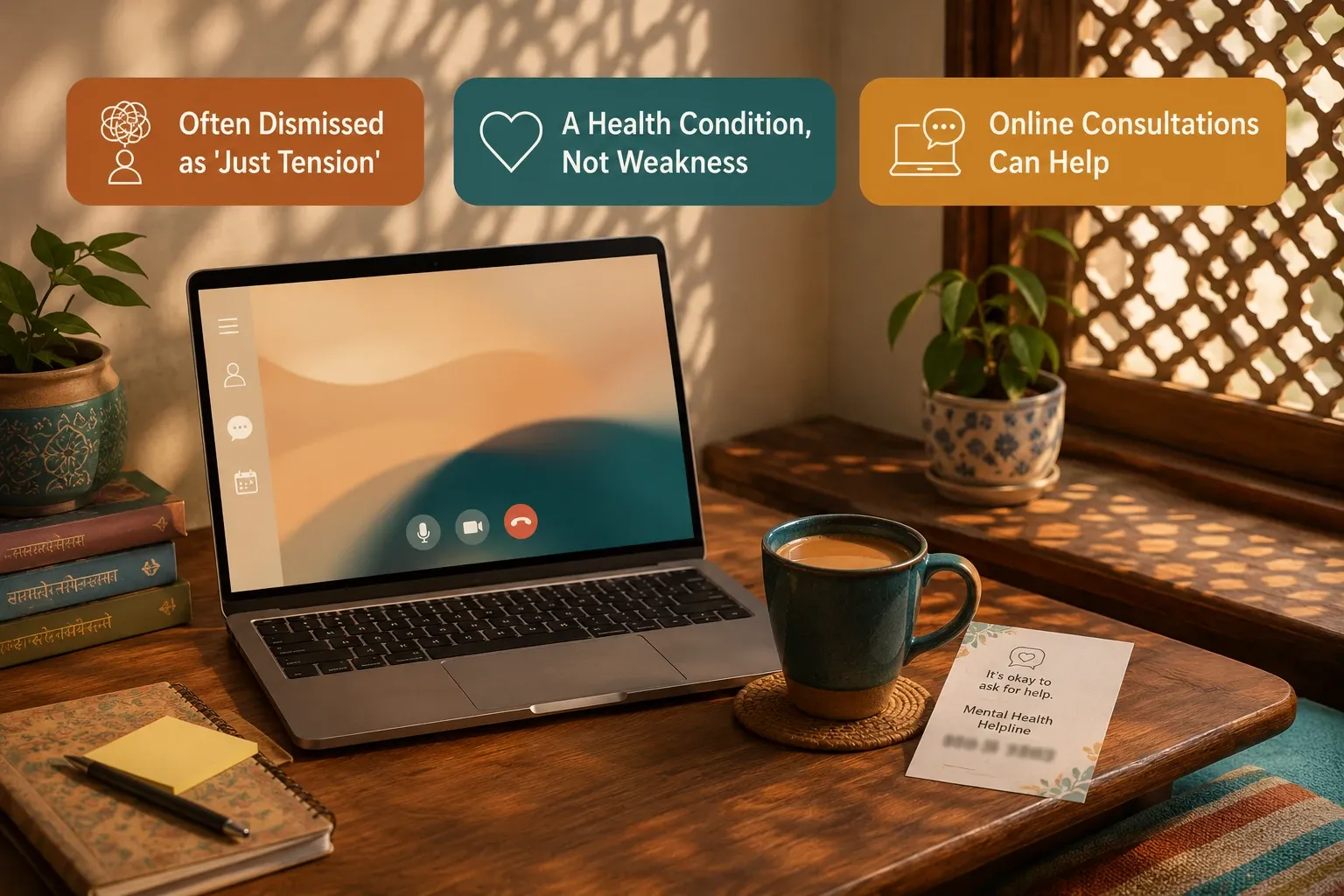
- Anxiety being dismissed as “just tension” or overthinking
- Fear of what family or other people may say
- Difficulty finding a qualified professional nearby
- Worry about treatment costs
- Not knowing where to get help
Anxiety is a health condition, not a personal weakness. Online consultations may make qualified support easier to access.
When Should You Get Help for Anxiety?
Speak to a mental health professional if:
- You feel worried or afraid on most days
- You cannot control the worry
- Anxiety affects your sleep, work, studies or relationships
- You avoid people, places or activities because of fear
- Physical symptoms keep returning after a medical check
- You use alcohol or other substances to cope
- You also feel sad, hopeless or lose interest in things
Anxiety can occur alongside depression. Tell a professional if you have ongoing low mood, hopelessness or loss of interest.
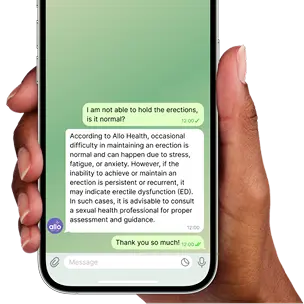
You do not need to wait until the symptoms become severe. If anxiety is making daily life difficult, you can book a confidential consultation with Allo Health to understand what is happening and discuss the right support.
Disclaimer
This blog article discusses mental health and emotional wellbeing for general educational and informational purposes only. It is not a substitute for professional advice, diagnosis, or treatment, and only a qualified mental health professional, such as a psychiatrist, psychologist, or licensed therapist, can diagnose a condition or recommend treatment. If you are struggling, please reach out to a qualified professional or someone you trust; if you are in crisis or may be at risk of harming yourself, use the crisis support resources on this page. For any decisions about your mental health, we encourage you to seek the guidance of a qualified professional.
Most Asked Questions
Can anxiety be treated?
Yes, and it responds well to treatment. Cognitive behavioural therapy is a recommended first step and helps many people, medication is an option some use with a doctor, and everyday changes support both. How much and how quickly it helps varies from person to person, and setbacks do not mean it will not work.
Can anxiety cause physical symptoms?
Yes. Anxiety commonly causes real physical symptoms such as a racing heart, muscle tension, and stomach upset, which can feel like other health problems. It is sensible to have unexplained physical symptoms checked by a doctor rather than assume the cause either way; a physical condition and anxiety can also exist at the same time.
Is anxiety a mental illness?
An anxiety disorder is a recognised and treatable mental health condition. Feeling anxious sometimes is normal and not an illness; it is the persistent, excessive, life-affecting pattern that a professional may diagnose as a disorder.
Sources
- 1.
National Institute of Mental Health. Generalized Anxiety Disorder: What You Need to Know.
- 2.
StatPearls (NCBI Bookshelf). Generalized Anxiety Disorder.
- 3.
Katharine C. DeGeorge et al (AAFP). Generalized Anxiety Disorder and Panic Disorder in Adults. American Family Physician. 2022;106(2):157–164.
- 4.
Manjunatha et al. Prevalence and correlates of anxiety disorders: findings from India's National Mental Health Survey 2016. Indian Journal of Psychiatry.
- 5.
Gururaj G, Varghese M, Benegal V, et al. National Mental Health Survey of India, 2015–16. NIMHANS, Bengaluru.
Why Should You Trust Us?
Why Should You Trust Us?
This article was written by Dr. Srishti Rastogi, who has more than 1 years of experience in the healthcare industry.
Allo has the expertise of over 50+ doctors who have treated more than 1.5 lakh patients both online and offline across 30+ clinics.
Our mission is to provide reliable, accurate, and practical health information to help you make informed decisions.
For This Article
- We referenced clinical criteria for generalized anxiety disorder to draw the distinction between normal worry and GAD, so readers get an accurate picture of when worry may be worth a professional assessment, not just a subjective feeling.
- We referenced India's National Mental Health Survey for our anxiety prevalence figures, so the claim that anxiety is underdiagnosed in India is grounded in national data, not assumption.
- We covered the five main anxiety disorder subtypes individually, panic disorder, social anxiety, phobias, health anxiety, and agoraphobia, so readers can recognise which pattern is closest to their own experience rather than a single generic description.
- We referenced cognitive behavioural therapy and gradual exposure as evidence-based treatments for anxiety, so the treatment guidance reflects what clinicians actually use.
- We were careful to note that anxiety symptoms can overlap with physical health conditions like thyroid problems, and to recommend medical evaluation where relevant, rather than assuming every physical symptom is anxiety.
- We named specific barriers to seeking help in India, including anxiety being dismissed as "just tension," so readers can recognise their own hesitation as common rather than personal.