Sleep Hygiene: A Practical Guide to Better Sleep
Written by Dr. Srishti Rastogi

Dr. Srishti Rastogi is a medical writer and healthcare professional dedicated to high-quality patient education and public health awareness. Leveraging her clinical background, she produces deeply researched, evidence-based content for digital health platforms and medical publications. Dr. Srishti’s unique dual perspective as a clinician and communicator allows her to craft content that builds trust and credibility with readers navigating sensitive health topics.
•
August 11, 2026
Our experts continually monitor the health and wellness space, and we update our articles when new information becomes available.

Quick Read
Sleep hygiene means the everyday habits and surroundings that help you sleep well. The basics matter most: a fairly regular sleep and wake time, a dark, quiet, cool bedroom, less caffeine and screen time in the evening, and a calm wind-down before bed. These small changes help many people sleep better. If sleep stays difficult even after you try them, that is worth talking to a professional about, and it does not mean you have done anything wrong.
If you regularly struggle to fall asleep or wake up feeling tired, a few changes to your daily routine may help. These habits are known as sleep hygiene.
This guide explains which sleep habits can improve rest, how to create a simple bedtime routine, and when sleep problems may need professional support.
What Is Sleep Hygiene?
Sleep hygiene means the daily habits and surroundings that support better sleep [1][2]. It is not about cleanliness or following a perfect routine.
Examples include keeping regular sleep times, reducing caffeine later in the day, making your sleeping space comfortable, and relaxing before bed. You do not need special equipment or many changes at once. Start with one or two habits that fit your daily life.

Allo asks
What's keeping you up at night?
Why Good Sleep Matters for Your Mind
Good sleep supports your mental health, while a systematic review linked ongoing poor sleep with a higher future risk of anxiety and depression [3]. Over time, this can create a cycle in which poor sleep and mental health concerns make each other worse.

Improving your sleep habits may help break this cycle. Relaxation techniques and healthy ways of managing stress may also help when worry keeps you awake.
A few difficult nights do not mean you have a mental health condition. However, ongoing sleep and mood problems are worth discussing with a qualified professional.
Patients often come in frustrated because they've read all the tips and still can't sleep. Usually it's not that the advice is wrong, it's that one piece is still off, caffeine timing, screen habits, an irregular schedule. Once we find it, things tend to shift.
The Core Habits of Good Sleep Hygiene
The core habits of good sleep hygiene are keeping a regular sleep schedule, making your bedroom comfortable, reducing caffeine and alcohol, and staying active during the day [2]. However, you do not need to change everything at once. Start with one or two habits that feel realistic. Small, consistent changes are more helpful than trying to create a perfect routine for a few days.
1. Keep a Regular Sleep Schedule
Try to wake up and go to bed at roughly the same time each day, including weekends. This helps your body learn when to feel awake and sleepy [1]. If your schedule has changed, adjust it slowly by 15 to 30 minutes every few days.

2. Make Your Bedroom Comfortable
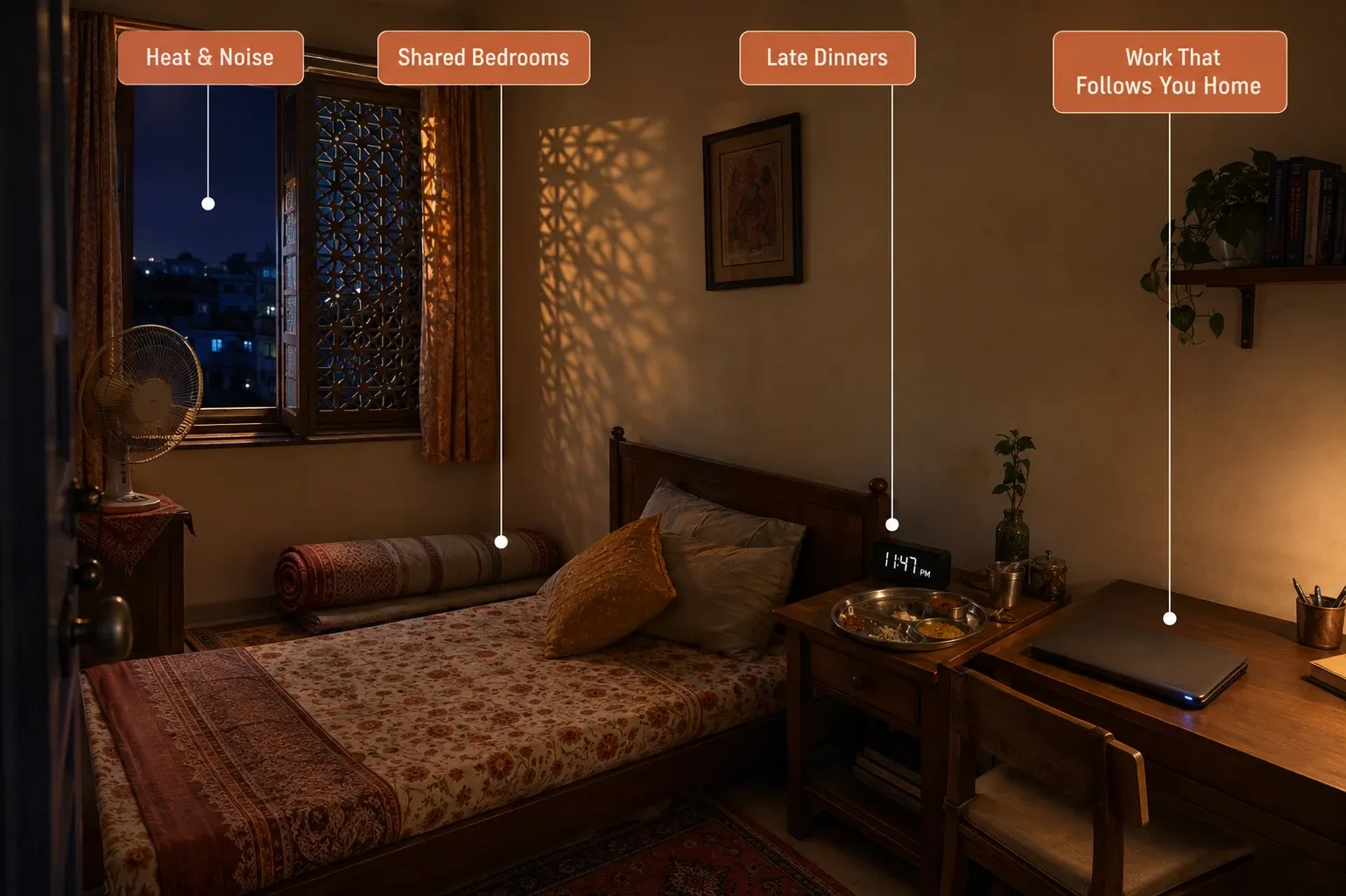
Try to keep your sleeping space dark, quiet, cool, and comfortable [1].
- Use curtains or an eye mask to reduce light.
- Try earplugs or soft background sound if noise is a problem.
- Use a fan, ventilation, or lighter bedding during hot nights.
- Keep work, studying, and scrolling out of bed when possible.
If you share a bedroom, speak to your family about reducing lights, noise, and screen brightness near bedtime. An eye mask or earplugs may also help.

3. Reduce Caffeine, Alcohol, and Heavy Meals
Caffeine can keep you awake for several hours. Reduce tea, coffee, cola, and energy drinks later in the day, especially if you are sensitive to them [4].
Alcohol may make you feel sleepy at first, but it can disturb your sleep later. Heavy meals close to bedtime may also cause discomfort.
4. Move During the Day
Walking or another form of regular physical activity may help you fall asleep more easily [5]. If exercising near bedtime makes you feel more awake, do it earlier in the day.
How to Build a Wind-Down Routine
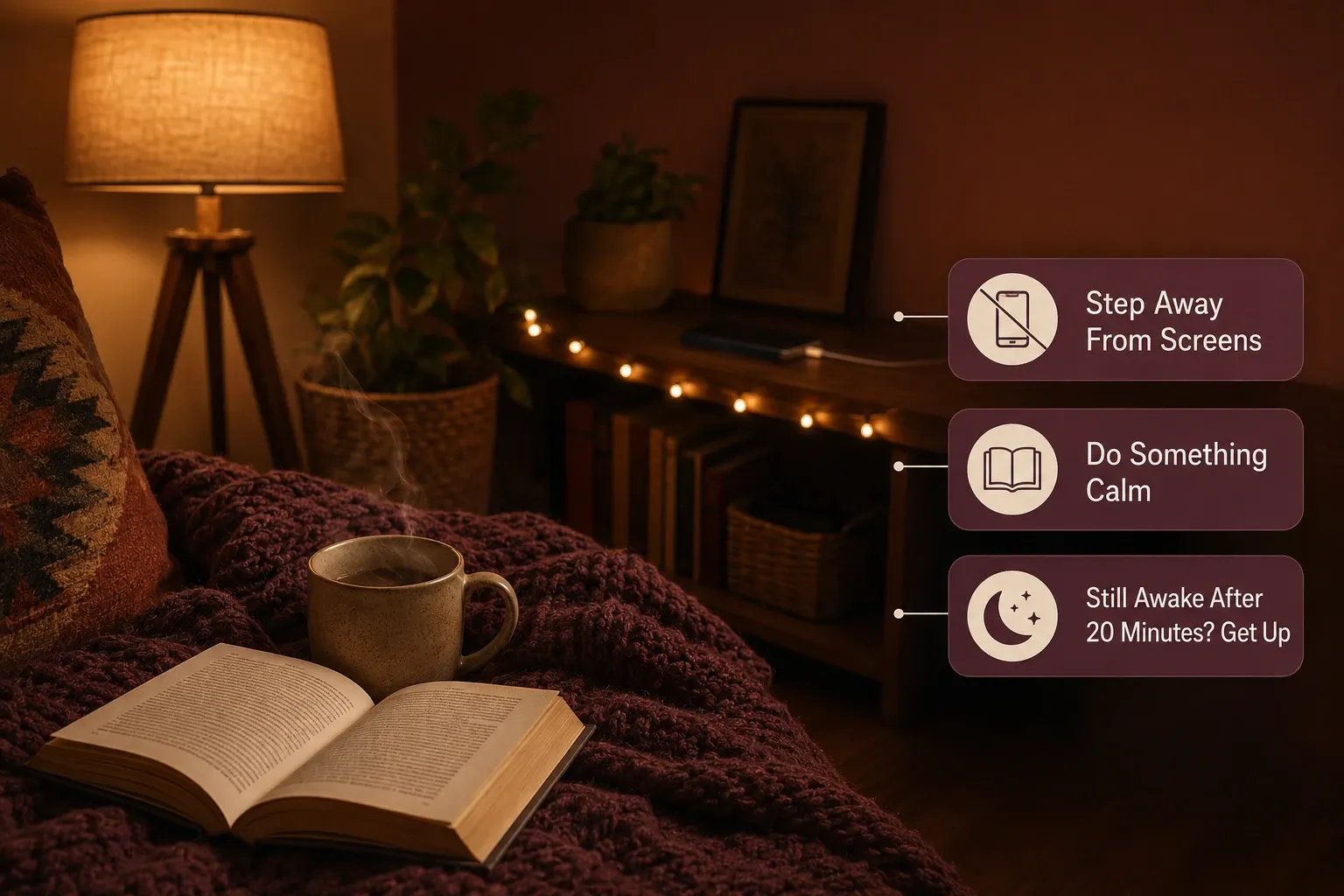
Spend the last 30 to 60 minutes before bed doing something calm. Try to reduce phone, television, and laptop use during this time [4]. A simple bedtime routine helps your mind and body slow down after a busy day. Doing the same calming activities each night can help you feel more relaxed and ready for sleep.
You could:
- Read a book.
- Take a warm shower.
- Stretch gently.
- Listen to quiet music.
- Practise slow breathing or another relaxation technique.
If you are lying awake and becoming frustrated, leave the bed and do something quiet in low light. Return when you feel sleepy. This can help your mind connect the bed with sleep instead of worry [6].
How to Reset Your Sleep Schedule
If travel, shift work, or late nights have changed your sleep schedule:
- Choose a realistic waking time and follow it every day.
- Get some daylight after waking.
- Avoid long or late daytime naps.
- Go to bed when you begin to feel sleepy.
- Move your schedule gradually instead of changing it all at once.
Your sleep schedule may take time to adjust, so focus on being consistent rather than trying to fix it in one night [1].
When Sleep Hygiene Is Not Enough
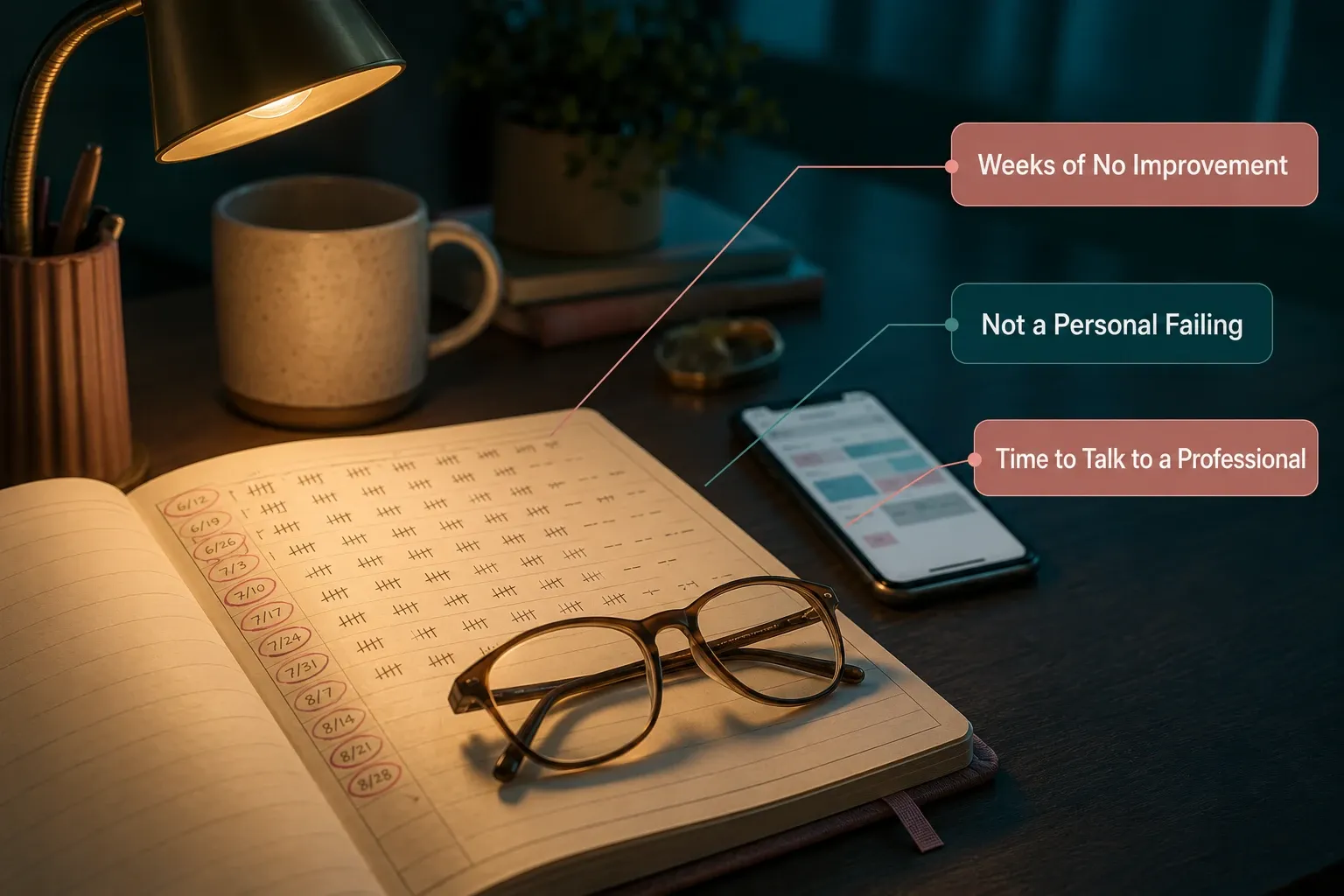
Sleep habits may not be enough if you regularly struggle to fall asleep, stay asleep, or wake feeling rested for several weeks. Ongoing problems may be related to insomnia or another sleep condition, stress, low mood, medicines, or a physical health problem.
A qualified professional can help identify the cause and recommend suitable treatment. For long-term insomnia, this may include cognitive behavioural therapy for insomnia, or CBT-I [7]. If therapy feels unfamiliar, learning what happens in a session may make the first step easier.
If you feel ready, you can book a confidential consultation with a mental health professional at Allo Health.
Disclaimer
This blog article discusses mental health and emotional wellbeing for general educational and informational purposes only. It is not a substitute for professional advice, diagnosis, or treatment, and only a qualified mental health professional, such as a psychiatrist, psychologist, or licensed therapist, can diagnose a condition or recommend treatment. If you are struggling, please reach out to a qualified professional or someone you trust; if you are in crisis or may be at risk of harming yourself, use the crisis support resources on this page. For any decisions about your mental health, we encourage you to seek the guidance of a qualified professional.
Most Asked Questions
What is sleep hygiene in simple terms?
Sleep hygiene is the set of daily habits and surroundings that help you sleep well, such as a regular sleep schedule, a dark and cool bedroom, less caffeine in the evening, and a calm routine before bed.
How can I improve my sleep hygiene?
Start small. Keep a steady wake-up time, cut caffeine from mid-afternoon, step away from screens in the last hour before bed, and make your bedroom dark, quiet, and cool. Adding one habit at a time is easier to keep up than changing everything at once.
Does sleep hygiene help with insomnia?
Better sleep habits can support your sleep and are often part of managing insomnia, but they do not always resolve it on their own. If sleep stays difficult despite good habits, it is worth speaking to a professional.
How long does it take to fix a sleep schedule?
It varies from person to person and depends on how far your schedule has drifted. Shifting gradually and keeping a fixed wake-up time usually helps it settle over a few weeks, so patience matters.
Why can't I sleep even when I am tired?
Stress, caffeine, screen use, an irregular schedule, or a room that is too warm or bright can all keep you awake despite feeling tired. Reviewing your evening habits often helps, and persistent trouble is worth discussing with a professional.
Is it bad to use my phone in bed?
Bright screens and the stimulation of scrolling can make it harder to fall asleep, so most people sleep better if they put phones away in the last thirty to sixty minutes before bed and keep the bed mainly for sleep.
Sources
- 1.
Centers for Disease Control and Prevention. About Sleep.
- 2.
Sleep Foundation. Sleep hygiene.
- 3.
Alvaro PK, Roberts RM, Harris JK. A systematic review assessing bidirectionality between sleep disturbances, anxiety, and depression.
- 4.
NHS. How to fall asleep faster and sleep better (Every Mind Matters).
- 5.
Harvard Health Publishing. Sleep hygiene: simple practices for better rest.
- 6.
Cleveland Clinic. Rest easy: 8 ways to improve your sleep hygiene.
- 7.
Sleep Foundation. Cognitive behavioral therapy for insomnia (CBT-I).
Why Should You Trust Us?
Why Should You Trust Us?
This article was written by Dr. Srishti Rastogi, who has more than 1 years of experience in the healthcare industry.
Allo has the expertise of over 50+ doctors who have treated more than 1.5 lakh patients both online and offline across 30+ clinics.
Our mission is to provide reliable, accurate, and practical health information to help you make informed decisions.
For This Article
- We reviewed leading sleep health resources, including the CDC, Harvard Health Publishing, and the Sleep Foundation, to make sure the habits recommended here reflect current, evidence-based guidance rather than popular myths.
- We referenced a peer-reviewed systematic review examining the two-way link between sleep, anxiety, and depression, so our claims about sleep and mental wellbeing are grounded in published research, not assumption.
- We looked at national-level data from India's Time Use Survey (2024) to understand how daily routines in India specifically affect sleep, rather than relying only on Western sleep research that may not reflect local realities.
- We checked guidance from the Cleveland Clinic and NHS on practical, everyday fixes such as wind-down routines and screen habits, so the tips in this guide are ones clinicians actually recommend.
- We paid attention to the everyday constraints that make textbook sleep advice hard to follow in India, such as shared bedrooms, late dinners, and long commutes, and adjusted our recommendations to be realistic rather than idealistic.
- We were careful to distinguish between habits that genuinely help most people and situations where sleep hygiene alone is not enough, so this guide does not overstate what small lifestyle changes can fix.