Exercise and Mental Health: Benefits and How to Start
Written by Dr. Srishti Rastogi

Dr. Srishti Rastogi is a medical writer and healthcare professional dedicated to high-quality patient education and public health awareness. Leveraging her clinical background, she produces deeply researched, evidence-based content for digital health platforms and medical publications. Dr. Srishti’s unique dual perspective as a clinician and communicator allows her to craft content that builds trust and credibility with readers navigating sensitive health topics.
•
September 7, 2026
Our experts continually monitor the health and wellness space, and we update our articles when new information becomes available.

Quick Read
Regular exercise is linked to real, measurable improvements in depression and anxiety, not just a vague sense of feeling better. Walking or jogging shows the strongest effect in the best current research, though yoga, strength training and general aerobic exercise all help too. The evidence is real but not as bulletproof as most articles make it sound, and how much you need matters less than actually moving regularly. Exercise supports treatment for a diagnosable condition; it does not replace it.
Has someone told you to “just go for a walk” when even getting out of bed felt difficult?
Such advice can feel hurtful. When you are depressed, anxious or exhausted, low energy is not laziness. Exercise can help, but starting may be genuinely difficult. The goal is not to push yourself. It is to find a small amount of movement that feels possible for you.

Allo asks
What makes exercise hardest for you right now?
How Does Exercise Improve Mental Health?
Exercise increases blood flow to the brain and affects chemicals that help regulate mood and stress. It may also increase BDNF, a protein that supports healthy brain function [4].
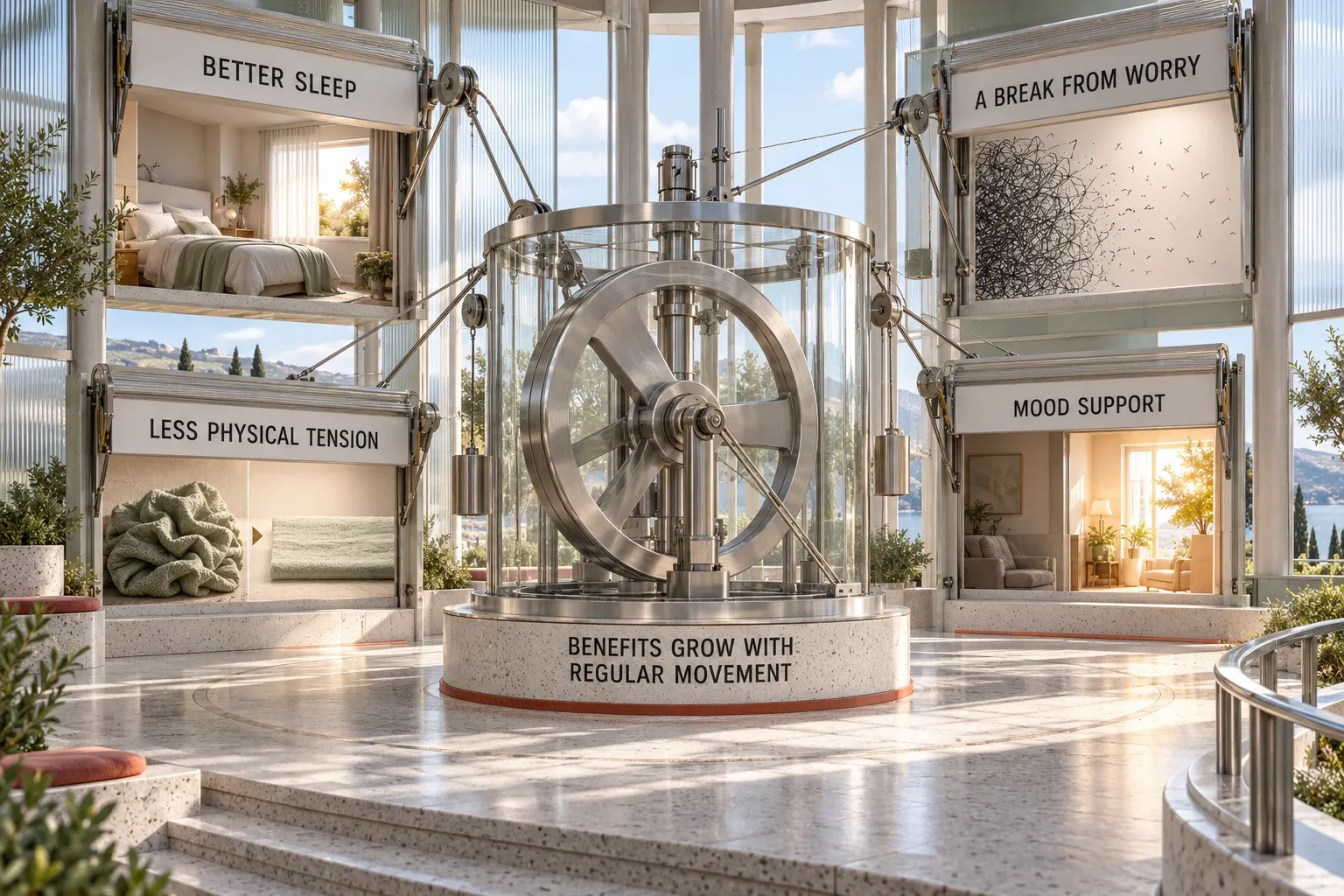
Regular movement may help you sleep better, reduce physical tension and take a break from repeated worrying. The World Health Organization says that physical activity can reduce symptoms of depression and anxiety and improve overall well-being [1].
The change may not happen after one workout. The benefits usually grow when movement becomes a regular part of your routine.

Can Exercise Help with Depression?
Yes. Research suggests that
exercise can reduce symptoms of depression.
A 2024 review examined 218 studies involving more than 14,000 people. Walking or jogging showed strong benefits. Yoga, strength training and other aerobic exercises also helped [2].

However, many of these studies had limitations. Exercise can be useful, but one activity will not work equally well for everyone.
Depression can make even small tasks feel tiring. If a 30-minute walk feels impossible, begin with five minutes. You could walk to the end of your lane, move around your terrace or simply stretch in your room.
A small start still counts. Read more about depression.

Can Exercise Reduce Anxiety and Stress?
Yes. Physical activity may help reduce anxiety, stress and emotional distress.
A 2023 review brought together 97 reviews involving more than 128,000 people. It found that physical activity produced moderate improvements in anxiety, depression and psychological distress [3].
Movement gives your body a way to release some of the tension created by stress. It can also shift your attention away from worry for some time.
Exercise is not the only way to manage anxiety. Mindfulness and relaxation techniques may help when you need to settle your body in the moment.
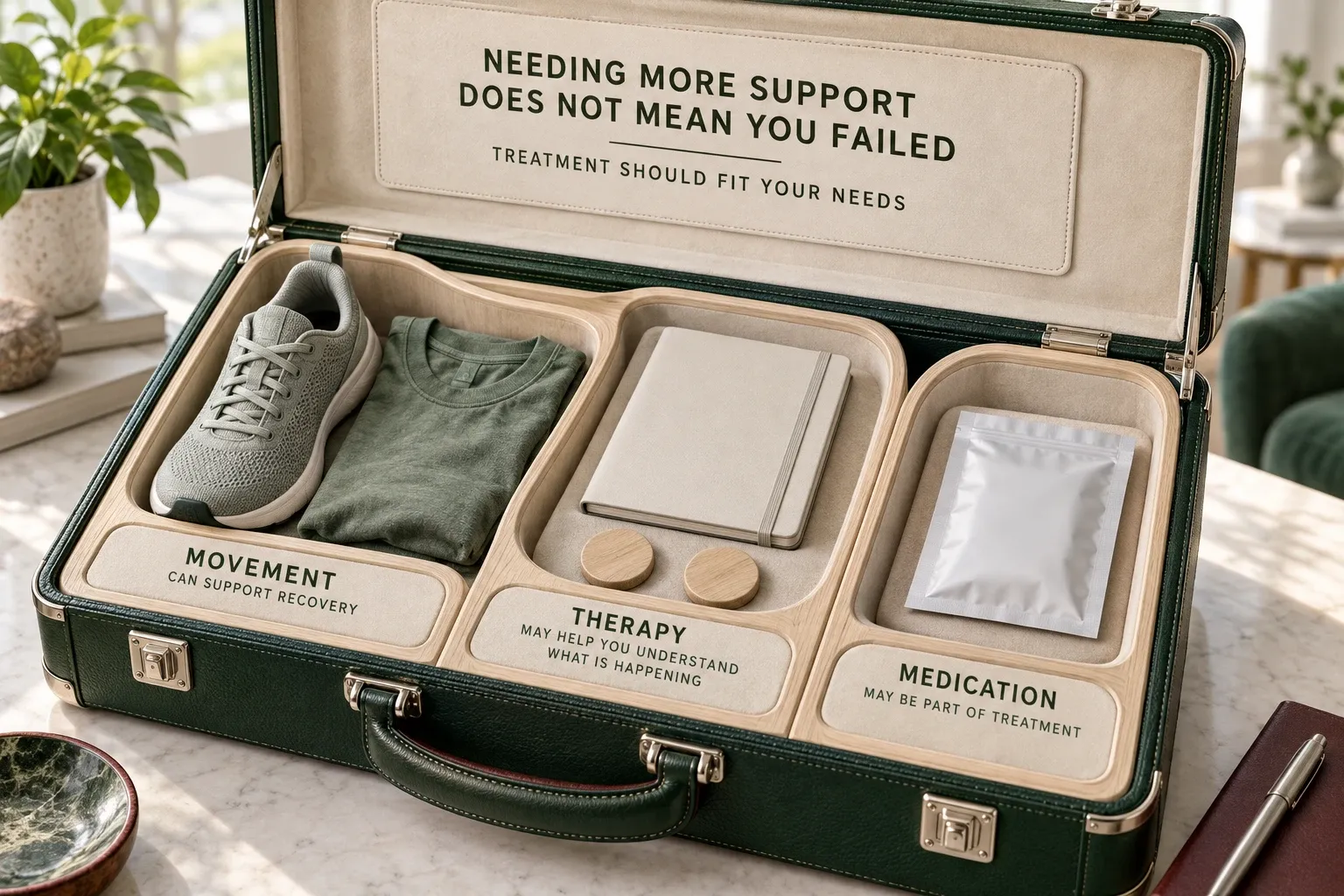
Exercise can support your recovery, but it is not a test of willpower. Needing therapy or medication does not mean you have failed.
How Much Exercise Is Good for Mental Health?
Adults are generally advised to get around 150 minutes of moderate physical activity each week [1]. You do not have to reach this number immediately.
If you have not exercised for some time, start with 5 or 10 minutes. Increase it slowly when your body and mind feel ready.
Moderate activity means your breathing becomes faster, but you can still speak. It may include brisk walking, comfortable cycling, dancing or doing household work at a quicker pace.
A simple routine you can continue is better than an ambitious plan that leaves you exhausted or makes you give up after a few days.

Is Walking Good for Mental Health?
Yes. Walking is one of the easiest ways to begin, and research suggests it can help reduce symptoms of depression [2].
You do not need special clothes, equipment or a gym membership. Depending on what is safe and convenient, you could walk:
- Around your housing society
- On your terrace
- In a nearby park
- Inside your home or building corridor
- To a nearby shop instead of taking a vehicle
Even a 10-minute walk is a reasonable beginning. It is not “too little” if that is what you can manage today.
How Can You Exercise at Home in India?
Going outside for exercise is not easy for everyone. Roads may be crowded, parks may be far away, the weather may be too hot or air pollution may be high. Finding privacy can also be difficult in a joint family or shared home.
A 2026 study of 400 older adults in rural Karnataka found that about 65% were physically inactive. Physical inactivity was associated with higher depressive symptoms, although the study cannot prove that one caused the other [5].
However, you can still move your body without following a formal workout. You might dance to two songs, walk around the house while speaking on the phone, use the stairs, stretch beside your bed or do household work at a faster pace.
Yoga may suit some people, while others may prefer walking, dancing or simple strength exercises. There is no single “best” activity. Choose something safe that fits your body, home, budget and daily routine.
If you have heart disease, breathing problems, joint pain or another medical condition, ask your doctor what kind of activity is safe for you.
What If You Have No Motivation to Exercise?
Do not wait to feel fully motivated. Make the activity small enough to begin without a lot of planning. Instead of telling yourself, “I have to exercise for 30 minutes,” decide to walk for five minutes. You can stop after that if you need to.
It may also help to connect movement with something already in your routine. You could stretch after your morning tea, walk after dinner or play one song and move while it finishes.
Ask a friend or family member to join you if company makes starting easier. Missing a day is also normal. It does not mean you have failed or need to restart from zero.
Can Exercise Improve Physical and Mental Health Together?
Yes. Regular physical activity can lower the risk of heart disease, high blood pressure and type 2 diabetes [1]. It can also improve sleep, strength and mobility.
Physical and mental health are closely connected. Living with a long-term physical illness can increase the risk of anxiety and depression. Looking after your physical health may therefore support your mental well-being too [4].
Exercise should not involve pushing through warning signs. Stop and seek medical advice if you experience chest pain, severe dizziness or unusual breathlessness.
Can Exercise Replace Therapy or Medication?
No. Exercise can support mental health treatment, but it cannot always replace therapy or medication.
Professional help may be needed if you:
- Feel low or anxious on most days
- Find it difficult to work, study or manage responsibilities
- Have stopped enjoying almost everything
- Feel hopeless or have thoughts of harming yourself
- Have tried exercise and other self-help methods without enough improvement
Needing more support does not mean you did not try hard enough. Mental health conditions may require proper treatment, just like diabetes, asthma or any other health condition.
If therapy feels unfamiliar, read what to expect in psychotherapy.
What Is the Best Exercise for Mental Health?
The best exercise is one that is safe, manageable and realistic for your life.
Start with one small goal: a 10-minute walk, a few stretches, one flight of stairs or dancing to one song. Let that be the complete goal for the day.
You do not have to enjoy exercise immediately or do it perfectly. Begin with what you can manage and build slowly. If low mood, anxiety or stress continues to affect your life, a confidential consultation with Allo Health can help you understand what other support may be useful.
Disclaimer
The following blog article provides general information and insights on various topics. However, it is important to note that the information presented is not intended as professional advice in any specific field or area. The content of this blog is for general educational and informational purposes only. The content should not be interpreted as endorsement, recommendation, or guarantee of any product, service, or information mentioned. Readers are solely responsible for the decisions and actions they take based on the information provided in this blog. It is essential to exercise individual judgment, critical thinking, and personal responsibility when applying or implementing any information or suggestions discussed in the blog.
Most Asked Questions
Does exercise really help with anxiety and depression, or is that overstated?
The effect is real but moderate, and the strongest studies behind it rate their own confidence as low, mainly because so few trials are well designed enough to rule out other explanations. Real and modest are not the same as fake, but they are also not the same as a cure.
How much exercise do I actually need for it to help?
There is no agreed daily minimum. The studies behind these numbers used routines ranging from a few sessions a week to daily activity, so a frequency you can actually keep up matters more than matching a specific schedule you found online.
Is walking enough, or do I need something more intense?
Walking's advantage may be partly that it is easier to keep doing than a more intense routine. An activity you will actually repeat most weeks is likely to help more over time than a harder one you quit after a fortnight.
Can exercise replace my medication or therapy?
No, but it is generally safe to add alongside either without changing your existing treatment. If you have a physical health condition that affects what activity is safe for you, that is worth a quick check with your doctor first, not because of your mental health treatment.
I've heard exercise works as well as antidepressants. Is that true?
Some evidence puts the effect of exercise on depression in a similar range to what is seen with certain treatments, but this comes with real quality caveats, and it is not the same as a head-to-head comparison showing one beats the other.
Sources
- 1.
World Health Organization. Physical activity. Updated 26 June 2024. Accessed 2 September 2026.
- 2.
Noetel M, Sanders T, Gallardo-Gómez D, et al. Effect of exercise for depression: systematic review and network meta-analysis of randomised controlled trials. BMJ. 2024;384:e075847. doi:10.1136/bmj-2023-075847.
Why Should You Trust Us?
Why Should You Trust Us?
This article was written by Dr. Srishti Rastogi, who has more than 1 years of experience in the healthcare industry.
Allo has the expertise of over 50+ doctors who have treated more than 1.5 lakh patients both online and offline across 30+ clinics.
Our mission is to provide reliable, accurate, and practical health information to help you make informed decisions.
For This Article
- We referred to the World Health Organization’s guidance on physical activity, including its recommendations on weekly activity and its recognised physical and mental health benefits.
- We reviewed a 2024 analysis of 218 studies involving more than 14,000 people with depression to understand which forms of exercise may help.
- We examined a 2023 review that brought together 97 systematic reviews and more than 128,000 participants to assess the effects of physical activity on depression, anxiety and psychological distress.
- We included the limitations of the evidence. Many studies had quality concerns, and their findings cannot guarantee that exercise will help every person in the same way.
- We reviewed Indian research and considered practical barriers such as crowded roads, limited parks, air pollution, extreme heat, lack of privacy and the cost of formal fitness programmes.