What to Expect in Therapy: Your First Counselling Session and Beyond
Written by Dr. Srishti Rastogi

Dr. Srishti Rastogi is a medical writer and healthcare professional dedicated to high-quality patient education and public health awareness. Leveraging her clinical background, she produces deeply researched, evidence-based content for digital health platforms and medical publications. Dr. Srishti’s unique dual perspective as a clinician and communicator allows her to craft content that builds trust and credibility with readers navigating sensitive health topics.
•
August 11, 2026
Our experts continually monitor the health and wellness space, and we update our articles when new information becomes available.

Quick Read
A counselling session is a private conversation with a trained mental health professional who is there to listen and help, not to judge. Your first session is mostly about getting to know you and your concerns. You do not need to prepare a speech or have the right words ready. Over time, therapy gives you space to understand what you are going through and to build ways of coping that work for you.
Booking your first counselling session may feel like a big step. You may feel nervous because you do not know what will happen or what you will be asked.
A counselling session is simply a private conversation with a trained professional. You will not be judged, labelled, or forced to talk about anything before you are ready.
This guide explains what happens during your first session, how long therapy may take, how your privacy is protected in India, and how to check whether your therapist is qualified.

Allo asks
What Is Your Biggest Question About Starting Counselling?
What Is a Counselling Session?
A counselling session is a private conversation with a trained mental health professional. You can talk about a problem you are facing, while the professional listens and helps you understand it more clearly [1].
A therapist does not make decisions for you. They help you understand your thoughts, feelings, and behaviour, develop coping skills, and decide what changes may help. Sessions often last 45 to 60 minutes and can take place online or in person [2].

Counselling, therapy, and talk therapy are often used to describe similar services. However, the professionals providing them may have different qualifications and roles.
| Professional | Training to check | How they can help | Can prescribe medicine? |
|---|---|---|---|
| Counsellor | Relevant postgraduate education and supervised counselling experience; qualifications can vary | Support with stress, grief, relationships, life changes, and other emotional concerns | No |
| Counselling psychologist | Usually a postgraduate degree in psychology or counselling psychology with supervised practical training | Counselling and psychological support for emotional, behavioural, and relationship concerns | No |
| RCI-registered clinical psychologist | An RCI-recognised qualification, such as the Master in Clinical Psychology, M.Phil. Clinical Psychology during the transition period, Psy.D., or another recognised route, followed by registration in the Central Rehabilitation Register | Psychological assessment, diagnosis where appropriate, and psychotherapy | No |
| Psychiatrist | MBBS followed by an MD or DNB in Psychiatry | Medical assessment, diagnosis, and treatment with medicines; some also provide psychotherapy if separately trained | Yes |
Do You Need to Be Mentally Ill to Go to Therapy?
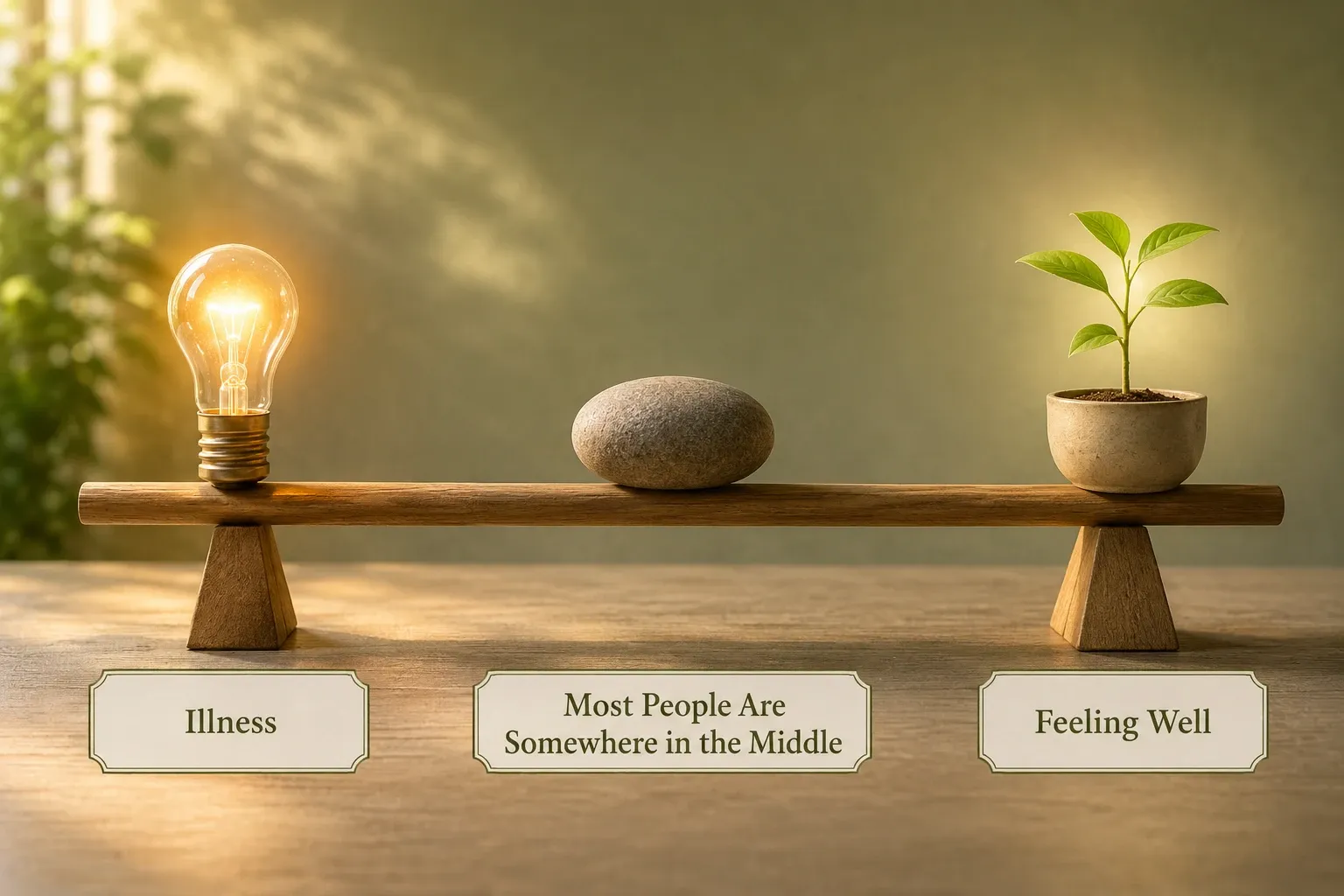
No. Mental health is a continuum - a line from illness at one end to feeling well at the other. Most people sit somewhere in the middle, moving back and forth with life's ups and downs.
People start therapy for many reasons, including stress, low mood, sleep problems, grief, relationship difficulties, major life changes, or feeling stuck. You do not need a diagnosis or a serious crisis to ask for help. Wanting to understand yourself or feel better is enough.
Therapy helps wherever you are on the line: managing an illness, or simply moving from "okay" towards genuinely feeling well. If you are unsure what you may be experiencing, explore our mental health guides.

What Happens in Your First Counselling Session?
The first session helps the therapist understand what you are experiencing and what you want help with [1][8].
Forms and Consent
You may provide basic details and agree to begin therapy. The therapist should explain:
- How your information will be used and stored
- The limits of confidentiality
- Session length and fees
- Cancellation and appointment rules
Talking About Your Concern
The therapist may ask about your concern, health, family, work, sleep, relationships, and any previous support. You do not need to explain everything perfectly. If you feel stuck, you can say, “I’m not sure where to start.”
Setting Goals
You may discuss what you want from therapy, such as feeling calmer, sleeping better, managing grief, or improving a relationship. Goals can change over time [8]. The first session may feel awkward or emotional. What matters is that you feel heard, respected, and safe enough to speak honestly.
Your first therapy session is not a test. You do not need to explain everything perfectly or share anything before you feel ready. It is simply a chance to understand the process, ask questions, and see whether the therapist feels right for you.
What Happens After the First Session?
Later sessions focus more closely on your goals. You may learn coping skills, notice patterns in your thoughts or relationships, and try small exercises between sessions. Your therapist should explain their approach in simple language.
Progress is usually gradual. Therapy may be used alone or with medication prescribed by a doctor.
What Therapy Is Not
Knowing what therapy is not saves a lot of disappointment in the first few weeks. Therapy is not advice-giving, friendship, a quick fix, or something only for severe mental illness.
- It is not advice: A therapist won't usually tell you what to do. Instead, they'll help you understand your thoughts, explore your options, and make decisions that feel right for you [10].
- It is not friendship: A therapist is there to support you in a professional way. Therapy has clear boundaries, and what you share stays private, except in certain situations where safety is at risk.
- It is not a quick fix: You may feel better after your first session, but real change usually takes time. Regular sessions and practising the skills you learn can make a lasting difference.
- It is not only for severe mental illness: You don't have to be in a crisis to benefit from therapy. Many people seek therapy for stress, grief, relationship problems, major life changes, feeling stuck, or personal growth. If everyday stress starts feeling too much to handle, therapy can help with that too.
How Long Does Therapy Take?
No fixed number of sessions suits everyone. It mostly depends on the type of therapy and progress [2][7]. One review found that about half of clients showed measurable improvement by 8 sessions and about three-quarters by 26 sessions [7]. These are averages, not a promise or timetable for every person.
Your therapist should discuss the expected length with you and review your progress regularly. You can ask:
- Are we working towards the right goals?
- Have you noticed any progress?
- Should we change the approach?
- How many more sessions might I need?

Is What I Say in Therapy Confidential?
Yes, in India, information about your mental health, treatment, and records is generally private. The Mental Healthcare Act, 2017 also protects electronic and digital records used in online care [6].
However, confidentiality has limits. Information may need to be shared:
- If there is a serious risk of harm to you or someone else
- When sharing is necessary with professionals involved in your treatment
- When a court or another authorised body legally requires it
- In other situations allowed under the Mental Healthcare Act
Different rules may apply if you are under 18 or if therapy is being paid for by an employer or insurance provider. Your therapist should explain what may be shared, with whom, and why.
Before therapy begins, ask:
- Who can see my records?
- Will my family, employer, or insurer receive any information?
- When would you have to break confidentiality?
- How are my online records stored?
If you are in immediate danger, use crisis support and helplines.
Why So Many People in India Put It Off
People in India often delay therapy because of fear of judgement, family pressure, cost worries, and difficulty finding qualified professionals nearby. India’s National Mental Health Survey found a large gap between the number of people who needed mental health care and those receiving it [5].
Common reasons include:
- Fear of “log kya kahenge (what would people say)” or being labelled weak or “pagal”
- Pressure to keep personal or family problems inside the home
- Believing that only people with severe mental illness need therapy
- Being told to pray, stay positive, or manage the problem alone
- Worry about fees or taking time away from work or studies
- Difficulty finding qualified professionals outside larger cities
- Concern that family members may discover an online or in-person appointment
- Difficulty finding a therapist who understands the person’s language, family structure, religion, gender, sexuality, or cultural background
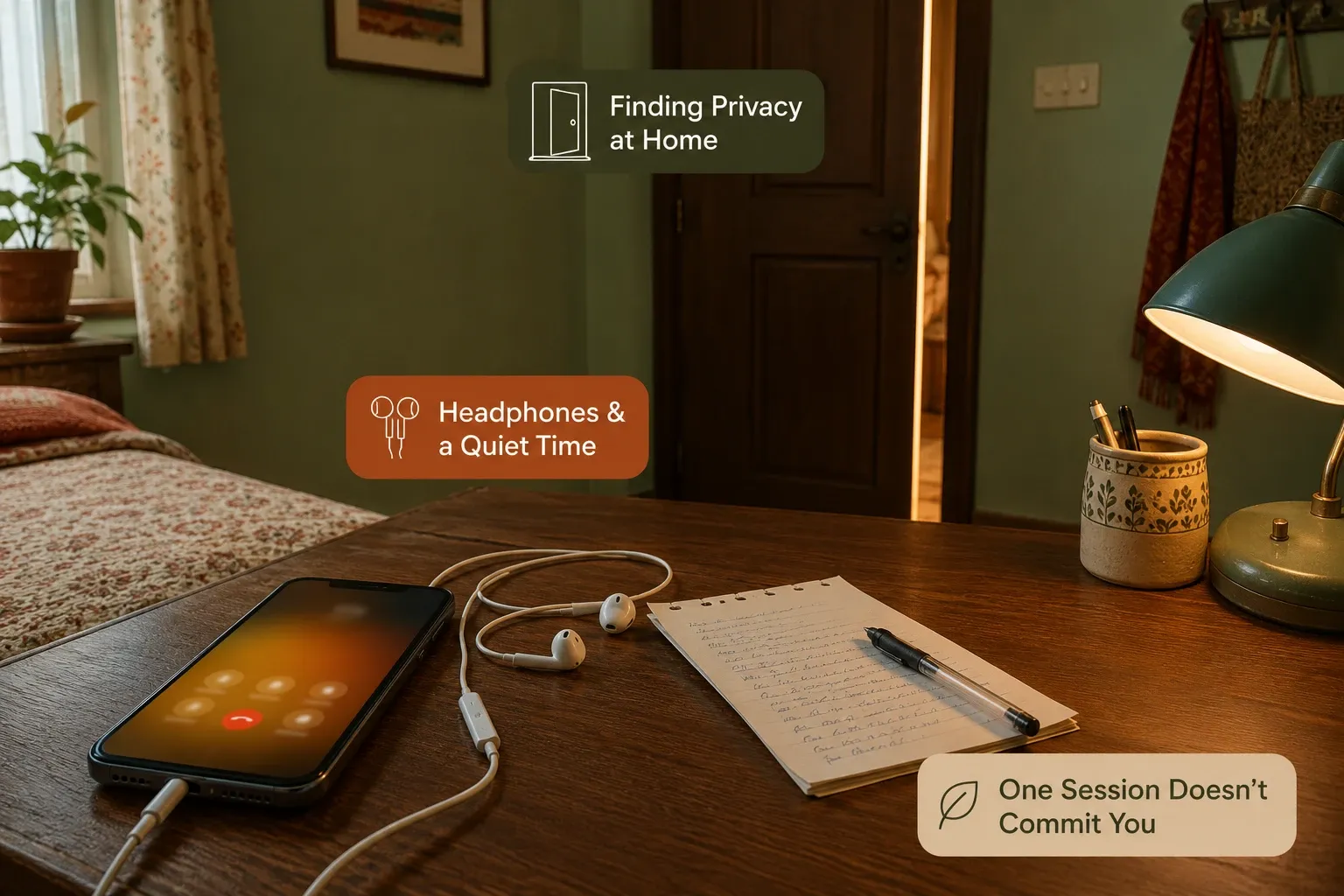
Online sessions may improve access, but privacy can be difficult in a shared home. You can ask for an audio-only session where appropriate, use headphones, sit in a private room or parked car, or choose a time when fewer people are home.
Before booking, ask about the therapist’s qualifications, language, fees, privacy policy, online options, and experience with your concern. One session does not commit you to long-term therapy.
How to Check Your Therapist Is Qualified
Do not rely only on a job title. Check the therapist’s degree, supervised experience, registration where applicable, and experience with your concern. For a clinical psychologist, verify registration in the Rehabilitation Council of India’s Central Rehabilitation Register.
Ask: “Where did you train, what are you registered with, and do you have experience with my concern?” A qualified professional should answer clearly.
What If Therapy Does Not Feel Right?
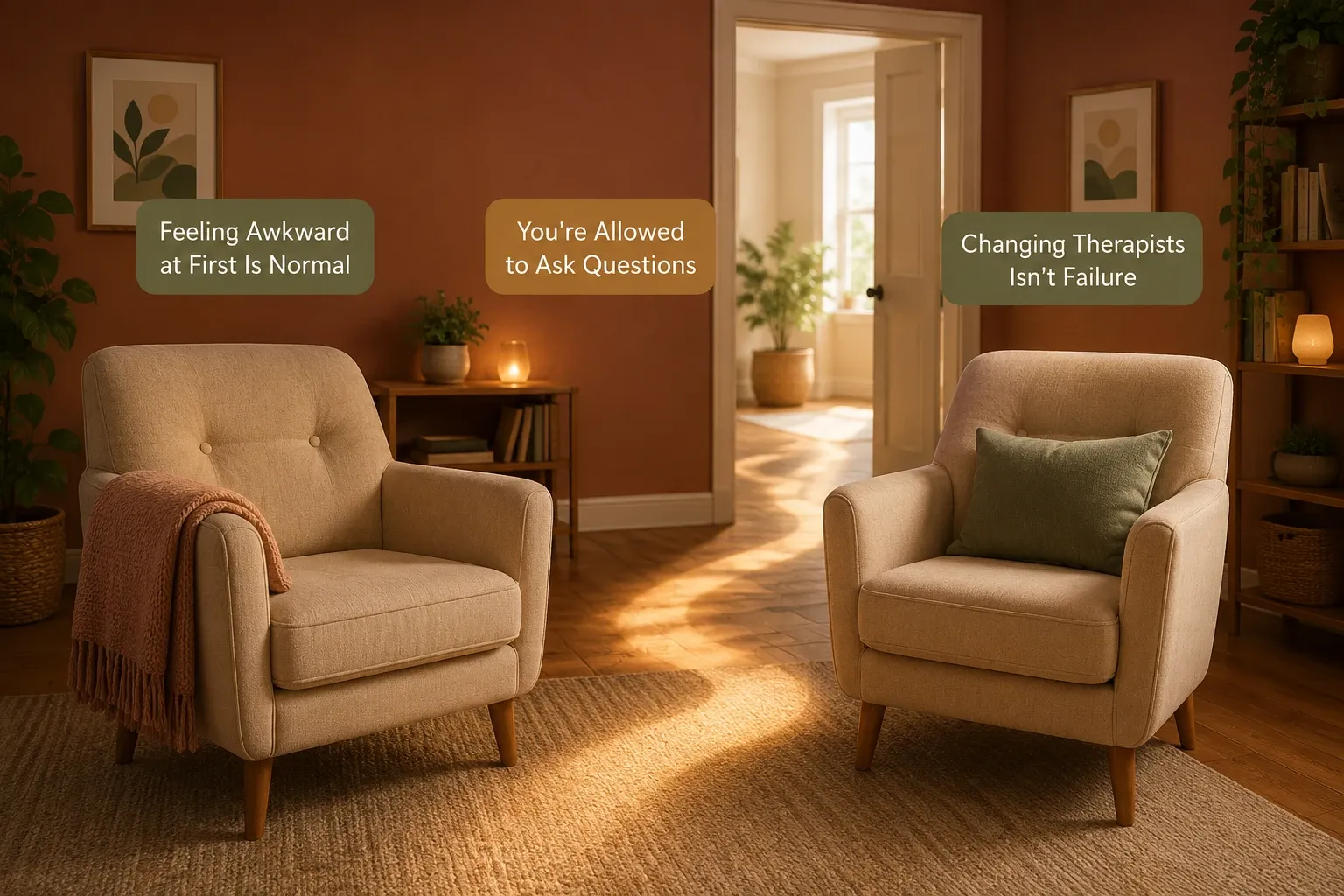
Feeling awkward in the first session is normal. After a few sessions, ask whether you feel heard, respected, able to speak honestly, and clear about what you are working on.
Discuss concerns with your therapist. You can choose someone else if the relationship does not improve. Be cautious if a therapist:
- Guarantees a cure or fixed result
- Pressures you to continue or book more sessions
- Ignores your boundaries
- Blames or repeatedly dismisses you
- Shares private information without a valid reason
- Avoids questions about qualifications, fees, or approach
Changing therapists does not mean therapy has failed.
Does Therapy Actually Work?
Therapy helps many people understand their concerns, manage difficult emotions, and develop healthier ways of coping [3]. However, results vary depending on the concern, treatment approach, and relationship with the therapist.
Progress may take time, and no therapist can guarantee a particular result. If therapy does not seem helpful, discuss your goals or consider a different therapist or approach.
Taking the First Step
Consider speaking to a mental health professional if a concern continues, affects your sleep, work, studies, or relationships, or feels difficult to manage alone. You do not need to wait for a crisis.
If you are in immediate distress or feel unsafe, contact crisis support and helplines first.
If you feel ready to explore therapy, you can book a confidential first consultation with a mental health professional at Allo Health. The first session can help you explain what you are experiencing, ask questions, and decide on the next step.
Disclaimer
This blog article discusses mental health and emotional wellbeing for general educational and informational purposes only. It is not a substitute for professional advice, diagnosis, or treatment, and only a qualified mental health professional, such as a psychiatrist, psychologist, or licensed therapist, can diagnose a condition or recommend treatment. If you are struggling, please reach out to a qualified professional or someone you trust; if you are in crisis or may be at risk of harming yourself, use the crisis support resources on this page. For any decisions about your mental health, we encourage you to seek the guidance of a qualified professional.
Most Asked Questions
Is it normal to feel nervous before therapy?
Very. Most people feel some nerves before a first session, and therapists expect it. The feeling usually eases once the conversation begins.
How should I prepare for my first therapy session?
You do not need to prepare much. It can help to jot down a few things on your mind, such as what prompted you to reach out or what you would like to feel different, but this is optional. Therapists are trained to draw out what matters through gentle questions, so arriving with an open mind is enough.
What is the difference between a psychologist and a psychiatrist?
A psychiatrist is a medical doctor (MBBS with specialisation in psychiatry) who can prescribe medicines. A psychologist provides talk therapy and psychological assessment but cannot prescribe. Many people see both, often working together.
What should I do after my first session?
Give yourself a little space afterwards; it is common to feel tired, reflective, or even unexpectedly emotional once a session ends. Between sessions, some people find it helpful to jot down thoughts or situations that come up, which can be useful to bring to the next session, though this is entirely optional and not something your therapist will expect.
How much does therapy cost in India?
Therapy fees in India vary widely depending on the professional's qualifications, city, and whether the session is online or in person. There is no fixed rate, so ask about fees, packages, and cancellation policy before booking. One session does not commit you to long-term therapy.
Is there a difference between counselling and psychotherapy?
The terms are often used interchangeably, and in everyday practice the line between them is blurry. Counselling tends to focus on specific, often shorter-term concerns, while psychotherapy can involve deeper, longer-term work on patterns of thinking and behaviour. Many professionals draw on both, and your therapist can explain which best describes the support they are offering you.
Do I need a doctor's referral to start therapy or see a psychiatrist in India?
For counselling or psychotherapy with a clinical psychologist or counsellor, you usually do not need a referral and can book directly. If you are specifically looking to see a psychiatrist, some clinics ask for a referral from a GP or your primary therapist, though many psychiatrists in India also accept direct bookings. It is worth checking with the specific provider.
Sources
- 1.
American Psychological Association. Understanding psychotherapy and how it works
- 2.
National Library of Medicine (NIH), StatPearls. Cognitive Behavior Therapy
- 3.
American Psychological Association. Recognition of Psychotherapy Effectiveness (policy resolution)
- 4.
American Psychological Association. Protecting your privacy: Understanding confidentiality in psychotherapy
- 5.
Gururaj G, et al. National Mental Health Survey of India, 2015-16: Summary. NIMHANS, Bengaluru (Government of India hosted copy)
- 6.
Government of India, Ministry of Law and Justice. The Mental Healthcare Act, 2017 (Gazette notification)
- 7.
Ministry of Health & Family Welfare, Government of India. Tele-MANAS
- 8.
Robinson L, Delgadillo J, Kellett S. The dose-response effect in routinely delivered psychological therapies: a systematic review. Psychotherapy Research, 2020;30(1):79-96.
- 9.
Johnson JA, Devdutt J, Mehrotra S, Bhola P, Sudhir P, Sharma A. Barriers to professional help-seeking for distress and potential utility of a mental health app components: stakeholder perspectives. NIMHANS, Bengaluru. PMC.
- 10.
White Swan Foundation. What are the ethics my counselor is bound to follow?
- 11.
White Swan Foundation. How can I tell if my therapist is right for me?
Why Should You Trust Us?
Why Should You Trust Us?
This article was written by Dr. Srishti Rastogi, who has more than 1 years of experience in the healthcare industry.
Allo has the expertise of over 50+ doctors who have treated more than 1.5 lakh patients both online and offline across 30+ clinics.
Our mission is to provide reliable, accurate, and practical health information to help you make informed decisions.
For This Article
- We cross-checked every claim in this article against primary sources from the American Psychological Association, the U.S. National Library of Medicine (NIH), and the Government of India, not third-party summaries, so the information reflects what these institutions actually publish.
- We referenced India's Mental Healthcare Act, 2017 directly from its official Gazette notification, rather than relying on paraphrased legal explainers, to accurately represent your confidentiality rights in therapy.
- We reviewed NIMHANS' National Mental Health Survey data to ground our claims about access and stigma in India in actual national research, not assumptions.
- We looked at how established clinical bodies describe psychotherapy's real-world effectiveness, including the APA's formal policy resolution on the topic, so our claims about outcomes are backed by research consensus rather than anecdote.
- We read through discussions on platforms like Reddit and Quora, including threads from Indian mental health communities, to understand the specific questions and hesitations first-time therapy-goers in India actually have, not just what a textbook assumes they'd ask.
- We verified that the crisis helpline numbers listed in this article (Tele-MANAS) are current and correctly sourced from the Ministry of Health & Family Welfare, so readers in distress reach the right support.