Stress and Burnout: How to Cope and When to Ask for Help
Written by Dr. Srishti Rastogi

Dr. Srishti Rastogi is a medical writer and healthcare professional dedicated to high-quality patient education and public health awareness. Leveraging her clinical background, she produces deeply researched, evidence-based content for digital health platforms and medical publications. Dr. Srishti’s unique dual perspective as a clinician and communicator allows her to craft content that builds trust and credibility with readers navigating sensitive health topics.
•
August 11, 2026
Our experts continually monitor the health and wellness space, and we update our articles when new information becomes available.
Quick Read
Stress is your body's normal response to pressure. Burnout is what can happen when that pressure goes on for a long time without a real break, leaving you exhausted, detached, and running on empty. Most stress can be managed with small, steady changes to how you rest, move, and set limits, and it helps to understand why stress builds up in the first place. If low mood or exhaustion follows you everywhere and does not lift with rest, that is worth talking to a professional about.
Feeling stressed or burnt out is very normal in today’s time. It may mean that you have been dealing with too much for too long without having enough time to recover. This guide will help you understand the difference between stress and burnout, recognise the signs, learn simple ways to feel better, and know when to speak to a mental health professional.

Allo asks
Right now, are you feeling more stressed or more burnt out?
What Is Stress?
Stress is your body's natural response to pressure or danger. It may make your heart beat faster, tighten your muscles, and make you feel more alert [1].
Stress can be:
- Short-term: It happens because of a specific situation, such as an exam, interview, argument, or deadline. It usually reduces when the situation ends.
- Long-term: It continues for weeks or months because the pressure or worry does not go away.
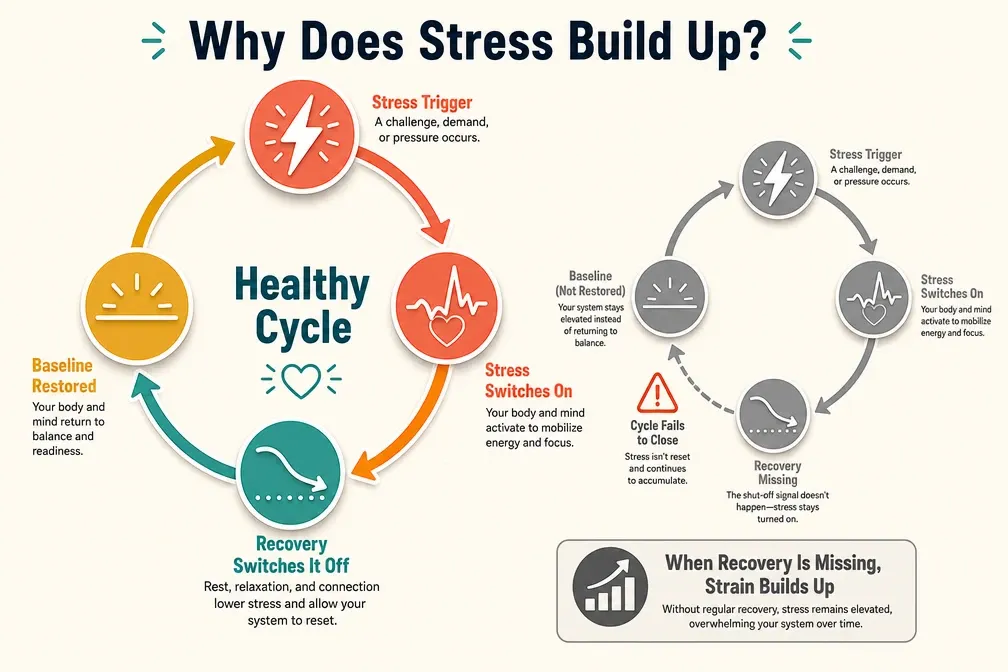
A small amount of short-term stress can help you act quickly or complete an important task. But it can build up when pressure continues, and your body does not get enough time to recover. Over time, this can affect your physical and mental health [2].

What Is Burnout?
Burnout is the result of long-term work stress that has not been managed well, as defined by WHO [3]. It usually shows up in three ways:
- Feeling constantly tired or emotionally drained
- Feeling disconnected, negative, or frustrated about your job
- Feeling less effective or capable at work
Burnout specifically refers to stress related to work. It should not be used to describe stress or exhaustion caused by other areas of life. Long working hours, difficult commutes, job insecurity, and after-hours messages can make recovery harder for workers in India.
Can Burnout Happen Outside of Work?
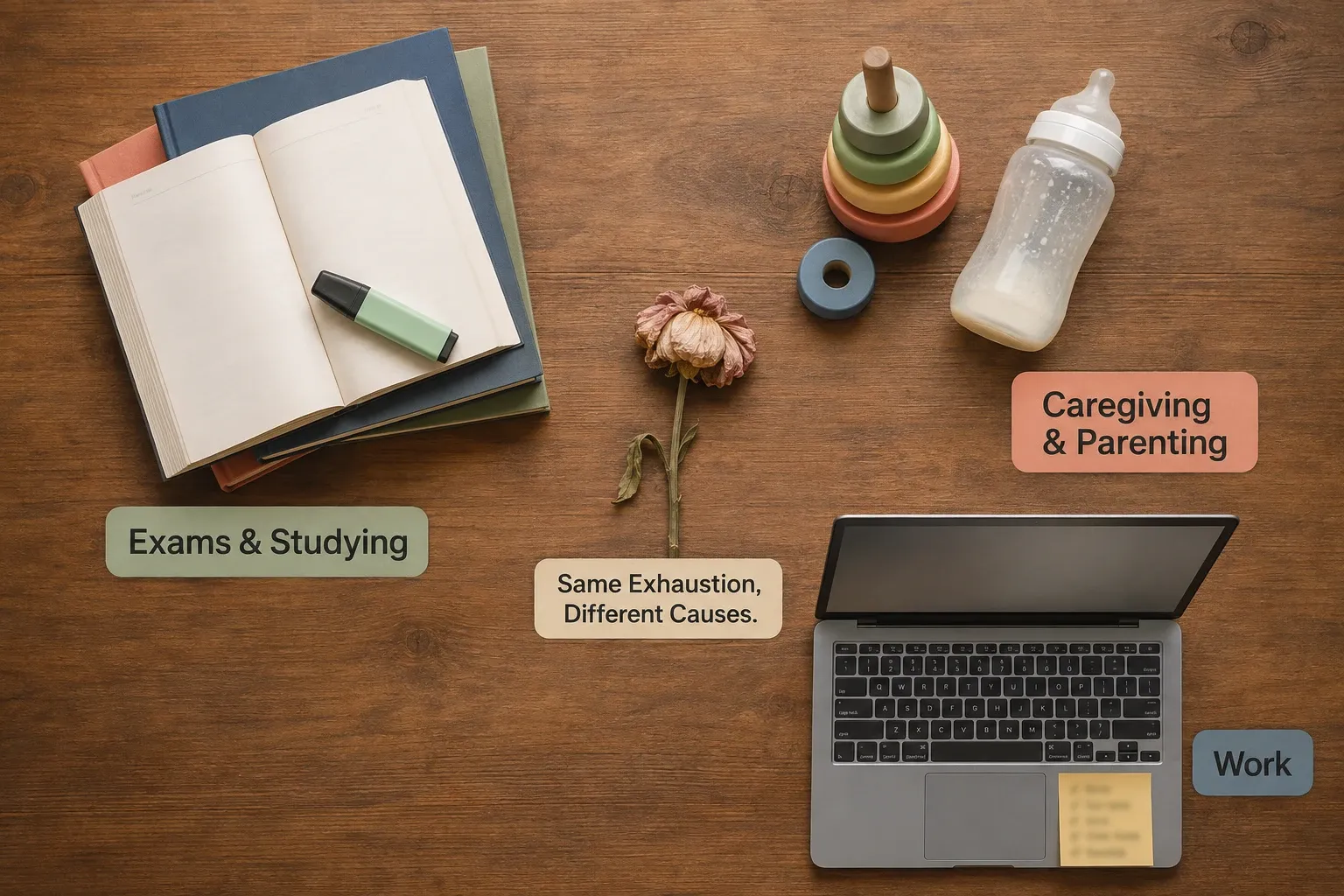
WHO defines burnout as unmanaged workplace stress only [3]. However, long-term stress from caregiving, parenting, or exam preparation can cause similar exhaustion and detachment.
Stress and Burnout: What Is the Difference?
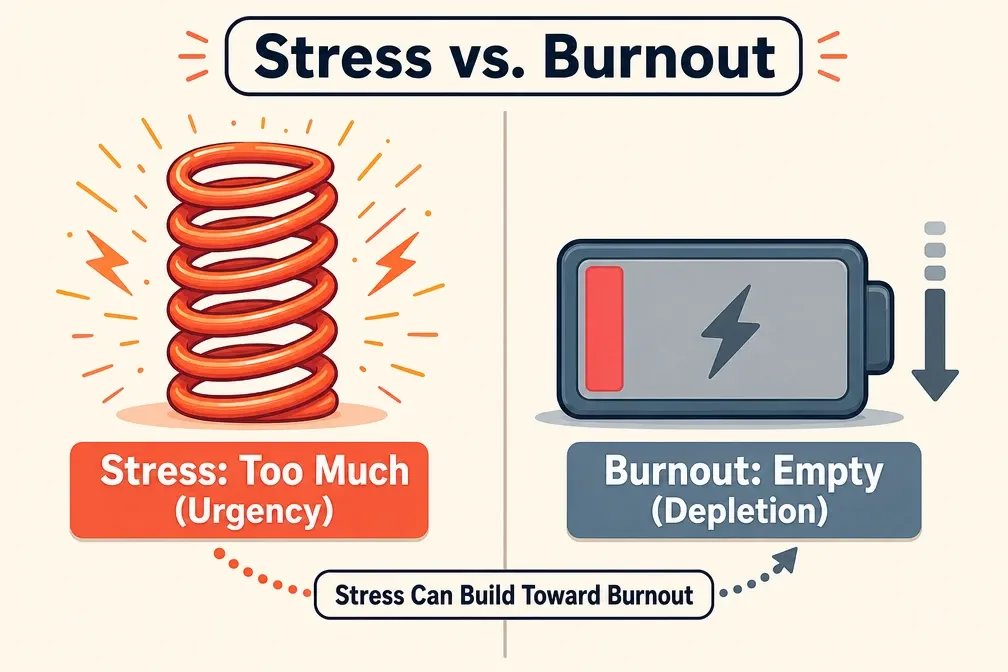
Stress and burnout are connected, but they are not the same as stress often feels like having too much to manage, while burnout can feel like having no energy left to manage it.
| Area | Stress | Burnout |
|---|---|---|
| Feelings | Worry, tension, irritability, or feeling overwhelmed | Exhaustion, emptiness, negativity, or detachment from work |
| Energy | Restlessness or difficulty relaxing | Very little energy or motivation |
| Physical signs | Headaches, tight muscles, stomach problems, or poor sleep | Deep tiredness that may not improve with normal rest |
| Behaviour | Poor concentration, impatience, or increased caffeine, alcohol, or screen use | Dreading work, withdrawing, struggling to make decisions, or completing fewer tasks |
| Main cause | Pressure from work or another area of life | Workplace stress that continues without enough recovery |
Long-term workplace stress can develop into burnout [3]. If these signs continue or affect your daily life, consider speaking to a mental health professional.

What Helps You Manage Stress?
You can manage stress by finding the main source of pressure, taking small daily actions, setting boundaries, and improving sleep and movement [4]. Ask yourself:
- What can I change?
- What can I ask for help with?
- What is outside my control?
You do not need to solve everything at once. Choose one problem and one small action you can take.
Quick Ways to Feel Calmer
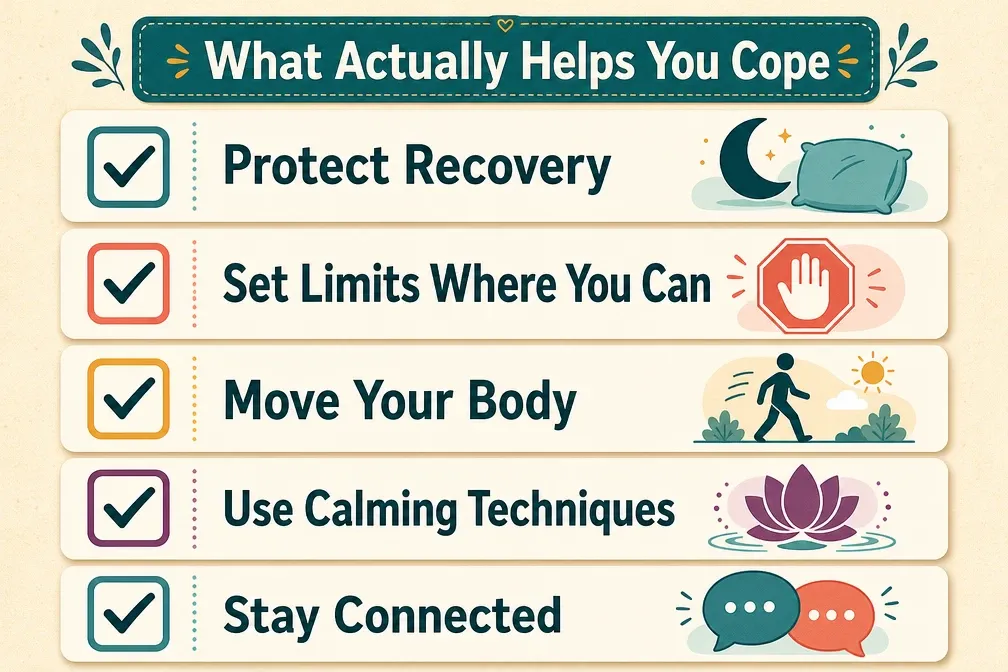
- Take slow, deep breaths: Breathe in through your nose and breathe out through your mouth. Repeat this for a few minutes. Slow breathing can help your body and mind relax. You can also try breathing and grounding exercises.
- Move for a few minutes: Walk, stretch, or gently move your shoulders and neck. Movement may reduce physical tension and help clear your mind.
- Take a short break: If possible, leave the task or screen for a few minutes. Drink water, look outside, or sit somewhere quieter before returning.
- Focus on the present: Pay attention to what you can see, hear, and feel around you. This can help calm your mind when your thoughts start racing or feel overwhelming.
Habits That Help Over Time
- Take one step at a time: If a task feels too big, break it into smaller, manageable steps. Focus on what needs to be done today and leave the rest for later.
- Set healthy boundaries: Decide when to stop working for the day. It's okay to say no to extra responsibilities when you already have a lot on your plate.
- Take care of your sleep: Try to go to bed and wake up at the same time every day. Give yourself some time to relax before bed, as poor sleep can make stress feel even harder to handle.
- Keep your body moving: Even a short walk or regular physical activity can help lift your mood and reduce stress.
- Talk to someone you trust: Sharing how you feel with a friend, family member, or someone close can help you feel supported. They may also offer practical advice or a fresh perspective.
- Make time for yourself: Set aside time for hobbies, rest, or spending time with people you enjoy. Doing things you like can help you recharge.
- Avoid unhealthy ways of coping: Alcohol, smoking, too much caffeine, drugs, or endless scrolling on your phone may feel helpful for a while, but they can make stress, sleep, and your mood worse over time.
How Long Does It Take to Recover From Burnout?
Recovery from burnout can take a few weeks to several months. It depends on how long it has continued, whether the cause changes, and how much support you have.
Rest alone may not be enough. Recovery usually needs real changes, like setting boundaries or reducing your workload. If you have rested and made changes but still feel exhausted, speak to a mental health professional.
A question I often ask my patients is: does it follow you? Burnout usually lifts when you step away from work. If the heaviness comes home with you, into your family, your hobbies, your mornings, we need to look beyond burnout.
Is It Burnout or Depression?
Burnout is linked to work stress and often improves with time away, while depression affects every area of life and continues despite rest [5]. Both can cause exhaustion, low motivation, and poor concentration. However, burnout often causes detachment from work, while depression may involve ongoing sadness, hopelessness, guilt, or worthlessness. [5]
They can overlap. If symptoms continue or affect your daily life, speak to a mental health professional. Learn more about depression.
When Should You Seek Help?
Speak to a mental health professional if:
- Stress or exhaustion continues for several weeks.
- It affects your sleep, health, work, or relationships.
- You lose interest in things you normally enjoy.
- Rest and coping strategies are not helping.
- You use alcohol or other substances to cope.
- You feel unable to manage on your own.
A professional can help you understand what is causing your stress and how to manage it. [6] You can learn what happens in a therapy session or book a confidential consultation with a qualified professional at Allo Health.
If you are thinking about harming yourself or feel unsafe, seek urgent help from emergency or crisis-support services.
Disclaimer
This blog article discusses mental health and emotional wellbeing for general educational and informational purposes only. It is not a substitute for professional advice, diagnosis, or treatment, and only a qualified mental health professional, such as a psychiatrist, psychologist, or licensed therapist, can diagnose a condition or recommend treatment. If you are struggling, please reach out to a qualified professional or someone you trust; if you are in crisis or may be at risk of harming yourself, use the crisis support resources on this page. For any decisions about your mental health, we encourage you to seek the guidance of a qualified professional.
Most Asked Questions
What is the difference between stress and burnout?
Stress is your body's response to pressure and often feels like being wound up or overloaded. Burnout is the depleted, empty state that can follow long-term stress with no recovery, marked by exhaustion, detachment, and feeling less effective. Stress can build toward burnout if it never eases.
Is burnout a mental illness?
No. The World Health Organization describes burnout as an occupational phenomenon resulting from chronic workplace stress, not as a medical condition. It is real and worth taking seriously, but it is not a diagnosis in the way depression is.
What are the three signs of burnout?
The WHO describes three: exhaustion or feeling drained, growing cynicism or mental distance from your work, and a sense of reduced effectiveness at what you do.
How do I know if it's burnout or depression?
Burnout tends to be tied to a situation like work and to ease when the pressure genuinely lifts, while depression follows you across all areas of life and does not lift with rest alone. They overlap a lot, so this is not something to diagnose yourself. If low mood persists regardless of rest, speak to a professional.
Can stress cause physical health problems?
Ongoing stress that never gets a chance to recover is linked over time to effects on the heart, digestion, and immune function. This is a reason to manage it and to see a doctor if you are worried, not a reason to panic.
How do I recover from burnout?
Recovery starts with protecting rest and downtime, setting limits where you can, and reducing demands that are within your control, alongside support from people you trust. If it has gone on for a while or is not improving, a professional can help. Where the source is a workplace that will not change, professional support and honest limits matter even more.
Is feeling stressed at work normal?
Some work stress is normal. Constant stress that never lets up, leaves you exhausted, or follows you home every day is worth addressing rather than accepting as unavoidable.
Sources
- 1.
Mental Health UK. Stress: signs, causes and management.
- 2.
Guidi J, Lucente M, Sonino N, Fava GA. Allostatic load and its impact on health: a systematic review. Psychotherapy and Psychosomatics, 2021;90(1):11-27.
- 3.
World Health Organization. Burn-out an "occupational phenomenon": International Classification of Diseases (ICD-11).
- 4.
Coping Strategies Influence Cardiometabolic Risk Factors in Chronic Psychological Stress: A Post Hoc Analysis of A Randomized Pilot Study
- 5.
Koutsimani P, Montgomery A, Georganta K. The relationship between burnout, depression, and anxiety: a systematic review and meta-analysis. Frontiers in Psychology, 2019.
- 6.
NHS. Talking therapies.
Why Should You Trust Us?
Why Should You Trust Us?
This article was written by Dr. Srishti Rastogi, who has more than 1 years of experience in the healthcare industry.
Allo has the expertise of over 50+ doctors who have treated more than 1.5 lakh patients both online and offline across 30+ clinics.
Our mission is to provide reliable, accurate, and practical health information to help you make informed decisions.
For This Article
- We referenced the World Health Organization's official classification of burnout as an occupational phenomenon, so the definitions used in this article match international clinical consensus rather than informal or pop-psychology descriptions.
- We drew on a peer-reviewed meta-analysis examining the relationship between burnout, depression, and anxiety to ground the burnout-versus-depression distinction in published research rather than guesswork.
- We referenced a systematic review on allostatic load, the physiological toll of unrecovered stress, so our explanation of why stress builds up over time reflects current research on the body's stress response.
- We looked at India-specific structural data, including International Labour Organization working-hours figures and Gallup's State of the Global Workplace survey, to ground the India workplace section in real numbers rather than assumptions about hustle culture.
- We referenced a peer-reviewed review on coping strategies, problem-focused, emotion-focused, and avoidance, so the coping advice in this guide reflects an evidence-based framework rather than generic self-help tips.
- We were careful to keep burnout framed as WHO defines it, an occupational phenomenon rather than a diagnosis, and to avoid presenting any self-scoring quiz or checklist, so this guide informs without encouraging readers to self-diagnose.
- We drew on the American Psychological Association's Work in America survey and White Swan Foundation's workplace mental health resources to reflect what employees are actually reporting about stress and support at work.