Understanding Psychiatric Medications
Written by Dr. Srishti Rastogi

Dr. Srishti Rastogi is a medical writer and healthcare professional dedicated to high-quality patient education and public health awareness. Leveraging her clinical background, she produces deeply researched, evidence-based content for digital health platforms and medical publications. Dr. Srishti’s unique dual perspective as a clinician and communicator allows her to craft content that builds trust and credibility with readers navigating sensitive health topics.
•
August 11, 2026
Our experts continually monitor the health and wellness space, and we update our articles when new information becomes available.
Quick Read
Psychiatric medications are prescription medicines that help treat mental health conditions, usually by gently adjusting the brain chemistry involved in mood, thinking, and behaviour. They are grouped into a few main types, such as antidepressants, antipsychotics, mood stabilisers, and others. They are not "happy pills," they are not addictive for most common conditions, and they do not change who you are. They often take a few weeks to work, may need some adjusting to get right, and should never be stopped suddenly on your own. For many people they work best alongside therapy. This guide explains how they work and answers the questions people worry about most.
If a doctor has suggested medication for a mental health condition, it is normal to have questions and worries. Will it change me? Will I need it forever? Are these addictive? Many people feel uneasy about psychiatric medication, often because of things they have heard rather than facts.
This guide explains the main types of psychiatric medicines, why doctors prescribe them, how long they may take to work, possible side effects, and why they should not be stopped suddenly. It does not recommend a particular medicine; that decision must be made with a qualified doctor.
What Are Psychiatric Medications?
Psychiatric medicines are prescription medicines used to manage conditions such as depression, anxiety disorders, bipolar disorder, and schizophrenia. A qualified doctor decides whether medicine may help after considering your symptoms, health, other medicines, and medical history.
These medicines may reduce symptoms and make daily life easier. Depending on the condition, they may be used alone or alongside therapy and other forms of support. If you need medicine, it does not mean you have done anything wrong. Sometimes, medication is an important part of treatment.

Allo asks
Which option best describes what you need help with?
How Do Psychiatric Medications Work?
Different psychiatric medicines work in different ways. Many affect how brain cells communicate through chemical messengers called neurotransmitters, which are involved in mood, sleep, thinking, and behaviour [1]. Their full effects are not always completely understood.

Mental health conditions are not caused by one simple “chemical imbalance.” Medicines aim to reduce symptoms, not change your personality or create artificial happiness. If you feel emotionally numb or unlike yourself after starting a medicine, tell your doctor. The dose or medicine may need to be reviewed.
What Are the Main Types of Psychiatric Medication?
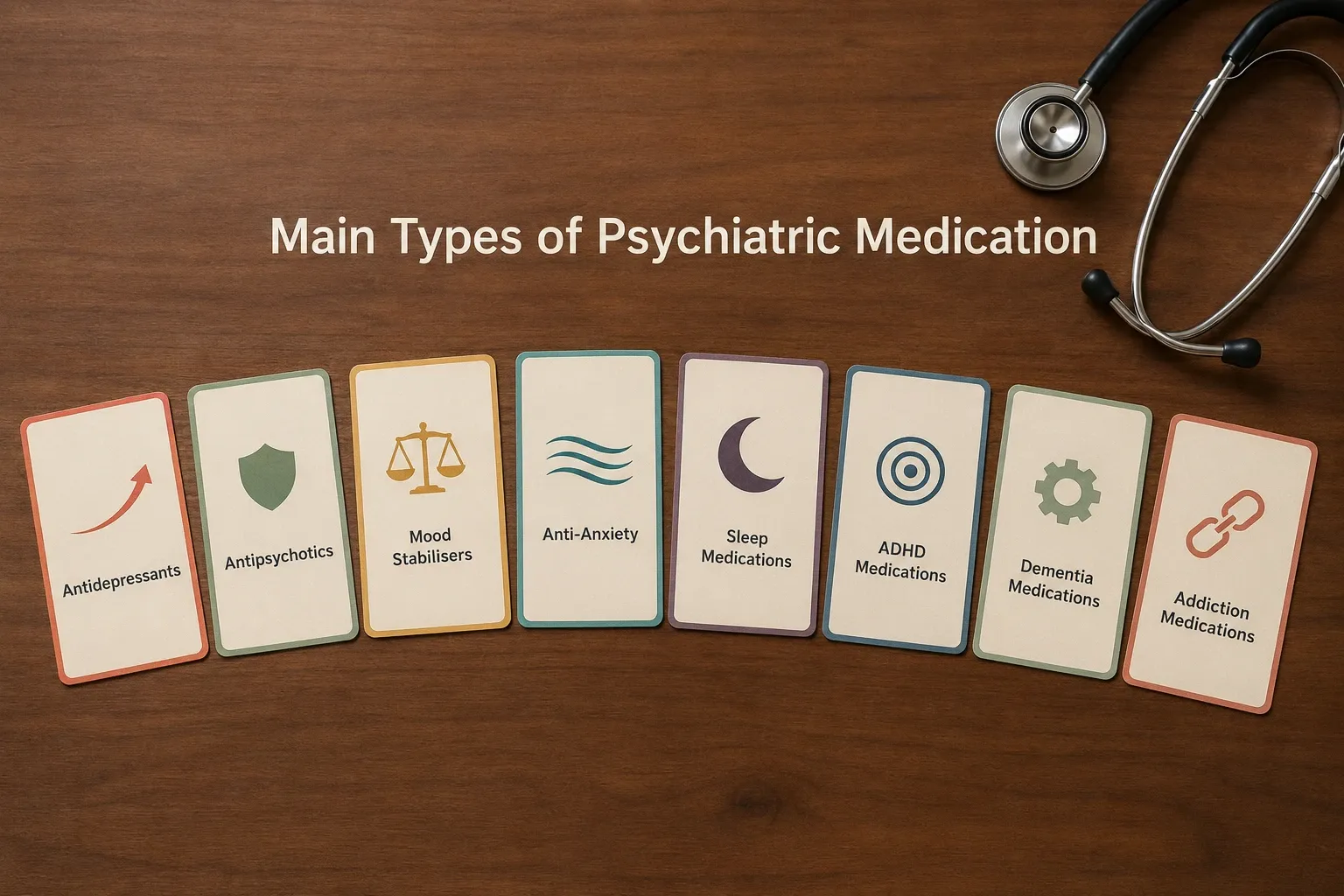
Psychiatric medicines are grouped into classes, each used for particular conditions [1]. The main types are antidepressants, antipsychotics, mood stabilisers, anti-anxiety medicines, sleeping medicines, ADHD medicines, dementia medicines, and addiction medicines, but you do not need to memorise these. The point is simply to see some options. Each type below links to a fuller guide.
- Antidepressants treat depression and many anxiety conditions. SSRIs, such as sertraline or escitalopram, are a commonly prescribed group.
- Antipsychotics help with conditions such as schizophrenia and the manic phase of bipolar disorder.
- Mood stabilisers help even out the highs and lows in bipolar disorder.
- Anti-anxiety medications can ease severe anxiety, and some are used only short-term because they carry a risk of dependence.
- Sleeping medications (hypnotics) are sometimes used briefly for serious sleep problems, again with care about dependence.
- ADHD medications help with focus and attention in attention-deficit hyperactivity disorder.
- Dementia medications can help manage some symptoms of dementia, though they do not cure it.
- Addiction medications support recovery from alcohol, tobacco, or other substance use.
The right medicine depends on your condition, symptoms, health, other medicines, and possible side effects. Your doctor should explain why a medicine has been recommended.

How Long Do They Take to Work?
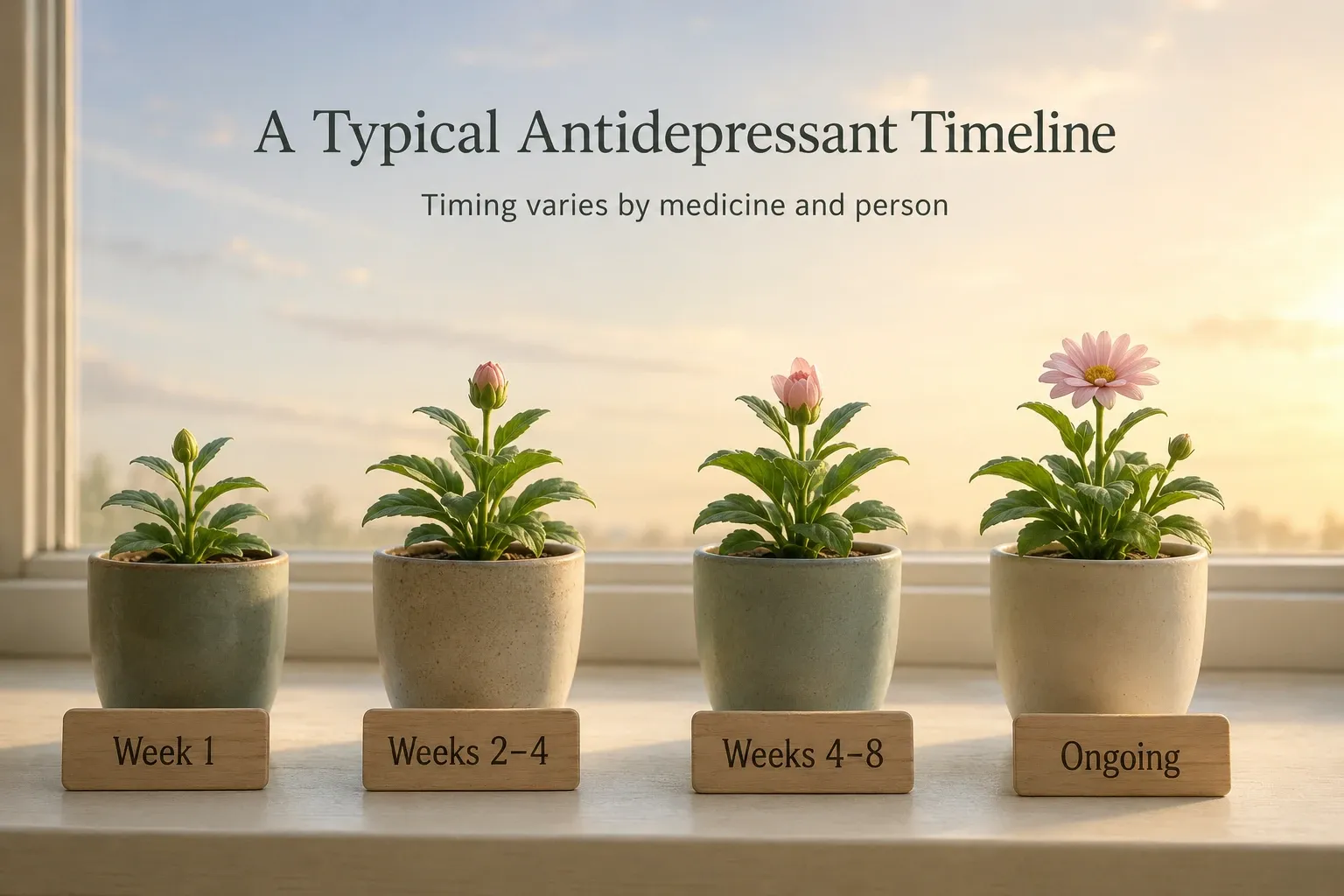
The timing depends on the medicine. Some psychiatric medicines work within hours or days, while antidepressants usually take several weeks to show full benefit. [1].
Ask your doctor when you should expect a change and when treatment will be reviewed. Do not increase the dose or stop the medicine because it does not seem to be working yet.
What Are the Side Effects of Psychiatric Medication?
Side effects depend on the medicine and the person. They may include nausea, tiredness, dizziness, sleep changes, weight changes, restlessness, or sexual problems. Some improve as your body adjusts, while others may continue [1] [4].
When starting a medicine:
- Read the information provided with it.
- Ask which side effects need urgent attention.
- Tell your doctor about anything troubling or unusual.
- Do not stop or change the dose without medical advice.
Some people under 25 may experience new or worsening suicidal thoughts after starting an antidepressant or changing the dose. [1] If this happens, contact the prescribing doctor immediately and use crisis support and helplines. If there is immediate danger, go to the nearest emergency department or call 112.
Feeling better a few weeks in is actually a really good sign, but it's exactly when people are tempted to stop on their own. I always tell patients that improvement is the medicine working, not a signal you're done. Let's talk before you make any changes.
What Happens If You Stop Psychiatric Medicine Suddenly?
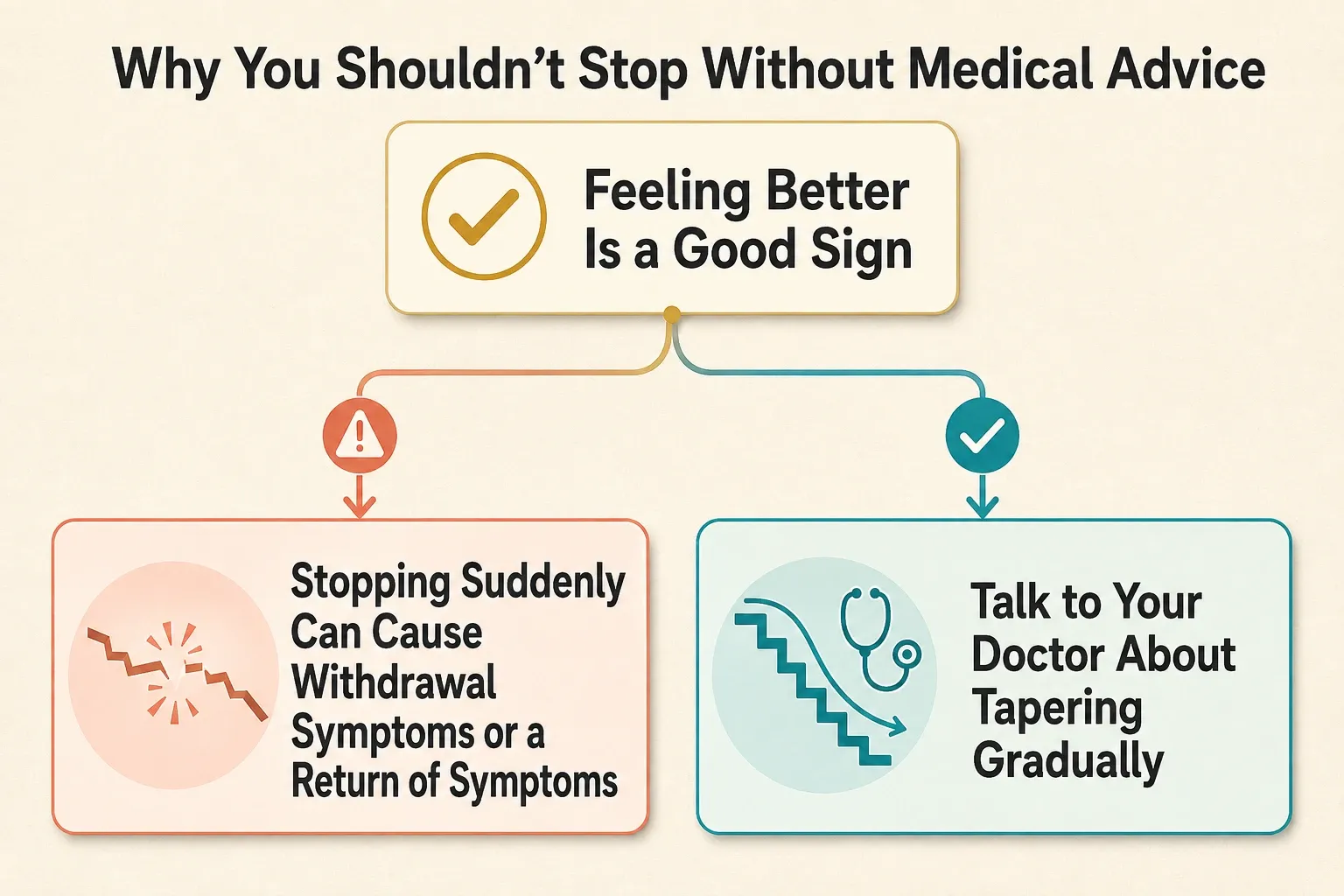
Stopping some psychiatric medicines suddenly can cause withdrawal symptoms or make the original condition return [2][3]. Feeling better may mean the treatment is working, not that it is time to stop.
If you want to stop, speak to your doctor. They may reduce the dose gradually so your body can adjust. The plan depends on the medicine, dose, length of treatment, and your health.
Are Psychiatric Medications Addictive?
Most psychiatric medicines do not cause addiction. Withdrawal symptoms after stopping a medicine are not the same as addiction. Addiction involves cravings, loss of control, and continued use despite harm [3][4].
However, some anti-anxiety medicines, sleeping medicines, and stimulants can cause dependence or be misused. Doctors prescribe these carefully and may limit how long they are used.
Ask your doctor:
- Can this medicine cause dependence?
- How long may I need it?
- What should I do if I want to stop?
Will Medication Change My Personality?
No. Psychiatric medicines are not meant to change who you are. They are used to help manage symptoms that affect your mood, thoughts, behaviour, or everyday life.
If you feel emotionally numb, very restless, or different from your usual self after starting a medicine, tell your doctor. They may need to adjust the dose or change the medicine.
Do I Still Need Therapy If I Take Medication?
It depends on your condition and needs. Medicine may reduce symptoms, while therapy can help you understand patterns, develop coping skills, and manage difficult situations.
Some people benefit from medicine alone, therapy alone, or both together. Your doctor can explain which approach may suit you. Learn what to expect in therapy.
Why Do People in India Avoid Psychiatric Medication?
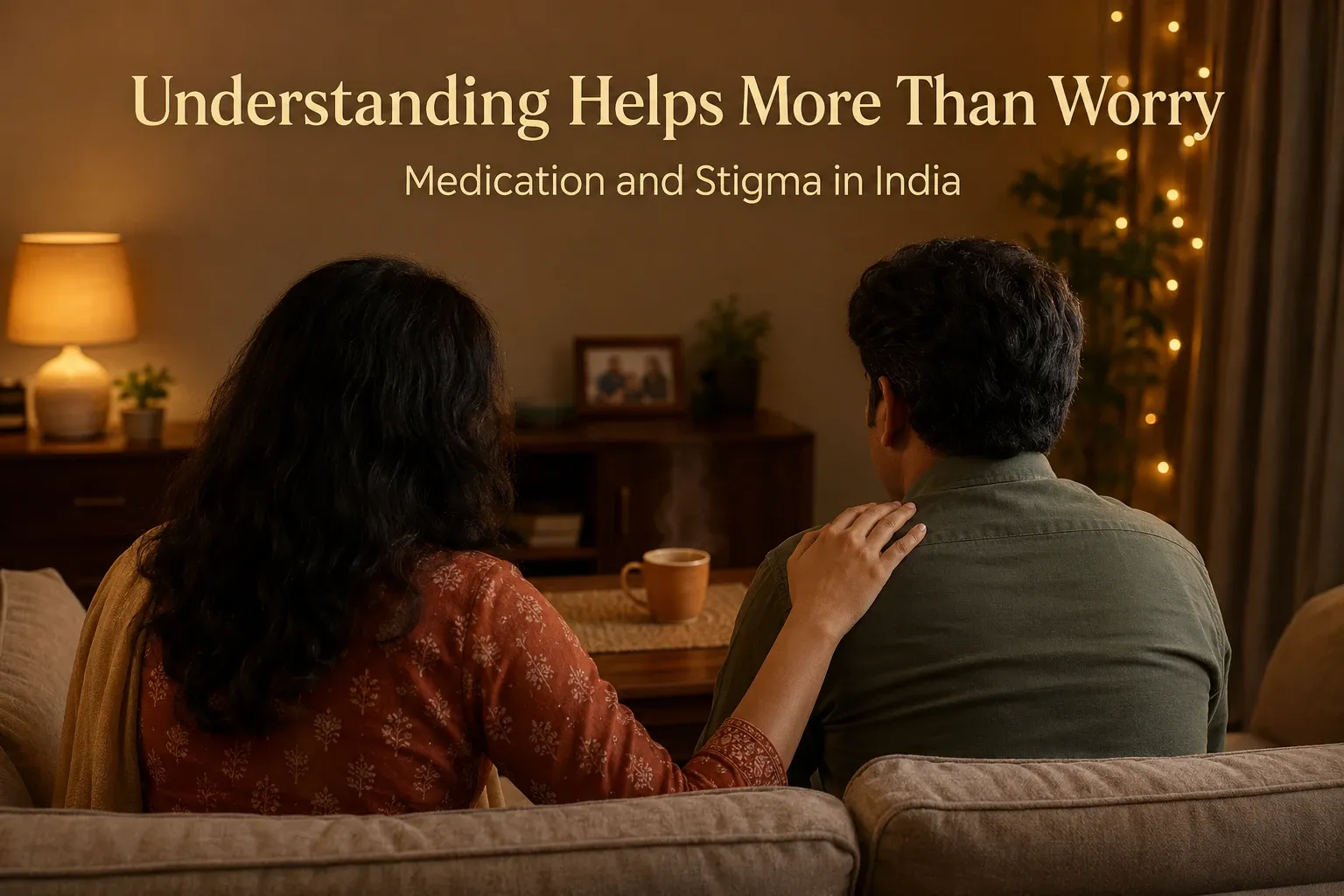
Some people in India delay treatment because they fear addiction, personality changes, or being judged by family. Asking questions and getting information from a qualified doctor can help separate genuine risks from myths.
If someone close to you takes psychiatric medicine, avoid telling them to stop or change it. Learn more about supporting a loved one through a mental health condition.
Conclusion
Psychiatric medicines can help manage symptoms, but finding the right treatment may take time. Take the medicine as prescribed, report side effects, attend follow-up appointments, and do not change or stop it without medical advice.
If you have questions about psychiatric medicine, you can book a confidential consultation with a qualified doctor at Allo Health.
Disclaimer
This blog article discusses mental health and emotional wellbeing for general educational and informational purposes only. It is not a substitute for professional advice, diagnosis, or treatment, and only a qualified mental health professional, such as a psychiatrist, psychologist, or licensed therapist, can diagnose a condition or recommend treatment. If you are struggling, please reach out to a qualified professional or someone you trust; if you are in crisis or may be at risk of harming yourself, use the crisis support resources on this page. For any decisions about your mental health, we encourage you to seek the guidance of a qualified professional.
Most Asked Questions
Will I have to take psychiatric medication for the rest of my life?
Not usually. How long you take a medicine depends on the condition and how you respond. Many people take it for a defined period and then, with their doctor, taper off. Some longer-term conditions do need ongoing treatment, but that is a decision reviewed with your doctor over time, not a life sentence decided at the start.
Can I drink alcohol while taking psychiatric medication?
It depends on the medicine, so this is worth asking your doctor or pharmacist about directly. Alcohol can interact with several psychiatric medicines, affecting how they work or how you feel, so do not assume it is fine without checking.
Is it safe to take psychiatric medication during pregnancy or breastfeeding?
This is an important decision to make with your doctor, not alone. For some people the risks of an untreated condition matter as much as the medicine itself, so a doctor weighs the benefits and risks for your specific situation. Do not stop or start anything on your own if you are pregnant, planning a pregnancy, or breastfeeding.
What should I do if a side effect bothers me, or I feel worse after starting?
Tell your doctor rather than stopping on your own. Many early side effects settle, and if one does not, the medicine or dose can be adjusted. If you notice distressing or suicidal thoughts in the first few weeks, contact your doctor promptly or reach crisis support, as the early weeks sometimes need closer monitoring.
Are psychiatric medicines available without a prescription in India?
No. All psychiatric medicines in India are prescription-only. A doctor, usually a psychiatrist, prescribes them after assessing your symptoms and history, and monitors how they work for you. You cannot safely buy or start them on your own.
Sources
- 1.
National Institute of Mental Health. Mental Health Medications.
- 2.
Royal College of Psychiatrists. Stopping antidepressants (patient information).
- 3.
Mayo Clinic. Antidepressant withdrawal: is there such a thing?
- 4.
White Swan Foundation. Medication: myths and facts (reviewed by Dr Santosh Loganathan, psychiatrist, NIMHANS).
Why Should You Trust Us?
Why Should You Trust Us?
This article was written by Dr. Srishti Rastogi, who has more than 1 years of experience in the healthcare industry.
Allo has the expertise of over 50+ doctors who have treated more than 1.5 lakh patients both online and offline across 30+ clinics.
Our mission is to provide reliable, accurate, and practical health information to help you make informed decisions.
For This Article
- We referenced clinical guidance from the National Institute of Mental Health on how psychiatric medications work and how long they typically take to show effect, so the pharmacology explanations in this guide reflect established medical understanding rather than simplified guesswork.
- We cross-checked our guidance on stopping medication safely against the Royal College of Psychiatrists' patient information on discontinuation, so the warnings about tapering and withdrawal effects match what psychiatrists actually advise.
- We referenced Mayo Clinic's clinical explanation of the difference between withdrawal effects and addiction, so this guide can accurately correct one of the most common and harmful myths about psychiatric medication.
- We drew on medication guidance reviewed by a psychiatrist at NIMHANS through the White Swan Foundation, so the answers to common patient worries, will it change me, is it addictive, reflect input from a working clinician, not just general health writing.
- We were deliberately careful to never recommend a specific medicine, dose, or brand anywhere in this article, keeping the guide informative without ever substituting for an individual doctor's judgment.
- We paid particular attention to the safety information around early-treatment risk in younger patients and stopping medication suddenly, since getting this right matters more than almost anything else on this page.