Antidepressants: How They Work, Side Effects and Stopping Safely
Written by Dr. Srishti Rastogi

Dr. Srishti Rastogi is a medical writer and healthcare professional dedicated to high-quality patient education and public health awareness. Leveraging her clinical background, she produces deeply researched, evidence-based content for digital health platforms and medical publications. Dr. Srishti’s unique dual perspective as a clinician and communicator allows her to craft content that builds trust and credibility with readers navigating sensitive health topics.
•
September 18, 2026
Our experts continually monitor the health and wellness space, and we update our articles when new information becomes available.

Quick Read
Antidepressants are prescription medicines used for depression and for several anxiety conditions. They usually take four to six weeks to show a clear effect, so the first fortnight can feel like nothing is happening. They aren't habit-forming the way sleeping tablets can be, but they should never be stopped suddenly. The first few weeks need closer contact with your doctor, especially if you're under 25.
If you or someone you know is in crisis, help is available right now. You are not alone, and things can get better with the right support.
If you think you may harm yourself, have made a plan or cannot stay safe, call 112 or go to the nearest hospital emergency department. Ask someone you trust to stay with you. You can also use these mental health crisis helplines in India. These may be signs of bipolar disorder. In some people with bipolar disorder, taking an antidepressant without suitable mood-stabilising treatment may trigger mania or make mood changes less stable [1].
Tell your doctor about these periods even if they felt enjoyable or productive at the time.
What Are the Main Types of Antidepressants?
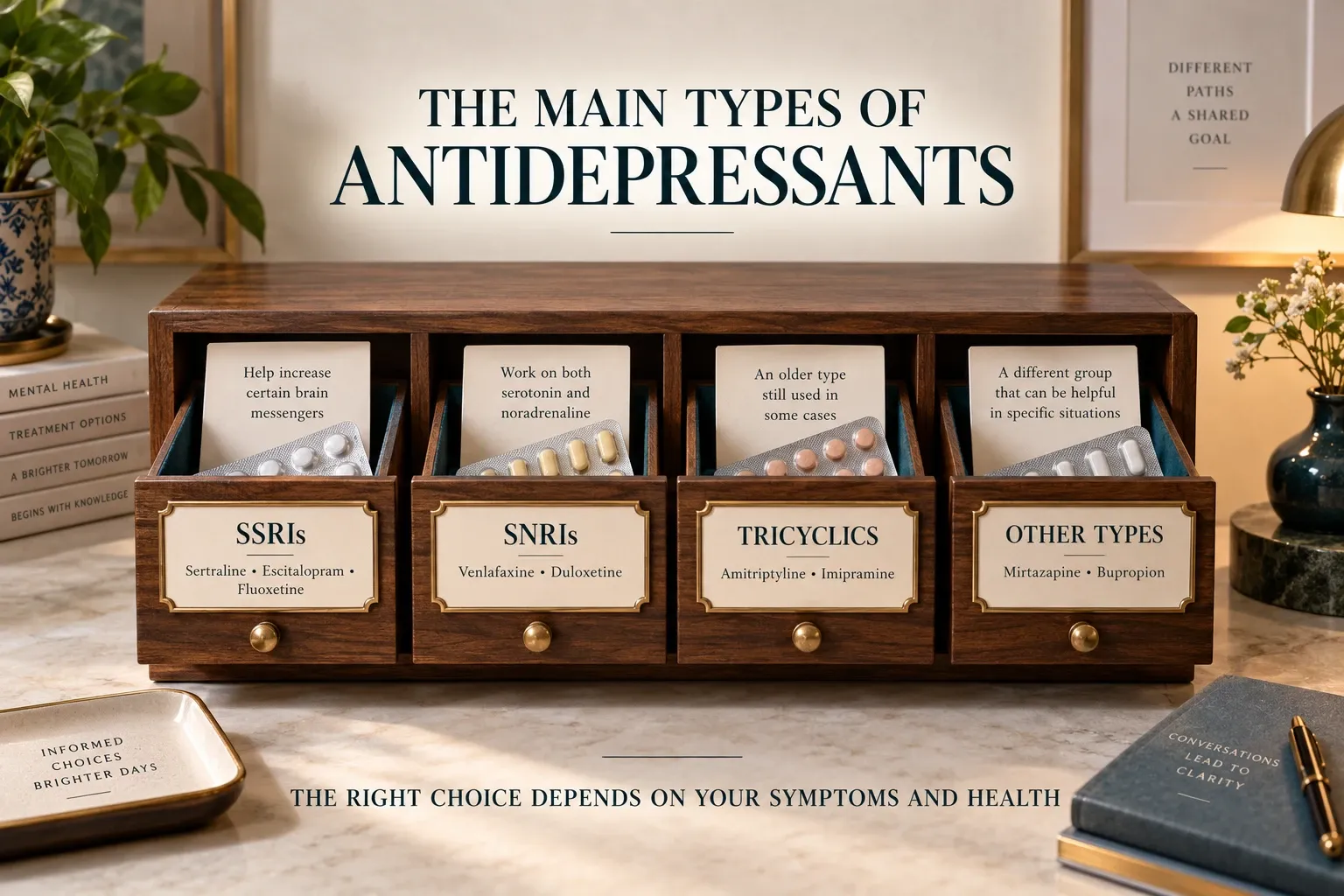
There is no single antidepressant that is best for everyone. The choice depends on your symptoms, physical health, other medicines and possible side effects.
| Type | Common examples | What to know |
|---|---|---|
| SSRIs | Sertraline, escitalopram, fluoxetine | Often used as a first treatment because they are generally well tolerated |
| SNRIs | Venlafaxine, duloxetine | Affect serotonin and noradrenaline and may also help some pain conditions |
| Tricyclic antidepressants | Amitriptyline, imipramine | Older medicines used in selected cases; some are also prescribed for pain |
| Other antidepressants | Mirtazapine, bupropion | May be considered depending on sleep, appetite, sexual side effects and other symptoms |
Do not choose a medicine because it worked for a friend or relative. The same antidepressant can affect two people differently.

Allo asks
What worries you most about taking an antidepressant?
How Long Do Antidepressants Take to Work?
Some people notice early changes in sleep, appetite or anxiety within one or two weeks. A clearer improvement in mood may take four to six weeks [2].

Not feeling better after a few days does not mean the medicine has failed. Continue taking it as prescribed and attend your planned follow-up.
If there is little or no improvement after an adequate trial, your doctor may check:
- Whether the dose is suitable
- Whether any doses have been missed
- Whether side effects are affecting treatment
- Whether another condition is contributing to your symptoms
- Whether the medicine should be adjusted or changed
Do not increase the dose yourself.

Do You Have to Take Antidepressants to Recover?
No. Antidepressants are not necessary for every person with depression.
For less severe depression, treatment may begin with guided self-help, talking therapy, behavioural activation or structured exercise. Guidelines say antidepressants should not routinely be the first treatment for less severe depression unless the person prefers them [3].
For more severe depression, a doctor may recommend antidepressants, therapy or both. Medicine may reduce symptoms enough to make it easier to participate in therapy and manage daily responsibilities.
If counselling feels unfamiliar, read what happens during your first therapy session.
Antidepressants do not usually cause addiction, but the body can become used to them. This is why they should be started, reviewed and stopped with medical guidance. If a medicine is not helping or is causing side effects, speak to your doctor instead of stopping it suddenly.
How Effective Are Antidepressants?
Antidepressants can reduce symptoms of depression, but not everyone responds to the first medicine.
A review of 522 clinical trials involving more than 116,000 adults found that all 21 antidepressants studied worked better than a placebo for the short-term treatment of major depression [4]. However, their benefits and side effects varied.
If one antidepressant does not help, your doctor may adjust the dose, change the medicine or recommend another treatment. Needing to try a different option does not mean treatment will not work for you.
What Are the Common Side Effects?
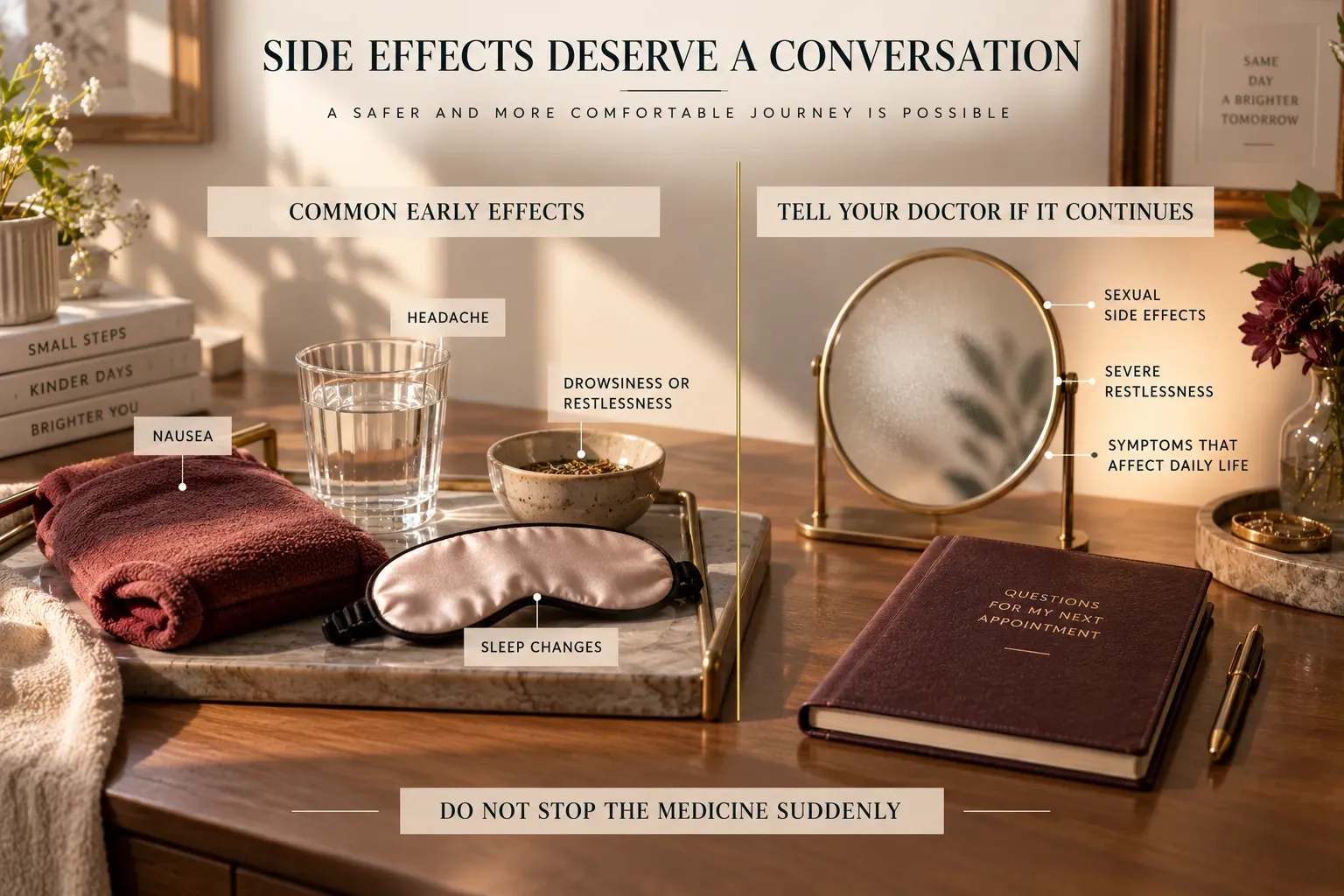
Side effects vary between medicines. Common early effects include:
- Nausea or stomach discomfort
- Headache
- Changes in sleep
- Drowsiness or restlessness
- Increased sweating
- Dry mouth
- Dizziness
Many early side effects become milder within a few weeks. Tell your doctor if they are severe, do not settle or make it difficult to continue treatment.
SSRIs and SNRIs may also cause sexual side effects, including reduced desire, difficulty reaching orgasm or erection problems. These effects do not always improve on their own. They are a valid reason to ask for a medication review.
Do not quietly stop taking the tablets because of a side effect. Your doctor may be able to change the dose, timing or medicine.

Can Antidepressants Increase Suicidal Thoughts?
A small number of people experience new or worsening suicidal thoughts after starting an antidepressant or changing the dose. Closer monitoring is particularly important for people under 25 and anyone already at increased risk.
Guidelines recommend reviewing people aged 18 to 25 about one week after starting an antidepressant or increasing the dose [3].
Contact your doctor urgently if you experience:
- New or worsening suicidal thoughts
- Severe agitation or restlessness
- A sudden increase in impulsive behaviour
- Very high energy with little need for sleep
- Thoughts or behaviour that feel unusual or unsafe
If you think you may act on suicidal thoughts or cannot stay safe, call 112 or go to the nearest emergency department. Do not remain alone. You can also find immediate support through these crisis helplines.
Are Antidepressants Addictive?
Antidepressants do not usually cause the craving, intoxication or loss of control associated with addiction.
However, your body can become physically used to the medicine. If you stop suddenly or reduce the dose too quickly, you may experience withdrawal symptoms such as:
- Dizziness
- Nausea or flu-like feelings
- Anxiety or irritability
- Sleep problems or vivid dreams
- Unusual sensations that feel like brief electric shocks
- A temporary worsening of emotional symptoms
Antidepressant withdrawal is different from the craving and compulsive use seen in an addiction. However, withdrawal can still be distressing and may last longer for some people. This is why the dose should be reduced gradually with medical guidance.

How Long Will You Need to Take an Antidepressant?
Many people continue taking an antidepressant for at least six months after their symptoms have improved [3]. Treatment may be longer if you:
- Have experienced depression more than once
- Had a severe episode
- Continue to have some symptoms
- Have other mental or physical health conditions
- Face a higher risk of relapse
Do not stop as soon as you begin feeling better. Continuing treatment for some time after recovery may reduce the chance of symptoms returning.
One study followed 478 people who felt well enough to stop long-term antidepressant treatment. Within one year, 56% of those who stopped experienced a relapse, compared with 39% of those who continued [5].
However, more than four in ten people who stopped remained well. This means there is no single correct decision for everyone. Your history, preferences and risk of relapse should guide the choice.
How Do You Stop Antidepressants Safely?
Antidepressants are usually stopped by reducing the dose in stages. The exact plan depends on:
- Which medicine you take
- Your current dose
- How long you have taken it
- Whether you previously experienced withdrawal
- How you feel after each reduction
Dose reductions may become smaller near the end. Some people can stop over several weeks, while others need a slower plan over several months.
If withdrawal symptoms appear, contact your doctor. The next reduction may need to be delayed or made smaller. In some cases, your doctor may advise returning temporarily to the previous dose.
Do not skip doses, divide tablets or change the schedule unless your doctor or pharmacist has told you how to do it safely.
What If Your Family Says Antidepressants Will Become an Aadat?
In many Indian families, taking medicine for mental health can lead to comments such as, “You will become dependent on it,” “Try to manage without tablets” or “Once you start, you will need it forever.” Antidepressants do not usually cause craving or loss of control. However, your body can get used to them, so stopping suddenly may cause withdrawal symptoms. This is why the dose is reduced gradually with a doctor’s help.

Also, do not buy an antidepressant because a relative uses it, a chemist suggests it or an online article calls it the “best” medicine. The right choice depends on your symptoms, health conditions and other medicines.
You may also receive a separate tablet for sleep or short-term anxiety. Ask what each medicine is for and how long you should take it. Some sleeping and anti-anxiety medicines have a different risk of dependence and may be intended only for short-term use.
What Should You Ask Your Doctor?
When an antidepressant is suggested, ask:
- What symptoms is this medicine expected to improve?
- When should I expect to notice a change?
- What side effects should I watch for?
- When will my first follow-up be?
- What should I do if I miss a dose?
- Could it interact with my other medicines?
- How long might I need to take it?
- How will we stop it when the time is right?
Antidepressants can be helpful, but treatment works best when you know what to expect and have regular follow-up. If the medicine is not helping or a side effect is affecting your life, tell your doctor. The answer may be to adjust the treatment, not to stop it suddenly.
You can explore more clinically reviewed mental health information or speak confidentially with a mental health professional at Allo Health.
Disclaimer
This blog article discusses mental health and emotional wellbeing for general educational and informational purposes only. It is not a substitute for professional advice, diagnosis, or treatment, and only a qualified mental health professional, such as a psychiatrist, psychologist, or licensed therapist, can diagnose a condition or recommend treatment. If you are struggling, please reach out to a qualified professional or someone you trust; if you are in crisis or may be at risk of harming yourself, use the crisis support resources on this page. For any decisions about your mental health, we encourage you to seek the guidance of a qualified professional.
Most Asked Questions
Can I drink alcohol while taking an antidepressant?
Ask your doctor about your specific medicine, because the answer differs by class. Alcohol also worsens low mood and disturbs sleep, which works against what the medicine is trying to do.
Will an antidepressant change my personality?
No. What people usually describe is the weight of symptoms easing, so they feel more like themselves. If a medicine makes you feel flat or numb, tell your doctor, because that usually means the medicine or the dose needs a review.
Do I have to take it at the same time every day?
Follow the instruction your doctor or pharmacist gave you, and keep it consistent. If you miss a dose, ask your pharmacist what to do rather than doubling up.
What if the first antidepressant doesn't work?
That's common, and it isn't the end of the road. Your doctor may adjust the dose, switch to another medicine, add therapy, or look at whether something else is contributing, such as a thyroid problem.
How will I know it's working?
Often other people notice first. Sleeping better, getting through the day with less effort, or finding small tasks less impossible are the early signs. A follow-up appointment is where you and your doctor compare notes.
Sources
- 1.
National Institute for Health and Care Excellence. Bipolar Disorder: Assessment and Management (CG185).
- 2.
Gautam S, Jain A, Gautam M, Vahia VN, Grover S. Clinical Practice Guidelines for the Management of Depression. Indian Journal of Psychiatry. 2017;59(Suppl 1):S34–S50.
- 3.
National Institute for Health and Care Excellence. Depression in Adults: Treatment and Management (NG222).
- 4.
Cipriani A, Furukawa TA, Salanti G, et al. Comparative Efficacy and Acceptability of 21 Antidepressant Drugs for the Acute Treatment of Adults With Major Depressive Disorder. The Lancet. 2018;391(10128):1357–1366.
- 5.
Lewis G, Marston L, Duffy L, et al. Maintenance or Discontinuation of Antidepressants in Primary Care. New England Journal of Medicine. 2021;385:1257–1267.
Why Should You Trust Us?
Why Should You Trust Us?
This article was written by Dr. Srishti Rastogi, who has more than 1 years of experience in the healthcare industry.
Allo has the expertise of over 50+ doctors who have treated more than 1.5 lakh patients both online and offline across 30+ clinics.
Our mission is to provide reliable, accurate, and practical health information to help you make informed decisions.
For This Article
- This article was medically reviewed by a qualified psychiatrist who checked the information about how antidepressants work, their side effects, suicide risk, bipolar disorder and safe withdrawal.
- The information is based on recognised treatment guidance from NICE and the Indian Psychiatric Society, along with published research on the effectiveness and long-term use of antidepressants.
- The article does not promote a particular medicine, brand or pharmaceutical company. It explains the main types of antidepressants and why the right choice can differ from one person to another.
- It addresses concerns commonly heard in Indian families, including whether antidepressants cause an aadat, how to discuss treatment with relatives and why medicines should not be taken on a chemist’s suggestion or someone else’s prescription.
- The possible benefits, side effects and withdrawal symptoms are explained together. The article does not present medication as the only treatment and also discusses therapy, follow-up care and other options.