Insomnia and Sleep Disorders: Causes, Symptoms, and Treatment
Written by Dr. Srishti Rastogi

Dr. Srishti Rastogi is a medical writer and healthcare professional dedicated to high-quality patient education and public health awareness. Leveraging her clinical background, she produces deeply researched, evidence-based content for digital health platforms and medical publications. Dr. Srishti’s unique dual perspective as a clinician and communicator allows her to craft content that builds trust and credibility with readers navigating sensitive health topics.
•
August 11, 2026
Our experts continually monitor the health and wellness space, and we update our articles when new information becomes available.
Quick Read
Insomnia means ongoing difficulty falling asleep, staying asleep, or waking far too early, even when you have the time and space to sleep. It affects your days as much as your nights. Stress, mental health, physical illness, medicines, and an irregular routine can all feed into it. Long-term insomnia responds well to a structured talking therapy called CBT-I, which is the treatment doctors recommend first. Sleep medicines have a limited role and are used carefully. If poor sleep has been wearing you down for weeks, a professional can help you work out why.
If you regularly struggle to fall asleep, stay asleep, or wake up feeling tired, you may have insomnia or another sleep problem. These problems can affect your energy, mood, concentration, and daily life.
This guide explains the signs and causes of insomnia, other common sleep disorders, how they are diagnosed, and which treatments may help.
What Is Insomnia?
Insomnia means regularly having difficulty:
- Falling asleep
- Staying asleep during the night
- Waking earlier than planned
- Feeling rested after sleep
It happens even when you have enough time and a suitable place to sleep [1]. Sleeping too little because of work, study, or another responsibility is not necessarily insomnia.

Allo asks
What best describes your sleep trouble?

Short-Term and Long-Term Insomnia
How long your sleep problem lasts can help explain what may be happening [2].
- Short-term insomnia may last for a few days or weeks. It usually begins during stress, illness, grief, travel, or a change in your routine. Sleep may improve when the situation settles.
- Long-term insomnia continues for three months or more. Sometimes, the original problem is over, but your mind has already started linking bedtime with worrying and staying awake.
This is why trying harder to sleep usually does not solve long-term insomnia and may increase worry about sleep.
What Are the Symptoms of Insomnia?
Insomnia can make it hard to fall asleep, stay asleep, or wake up feeling rested, and it may leave you tired, irritable, or unable to focus during the day [3].
At night, you may:

- Take a long time to fall asleep.
- Wake up several times and struggle to sleep again.
- Wake earlier than planned.
- Wake up without feeling rested.
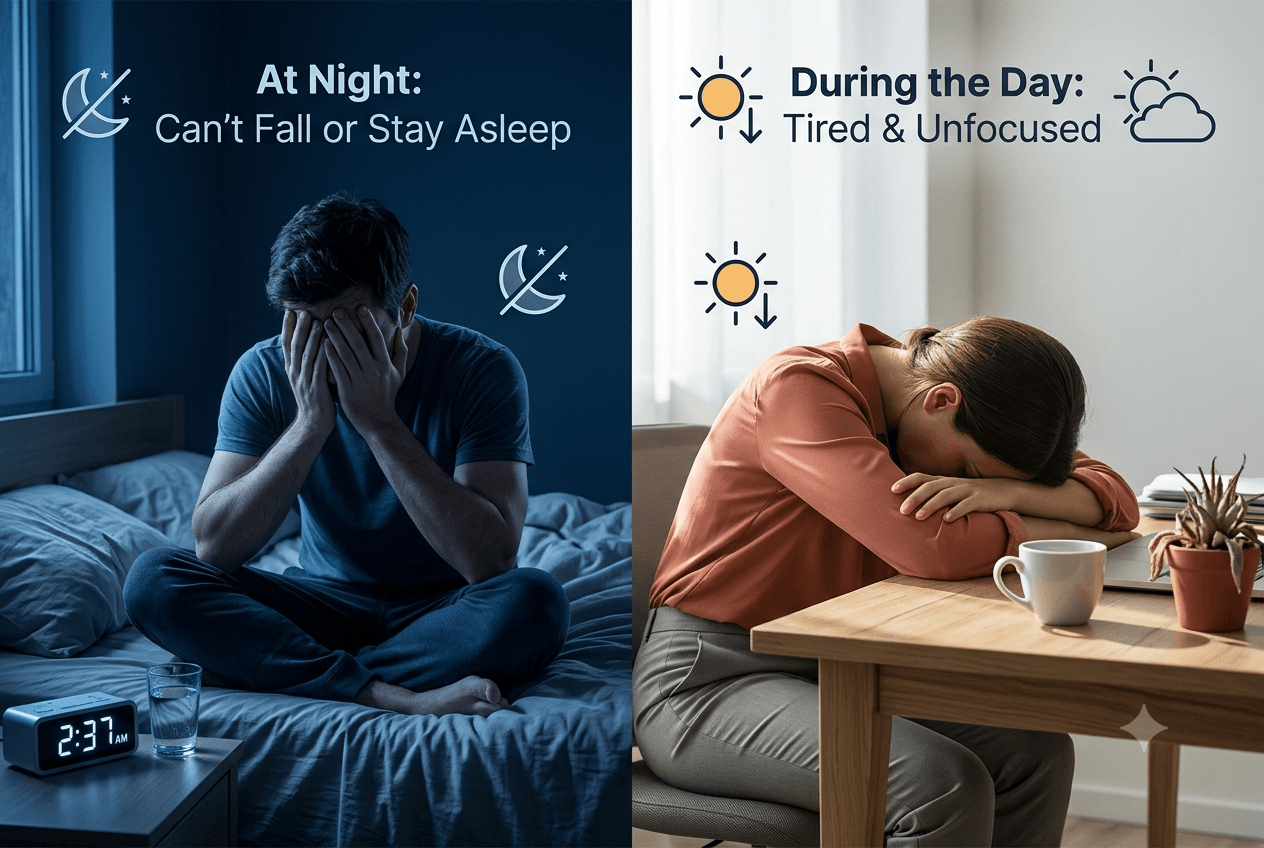
During the day, you may:
- Feel tired or low on energy.
- Struggle to focus or remember things.
- Feel irritable, anxious, or low.
- Start worrying about sleep before bedtime.
However, these symptoms can also have other causes, so persistent sleep problems should be assessed by a healthcare professional.
What Causes Insomnia?
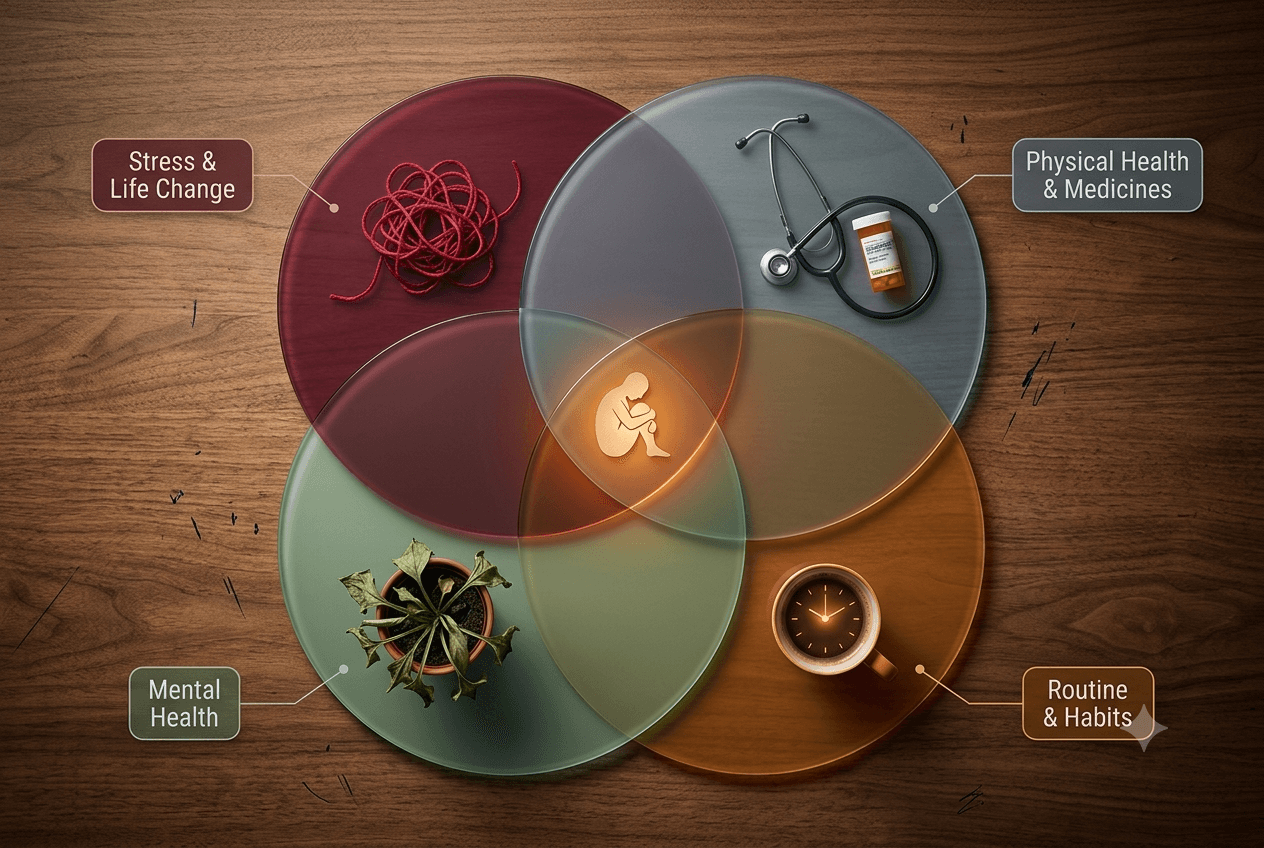
Insomnia is generally caused by several factors working together to affect your sleep, including stress, mental health conditions, physical illness, medicines, caffeine or alcohol, and an irregular routine.
Sleep problems are also widespread in India. The National Longitudinal Ageing Study in India (LASI) found that around 12% of adults aged 45 and above reported frequent sleep problems, with higher rates among women, older adults, and people in rural areas [4].
- Stress or major life changes: In India, pressures like work deadlines, competitive exams, financial responsibilities, family expectations, caregiving, or the loss of a loved one can keep your mind busy long after you've gone to bed.
- Mental health concerns: Conditions like anxiety and depression, as well as past traumatic experiences, can make it harder to fall asleep or stay asleep.
- Physical health problems: Ongoing pain, breathing difficulties, acidity, thyroid disorders, or waking up frequently to use the toilet can all disrupt your sleep.
- Medicines: Some medicines can interfere with sleep as a side effect. If you think your medicine is affecting your sleep, speak to your doctor before making any changes.
- Caffeine, nicotine, and alcohol: Coffee, tea, energy drinks, smoking, and alcohol can all affect your sleep, especially when consumed later in the day.
- Your routine and sleep environment: Long commutes, shift work, late-night dinners, hot and humid weather, traffic or neighbourhood noise, frequent power cuts, or sharing a bedroom with family members are common in India and can make it harder to get good-quality sleep.
The instinct is always to try harder, lie there and force it. But sleep doesn't work that way; the more you chase it, the further it moves. What actually helps is almost the opposite, working with your body's rhythm instead of fighting it.
How Are Insomnia and Mental Health Connected?
Sleep and mental health are closely connected. Feeling anxious, stressed, or depressed can make it difficult to fall asleep or stay asleep. At the same time, poor sleep can make it harder to cope with stress, increase anxiety, lower your mood, and leave you feeling more irritable. A review found that insomnia was linked to a higher future risk of depression and anxiety, although it does not prove that insomnia directly causes them [5].
If sleep problems continue, speak to a doctor or mental health professional. They can check whether a health condition, anxiety, low mood, or ongoing stress and burnout may also be affecting your sleep.
What Should You Do If You Have Insomnia?
Start with simple steps at home, and see a doctor if the problem lasts several weeks. You can:
- Track your sleep: For one or two weeks, record when you go to bed, when you wake, daytime naps, caffeine or alcohol use, and how you feel the next day.
- Improve basic sleep habits: Keep a regular waking time, reduce caffeine later in the day, make your bedroom comfortable, and follow a calm bedtime routine. These habits may help short-term sleep problems and support long-term treatment, but they may not be enough for ongoing insomnia [2][6]. Learn more about everyday sleep habits.
- Do not force sleep: If you are lying awake and becoming frustrated, leave the bed and do something quiet in low light. Return when you feel sleepy.
- Do not self-medicate: Avoid using alcohol or taking sleep medicines without medical advice.
- Speak to a professional: Book an appointment if the problem continues for several weeks or affects your energy, mood, concentration, work, or safety.
Seek medical help sooner if you regularly wake up gasping, someone notices pauses in your breathing, or you feel sleepy while driving.
What Happens When You Seek Help?
A doctor will ask about your sleep, routine, health, medicines, and daytime symptoms. They may use your sleep diary or order tests if another health condition or sleep disorder is suspected.
For long-term insomnia, the recommended first treatment is cognitive behavioural therapy for insomnia, or CBT-I [6][7]. It helps you follow a suitable sleep schedule, reduce worry about sleep, and change habits that keep the problem going. Learn what happens in a therapy session.
Sleep medicines may be used for a short time in some cases, but they are usually not the first treatment for long-term insomnia [2][7]. Never start, stop, or change sleep medicine without speaking to your doctor.
What Are the Other Common Sleep Problems?
Not every sleep problem is insomnia. Other conditions can cause poor sleep or daytime tiredness [8].
| Sleep problem | What stands out |
|---|---|
| Obstructive sleep apnea | Breathing repeatedly pauses in sleep, often with loud snoring or gasping; heavy daytime sleepiness despite long hours in bed. A partner often notices first. |
| Restless legs syndrome | An uncomfortable urge to move the legs, worse in the evening and at rest, which delays sleep. |
| Circadian rhythm problems | The body clock falls out of step with the needed schedule, as with shift work, jet lag, or a naturally very late body clock. |
| Hypersomnia and narcolepsy | The difficulty is excessive daytime sleepiness rather than sleeplessness; narcolepsy is an uncommon neurological condition affecting sleep-wake control. |
Speak to a doctor if any of these signs match your experience. Diagnosis may require a medical assessment or sleep study, and the right treatment depends on the condition.
Sleep Can Get Better
An occasional bad night is normal. Consider seeking help if you regularly struggle to sleep for several weeks or if poor sleep is affecting your mood, energy, concentration, or daily life.
Insomnia is treatable. A qualified professional can help identify what is affecting your sleep and recommend suitable treatment. If you feel ready, you can book a confidential consultation with a qualified professional at Allo Health.
Disclaimer
This blog article discusses mental health and emotional wellbeing for general educational and informational purposes only. It is not a substitute for professional advice, diagnosis, or treatment, and only a qualified mental health professional, such as a psychiatrist, psychologist, or licensed therapist, can diagnose a condition or recommend treatment. If you are struggling, please reach out to a qualified professional or someone you trust; if you are in crisis or may be at risk of harming yourself, use the crisis support resources on this page. For any decisions about your mental health, we encourage you to seek the guidance of a qualified professional.
Most Asked Questions
What is CBT-I?
CBT-I is cognitive behavioural therapy for insomnia, a short, practical course of sessions with a trained therapist. It works on the bed-sleep link, your sleep schedule, anxious thoughts about sleeping, relaxation, and daily habits.
Do I need sleeping pills for insomnia?
Not usually as a first step. Doctors are careful with sleep medicines and tend to prefer therapy first, using medicines briefly and alongside other treatment when appropriate. Any decision about them belongs with your doctor.
Is insomnia a mental illness?
No. Insomnia is a sleep disorder in its own right. It often occurs alongside anxiety or depression, and the two influence each other, but having insomnia does not mean you have a mental health condition.
Why do I wake up at the same time every night?
Regular night-time waking can relate to stress, alcohol, an underlying health problem, breathing problems during sleep, or a body clock out of step with your schedule. A doctor can help work out which applies to you.
How do I know if I have insomnia?
Only a professional can tell you that. If you regularly struggle to sleep despite having the time and space, and it is affecting your days, that is worth discussing with a doctor rather than diagnosing yourself from a checklist.
Sources
- 1.
Cleveland Clinic. Insomnia; Cognitive Behavioral Therapy for Insomnia.
- 2.
Mayo Clinic. Insomnia: Symptoms and causes.
- 3.
NHS. Insomnia.
- 4.
Alvaro PK, Roberts RM, Harris JK. A systematic review assessing bidirectionality between sleep disturbances, anxiety, and depression.
- 5.
National Heart, Lung, and Blood Institute (NIH). Sleep Science and Sleep Disorders.
- 6.
American Academy of Sleep Medicine. Behavioral and psychological treatments for chronic insomnia disorder in adults: an AASM clinical practice guideline.
- 7.
American College of Physicians. Management of Chronic Insomnia Disorder in Adults: A Clinical Practice Guideline. Annals of Internal Medicine.
- 8.
Prevalence of sleep disorders and association with various occupations among Indian population aged 45 years and above (LASI). PMC.
- 9.
Prevalence of sleep disorders and association with various occupations among Indian population aged 45 years and above (LASI). PMC.
- 10.
LocalCircles. How India Sleeps, 2024-25 survey (41,000+ respondents)
- 11.
White Swan Foundation. Insomnia
Why Should You Trust Us?
Why Should You Trust Us?
This article was written by Dr. Srishti Rastogi, who has more than 1 years of experience in the healthcare industry.
Allo has the expertise of over 50+ doctors who have treated more than 1.5 lakh patients both online and offline across 30+ clinics.
Our mission is to provide reliable, accurate, and practical health information to help you make informed decisions.
For This Article
- We referenced clinical practice guidelines directly from the American Academy of Sleep Medicine and the American College of Physicians, both of which recommend CBT-I as the first-line treatment for chronic insomnia, so the treatment guidance here reflects actual medical consensus, not popular opinion.
- We cross-checked symptom and cause information against Mayo Clinic and Cleveland Clinic, two of the most cited clinical references in sleep medicine, to keep the explanations accurate and current.
- We drew on a peer-reviewed systematic review examining the two-way relationship between sleep disturbances, anxiety, and depression, so our claims about insomnia and mental health are grounded in published research.
- We looked at Indian-specific data, including a national study of adults aged 45 and above (LASI) on sleep disorder prevalence, to reflect patterns in the Indian population rather than relying only on Western data.
- We distinguished clearly between short-term and long-term insomnia, and between what better sleep habits can and cannot fix, so the guide does not oversimplify a condition that genuinely needs professional assessment in many cases.
- We covered related sleep disorders, like sleep apnea and restless legs syndrome, that are commonly mistaken for insomnia, so readers can recognize if their experience points somewhere else entirely.