Psychiatrist vs Psychologist vs Therapist: Who Should You See?
Written by Dr. Srishti Rastogi

Dr. Srishti Rastogi is a medical writer and healthcare professional dedicated to high-quality patient education and public health awareness. Leveraging her clinical background, she produces deeply researched, evidence-based content for digital health platforms and medical publications. Dr. Srishti’s unique dual perspective as a clinician and communicator allows her to craft content that builds trust and credibility with readers navigating sensitive health topics.
•
October 7, 2026
Our experts continually monitor the health and wellness space, and we update our articles when new information becomes available.

Quick Read
A psychiatrist is a medical doctor who can diagnose mental health conditions and prescribe medicine. A clinical psychologist assesses and treats through therapy and cannot prescribe; in India they must be registered with the Rehabilitation Council of India. "Therapist" and "counsellor" describe the work, so training varies. For everyday stress, worry or relationship problems, a psychologist or qualified counsellor is a good start. For severe, sudden or physical symptoms, or if medicine may help, see a psychiatrist first. Either can refer you to the other.
If you or someone you know is in crisis, help is available right now. You are not alone, and things can get better with the right support.
Getting mental health support can feel confusing when several professionals seem to offer similar help. Psychiatrists, psychologists, counsellors and therapists may all work with anxiety, depression, stress and other mental health concerns, but they are trained differently.
The right person depends mainly on what you are struggling with and whether you may need medicines, therapy, psychological testing or a combination of these.
Here is a simple way to understand the difference.

Allo asks
What are you looking for help with right now?
Psychiatrist vs Psychologist vs Therapist: What Is the Difference?
| Professional | What they mainly do | Can prescribe medicine? |
|---|---|---|
| Psychiatrist | Diagnoses mental health conditions, prescribes medicines and manages medical treatment | Yes |
| Clinical psychologist | Psychological assessment, testing and therapy | No |
| Counselling psychologist | Therapy for emotional, relationship and everyday mental health concerns | No |
| Counsellor or therapist | Talk-based emotional support and therapy, depending on training | No |
| Psychiatric social worker | Therapy, family support and help with social or practical problems | No |
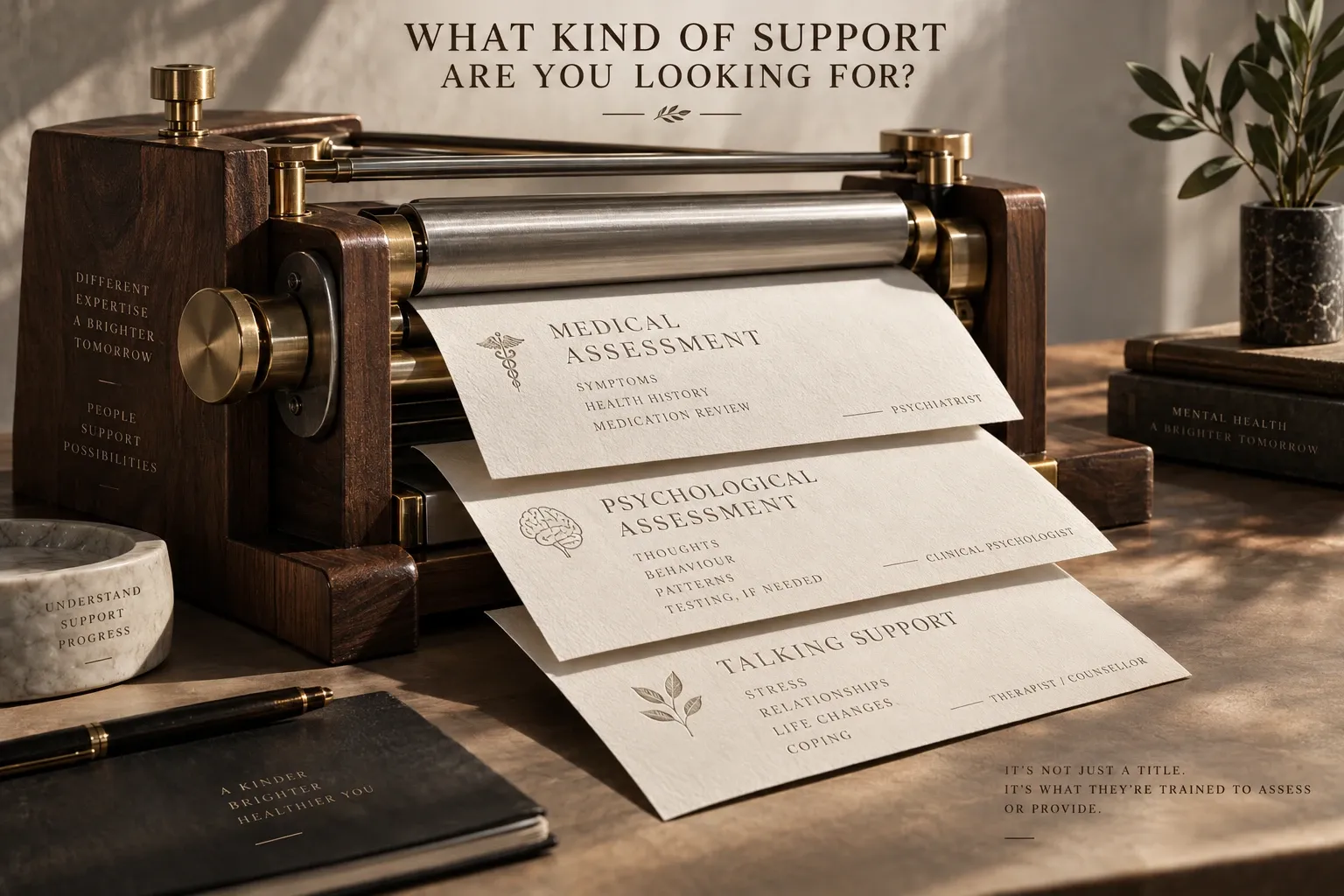
The biggest practical difference is that psychiatrists are medical doctors and can prescribe medicines. Psychologists cannot prescribe medicines.
The word therapist is broader. A therapist may be a psychologist, counsellor, social worker or another professional trained in psychotherapy. This is why checking their actual qualification is important.

What Does a Psychiatrist Do?
A psychiatrist is a medical doctor who specialises in mental health. In India, psychiatrists first train as doctors and then complete postgraduate training in psychiatry [1]. They can assess symptoms, diagnose mental health conditions and prescribe medicines. You might see a psychiatrist for conditions such as:
- depression
- anxiety disorders
- bipolar disorder
- schizophrenia and psychosis
- OCD
- ADHD
- substance use problems
A psychiatrist can also consider whether a physical health problem or medicine could be contributing to your symptoms. For example, certain thyroid problems can cause symptoms that resemble depression or anxiety.
Not every visit to a psychiatrist leads to medication. The psychiatrist will first understand your symptoms, medical history, current medicines and how the problem is affecting your life. If medicine is recommended, you can ask why you need it, what benefits to expect and what side effects to watch for. You can also read more about how psychiatric medicines work.

What Does a Clinical Psychologist Do?
A clinical psychologist helps assess and treat mental health problems mainly through psychological therapies and assessments. They do not prescribe medicines. You may see a clinical psychologist if anxiety, low mood, trauma, difficult thoughts or behaviour patterns are affecting your life.
For example, therapy may help you understand why you keep avoiding situations that make you anxious and gradually learn ways to manage them. Clinical psychologists can also carry out psychological assessments when needed.
In India, clinical psychologist is a regulated professional title. A person practising as a clinical psychologist should have an RCI-recognised qualification and be registered with the Rehabilitation Council of India [1,3]. You can ask for their Central Rehabilitation Register (CRR) number and check it before booking.
What Is a Counselling Psychologist?
A counselling psychologist generally helps people work through emotional and everyday difficulties. You might see one for:
- stress at work or college
- relationship difficulties
- grief
- low confidence
- life changes
- mild anxiety or low mood
They use counselling and psychological techniques rather than medication. Training can differ, so ask about their degree, supervised clinical experience and the kind of problems they usually work with.
You do not need to know your diagnosis before asking for help. Start with a qualified mental health professional. If you need a different kind of care, they can guide you.
What Is a Therapist or Counsellor?
The words therapist and counsellor do not tell you someone's exact qualification. This matters because two people using the title "therapist" may have very different levels of training. Before starting therapy, ask:
- What is your main professional qualification?
- Where did you train?
- Do you have supervised clinical experience?
- Do you have a registration number, if your profession requires one?
- Have you worked with people with concerns similar to mine?
A short online certificate is not the same as professional mental health training. If you have never been to therapy before, read what to expect in your first therapy session.

Should I See a Psychiatrist or Psychologist First?
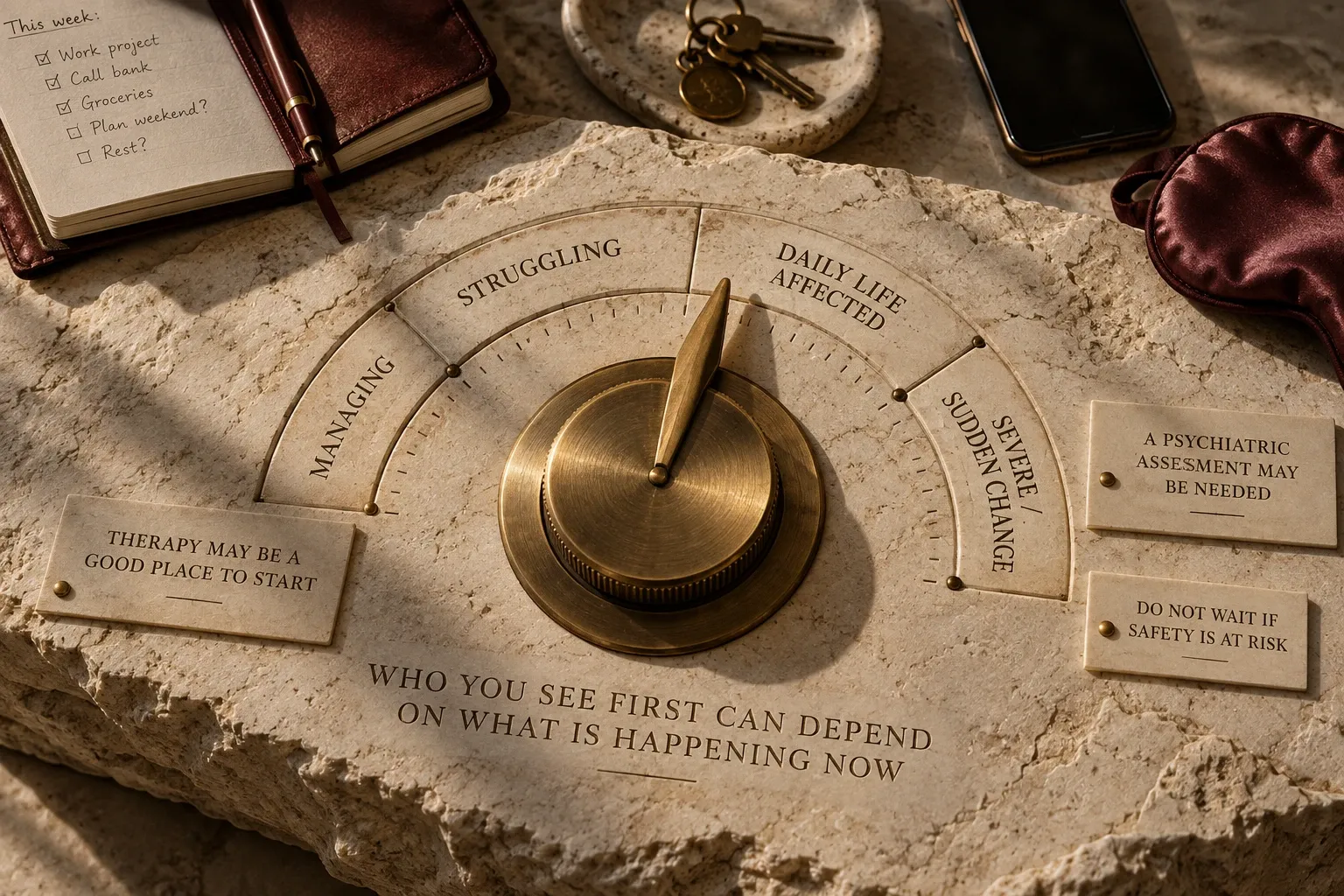
See a psychiatrist when a medical assessment or medication may be needed. See a psychologist or qualified counsellor when you mainly want therapy or support with thoughts, emotions, behaviour or relationships.
Consider starting with a psychiatrist if:
- your symptoms are severe or have suddenly become much worse
- you are struggling to manage basic daily activities
- you have periods of very high energy or very little sleep along with major mood changes
- you are hearing or seeing things that other people do not
- alcohol or drug use is becoming difficult to control
- you are already taking psychiatric medicines and need them reviewed
- another healthcare professional has suggested that medication may help
Consider starting with a psychologist or qualified counsellor if:
- stress or worry is becoming difficult to manage
- you are going through grief, a breakup or a major life change
- you want help with relationships
- you want to understand repeated thoughts or behaviour patterns
- you want to improve confidence or coping skills
- you want to try therapy
However, these are not strict rules. Some people benefit from seeing both. A psychiatrist may manage medicines while a psychologist provides regular therapy. If you choose one and need the other, you can be referred.
When Should You Get Urgent Mental Health Help?
Some situations should not wait for a routine therapy or psychiatry appointment. Get urgent help if you feel you may harm yourself or someone else, cannot keep yourself safe, or are extremely confused or disconnected from reality.
In India, you can call 112 for emergency help or go to the nearest hospital emergency department. For mental health support, you can also contact Tele-MANAS at 14416. You can find more options in our guide to mental health crisis support and helplines.
Will a Psychiatrist Automatically Put Me on Medicine?
No. Seeing a psychiatrist does not automatically mean you will be prescribed medication. The first appointment usually involves understanding your symptoms, how long they have been present, your medical history and how they affect your daily life.
Depending on the problem, treatment may involve therapy, medication, lifestyle changes or a combination. You can ask why a medicine is being suggested and whether other options are available. For some conditions, therapy can be an important treatment on its own. For others, especially when symptoms are more severe, combining therapy and medication may be helpful [7,8].
If low mood is one of the main reasons you are seeking help, read more about depression and its treatment.
Can You See a Psychiatrist and Psychologist at the Same Time?
Yes. A psychiatrist may diagnose the condition and manage medication. A psychologist may provide regular therapy to work on thoughts, emotions and behaviour. With your permission, they may also coordinate your care. You do not have to choose one professional forever. The kind of support you need can change over time.

How Do You Check a Mental Health Professional's Qualifications in India?
Do not rely only on someone's Instagram bio, website or the word "therapist." Check the underlying qualification.
Psychiatrist
Ask for the doctor's medical registration number. You can check registered doctors through the National Medical Commission (NMC) or the relevant State Medical Council [9].
Clinical psychologist
Ask for the person's CRR number. Clinical psychologists should be registered with the Rehabilitation Council of India (RCI) [3]. You can verify the registration through the RCI's Central Rehabilitation Register [10].
You may come across clinical psychologists with different qualification names because India's training pathway is changing. Many practising clinical psychologists trained through the earlier M.Phil route, while RCI has introduced a newer Master in Clinical Psychology pathway [5,11].
The important practical check is whether the person's qualification is recognised and whether they have the required RCI registration.
Counsellor or counselling psychologist
Ask about:
- their degree
- where they studied
- supervised practical training
- experience with your concern
- any relevant professional registration or membership
Do not hesitate to ask. A qualified professional should be comfortable explaining their training.
What Should You Ask at Your First Mental Health Appointment?
You do not need to prepare a long list. A few questions can tell you a lot:
- What are your qualifications and registration?
- Have you worked with people with concerns like mine?
- What treatment or therapy would you suggest, and why?
- What should I expect from the sessions?
- How will we know whether treatment is helping?
- Will you refer me if I need another professional?
- Who can see my records or information?
You can also ask about fees, appointment frequency and what happens if you want to stop or change treatment. If you are looking for mental health care for a parent, partner, friend or another family member, read how to support a loved one with their mental health.
What If I Still Don't Know Who to See?
You do not need to work out the entire treatment plan before booking your first appointment. Start with a qualified professional who seems appropriate for your main concern. They can assess what is happening and suggest another professional if needed.
At Allo Health, you can consult a psychiatrist or psychologist depending on your needs. If you are unsure where to start, you can book a confidential consultation and discuss what kind of support may be suitable.

Disclaimer
This blog article discusses mental health and emotional wellbeing for general educational and informational purposes only. It is not a substitute for professional advice, diagnosis, or treatment, and only a qualified mental health professional, such as a psychiatrist, psychologist, or licensed therapist, can diagnose a condition or recommend treatment. If you are struggling, please reach out to a qualified professional or someone you trust; if you are in crisis or may be at risk of harming yourself, use the crisis support resources on this page. For any decisions about your mental health, we encourage you to seek the guidance of a qualified professional.
Most Asked Questions
Do I need a referral to see a psychiatrist in India?
No. You can book a psychiatrist or psychologist directly, in person or online.
Is a clinical psychologist with an M.Phil still properly qualified?
Yes. The Mental Healthcare Act names the two-year M.Phil in Clinical Psychology as a recognised route [1], and the RCI allowed M.Phil admissions to continue up to the 2025-26 academic session [11]. What matters is the RCI registration, so ask for the CRR number either way.
Is seeing a psychiatrist a sign that something is seriously wrong?
No. People see psychiatrists for sleep problems, anxiety, low mood, exam or work stress and many other everyday concerns. Seeing a psychiatrist means a medical opinion is useful, not that your problem is severe.
Will my family be told what I discuss?
Not without your agreement, except in rare situations the professional should explain at the start. The Mental Healthcare Act gives people receiving mental health care a legal right to confidentiality about their mental health and treatment [1].
Can I see a psychiatrist or psychologist online?
Yes, many consult by video or phone. The same checks apply: ask for the registration number and look it up before your first session. Choose a private room and headphones if others are at home.
Sources
- 1.
Government of India. The Mental Healthcare Act, 2017 (No. 10 of 2017). Section 2(1) definitions of "clinical psychologist", "psychiatric social worker" and "psychiatrist"; section 23(1). Government-hosted copy
- 2.
Government of India. The National Medical Commission Act, 2019. Section 34 (bar to practise without enrolment in a State Register or the National Register).
- 3.
Government of India. The Rehabilitation Council of India Act, 1992 (Act No. 34 of 1992). Section 13(2) and 13(3).
- 4.
Soni AK, Kumar M. Clinical psychology training and accreditation: meeting demands without jeopardizing quality. PLOS Mental Health, 2024. doi:10.1371/journal.pmen.0000188.
- 5.
Rehabilitation Council of India. Change of nomenclature of courses in Clinical Psychology / Rehabilitation Psychology. F.No. RCI-12022/1/2022 (Comp No. 2910), 3 May 2026.
- 6.
Press Information Bureau, Ministry of Health and Family Welfare, Government of India. Tele MANAS: Revolutionizing Mental Health Care in India. 13 October 2024.
- 7.
The efficacy of psychotherapy and pharmacotherapy in treating depressive and anxiety disorders: a meta-analysis of direct comparisons
- 8.
National Institute for Health and Care Excellence. Depression in adults: treatment and management. NICE guideline NG222, 2022, recommendations 1.5.3 and 1.6.1.
- 9.
National Medical Commission. Indian Medical Register.
- 10.
Rehabilitation Council of India. Central Rehabilitation Register search
- 11.
Rehabilitation Council of India. Public Notice: Continuation of M.Phil Clinical Psychology and M.Phil Rehabilitation Psychology for the academic session 2024-25 & 2025-26. 21 September 2024.
Why Should You Trust Us?
Why Should You Trust Us?
This article was written by Dr. Srishti Rastogi, who has more than 1 years of experience in the healthcare industry.
Allo has the expertise of over 50+ doctors who have treated more than 1.5 lakh patients both online and offline across 30+ clinics.
Our mission is to provide reliable, accurate, and practical health information to help you make informed decisions.
For This Article
- This article was created to help you understand the differences between mental health professionals without making the process more confusing.
- The information on psychiatrists, clinical psychologists and other mental health professionals has been checked against Indian laws and official regulatory sources, including the Mental Healthcare Act, the National Medical Commission and the Rehabilitation Council of India.
- Treatment information is based on established clinical guidelines and peer-reviewed research. We also distinguish between professional titles carefully because terms such as psychiatrist, clinical psychologist, counselling psychologist, counsellor and therapist do not mean the same thing or require the same training.
- Where qualifications or training pathways are changing, such as clinical psychology training in India, we use current regulatory information rather than relying only on older definitions.