Borderline Personality Disorder: Symptoms, Causes and Treatment
Written by Dr. Srishti Rastogi

Dr. Srishti Rastogi is a medical writer and healthcare professional dedicated to high-quality patient education and public health awareness. Leveraging her clinical background, she produces deeply researched, evidence-based content for digital health platforms and medical publications. Dr. Srishti’s unique dual perspective as a clinician and communicator allows her to craft content that builds trust and credibility with readers navigating sensitive health topics.
•
September 10, 2026
Our experts continually monitor the health and wellness space, and we update our articles when new information becomes available.
Quick Read
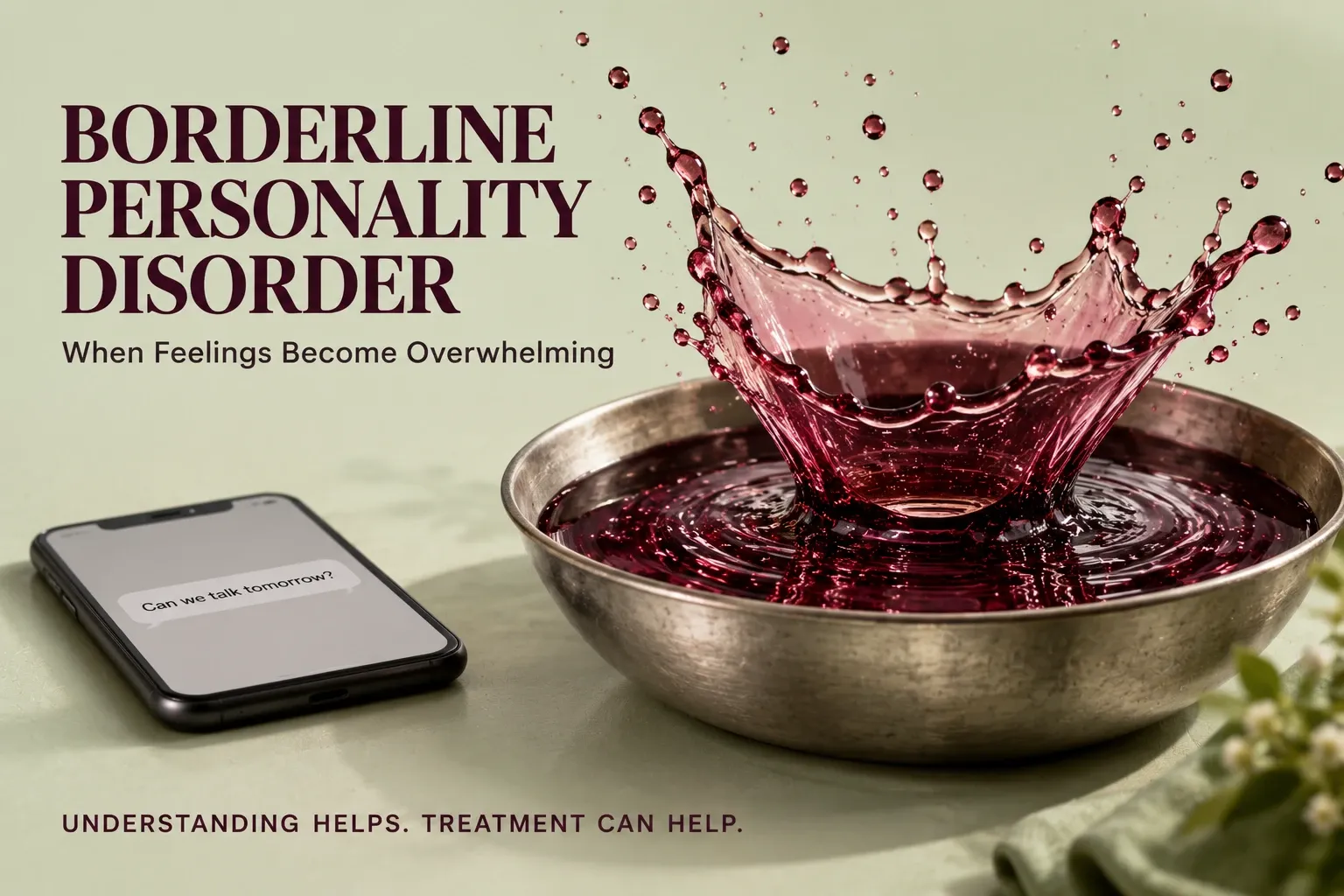
Borderline personality disorder involves emotions that feel more intense and shift faster than most people experience, a deep fear of being abandoned, and relationships that can swing between very close and very painful. This page covers what it actually is, why the emotional intensity happens, when to get help urgently, and how treatment, especially a therapy called DBT, genuinely works.
If you or someone you know is in crisis, help is available right now. You are not alone, and things can get better with the right support.
Ever felt like your emotions go from zero to a hundred in seconds? Or been so scared that someone you love will leave you, that you push them away first? If this sounds familiar, or reminds you of someone close to you, you might have heard of a condition called BPD. It is more common than most people think, and it is very treatable. Let us walk you through what it actually means.
What Is Borderline Personality Disorder?
BPD, or borderline personality disorder, is a mental health condition. It shows up as very strong emotions that change fast, a deep fear of being left alone, and a sense of self that keeps shifting [2]. Somewhere between 1 in 150 and 1 in 35 people go through this at some point in life [2]. That is a lot of people.
If you have BPD, you are not being dramatic. You are not doing this on purpose. This is real, and here is something good to know, it is also one of the most treatable conditions out there. Only a doctor can confirm a diagnosis, not an online quiz or one chat with a friend. A lot of these traits show up in people who do not have BPD too [2].

Allo asks
Which part of BPD do you think is hardest for people around a person to understand?
What Are the Symptoms of BPD?
The main symptoms of BPD are unstable moods, doing things without thinking, feeling empty inside, strong anger, and trouble in relationships. These symptoms usually come together, not one at a time. Doing things without thinking might look like spending a lot of money suddenly, using substances, or ending a relationship or job in the heat of the moment. Under a lot of stress, some people also feel cut off from themselves, almost like watching from far away.
Only a doctor can tell you if this pattern fits you. Not this list.

BPD is one of the more misunderstood diagnoses I see in practice. Patients often arrive thinking they're just 'too much' or 'too sensitive,' when really their nervous system is processing emotions differently. The good news is that BPD responds well to structured therapy like DBT. With the right support, people build steadier relationships and a calmer relationship with their own emotions.
What Is Emotional Dysregulation in BPD?
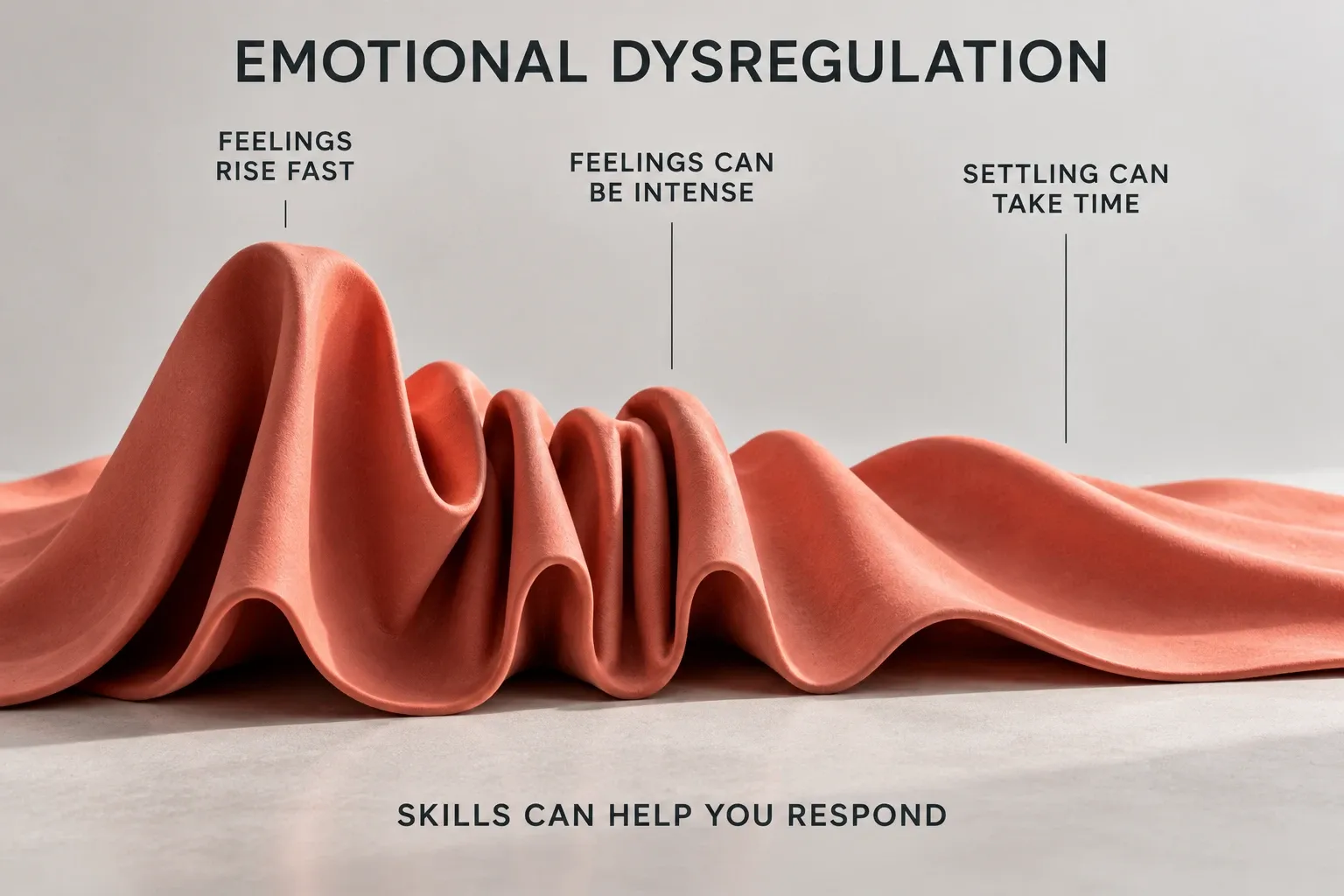
Emotional dysregulation means feelings hit fast, hit hard, and take a long time to calm down. This is the main reason behind most BPD symptoms. It is not a choice. It is not a flaw. It is simply how the brain handles emotions differently. Once you understand this, everything else makes more sense. What looks like an overreaction from outside is often a huge storm happening inside, all within seconds.
Mindfulness and grounding exercises are one way therapists help slow this down.
Why Does BPD Cause Fear of Abandonment and Unstable Relationships?
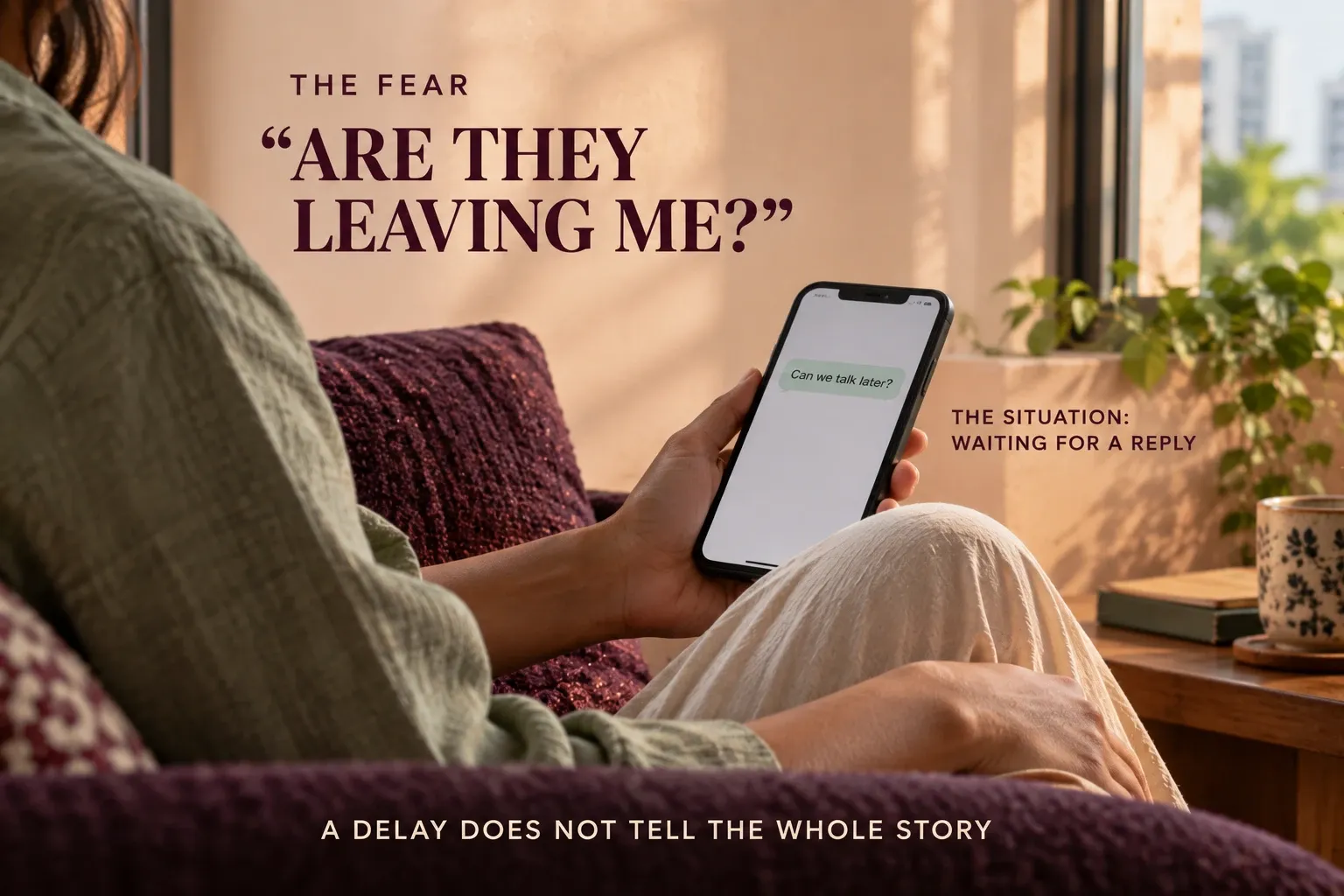
A deep fear of being left or rejected sits at the center of BPD. It shapes relationships in ways that can look confusing. A person might pull someone close, then push them away, all in the same week. A late reply to a text can feel like panic.

This is not manipulation. It is a real, tiring response to real pain. Relationships built on this fear can feel shaky for everyone, not just the person going through it. This is also where the biggest myth about BPD comes from, that the person wants to create chaos. That is simply not true.
Is Suicide Risk Higher With BPD?
Yes. People with BPD have a higher risk of suicide compared to people with other personality disorders [2]. If you are having thoughts of ending your life, or someone you know is, please act now. Use the helplines at the top of this page. Go to the nearest hospital.
This does not mean you have failed. It means the pain got too heavy to carry alone. And that is exactly when help is meant to step in.
What Causes BPD?
There is no single cause of BPD. It comes from a mix of genes and difficult early life experiences, especially situations where feelings were ignored, punished, or met with instability [2]. Studies on twins and families show a real genetic link, but no single gene can confirm BPD on its own [2].
Childhood trauma, neglect, or an unstable home raises the risk. But not everyone with BPD had a hard childhood, and not everyone with a hard childhood gets BPD. It comes from how your nature and your experiences mix together. Never because a child did something wrong.
How Is BPD Treated?
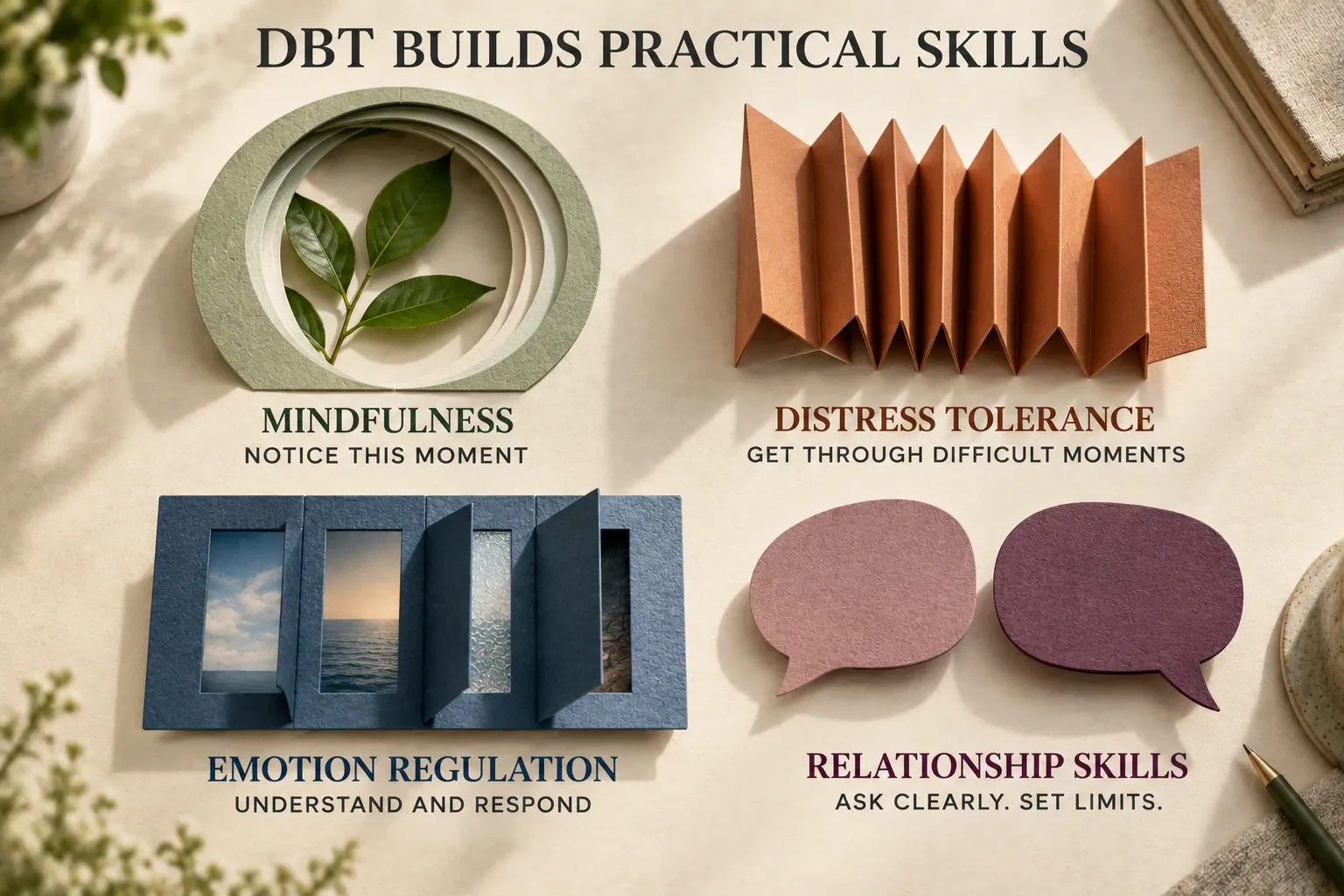
Therapy is the main treatment for BPD, not medicine. Dialectical behaviour therapy, or DBT, works best [2].
Doctors around the world agree that medicine alone should not be used to treat BPD [1]. A doctor might give medicine for something else happening alongside it, like depression. But that is a separate decision.
What DBT actually looks like:
- One on one therapy sessions
- Group sessions that teach skills for handling big emotions
- A focus on building better relationships [2]
In one study, people did DBT for a full year. By the end, 77 percent no longer showed signs of BPD, and hospital visits dropped too [3]. This does not mean they were cured, results differ for everyone. But it shows real change, not just kind words.
Other therapies help too, like mentalisation based therapy and schema therapy [2].
A note for Indian families: A small study found that family attitudes often stopped people from getting help in the first place [4]. It also showed how much strain BPD puts on daily life and relationships. Getting treatment is not a failure on the family's part. Most times, it is the turning point.
Small habits that support therapy:
- Regular exercise is linked to better mood in many studies
- Poor sleep makes it harder to manage emotions, even more so with BPD, so good sleep habits genuinely help
- For the anger that often comes with BPD, anger management techniques can help, though they do not replace therapy

How Can You Live With BPD or Support Someone Who Has It?
Relationships affected by BPD can get better, especially with the right treatment. Getting better does not mean becoming a different person. It means the big emotions get easier to handle, and relationships feel steadier with time.
If you are supporting a partner, family member, or friend and not going through BPD yourself, a different guide will help you more. Our guide for families and loved ones shows you how to help without losing yourself in the process.
This page is written for adults. Doctors usually do not diagnose personality disorders until adulthood, though some signs can show up during teenage years. That conversation is best had with a young person's doctor.
Talk to Someone Who Understands
Struggling with this alone gets exhausting, and it does not have to be that way. Allo Health offers confidential consultations with professionals who understand BPD, without judgment and without the wait. Reach out whenever you are ready.

Disclaimer
This blog article discusses mental health and emotional wellbeing for general educational and informational purposes only. It is not a substitute for professional advice, diagnosis, or treatment, and only a qualified mental health professional, such as a psychiatrist, psychologist, or licensed therapist, can diagnose a condition or recommend treatment. If you are struggling, please reach out to a qualified professional or someone you trust; if you are in crisis or may be at risk of harming yourself, use the crisis support resources on this page. For any decisions about your mental health, we encourage you to seek the guidance of a qualified professional.
Most Asked Questions
Is BPD the same as being manipulative or dramatic?
No. The intense reactions in BPD come from a genuine fear of abandonment and emotions that are harder to regulate, not a deliberate attempt to control or upset anyone. Treating it as manipulation is one of the most damaging myths around this condition.
What causes borderline personality disorder?
There's no single cause. It develops from a combination of genetic or temperamental sensitivity and difficult early environments, such as childhood trauma or growing up where emotions were dismissed or met with instability.
Is BPD treatable?
Yes. Dialectical behaviour therapy (DBT) has strong evidence behind it. In one study, 77% of people no longer met the diagnostic criteria for BPD after a full year of treatment. Other structured therapies are also used.
Can medication help with BPD?
Not with the core symptoms. Guidelines are explicit that medication should not be used to treat BPD itself, though a doctor may prescribe something for a separate condition, like depression, that occurs alongside it.
What's the difference between BPD and bipolar disorder?
They're often confused because both involve intense mood shifts, but they work differently. BPD's emotional shifts are usually triggered by relationships or events and can happen within a day, while bipolar disorder involves distinct episodes that typically last longer. A professional assessment can tell the two apart.
Sources
- 1.
National Institute for Health and Care Excellence. Borderline personality disorder: recognition and management (CG78). NICE, 2009.
- 2.
Borderline Personality Disorder. StatPearls, NCBI Bookshelf.
- 3.
Stiglmayr C, Stecher-Mohr J, Wagner T, et al. Effectiveness of dialectic behavioral therapy in routine outpatient care: the Berlin Borderline Study. Borderline Personality Disorder and Emotion Dysregulation. 2014;1:20.
- 4.
Choudhary S, Thapa K. Clinical profile of borderline personality disorder in North India. Psychological Studies. 2014;59:374-382.
Why Should You Trust Us?
Why Should You Trust Us?
This article was written by Dr. Srishti Rastogi, who has more than 1 years of experience in the healthcare industry.
Allo has the expertise of over 50+ doctors who have treated more than 1.5 lakh patients both online and offline across 30+ clinics.
Our mission is to provide reliable, accurate, and practical health information to help you make informed decisions.
For This Article
- We referenced NICE's clinical guideline on borderline personality disorder to make sure the diagnostic criteria and treatment recommendations reflect internationally recognised standards.
- We used the StatPearls entry on NCBI Bookshelf, a peer reviewed clinical reference, to ground the core facts on symptoms, prevalence, and causes.
- We cited the Berlin Borderline Study, a real world outcomes study on DBT, so the 77 percent recovery figure comes from actual patient data, not a promotional claim.
- We referenced a study on BPD patients in North India to make sure the article reflects how family attitudes and cultural context shape treatment seeking in an Indian setting, not just Western research.
- We were careful to separate the emotional dysregulation mechanism from the fear of abandonment pattern, so readers understand these as distinct, evidence based parts of BPD rather than one vague symptom list.