Jelqing Meaning: Does It Work, Side Effects, and Erectile Dysfunction Risk
Medically reviewed by Dr. Sandip Deshpande

Dr Sandip completed his training in Psychiatry and sexual medicine in the UK. A post-graduate in Psychiatry from KMC Manipal, he worked in the UK for over 8 years following a one-year research post at NIMHANS, Bangalore. With an interest in the fields of sexual health and functioning, he has authored articles in books and peer-reviewed journals. A recipient of the student of the year award by BSART in 2010, he is currently a consultant psychiatrist and sexual and relationship therapist with a belief in a holistic and psychotherapeutic approach to treating psychological distress.
•
Written by Dr. Deepali Anand

Dr. Deepali is a medical writer and healthcare professional with a background in clinical surgery and patient care. Having transitioned from active clinical practice to medical communications, she specializes in bridging the gap between complex clinical data and patient education. Dr. Deepali is dedicated to creating evidence-based content that is grounded in scientific rigor and empathy, ensuring that sensitive topics like sexual wellness and mental health are accessible and empowering for every reader.
•
July 30, 2026
Our experts continually monitor the health and wellness space, and we update our articles when new information becomes available.
Quick Read
Yes, jelqing can cause erectile dysfunction by damaging the nerves, blood vessels, and tissues that are essential for healthy erections. While it’s often promoted online as a natural way to increase penis size, the risks are real, ranging from temporary issues to long-term complications like Peyronie’s disease or hard flaccid syndrome. If you’ve tried jelqing, pay attention to warning signs and seek medical advice early. And remember, there are safe, evidence-based alternatives to support both confidence and sexual health.
If you're wondering, “Does jelqing cause erectile dysfunction?” Jelqing may increase the risk of erectile dysfunction in some men, especially when done aggressively or repeatedly. It’s popular online as a “natural” way to improve size or erections, but the medical risks are real. Also searched as jelking, jelquing, jelqin, jelq, many men come across this jelqing technique online, hoping it might increase their penis size or improve erections. But while jelqing may sound harmless, the reality is quite different.
In this article, we’ll explore what jelqing is and the real medical risks it carries, including its potential to contribute to nerve irritation, vascular injury, scarring, and longer-lasting erection problems in some cases. Whether you're just curious or have already tried jelqing, this guide will help you understand the facts without fear, shame, or judgment.
What is Jelqing?
Jelqing is a supposed exercise to increase penile length or a penis stretching exercise[1]. It gained popularity in online forums, where people claim that regular practice can increase penis size. In simple terms, the technique involves wrapping your thumb and index finger around the shaft, like making an "OK" sign, and then slowly moving the grip from the base to the tip in a stroking motion.
The Technique (And Where it Goes Wrong):
- The Grip: Wrapping the thumb and index finger around the base (the "OK" sign).
- The Motion: Stroking from base to tip to force blood into the glans.
- The Myth: Doing this repeatedly creates "micro-tears" for growth. (Read below why this is biologically impossible).
Online claims often suggest doing it regularly for weeks or months, but these promises are not backed by strong clinical evidence — unlike the better-studied concept of edging and sexual health.
How Jelqing is Supposed to Help Erections
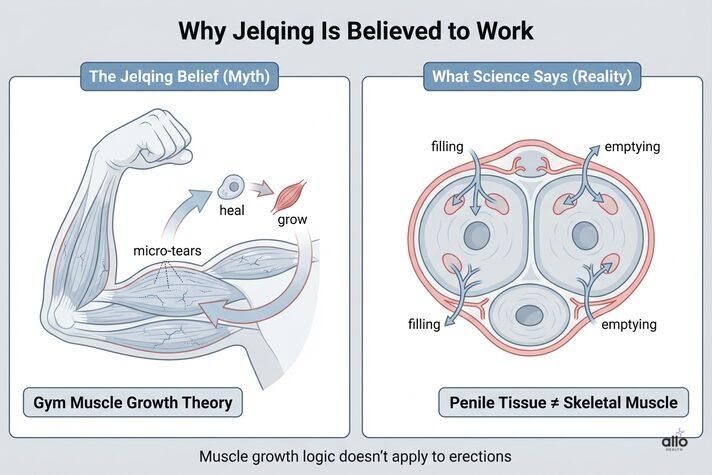
The idea behind jelqing comes from how muscle growth works when you hit the gym. According to this belief, the harder and more consistently you massage or stretch the penis, the more micro tears you create in the penile tissue. The idea is that as these tears heal, new muscle and tissue will form, gradually increasing penis length over time.
What Does Science Say? — On masturbation and erectile dysfunction, research consistently finds no causal link for most men. There’s no high-quality clinical evidence that jelqing increases penis length. Some doctor-supervised approaches (like traction devices) may be used in specific medical situations (for example, curvature), but that is not the same as DIY penis stretching exercises[2].
Why Jelqing Doesn't Work
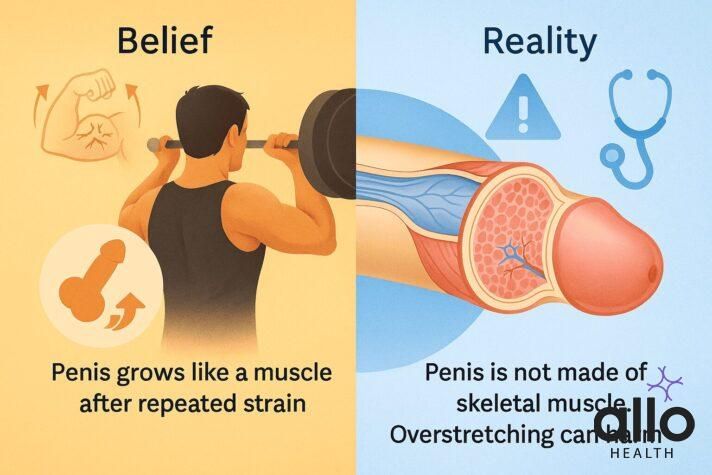
The catch is that the muscles you build in the gym, like your biceps or quadriceps, are skeletal muscles. The penis, on the other hand, is made up mostly of smooth muscle and spongy tissue, and the same growth principles don’t apply here.
Erections depend on the corpora cavernosa filling with blood and the tunica albuginea helping trap that pressure. Repeated squeezing or high pressure doesn’t “train” this tissue like a gym muscle. It can irritate blood vessels and nerves, or contribute to scarring.
So, how does the penis size increase during arousal? It’s not through muscle tearing or repair. Instead, it's a complex process involving signals from the brain, chemical messengers, and the relaxation of smooth muscles in the penis[3]. This allows blood vessels to open up, increasing blood flow and causing the penis to elongate and become erect.

The truth is, the penis isn't made of the same kind of muscle you build at the gym, so the idea that you can 'train' it to grow through jelqing just doesn’t hold up medically.
Can Jelqing Cause Erectile Dysfunction?
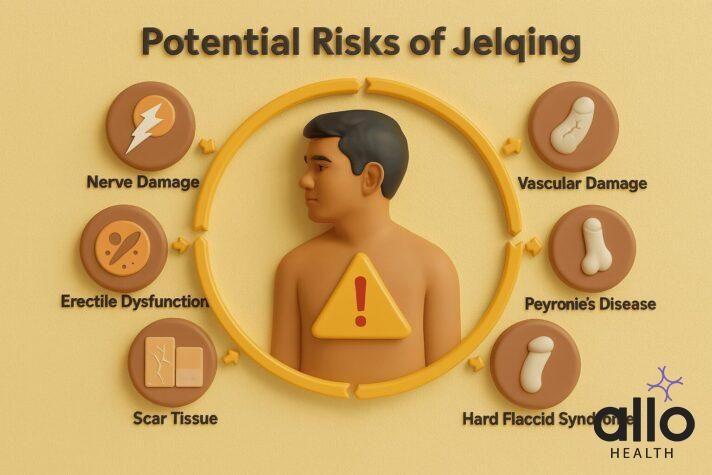
It will come as a surprise, but jelqing can actually cause what it is thought to help with - ED. Jelqing can cause erectile dysfunction in several ways:
1. Nerve Damage:
The repetitive pulling and stretching involved in jelqing exercise can harm the delicate nerve bundles responsible for erections. Here's the thing about nerves: they don’t like to be stretched, and they certainly can’t grow longer. When these crucial nerves are damaged, it can contribute to longer-lasting erection problems in some cases.
2. Vascular Damage:
The penis contains a complex network of blood vessels that are vital for achieving and maintaining an erection. Aggressive penis stretching can injure these vessels, potentially causing venous leaks and reducing the blood flow necessary for erections. In simpler terms, the plumbing gets disrupted, and erections suffer as a result.
3. Scar Tissue Formation:
When tissue is repeatedly injured, the body may heal it by forming scar tissue. Unfortunately, this fibrous scar tissue is not as elastic or functional as healthy tissue. In the penis, it can restrict blood flow and make it harder to achieve or maintain an erection.
4. Peyronie's Disease:
Repeated injury and micro-trauma by jelqing may contribute to scar tissue formation and curvature in some men (Peyronie disease). This can lead to painful or curved erections and affect sexual confidence[4].
5. Hard Flaccid Syndrome:
This rare but distressing condition causes the penis to remain semi-rigid even when you're not aroused. It’s often accompanied by pain, numbness, and erectile dysfunction[5]. Some people reporting pelvic/penile symptoms online associate it with overly aggressive penile exercises, but the condition is still not fully understood.
6. Permanent Tissue Damage:
Perhaps the most serious risk of jelqing is irreversible harm to the blood vessels, tissues, and support structures of the penis — a vascular concern also raised by excessive sex and erectile dysfunction when taken to extremes. In severe cases, this can result in permanent erectile dysfunction, a condition that may require specialist evaluation and a structured treatment plan.
Can Oils or Lubricants Make Jelqing Exercise Safe?
- Lubrication may reduce surface friction, but it does not prevent internal vascular or nerve injury from pressure and stretching.
- “Kitchen oils” can irritate skin or worsen folliculitis in some people.
- If there’s pain, numbness, discoloration, or swelling, stop immediately and get checked.
Does Size Matter?
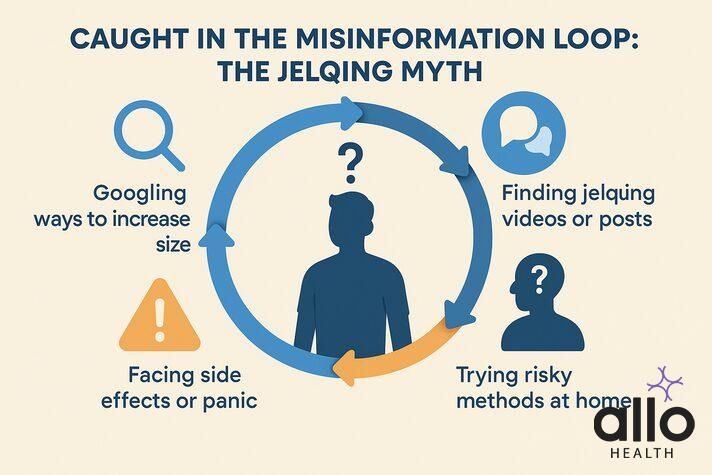
The pressure to increase penis size often stems from low self-esteem and unrealistic standards about what’s considered “normal.” But here’s the truth: penis size varies widely, and there’s no one-size-fits-all.
So, what’s the ideal size?
According to multiple large-scale studies, the average erect penis size is about 5 inches (13 cm). A penis that measures less than 3 inches when erect is classified as a _micropenis_- a rare condition. In such cases, sexual medicine specialists may consider cosmetic or surgical interventions, particularly if the person also has functional difficulties during sex.
Safer Alternatives to Jelqing

If you're concerned about penis size(small penis syndrome), you're not alone, but it's important to approach the issue safely and realistically. Here’s what medical professionals recommend[6]:
| Method | Evidence | Safety | Realistic Outcome |
|---|---|---|---|
| Jelqing | No strong evidence | Higher risk | Unpredictable, injury risk |
| Vacuum device | Used medically | Safer with guidance | Temporary fullness, rehab support |
| Penile TractionDevices | Used in select cases | Safer with guidance | Gradual changes in specific conditions |
| Sex therapy/counselling | Good for anxiety/body image | Very safe | Confidence + performance benefits |
| Lifestyle + ED evaluation | Strong for erectile health | Very safe | Better erections over time |
- Talk to a urologist: A specialist can assess your anatomy, address any functional concerns, and help set realistic expectations about size and performance.
- Know what’s normal: Most men fall within the average range, around 5 to 5.5 inches when erect. Size alone rarely impacts sexual satisfaction.
- Work on body image, not just size: If insecurity is affecting your confidence or relationships, counseling or sex therapy can help you feel more at ease in your body.
- Consider medically approved options (if needed): In rare cases where treatment is appropriate, options like penis pumps, implants, penile traction therapy, or cosmetic surgery should always be done under medical supervision.
- Focus on Pleasure and Performance: Sexual satisfaction is about so much more than size. Communication with your partner, technique, and overall confidence often matter far more than measurements.
- Lifestyle Changes for Better Erection: Sometimes the most effective improvements come from the basics- regular exercise, a healthy diet, adequate sleep, stress management, and avoiding smoking. These lifestyle changes support your overall vascular health, which directly impacts erectile function.
What If You've Already Tried Jelqing?
Many people try it out of curiosity, insecurity, or a desire to improve their bodies. What matters most now is being honest with yourself about any changes you’ve noticed and taking steps to protect your health.
Signs You May Have Injured Yourself
Keep an eye out for:
- Pain during erections or urination
- New or worsening curvature in your penis
- Trouble getting or maintaining an erection
- Unusual bruising, swelling, or discoloration
These aren’t symptoms to ignore. They’re your body’s way of saying something’s off, and it’s worth paying attention.
When to See a Doctor
If you’re experiencing any of the symptoms above, it’s time to check in with a doctor. The good news is that many jelqing-related issues can be reversed with rest and care, especially if you address them early.
Tips for Recovery
- Stop jelqing immediately & give your body a break.
- Apply warm compresses to improve blood flow and promote healing.
- Schedule a medical check-up to get professional insight and peace of mind.
- Stay calm, as anxiety and stress can worsen erectile problems, so be kind to yourself during recovery.
What We See at Allo: Jelqing, Size Anxiety & ED
Based on our clinical data at Allo Health, drawn from over 250,000+ sexual health consultations, we’ve observed some clear patterns:
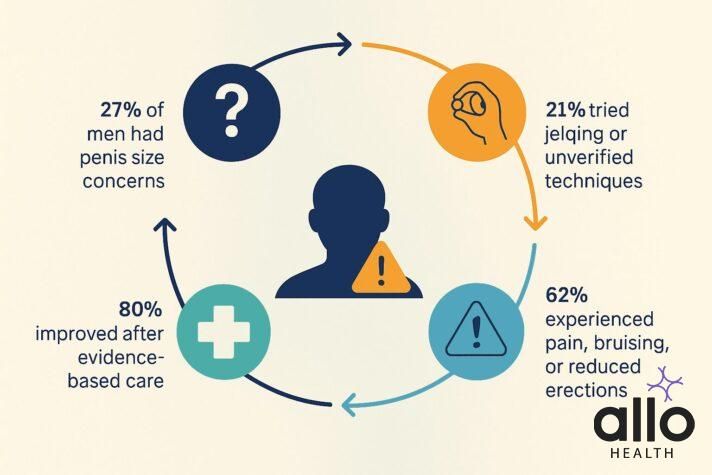
- 27% of men brought up concerns about penis size, often fueled by misinformation from online sources.
- Among them, over 1 in 5 (21%) had attempted jelqing or similar unverified techniques in hopes of enlarging their penis.
- Of those who tried jelqing, 62% reported pain, bruising, or a noticeable decline in erection quality following the practice.
- Encouragingly, more than 80% of these men reported better sexual confidence and health after shifting to evidence-based care and dropping unsafe practices.
Final Verdict: Is Jelqing Worth the Risk?
Can jelqing cause erectile dysfunction? Yes, it can harm your erectile function and even lead to long-term ED. While it may seem like a harmless, natural method to increase penis size over time, the reality is that jelqing can do more damage than good.
Many men struggle with small penis anxiety, but it's important to know that this concern is often tied to body image issues, not actual medical problems — and approaches like hypnosis for erectile dysfunction can help address the psychological side. Before trying risky DIY methods, take a step back, weigh the risks, and consider speaking with a doctor or urologist.
Your sexual health deserves care, not shortcuts.
Disclaimer
The following blog article provides general information and insights on various topics. However, it is important to note that the information presented is not intended as professional advice in any specific field or area. The content of this blog is for general educational and informational purposes only. The content should not be interpreted as endorsement, recommendation, or guarantee of any product, service, or information mentioned. Readers are solely responsible for the decisions and actions they take based on the information provided in this blog. It is essential to exercise individual judgment, critical thinking, and personal responsibility when applying or implementing any information or suggestions discussed in the blog.
Most Asked Questions
Can you still get erections after jelqing?
Some people may still get erections after jelqing, especially if no serious damage occurred. However, if you notice pain, reduced firmness, or changes in sensation, it's a sign that something might be wrong and you should consult a doctor.
What are the harmful effects of jelqing?
Jelqing can cause pain, bruising, scarring, nerve damage, curved erections (Peyronie’s disease), or even conditions like hard flaccid syndrome. These effects can interfere with both erection quality and overall sexual function.
Can jelqing damage the nerves in the penis?
Jelqing may injure these nerves, which can result in numbness, reduced sensitivity, or erectile issues.
Are there safer alternatives to jelqing if I’m concerned about my penis size?
Yes. Medical-grade options like vacuum pumps or penile traction devices may be helpful in some cases, but should only be used under medical supervision. Often, counseling and lifestyle changes can improve both confidence and erection quality without any physical risk.
Does jelqing actually work for increasing penis size?
There’s no strong clinical evidence that jelqing permanently increases penis size. Some people notice temporary swelling or fullness, which can be mistaken for growth, but this effect doesn’t last and doesn’t represent real tissue enlargement.
What should I do if I’ve already tried jelqing and now have symptoms?
Stop the practice immediately and give your body time to heal. Apply warm compresses to reduce discomfort, avoid further stress or stretching, and consult a urologist if symptoms persist.
Is jelqing safe if done gently or with lubrication?
No method of jelqing is considered medically recommended. Lubrication may reduce skin friction but does not protect against internal nerve or blood vessel injury caused by pressure or stretching. Pain, numbness, or discoloration are warning signs to stop and seek medical advice.
Sources
- 1.
What Is Jelqing, and Does It Actually Work?
- 2.
Penile traction therapy and Peyronie’s disease: a state of art review of the current literature
- 3.
Physiology of Penile Erection and Pathophysiology of Erectile Dysfunction
- 4.
Scar Tissue Can Lead to Painful Erections
- 5.
Hard Flaccid Syndrome: A Biopsychosocial Management Approach with Emphasis on Pain Management, Exercise Therapy and Education
- 6.
Penis-enlargement products: Do they work?
Why Should You Trust Us?
Why Should You Trust Us?
This article was written by Dr. Sandip Deshpande, who has more than 27 years of experience in the healthcare industry.
Allo has the expertise of over 50+ doctors who have treated more than 1.5 lakh patients both online and offline across 30+ clinics.
Our mission is to provide reliable, accurate, and practical health information to help you make informed decisions.
For This Article
- We reviewed over 20 top-ranking articles on jelqing, penis health, and erectile dysfunction to ensure this content is comprehensive, accurate, and up-to-date.
- We analyzed clinical studies and expert guidelines from reputable urology and sexual medicine sources to verify the medical risks associated with jelqing.
- Our team referenced insights from over 2,50,000+ sexual health consultations at Allo Health, giving us real-world perspective on what men are actually experiencing.
- We explored community discussions across forums like Reddit and Quora, where men share personal stories about jelqing, size anxiety, and ED-related struggles.
- We also considered social media trends and YouTube content to better understand how misinformation around jelqing spreads and how to correct it with facts.