Alcohol and Substance Use: When It Becomes a Problem, and What Helps
Written by Dr. Srishti Rastogi
Dr. Srishti Rastogi is a medical writer and healthcare professional dedicated to high-quality patient education and public health awareness. Leveraging her clinical background, she produces deeply researched, evidence-based content for digital health platforms and medical publications. Dr. Srishti’s unique dual perspective as a clinician and communicator allows her to craft content that builds trust and credibility with readers navigating sensitive health topics.
•
October 5, 2026
Our experts continually monitor the health and wellness space, and we update our articles when new information becomes available.
Quick Read
Substance use becomes a disorder when it stops being a choice and starts running your life. It is a health condition, not a character flaw, and it responds to treatment. One warning first: if you drink heavily every day, do not stop suddenly on your own. Alcohol withdrawal can be dangerous and sometimes fatal, and it needs medical supervision.
If you or someone you know is in crisis, help is available right now. You are not alone, and things can get better with the right support.
Alcohol or drug use may be becoming a problem if you need more than before, cannot cut down or use it simply to feel normal. It may also begin affecting your health, work, money or relationships.
These changes can be difficult to notice, especially when the substance first helped with stress, pain or sleep. This guide explains the signs of addiction, how to stop safely and the treatment options available in India.
What Is Addiction?
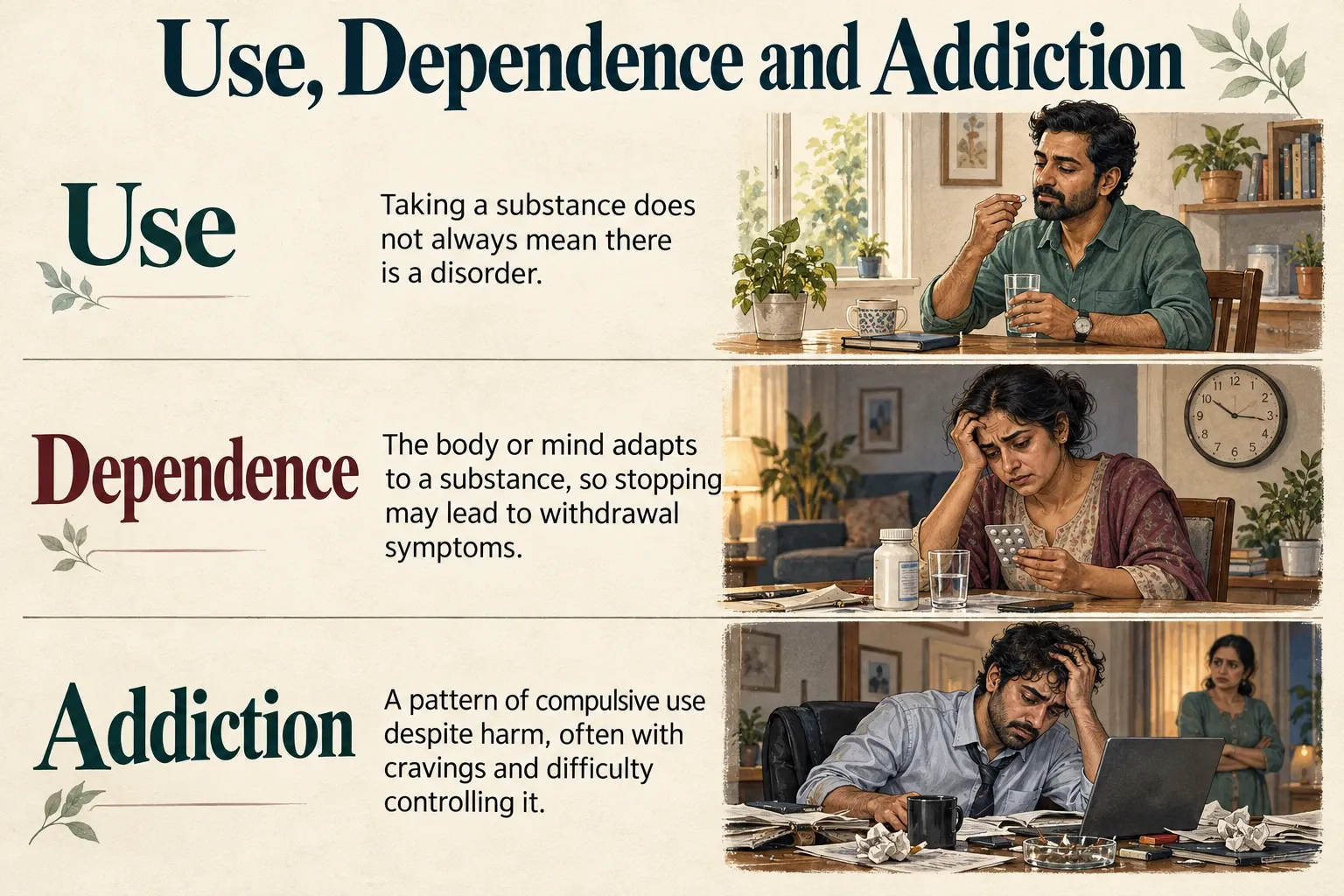
Addiction, also called a substance use disorder, means finding it difficult to control alcohol or drug use even when it is causing harm [1].
| Term | Simple meaning |
|---|---|
| Use | Taking alcohol or another substance. Not everyone who uses it develops a problem. |
| Dependence | Your body becomes used to it. You may need more for the same effect or feel unwell without it. |
| Addiction | You continue using despite harm and find it difficult to reduce or stop. |
These patterns exist on a spectrum. The important question is not which label fits, but whether substance use is affecting your health, work, finances or relationships.

Allo asks
How is alcohol or substance use showing up in your daily life?
What Are the Signs of Addiction?
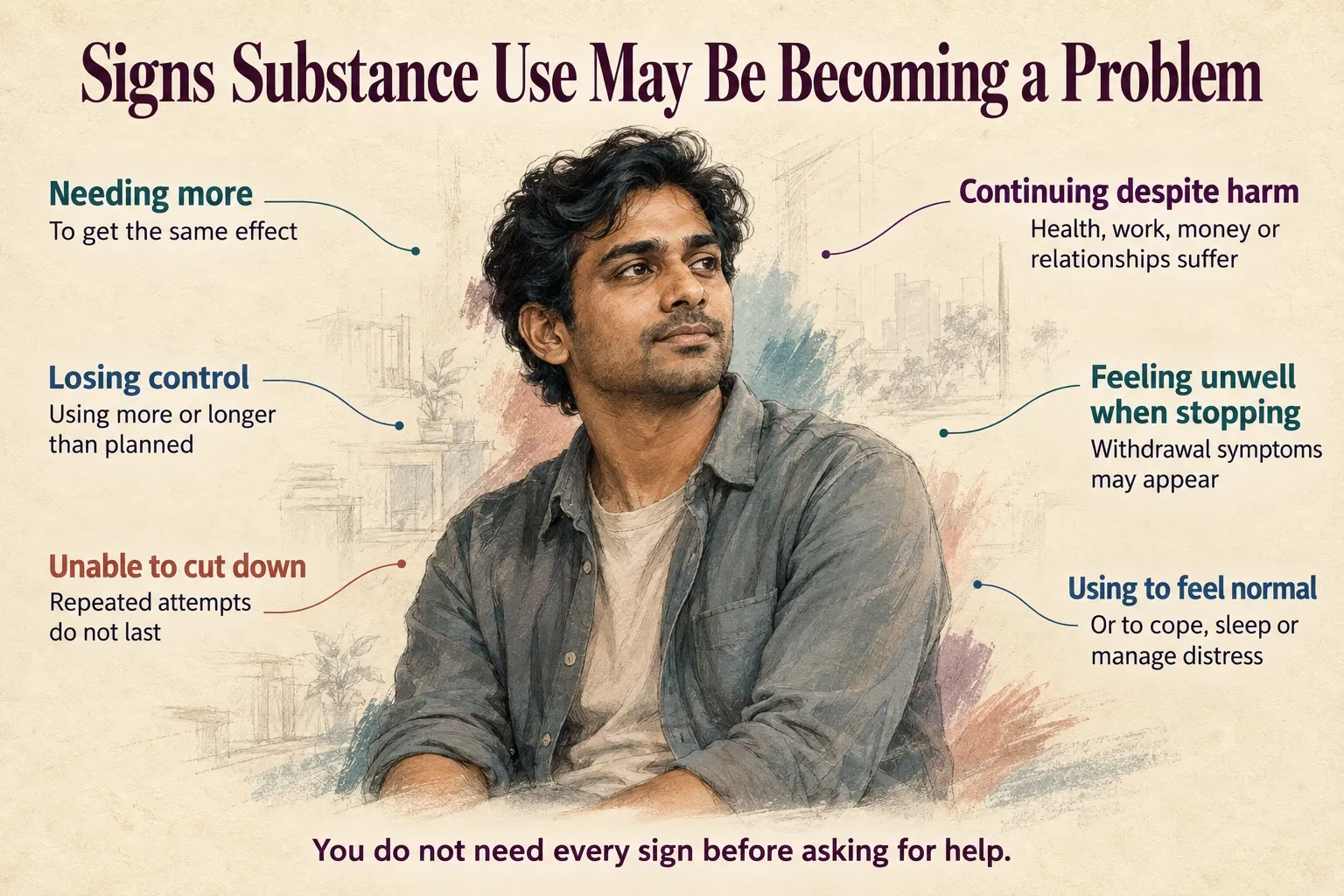
Possible signs include:
- Needing more to get the same effect
- Using more or for longer than you planned
- Trying to cut down but being unable to
- Spending a lot of time using, finding or recovering from the substance
- Continuing despite problems with health, money, work or relationships
- Feeling shaky, anxious or unwell when you stop
- Using it to sleep, cope or feel normal
- Losing interest in other activities
You do not need to experience every sign before speaking to a professional.
Which Substances Can Cause Addiction?
Different substances have different risks and treatments.
- Alcohol: India’s national survey found that about 14.6% of people aged 10–75 used alcohol. Around 5.7 crore people were affected by harmful or dependent alcohol use [2]. Read more about alcohol use disorder.
- Tobacco and nicotine: This includes cigarettes, bidis, gutka and chewing tobacco. Read about quitting smoking and nicotine.
- Cannabis: This includes bhang and other cannabis products. Around 2.8% of people surveyed in India had used cannabis during the previous year [2]. Read about cannabis dependence.
- Opioids: Around 2.1% of people surveyed used opioids, including opium, heroin and pharmaceutical opioids [2]. These substances can cause dependence and overdose.
- Prescription medicines: Some sleeping pills, pain medicines and anti-anxiety medicines can cause dependence when used without proper medical supervision. Learn more about how psychiatric medicines work.
Is It Safe to Stop Drinking Suddenly?
Do not suddenly stop drinking without medical advice if you drink heavily every day.

Alcohol withdrawal can be dangerous. Symptoms may begin within hours and include:
- Shaking and sweating
- Anxiety or agitation
- Confusion
- Hallucinations
- Seizures
A severe form of withdrawal called delirium tremens may develop several days after the last drink [3].
Some families try to manage alcohol withdrawal at home because they fear hospital admission or a “de-addiction centre.” However, severe withdrawal needs medical care. A doctor can decide whether you require hospital treatment or can stop safely through outpatient care.
Nicotine and cannabis withdrawal may be uncomfortable, but they are not usually dangerous in the same way as severe alcohol withdrawal.
I understand why families try to handle withdrawal at home, the fear of a hospital or a de-addiction centre is real in our society. But severe withdrawal is a medical situation, not something willpower or home care can safely manage. Please don't take that risk alone.
Why Does Addiction Happen?
Addiction usually develops because of several factors:
- Family history and genetics
- Stress or trauma
- Family or social environment
- Easy access to alcohol, tobacco or drugs
- Physical pain
- Sleep problems
- Anxiety, depression or other mental health concerns
- Using a substance to cope with difficult feelings
In India, work pressure, financial stress, family difficulties and easy access to alcohol, tobacco, gutka or some medicines may also affect substance use.
Some people use alcohol or drugs to manage another problem. For example, they may drink to sleep or use a substance to avoid painful memories. Treatment works better when these underlying concerns are also addressed.
Read more about generalised anxiety disorder, depression, PTSD and trauma, and insomnia and sleep disorders.
How Is Addiction Diagnosed?
There is no single blood test for addiction. A doctor or mental health professional may ask:
- What substances you use
- How much and how often you use them
- Whether your use has increased
- What happens when you stop
- How it affects your health and daily life
- Whether you have other physical or mental health concerns
Tell the professional about everything you use, including alcohol, tobacco, cannabis, prescription medicines and locally available substances. This information helps them plan safe treatment.
The conversation is meant to understand your situation, not judge you. Speaking to a professional does not mean you must agree to stop that day.
How Is Addiction Treated?
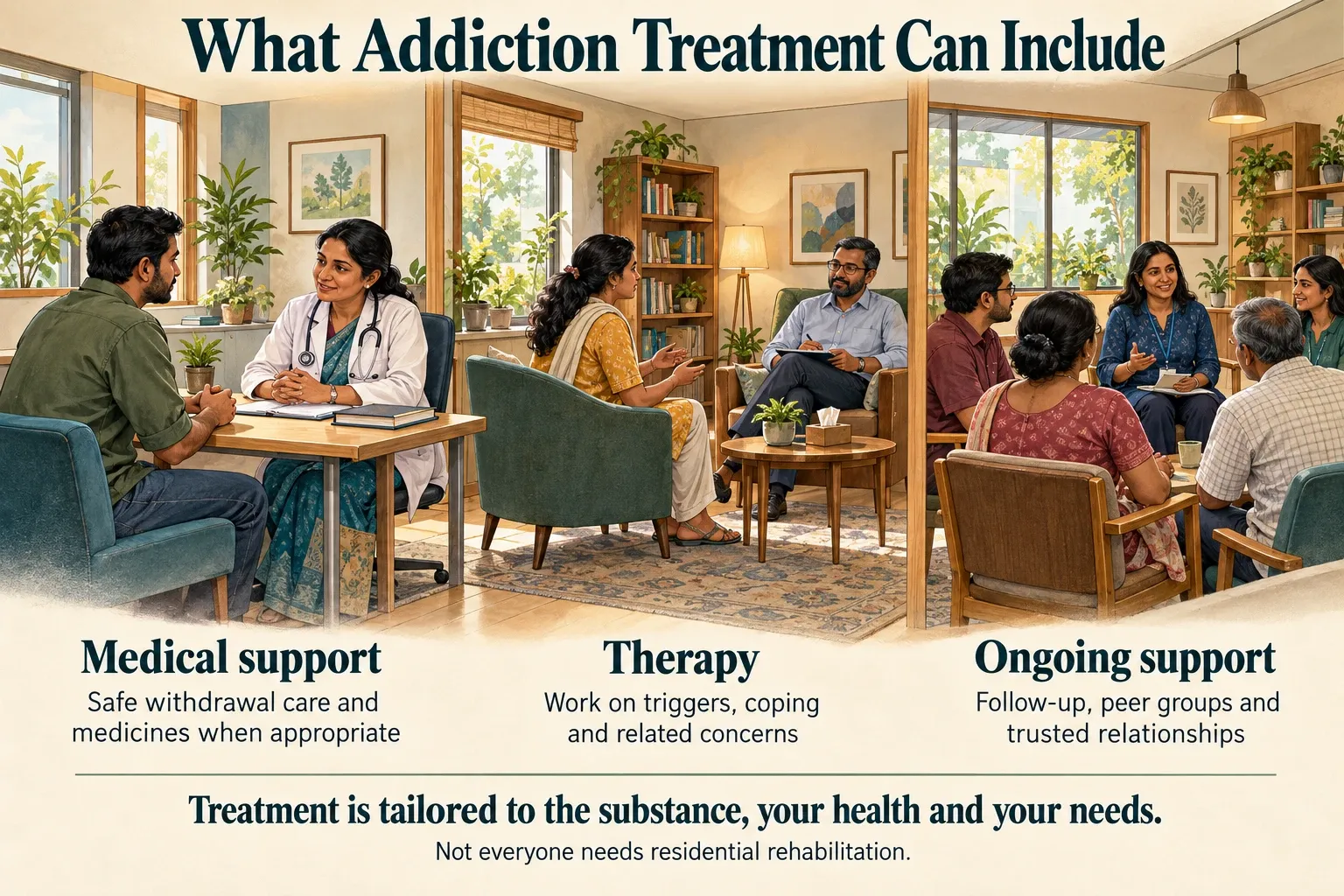
Treatment depends on the substance, your health and the support you need. It does not always mean staying in a rehabilitation centre.
Medical Support
A doctor may help you manage withdrawal safely. For some substances, medicines may reduce cravings or lower the chance of returning to use.
Depending on your needs, treatment may happen through clinic visits, online consultations, a short hospital stay or residential rehabilitation.
Learn more about medicines used to treat addiction.
Therapy
Therapy can help you:
- Understand what triggers your substance use
- Manage stress and difficult emotions
- Find healthier ways to cope
- Plan for situations where you may feel tempted to use
- Treat related anxiety, depression or trauma
Read about what to expect in psychotherapy.
Support Groups and Relationships
Support may come from family, trusted friends, healthcare professionals or peer groups such as Alcoholics Anonymous (AA) and Narcotics Anonymous (NA). Meetings may be available in person or online.
Family support can help, but relatives may also need guidance. Repeatedly hiding, managing or solving the consequences of someone’s substance use can affect the whole family.
If substance use is affecting your family, read our guide to supporting a loved one.
Help After a Relapse
Using alcohol or drugs again does not mean that recovery has failed. It may show that your treatment plan, support or coping strategies need to change.
Tell your doctor or therapist what happened so you can decide the next step together.
When Should You Get Help?
Consider speaking to a professional if:
- You have tried to reduce or stop but could not
- You need more of the substance than before
- You use it to sleep, cope or feel normal
- It is affecting your health, work, money or relationships
- People close to you have repeatedly expressed concern
- You feel unwell when you stop
Only around 1 in 38 people with alcohol dependence in India receives treatment [2]. Shame, fear of judgement and concerns about family reputation can delay care.
You can speak to a professional even if you are not ready to stop completely.
When Is Emergency Help Needed?
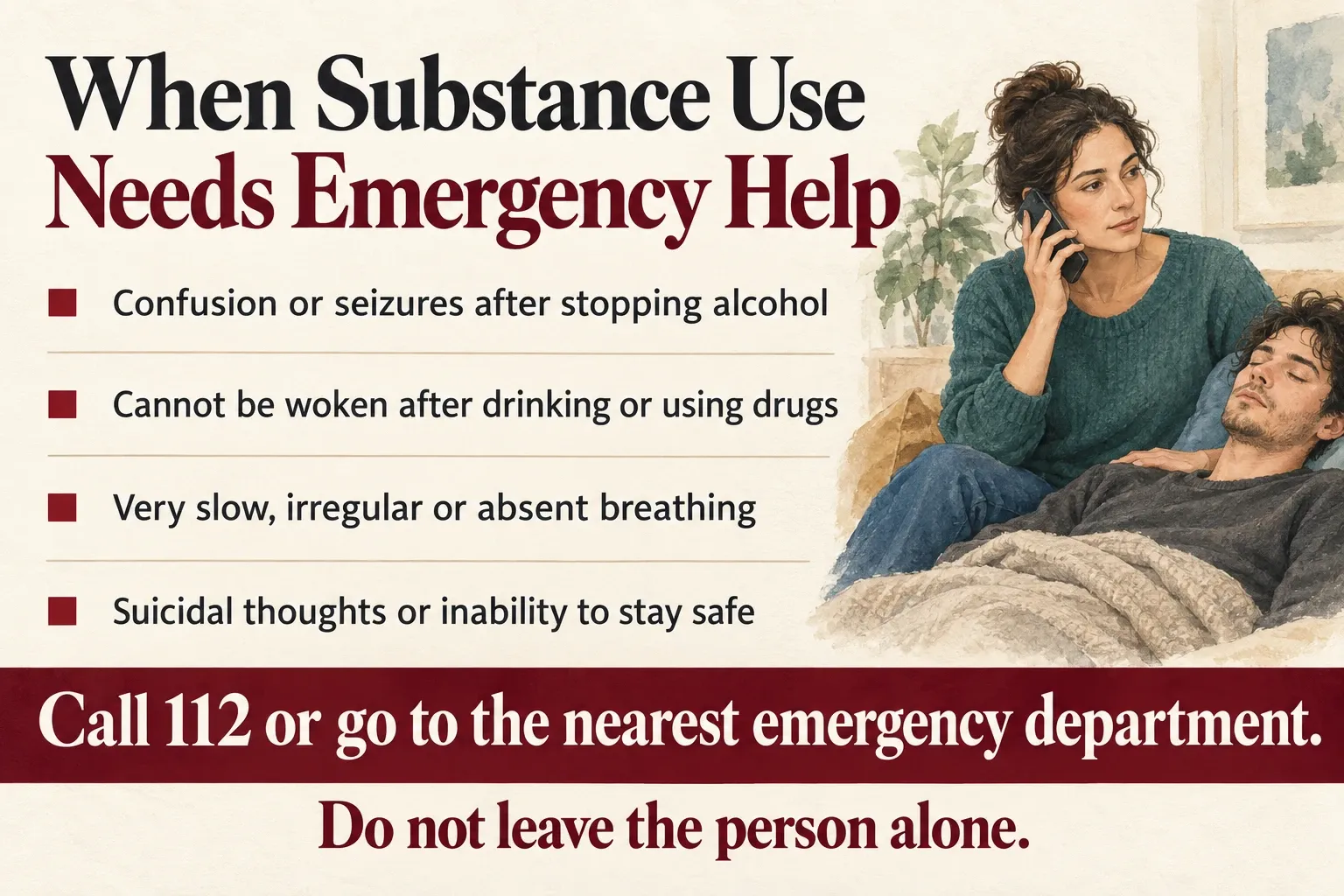
Get urgent help if someone:
- Becomes confused, severely shaky or has a seizure after stopping alcohol
- Cannot be woken after drinking or using drugs
- Is breathing very slowly, irregularly or not at all
- Has thoughts of suicide or cannot stay safe
Call 112 or go to the nearest hospital emergency department. Do not leave the person alone. Visit our crisis support and helplines page for more immediate support options.
Can Addiction Be Treated?
Yes. Recovery is possible, although it may take time and more than one attempt. Treatment can help you stop safely, reduce substance use and manage the reasons behind it.
If you are concerned about yourself or someone close to you, consider speaking confidentially with a qualified professional. You do not need to wait for a crisis before asking for help.
Disclaimer
This blog article discusses mental health and emotional wellbeing for general educational and informational purposes only. It is not a substitute for professional advice, diagnosis, or treatment, and only a qualified mental health professional, such as a psychiatrist, psychologist, or licensed therapist, can diagnose a condition or recommend treatment. If you are struggling, please reach out to a qualified professional or someone you trust; if you are in crisis or may be at risk of harming yourself, use the crisis support resources on this page. For any decisions about your mental health, we encourage you to seek the guidance of a qualified professional.
Most Asked Questions
Do I have to quit completely, or can I just cut down?
It depends on how far the pattern has gone. Some people who are drinking heavily but are not dependent do well with cutting down. For someone who is dependent, controlled use is usually much harder to sustain than stopping. This is a decision to make with a doctor who knows your history, not one to guess at.
Is addiction a disease or a choice?
Neither framing helps much. The first use is usually a choice. What happens after repeated use changes how the brain handles reward, stress, and self-control, which is why stopping is not simply a matter of deciding to. Treating it as a health condition is what gets people better outcomes.
What if the person does not want help?
This is the hardest situation for families, and pressure rarely works. What helps is staying connected, being clear and calm about the effect on you, avoiding shaming, and keeping the door to treatment visibly open. Many people come round in their own time, and the relationship is what they come back to.
Does going to a de-addiction centre mean being locked up?
No. Residential care is one option among several, and most people are treated as outpatients while carrying on with their lives. Supervised withdrawal is a medical process, usually a few days, and it is not the same as long-term admission.
Can someone recover fully?
Yes, and many people do. Recovery does not always mean never struggling again. For most people it means the substance stops running the day, and life becomes something they want to be present for.
Sources
- 1.
World Health Organization. Alcohol (fact sheet), updated 28 June 2024.
- 2.
Ambekar A, Agrawal A, Rao R, Mishra AK, Khandelwal SK, Chadda RK. Magnitude of Substance Use in India. Ministry of Social Justice and Empowerment, Government of India, and National Drug Dependence Treatment Centre, AIIMS New Delhi. 2019.
- 3.
Canver BR, Newman RK, Gomez AE. Alcohol Withdrawal Syndrome. In: StatPearls [Internet]. StatPearls Publishing; updated 14 February 2024.
- 4.
Sinclair DL, Chantry M, De Ruysscher C, Magerman J, Nicaise P, Vanderplasschen W. Recovery-supportive interventions for people with substance use disorders: a scoping review. Frontiers in Psychiatry. 2024;15:1352818.
Why Should You Trust Us?
Why Should You Trust Us?
This article was written by Dr. Srishti Rastogi, who has more than 1 years of experience in the healthcare industry.
Allo has the expertise of over 50+ doctors who have treated more than 1.5 lakh patients both online and offline across 30+ clinics.
Our mission is to provide reliable, accurate, and practical health information to help you make informed decisions.
For This Article
- We cited data from India's national survey on substance use, so the prevalence figures for alcohol, cannabis, and opioid use in this article reflect actual measured rates rather than estimates.
- We were explicit and cautious about alcohol withdrawal, including the risk of delirium tremens, so readers who drink heavily daily get a clear, medically accurate warning against stopping suddenly on their own rather than a vague caution.
- We distinguished clearly between use, dependence, and addiction as a spectrum, so readers can honestly assess their own situation without needing to fit a single label before it "counts" as worth discussing with a professional.
- We addressed the specific fear many Indian families have around hospital admission or "de-addiction centres" during withdrawal, and were direct that severe withdrawal genuinely needs medical care, so this article doesn't inadvertently support risky at-home management.
- We cited the treatment gap for alcohol dependence in India (only around 1 in 38 people receive treatment), so readers understand that seeking help despite shame or fear of judgement is common ground, not an unusual step.