How to Quit Smoking or Tobacco: A Practical Guide for India
Written by Dr. Srishti Rastogi
Dr. Srishti Rastogi is a medical writer and healthcare professional dedicated to high-quality patient education and public health awareness. Leveraging her clinical background, she produces deeply researched, evidence-based content for digital health platforms and medical publications. Dr. Srishti’s unique dual perspective as a clinician and communicator allows her to craft content that builds trust and credibility with readers navigating sensitive health topics.
•
September 10, 2026
Our experts continually monitor the health and wellness space, and we update our articles when new information becomes available.

Quick Read
Quitting smoking is hard because nicotine changes your brain chemistry, not because you lack willpower. Withdrawal is uncomfortable, usually peaking in the first week, but it isn't medically dangerous the way alcohol withdrawal can be. Most people who quit for good use a plan, some support, and often medicine, rather than trying to power through alone. And despite how it feels in the first few days, the evidence points the other way on mood. People who quit smoking tend to feel less anxious and less low months later, not more.
If you or someone you know is in crisis, help is available right now. You are not alone, and things can get better with the right support.
You may have tried quitting before. Then came chai, a stressful day or a friend offering you a cigarette. Using tobacco again doesn’t mean you lack willpower. Nicotine affects the brain, and tobacco also becomes tied to daily routines. Both parts need attention.
This article explains why quitting tobacco feels so difficult and what you can expect during withdrawal. You’ll also learn how to handle cravings, which treatments can help and where to find support in India.
Why Is Quitting Tobacco So Hard?
When your brain gets used to nicotine, it starts expecting the next dose. If you don’t take it, you may become irritated, restless or unable to focus. At the same time, familiar situations can trigger cravings: tea, meals, work breaks, driving, alcohol or stress.
A cigarette may feel calming, but often it is only relieving nicotine withdrawal for a short time. Then the discomfort returns. If drinking or another drug is part of the pattern, read about alcohol and substance use.

Allo asks
What makes quitting tobacco hardest for you?
What Does Nicotine Withdrawal Feel Like?
Withdrawal can start within a few hours. It’s usually strongest during the first three days and then becomes easier over the next few weeks. Common symptoms include:

- Strong cravings
- Irritability or anxiety
- Restlessness
- Low mood
- Poor concentration
- Increased hunger
- Trouble sleeping
Nicotine withdrawal is uncomfortable, but it’s generally not medically dangerous. Most cravings pass within a few minutes, even when they feel intense. If sleep becomes difficult, try these sleep hygiene tips.
Going back to tobacco during a quit attempt doesn’t mean you lack willpower. It usually means the nicotine dependence, daily triggers or both weren’t fully managed. We look at what pulled you back, adjust the plan and try again.
Will Quitting Make Anxiety or Depression Worse?
You may feel more anxious or low during the first few days. That’s often withdrawal. Over time, quitting is linked with better mental health. A Cochrane review found that people who stopped smoking had less anxiety, depression and stress than those who continued [1].
Smoking doesn’t treat anxiety or depression. If you already live with either condition, tell your doctor before quitting so that you have support in place. Get help if your mood becomes much worse or you have thoughts of harming yourself.

How Can You Quit Tobacco?
Keep the plan simple:
- Choose a quit date. Pick a date within the next two weeks.
- Notice your triggers. Look for the times, places and feelings that make you reach for tobacco.
- Remove tobacco products. Clear cigarettes, bidis, gutka, khaini, lighters and spare packets from your home, bag and vehicle.
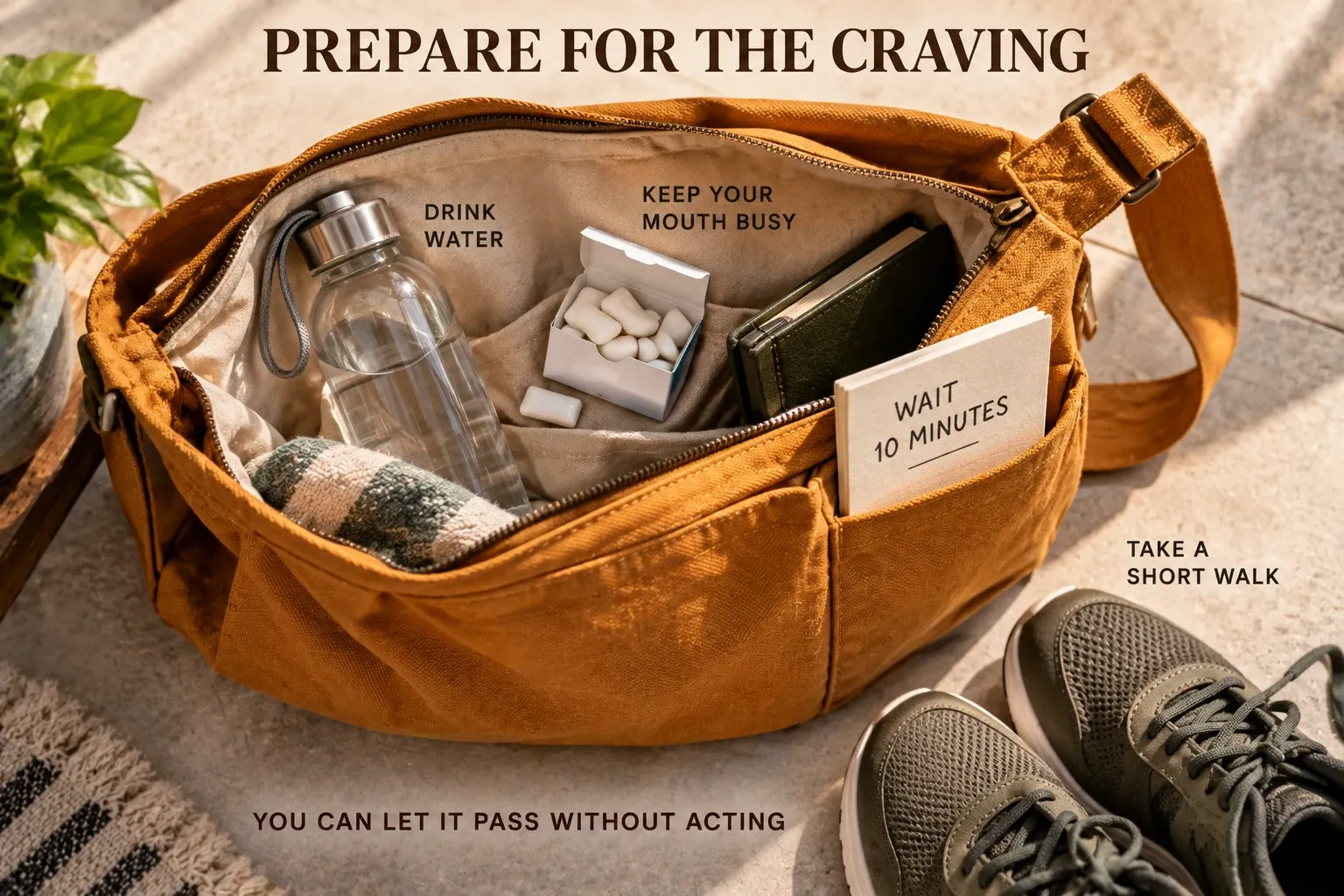
- Plan for cravings. Keep water or sugar-free gum nearby. Walk after meals or move away from places where people are smoking.
- Tell someone. Ask one trusted person to check in without lecturing you.
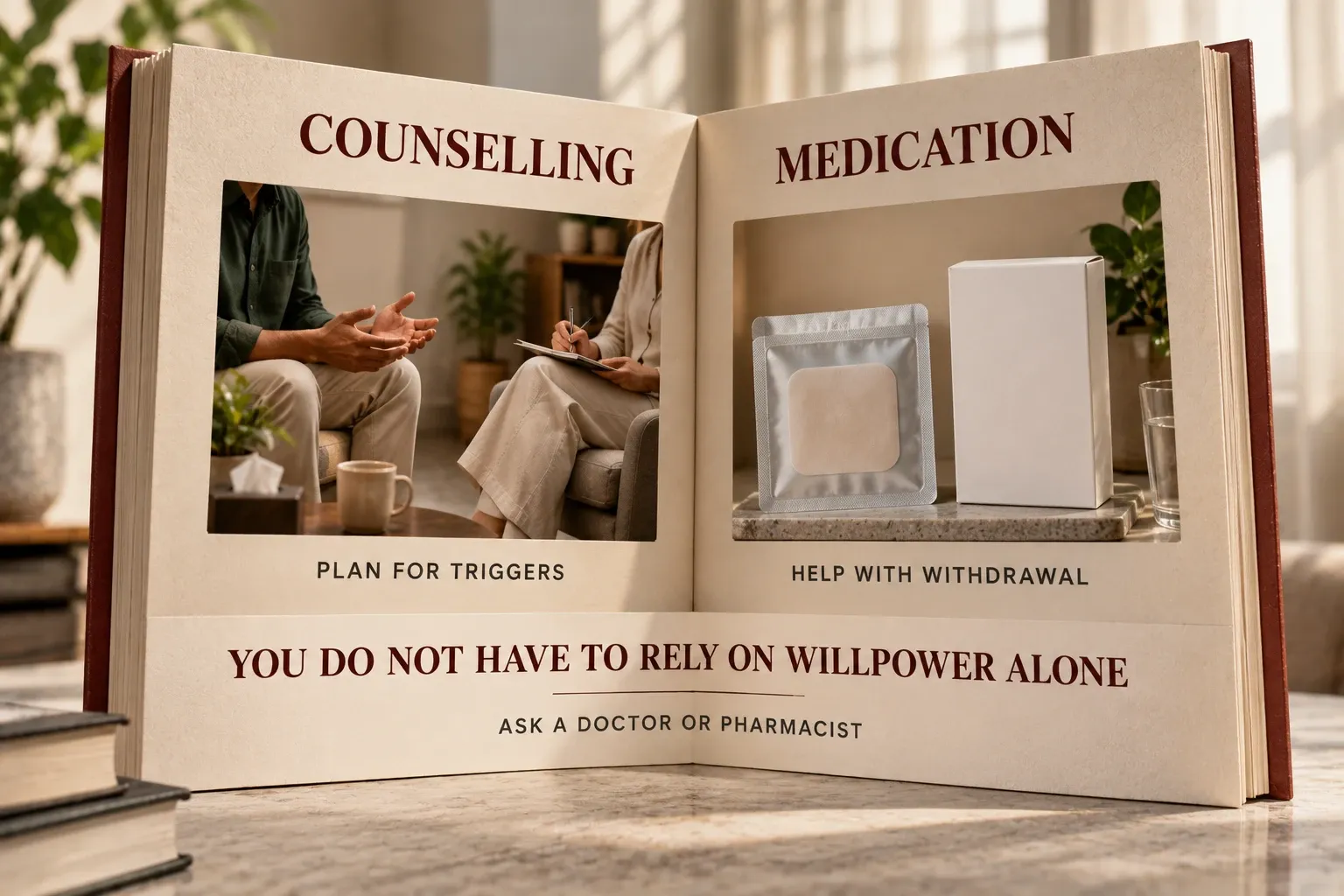
- Consider medical support. Counselling and medication together give people a better chance of quitting [2].
Don’t try to change your whole life on the same day. Focus on not using tobacco today. Then repeat that tomorrow.
What Can You Do During a Craving?
Wait for ten minutes before deciding what to do. Drink water, change your location, keep your hands busy or take a short walk. Exercise can also help with stress and restlessness.
If the craving comes with anxiety, try one of these breathing and grounding techniques. You don’t have to make the craving vanish. Let it pass without acting on it.
Which Medicines Can Help You Quit?
Nicotine replacement therapy, or NRT, gives you nicotine without tobacco smoke. It is available as gum, lozenges and patches. Research shows that NRT increases successful quitting rates by around 50% to 60% compared with trying without it [3]. A patch works slowly through the day. Gum or lozenges can help when a sudden craving starts.
Nicotine gum isn’t chewed like ordinary gum. Ask a doctor or pharmacist how to use it properly and which dose suits you. Varenicline and bupropion are prescription medicines that can reduce cravings. The World Health Organization recommends NRT, varenicline and bupropion as effective treatments for adults who want to quit tobacco [4].
These medicines aren’t suitable for everyone. Speak to a doctor before using them, especially if you’re pregnant, breastfeeding, taking other medicines or living with kidney disease, seizures or a mental health condition. Read more about how psychiatric medicines are chosen and monitored.
What About Gutka, Khaini and Chewing Tobacco?
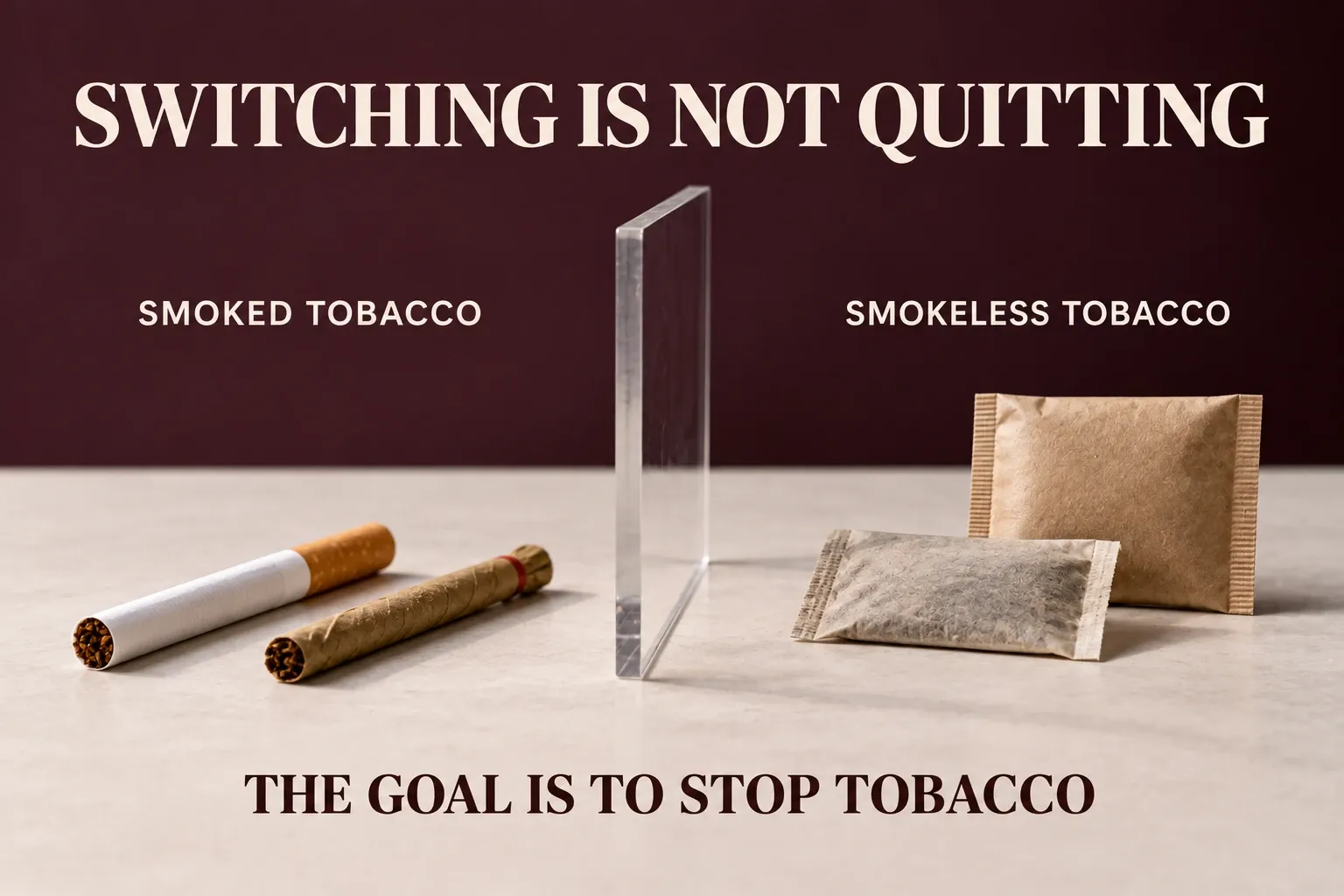
Smokeless tobacco also causes nicotine dependence. Gutka, khaini, zarda, mawa and betel quid containing tobacco can damage the mouth and increase the risk of oral cancer.
The 2016–17 Global Adult Tobacco Survey found that 21.4% of Indian adults used smokeless tobacco, while 10.7% smoked tobacco [5]. The quit process is similar: choose a date, remove the product and prepare for withdrawal. A doctor can help you choose the right treatment because nicotine levels vary across products.
Moving from cigarettes to gutka, or the other way around, isn’t quitting.
Is Vaping a Safe Way to Quit?
Vapes still deliver nicotine and may keep the dependence going. Their production, import, sale, distribution and advertising are also prohibited in India under the Prohibition of Electronic Cigarettes Act, 2019. Speak to a doctor about approved stop-tobacco treatments instead.
What Happens After You Quit Smoking?
| Time after quitting | What may change |
|---|---|
| 20 minutes | Heart rate and blood pressure begin to fall |
| 12 hours | Carbon monoxide in the blood returns towards normal |
| 2–12 weeks | Circulation and lung function improve |
| 1–9 months | Coughing and breathlessness may reduce |
| 1 year | Heart disease risk is about half that of a smoker |
| 10 years | Lung cancer death risk is about half that of a smoker |
These are average timelines from the World Health Organization [6]. Your recovery will depend on your health and tobacco use, but quitting helps at any age.

What If You Use Tobacco Again?
Don’t treat one cigarette or one pouch as the end of the attempt. Stop again. Look at what triggered the slip and change that part of your plan. Many people need several attempts before they quit completely.
If irritability is becoming difficult to handle, these anger management strategies may help.
Where Can You Get Help in India?
You can speak to a family doctor, dentist, psychiatrist or tobacco cessation clinic. Therapy may help if stress, anxiety or low mood keeps pulling you back to tobacco.
India’s National Tobacco Quit Line is 1800-11-2356. It offers free counselling in regional languages [7].
You can also book a confidential consultation with Allo Health. A professional can help you understand your triggers, manage cravings and build a quit plan that fits your daily life. You don’t have to wait until tobacco causes a serious health problem.
Disclaimer
This blog article discusses mental health and emotional wellbeing for general educational and informational purposes only. It is not a substitute for professional advice, diagnosis, or treatment, and only a qualified mental health professional, such as a psychiatrist, psychologist, or licensed therapist, can diagnose a condition or recommend treatment. If you are struggling, please reach out to a qualified professional or someone you trust; if you are in crisis or may be at risk of harming yourself, use the crisis support resources on this page. For any decisions about your mental health, we encourage you to seek the guidance of a qualified professional.
Most Asked Questions
Will I Gain Weight After Quitting Tobacco?
You may feel hungrier after quitting, and food may taste better. Some people gain a little weight, but this varies. Don’t let that stop you from quitting. Regular meals, water and light exercise can help while your appetite settles.
Can You Become Addicted to Nicotine Gum or Patches?
Nicotine replacement products still contain nicotine, so some dependence is possible. However, they provide nicotine more slowly and without the toxic smoke found in cigarettes. They are much safer than continuing to smoke. Use the recommended dose and ask your doctor or pharmacist when to reduce it.
Is One Cigarette a Day Safe?
No. Even occasional smoking exposes your body to harmful chemicals. There is no safe level of cigarette smoking, and smoking only a few cigarettes can still increase the risk of heart and blood vessel disease. Cutting down can be part of a quit plan. The eventual aim should be to stop completely.
Can You Use Quit-Smoking Medicines During Pregnancy?
Don’t start nicotine gum, patches, varenicline or bupropion during pregnancy without speaking to a doctor. The safest treatment depends on your tobacco use, pregnancy and overall health. A doctor can compare the risks of continuing tobacco with the available quitting options.
Does Smoking Near a Window Protect Your Family?
No. Smoke can remain in a room for hours. Opening a window, switching on a fan or smoking in another room does not fully protect other people. The best option is to keep the entire home and car smoke-free, especially when children, pregnant women or older adults are present.
Sources
- 1.
Cochrane. Does stopping smoking improve mental health?
- 2.
Centers for Disease Control and Prevention. How to Quit Smoking.
- 3.
Cochrane. Can nicotine replacement therapy help people quit smoking?
- 4.
World Health Organization. WHO Clinical Treatment Guideline for Tobacco Cessation in Adults.
- 5.
Ministry of Health and Family Welfare, Government of India. Global Adult Tobacco Survey India 2016–17.
- 6.
World Health Organization. Health Benefits of Smoking Cessation.
- 7.
National Tobacco Control Programme, Ministry of Health and Family Welfare. National Tobacco Quit Line Services.
Why Should You Trust Us?
Why Should You Trust Us?
This article was written by Dr. Srishti Rastogi, who has more than 1 years of experience in the healthcare industry.
Allo has the expertise of over 50+ doctors who have treated more than 1.5 lakh patients both online and offline across 30+ clinics.
Our mission is to provide reliable, accurate, and practical health information to help you make informed decisions.
For This Article
- The treatment information in this article comes from the World Health Organization, Cochrane, the US Centers for Disease Control and Prevention and India’s Ministry of Health and Family Welfare.
- We reviewed evidence on counselling, nicotine replacement therapy and prescription medicines instead of suggesting that motivation alone is enough.
- The article explains why anxiety, stress and low mood can become tied to tobacco use. It also makes clear that temporary withdrawal symptoms are different from a lasting decline in mental health.
- We wrote for tobacco use in India. The article covers cigarettes and bidis as well as gutka, khaini, zarda, mawa and other forms of smokeless tobacco that are commonly used in India.
- We stated the age of the Indian survey data. The tobacco-use figures come from the 2016–17 Global Adult Tobacco Survey. We have not presented them as new figures.
- We explained the limits of self-treatment. Readers are told when to speak to a doctor, why prescription medicines should not be started without advice and when changes in mood need urgent attention.