Physical Causes of Erectile Dysfunction
Written by Dr. Deepali Anand

Dr. Deepali is a medical writer and healthcare professional with a background in clinical surgery and patient care. Having transitioned from active clinical practice to medical communications, she specializes in bridging the gap between complex clinical data and patient education. Dr. Deepali is dedicated to creating evidence-based content that is grounded in scientific rigor and empathy, ensuring that sensitive topics like sexual wellness and mental health are accessible and empowering for every reader.
•
April 13, 2026
Our experts continually monitor the health and wellness space, and we update our articles when new information becomes available.
Quick Read
Erectile dysfunction caused by physical factors usually involves issues with blood flow, nerve signals, or hormones. Conditions like diabetes, heart disease, nerve damage, or low testosterone can interfere with how erections happen in the body. In many cases, ED can also act as an early sign of underlying health problems, especially related to the heart or metabolism. The good news is that these causes can often be identified through simple tests and managed with the right treatment. Understanding the root cause is the first step toward effective and long-term improvement.
If you have been struggling with ED, it is natural to wonder whether something physical is going on. In many cases, especially when ED is persistent, there is a biological cause behind it. These physical causes can be identified, measured, and treated. It may simply be giving an early signal that something needs attention.
What Are Physical Causes of ED?
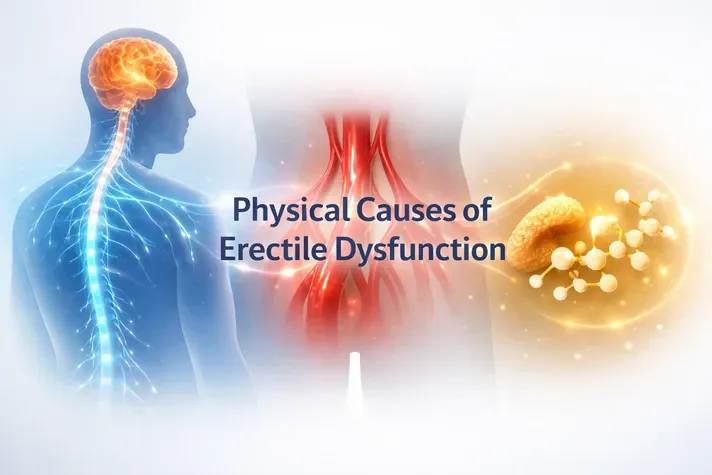
An erection depends on three systems working together: blood flow, nerve signals, and hormones. Blood needs to reach the penis and stay there, nerves need to carry signals from the brain and spinal cord, and hormones, especially testosterone, need to support sexual desire and response. When one of these systems is physically affected, ED can happen.
This is different from psychological ED, where stress, anxiety, or relationship concerns may play a bigger role. In biological ED, the issue is in the body’s physical machinery.
इरेक्शन के लिए तीन चीज़ों का सही तरह से काम करना ज़रूरी है — रक्त प्रवाह, नसों के संकेत, और हार्मोन। जब इनमें से कोई भी चीज़ शारीरिक रूप से प्रभावित होती है, तो ED हो सकता है।
How Do Physical Factors Affect ED?
Biological ED usually falls into four broad groups:

- Vascular causes
- Neurogenic causes
- Hormonal causes
- Structural causes
Understanding which of these causes is involved can help guide the next step.
Vascular Causes of ED (Blood Flow Problems)
This is the most common biological cause of ED. When you are aroused, blood vessels in the penis relax and widen so blood can flow in and create an erection.
But conditions like high blood pressure, high cholesterol, diabetes, heart disease, and atherosclerosis can narrow or damage these blood vessels over time.
According to studies, ED can appear years before heart disease becomes obvious, making it an early warning sign in some men as penile arteries are smaller than the arteries of the heart.[1]

If ED starts early or becomes persistent, it is worth discussing overall heart and metabolic health with a doctor.
एक अहम बात यह है कि लिंग की धमनियाँ छोटी होती हैं, इसलिए समस्या वहाँ पहले दिख सकती है। कई बार ED दिल की सेहत से जुड़ी परेशानी का शुरुआती संकेत भी हो सकता है।
→ Read more about the Vascular Causes of Erectile Dysfunction
Neurogenic Causes of ED (Nerve Problems)
Erections begin in the brain. Nerve signals travel from the brain through the spinal cord and pelvic nerves to trigger the changes needed for an erection. If these pathways are damaged, the signal may not reach properly. Common causes include:
- Diabetic neuropathy
- Spinal cord injury
- Parkinson’s disease
- Multiple sclerosis
- Stroke
- Pelvic surgery
Neurogenic ED is treatable, and options may include medicines, devices, and cause-specific treatment plans.
इरेक्शन की शुरुआत दिमाग से होती है। नसों के संकेत दिमाग से रीढ़ की हड्डी और फिर लिंग तक पहुँचते हैं। अगर रास्ते में कहीं भी नुकसान हो, तो इरेक्शन प्रभावित हो सकता है। मधुमेह, रीढ़ की चोट, पार्किंसन, स्ट्रोक, MS या प्रोस्टेट सर्जरी के बाद ऐसी समस्या हो सकती है।
Hormonal and Structural Causes Of ED
Testosterone plays a major role in sex drive and erectile function. When testosterone levels fall, desire may reduce, and erections may become less reliable. Thyroid problems and high prolactin levels can also contribute.
Sometimes the issue is structural. Peyronie’s disease, for example, can cause scar tissue inside the penis, leading to curvature, pain, and difficulty during erections. If erections are painful or noticeably bent, it is important to bring that up with a doctor.
टेस्टोस्टेरोन यौन इच्छा और इरेक्शन दोनों के लिए महत्वपूर्ण है। जब इसका स्तर कम होता है, तो इच्छा और इरेक्शन दोनों प्रभावित हो सकते हैं। थायरॉइड की समस्या या अन्य हार्मोनल असंतुलन भी कारण बन सकते हैं।
→Read more about How Hormones affect Erections
→ Read about Peyronie’s Disease and ED
What Should You Do Next?
If you think your ED may have a physical cause, the next step is not guesswork. A doctor may suggest blood tests, blood sugar and cholesterol checks, hormone tests, or a penile Doppler to understand what is happening.
अगर आपको लगता है कि आपकी समस्या का कारण शारीरिक हो सकता है, तो अगला कदम सही जांच है।
Explore More: Physical Causes of ED
Blood Flow and Vascular Causes
- Blood Flow and Erectile Dysfunction
- Arteriogenic Erectile Dysfunction
- Venogenic Erectile Dysfunction
- Atherosclerosis Erectile Dysfunction Treatment
Nerve Damage and Neurological Causes
- Back Pain and Erectile Dysfunction
- Can a Neck Injury Cause Erectile Dysfunction
- Lost Sensitivity Erectile Dysfunction
Hormonal and Chemical Causes
- Nitric Oxide and Erections
- Can Low Dopamine Cause Erectile Dysfunction
- Cortisol and Erectile Dysfunction
- Low Iron Erectile Dysfunction
Disease and Infection
- How Does Kidney Disease Cause Erectile Dysfunction
- Can Liver Problems Cause Erectile Dysfunction
- Can Infection Cause Erectile Dysfunction
- Can Chlamydia Cause Erectile Dysfunction
- Can Gonorrhea Cause Erectile Dysfunction
- Does Epididymitis Cause Erectile Dysfunction
- Frequent Urination and Erectile Dysfunction
- Can Bladder Cancer Cause Erectile Dysfunction
Structural and Pelvic Causes
- Can Hip Pain Cause Erectile Dysfunction
- Can Epididymal Cyst Cause Erectile Dysfunction
- Cold Testicles Erectile Dysfunction
Post-Surgery Causes
General Physical Health Factors
- Age and Impotence
- Organic Erectile Dysfunction
- Does Dehydration Cause Erectile Dysfunction
- High Triglycerides Impotence
हिंदी लेख

Disclaimer
The following blog article provides general information and insights on various topics. However, it is important to note that the information presented is not intended as professional advice in any specific field or area. The content of this blog is for general educational and informational purposes only. The content should not be interpreted as endorsement, recommendation, or guarantee of any product, service, or information mentioned. Readers are solely responsible for the decisions and actions they take based on the information provided in this blog. It is essential to exercise individual judgment, critical thinking, and personal responsibility when applying or implementing any information or suggestions discussed in the blog.
Most Asked Questions
How do I know if my ED is biological or psychological?
If morning erections have reduced or stopped, a physical cause may be more likely. A doctor can confirm with history, blood tests, and sometimes a penile Doppler.
Does diabetes always cause ED?
Not always, but it raises the risk significantly because it can damage both blood vessels and nerves.
क्या जैविक ED का इलाज संभव है?
हाँ, कई मामलों में सही इलाज, दवाइयों और जीवनशैली में बदलाव से काफी सुधार हो सकता है।
Why Should You Trust Us?
Why Should You Trust Us?
This article was written by Dr. Deepali Anand, who has more than 1 years of experience in the healthcare industry.
Allo has the expertise of over 50+ doctors who have treated more than 1.5 lakh patients both online and offline across 30+ clinics.
Our mission is to provide reliable, accurate, and practical health information to help you make informed decisions.
For This Article
- We reviewed 30+ top-ranking medical and health articles on physical causes of erectile dysfunction to ensure this content is accurate, relevant, and comprehensive.
- We referred to trusted medical resources and textbooks covering urology, endocrinology, and cardiovascular health to build a strong clinical foundation.
- We analyzed 20+ peer-reviewed research studies on ED, including its links with blood flow, nerve function, and hormonal balance.
- We explored platforms like YouTube, Instagram, and Google search trends to understand what people are commonly confused or concerned about when it comes to ED.
- We looked into real user discussions on forums such as Reddit and health communities to identify practical questions, misconceptions, and lived experiences.
- This article is written in a doctor-informed, patient-friendly tone, balancing medical accuracy with clear, easy-to-understand explanations.